



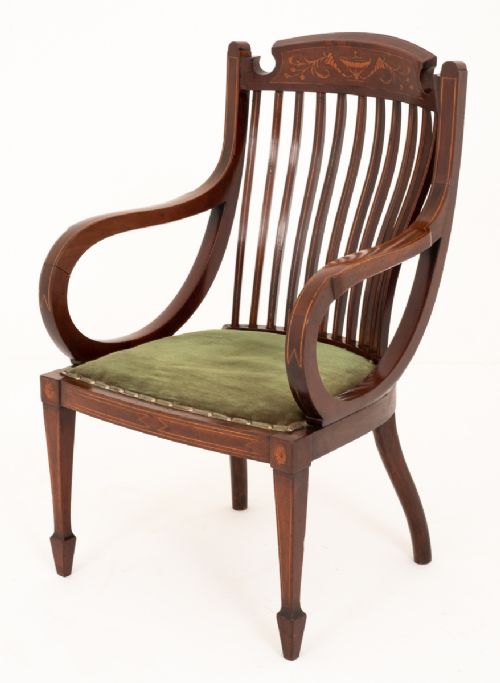
Georgian Marquetry Chairs
Georgian marquetry chairs bring patterned wood inlay and rich timbers into domestic spaces, offering both structural grace and historical weight.
Georgian Marquetry Chairs
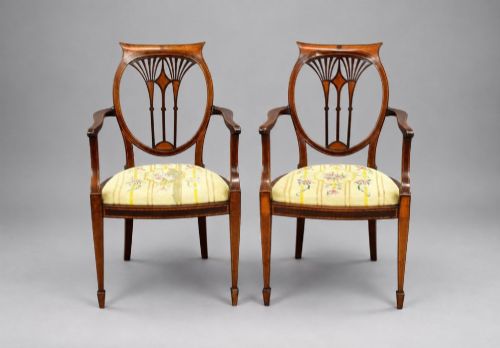
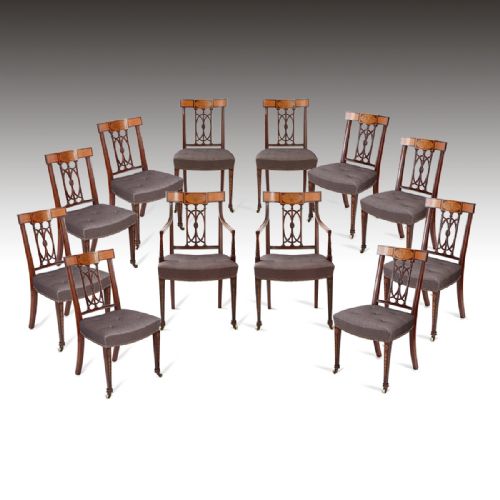
Georgian marquetry chairs encompass seating forms ranging from dining chairs and side chairs to armchairs and elbow chairs. The selections spanning this search phrase appear across periods such as the eighteenth century and the Regency era, alongside later interpretations like the Edwardian period and Sheraton Revival.
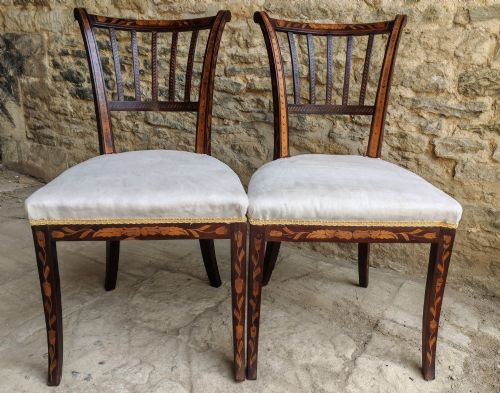
Buyers frequently encounter mahogany, satinwood, and walnut frames decorated with contrasting wood inlays or brass details. The physical forms recorded in these pieces include dining sets of varying sizes, pairs of side chairs, and individual open armchairs.
How they were made
Cabinetmakers constructed these frames primarily from dense timbers such as mahogany, walnut, and satinwood, frequently substituting faux rosewood for exotic grains. Skilled artisans shaped the wooden components to form supportive seat rails, raked back legs, and curved armrests.
Marquetry panels and brass inlay were meticulously fitted into precise recesses carved into the primary wood surface. Craftsmen secured these decorative elements using traditional adhesives and pinned joints before applying final protective finishes.
Even twelfth-generation dining chairs occasionally need a sympathetic wiggle check before hosting Sunday roast.
What varies in quality
The sophistication of the timber selection and the precision of the marquetry cutting define the upper tier of these chairs. Finer examples display complex pictorial or geometric wood inlays that integrate seamlessly with the primary grain of the mahogany or walnut structure.
Structural integrity and the retention of original upholstery materials or period brass inlays heavily influence the standing of each piece. Chairs that maintain their initial proportions and uncompromised joinery command greater appreciation among serious collectors.
John Gee
The Georgian Marquetry Chairs Glossary
- Marquetry
- Decorative veneer work arranged in intricate patterns or pictures using various coloured woods. This technique requires precise hand-cutting to fit individual pieces together within the surface of the chair back or frame.
- Satinwood
- A durable tropical timber valued for its pale, golden yellow colour and natural sheen. It is frequently utilised in detailed inlay work and polished veneers on eighteenth-century seating.
- Side chair
- An upright chair without arms designed primarily for dining or placement against room walls. These forms form a substantial portion of historical seating sets.
- Regency
- An English design period spanning the early nineteenth century characterised by classical influences and refined metal embellishments. Pieces from this era often incorporate brass inlay alongside dark timber frames.
Georgian Marquetry Chairs: Frequently Asked Questions
How do I care for marquetry chairs?
Keep these wooden chairs away from direct sunlight and fluctuating radiator heat to prevent the delicate veneer from drying and lifting. Apply a gentle microcrystalline wax occasionally to nourish the timber surface without building up excessive residue.
Avoid using modern liquid polishes or harsh chemical sprays that might penetrate the joints or soften historical adhesives. Regular dusting with a soft, dry cloth is sufficient for maintaining the polished finish of the satinwood and mahogany.
Can I use these for daily dining?
Most sturdy mahogany and walnut frames remain fully capable of supporting regular daily seating when placed on even flooring. Period examples constructed with traditional mortise and tenon joinery offer remarkable structural resilience.
Users should nonetheless inspect the underframe stability periodically and avoid dragging chairs across carpeted or uneven surfaces. Cushioning can be updated with period-appropriate fabrics to suit modern comfort preferences without altering the wooden structure.
How do I distinguish Regency from earlier styles?
Regency seating frequently incorporates bold brass inlay and faux rosewood finishes influenced by classical Greek and Roman archaeological discoveries. The structural lines tend to be more austere and linear compared to earlier eighteenth-century designs.
Earlier Georgian pieces typically rely on carved mahogany or figured walnut without metal embellishments, often featuring elaborate splat backs. Examining the timber grain and decorative techniques clarifies the specific historical period of manufacture.
What defines a side chair versus an armchair?
Side chairs are built without armrests, allowing multiple pieces to tuck neatly around a dining table or align along a hallway wall. Their compact proportions make them versatile for various domestic room layouts.
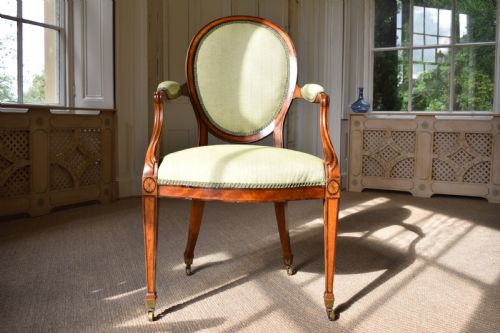
Armchairs include supportive side rails for the arms, often terminating in scroll or upholstered elbow rests. These larger seating forms were traditionally reserved for heads of households or placement in reading parlours.