


Georgian Marine Art
Georgian marine art captures the drama of naval warfare, bustling harbours and coastal trade on canvas, paper and panel.
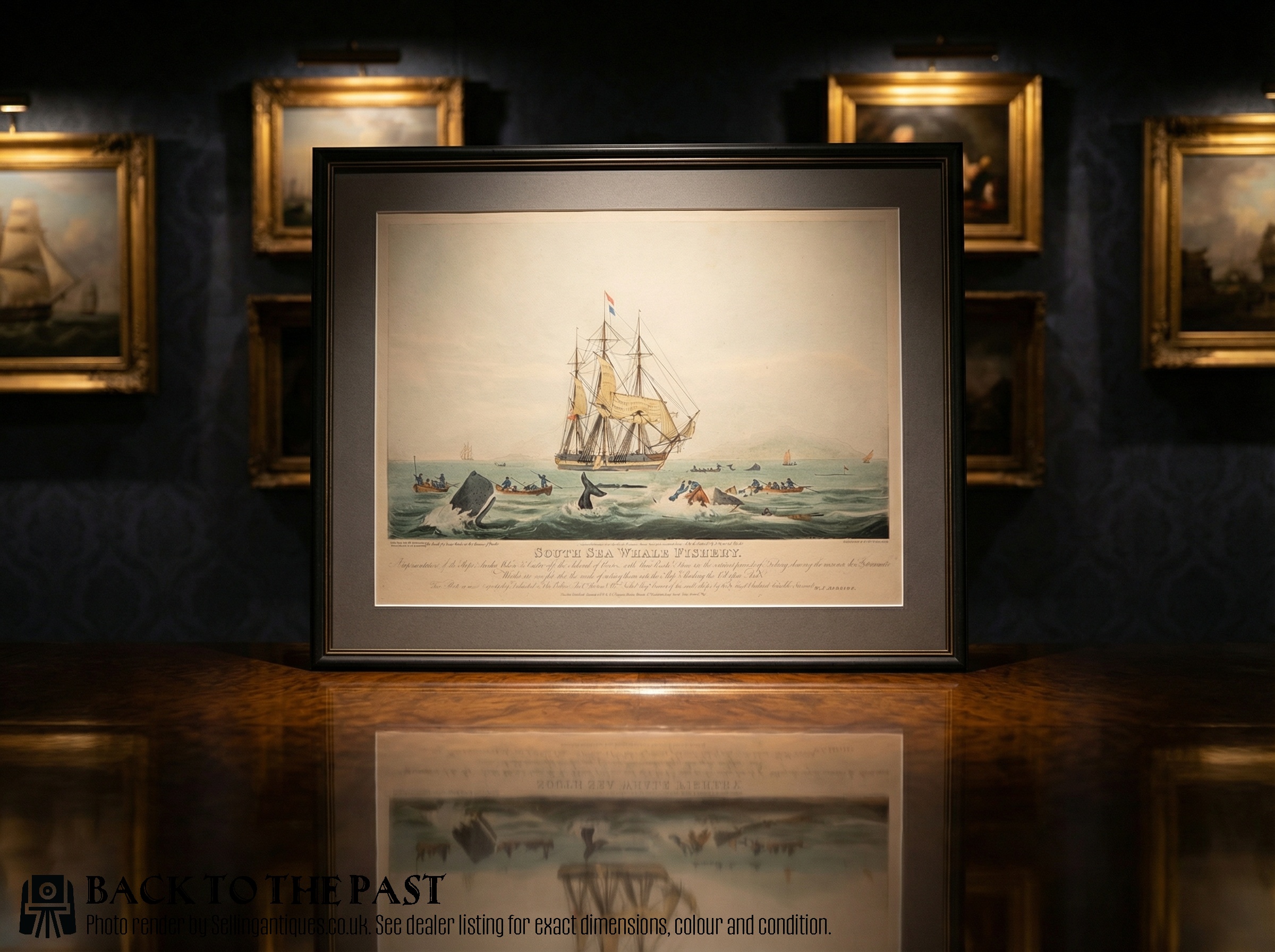
Georgian Marine Art
Georgian marine art encompasses oil paintings, watercolours, framed aquatints and architectural reliefs depicting ships, sea battles and coastal scenes. These works capture naval engagements, merchant shipping and coastal landscapes from the eighteenth and nineteenth centuries.
The pieces on this page span the eighteenth century, Regency period and Victorian era, executed in styles ranging from Georgian maritime to nineteenth-century marine art. Forms extend from oil paintings on canvas to framed prints and lead cistern panels of marine interest.
Materials and techniques
Artists painted primarily with oil paint on canvas, applying pigment to capture the movement of water, the billowing of sails and the details of warships and coastal figures. Watercolours on paper also appear, alongside aquatint printmaking.
Framing materials include giltwood for large country house oil paintings, while other works utilise glass and wood to protect paper prints and watercolours.
Listings span the eighteenth century, Regency period, and nineteenth century, utilising oil paint, canvas, watercolour, paper, and giltwood.
Variations in quality
Quality rests in the precision of the rigging, the accuracy of the naval architecture and the handling of light on water and sky. Works attributed to known artists or showing detailed sea battles and named vessels tend to demonstrate superior execution.
The framing and medium also shape the piece, with substantial giltwood frames and finely rendered oil on canvas works representing a different tier of craftsmanship compared to standard prints.
W. Collard·George Morland·W J Huggins·Samuel Owen·Francis Holman
The Georgian Marine Art Glossary
- Aquatint
- An intaglio printmaking technique that produces tonal effects similar to watercolour washes. It was often used for marine series and coastal prints.
- Giltwood
- Wood that has been carved and coated with gold leaf or a gold-coloured finish. This material is typical for framing substantial eighteenth-century oil paintings.
- Man-of-war
- A warship or frigate belonging to a royal navy during the age of sail. These vessels form a primary subject in naval marine paintings.
- Lead cistern panel
- A cast architectural or functional lead element decorated with reliefs. Pieces of marine interest feature maritime motifs or coastal scenes.
Georgian Marine Art: Frequently Asked Questions
What subjects appear in Georgian marine art?
These works depict naval battles, warships with raised sails, ships entering harbours like Portsmouth, and coastal shipping. Scenes also include fishing boats in brisk winds and quiet coastal landscapes with figures.
Artists recorded the maritime commerce and naval might of the period, providing visual records of historic ships such as the HMS Queen Charlotte and the HMS Swift.
How do I identify a period marine painting?
Dating relies on the rigging styles of the ships, the clothing of coastal figures, and the framing materials used. Eighteenth-century works often feature galleons and warships with specific cannon configurations, while Regency and Victorian pieces show nineteenth-century vessel designs.
Attributions to artists active in the seventeen-hundreds or early eighteen-hundreds provide further temporal context for the canvas or watercolour.
Where were these marine artworks displayed?
Large oil paintings in giltwood frames were commissioned for country houses and grand domestic interiors to display naval loyalty or maritime interests. Smaller watercolours and aquatints suited parlour display and private collections.
Architectural pieces like lead cistern panels served functional roles while incorporating marine decoration for estate gardens or courtyards.
How should I care for antique oil paintings?
Oil on canvas works require stable humidity and temperature away from direct sunlight to prevent the canvas from sagging and the oil paint from cracking. Giltwood frames need gentle dusting with a soft brush without chemical cleaners.
Works on paper, such as aquatints and watercolours, demand protection behind glass to guard against moisture and light degradation.