



Framed Ship Watercolour
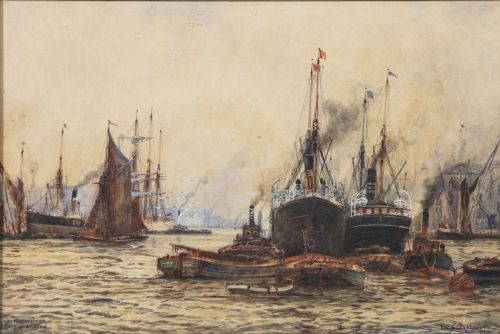
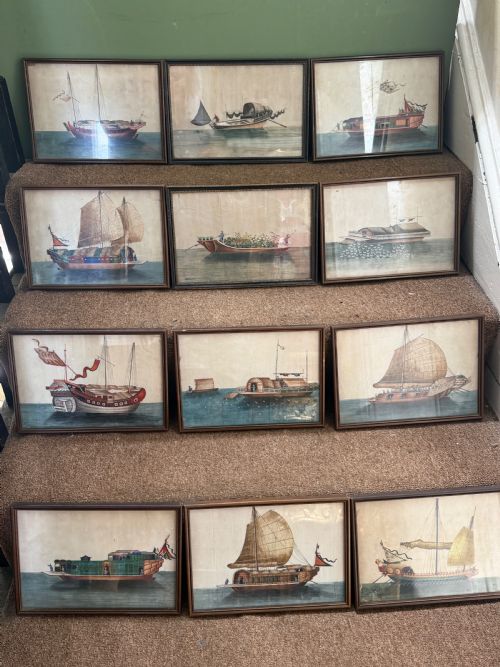
These framed ship watercolour pieces capture maritime history on paper through detailed sailing vessels, steamers and naval craft.
Framed Ship Watercolour
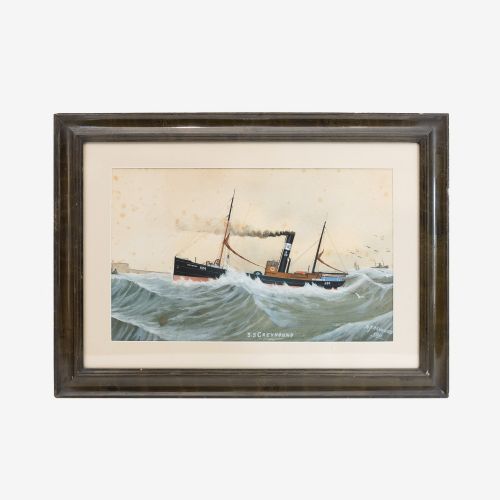
A framed ship watercolour depicts maritime subjects ranging from nineteenth century clipper ships and barques to early twentieth century naval vessels and port scenes. Buyers examine these works for historical accuracy in rigging, hull design and coastal topography.
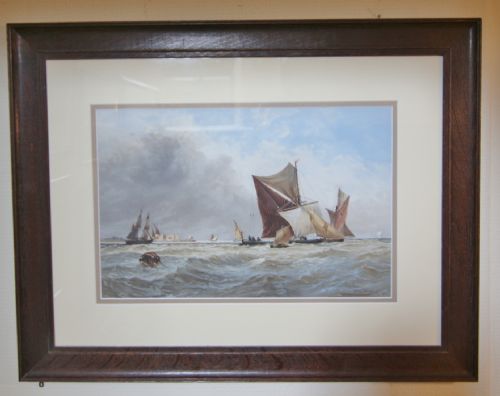
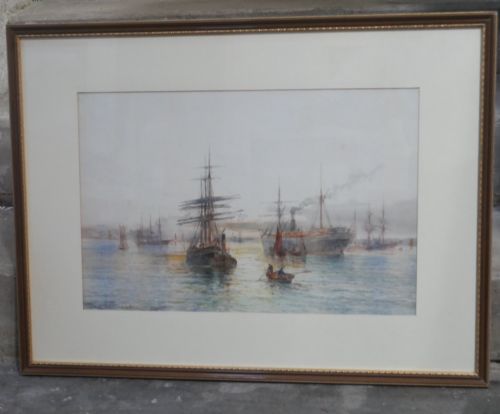
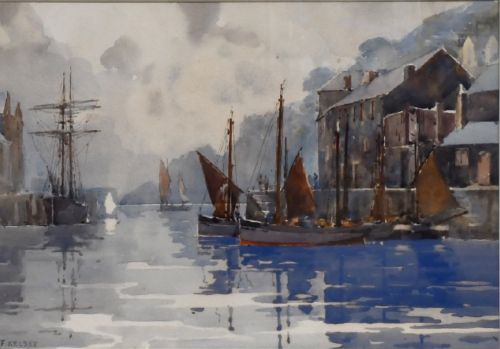
The selections on this page span the Victorian and Edwardian eras, moving from tranquil harbour views to dramatic open sea encounters in choppy waters. Works include signed compositions by established marine artists alongside atmospheric studies by lesser known hands.
Framing typically involves period wood moulding, sometimes enhanced with gilt leaf or glass protection to preserve the delicate pigment on paper. Collectors find everything from intimate port sketches to large scale seascapes suitable for wall display.
Materials and Technique
Artists painted these works on paper using water-soluble pigments, frequently combining transparent watercolour washes with opaque gouache highlights to render the sparkle of sunlight on water and the texture of canvas sails. Gum arabic was often added to deepen dark tones and lend a subtle sheen to hulls and stormy skies.
Protective framing utilises glass and wooden surrounds, occasionally incorporating gold leaf mouldings or hand enamelled borders to complement the palette of the painting. The underlying paper supports range from lightweight sheets to heavier card stock suited to larger marine compositions.
Listings feature paper, glass, wood, gold leaf and gouache across nineteenth and early twentieth century works.
Evaluating Quality
Superior examples display a confident command of maritime architecture, accurately depicting vessel rigging, perspective and the movement of water under varying wind conditions. The best hands capture atmospheric light and the specific atmospheric conditions of named ports with economy and precision.
The handling of secondary elements such as distant shorelines, sky washes and attendant harbour craft separates accomplished studio output from more formulaic productions. Original framing and clear provenance regarding the ship, captain or location further elevate the standing of a piece.
Charles Edward Dixon·Frank William Scargrough·Thomas Bush Hardy·Samuel Owen·WF Mitchell
The Framed Ship Watercolour Glossary
- Gouache
- An opaque watercolour paint mixed with a white pigment binder. It creates solid areas of colour and sharp highlights on churning waves.
- Barque
- A sailing vessel with three or more masts having the fore and mainmasts square-rigged and the mizzenmast fore-and-aft rigged.
- Gilt Wood
- Wood treated with a thin layer of gold leaf or metallic gilt finish. It provides a decorative border that isolates the painting from the surrounding wall.
- Maritime
- Pertaining to the sea, navigation, shipping and marine commerce. These scenes record the commercial and naval vessels of past centuries.
- Provenance
- The documented history of ownership or creation for a work of art. It often confirms the identity of the ship or the artist.
Framed Ship Watercolour: Frequently Asked Questions
How do I date a maritime watercolour?
Dating relies on the vessel types depicted, such as the transition from sailing barques to steam ironclads around the turn of the twentieth century, alongside artist signatures and framing styles.
Paper quality and inscriptions naming specific ships or launch dates often provide precise temporal markers for Victorian and Edwardian works.
Where should I hang these watercolours?
Watercolours require placement away from direct sunlight to prevent the fading of delicate pigments on paper. Stable indoor humidity levels protect both the paper support and the antique wooden frame.
Room environments with moderate light and minimal temperature fluctuation suit these delicate maritime artworks best.
What is the difference between watercolour and gouache?
Traditional watercolour relies on transparent washes where the white of the paper illuminates the pigment layers. Gouache introduces body colour and white filler, creating opaque passages that sit flat on the surface.
Many marine artists combined both mediums to render atmospheric skies alongside solid hull details.
Are these paintings records of real ships?
Many works depict named vessels, naval carriers and commercial barques that sailed during the nineteenth and twentieth centuries. Inscriptions on the mount or reverse frequently record the specific ship, port or historical event.
Other compositions present generic coastal scenes capturing the general maritime traffic of a specific era.