
Georgian Mahogany Wine Box
A georgian mahogany wine box is a sturdy timber container designed to chill or store bottles, bringing refined storage into a formal dining room.
Georgian Mahogany Wine Box
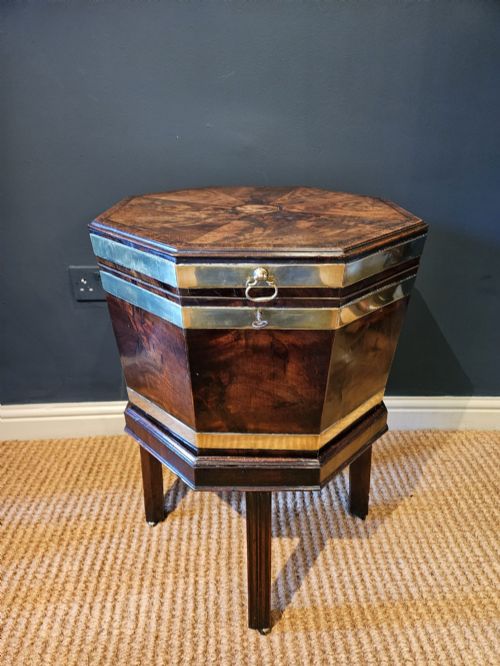
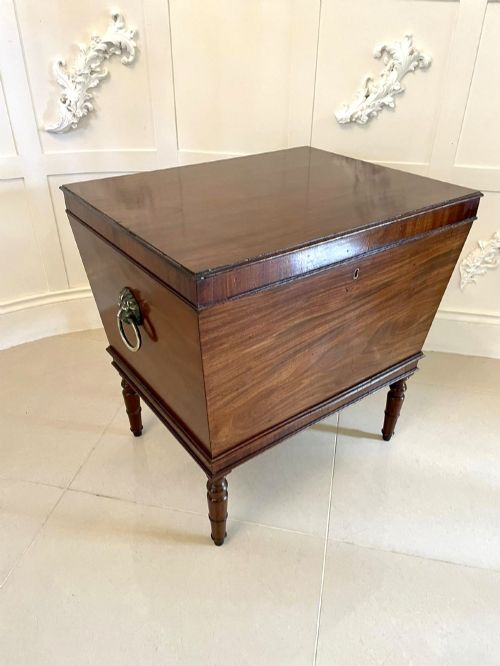
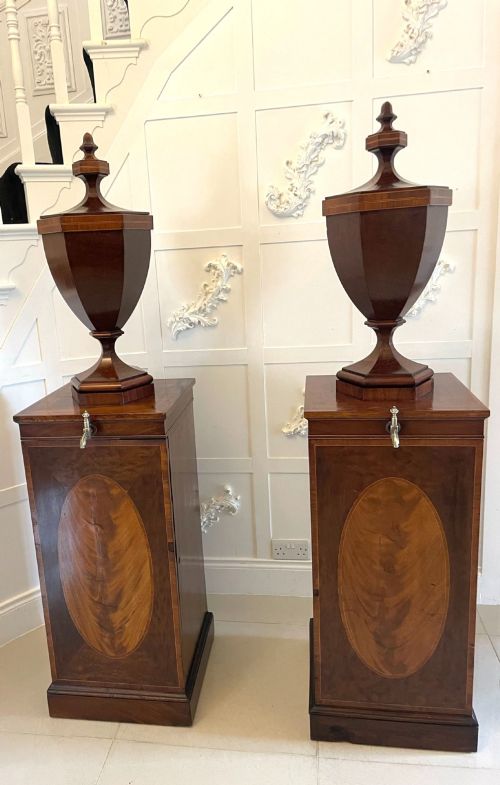
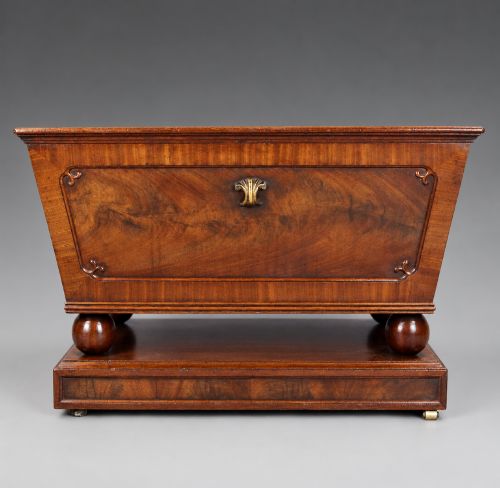
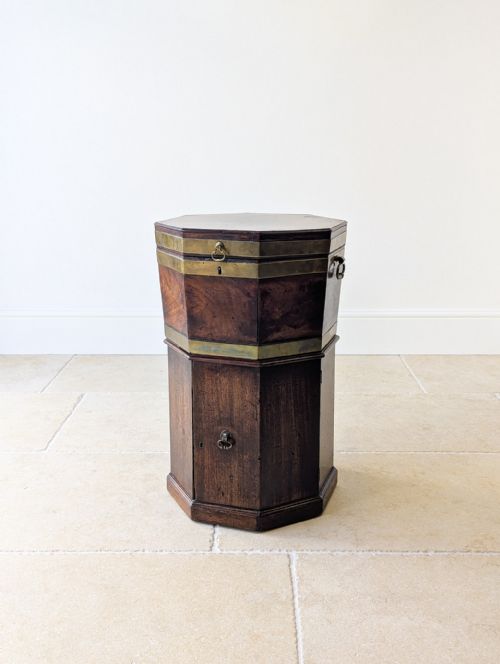
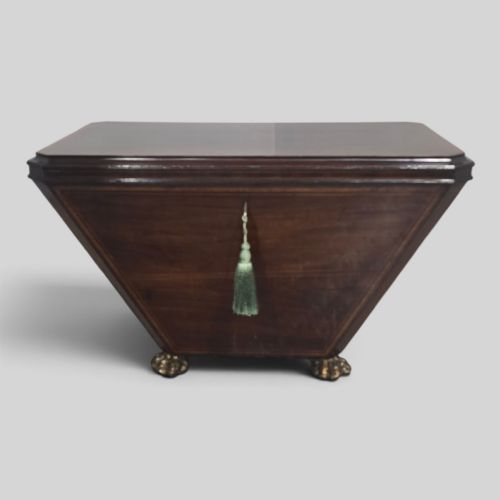
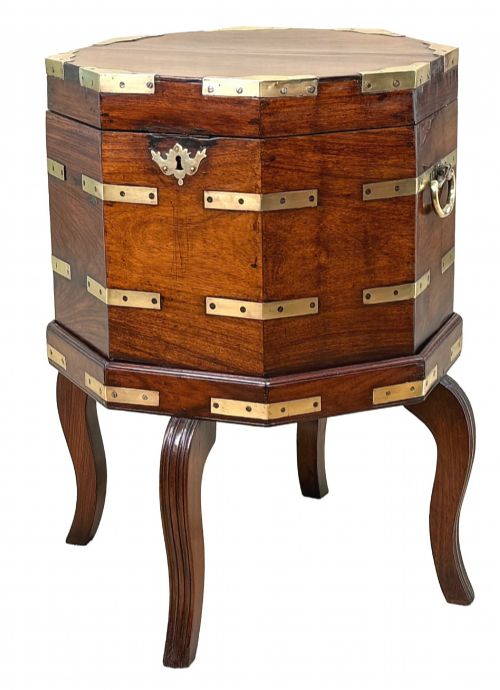
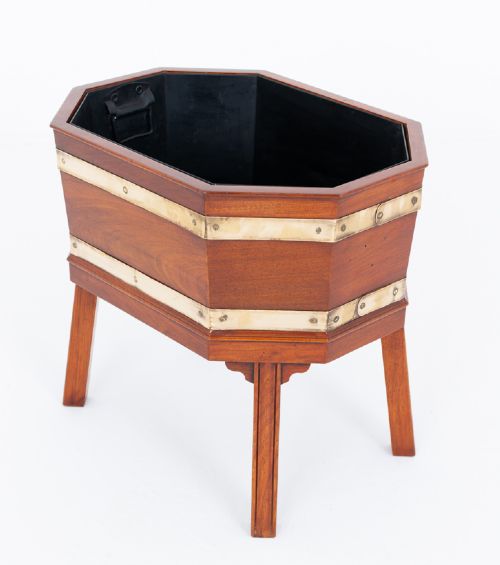
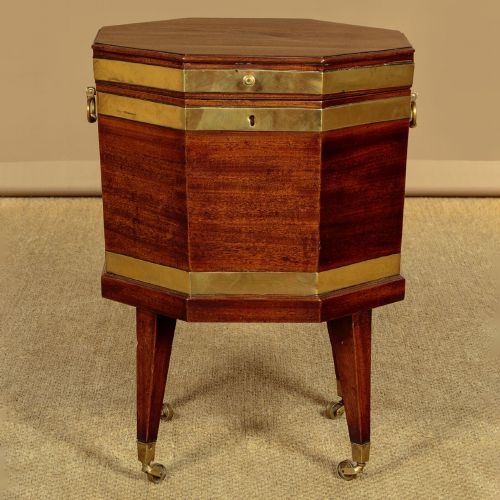
A georgian mahogany wine box takes several architectural shapes, most frequently appearing as octagonal vessels, oval carriers, or sarcophagus-form coolers spanning the eighteenth and nineteenth centuries. These pieces originate from periods including the Georgian and Regency eras, alongside later revival pieces produced in the twentieth century.
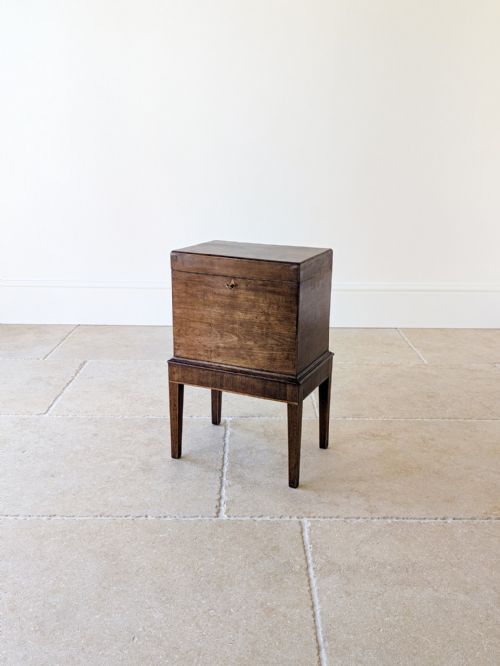
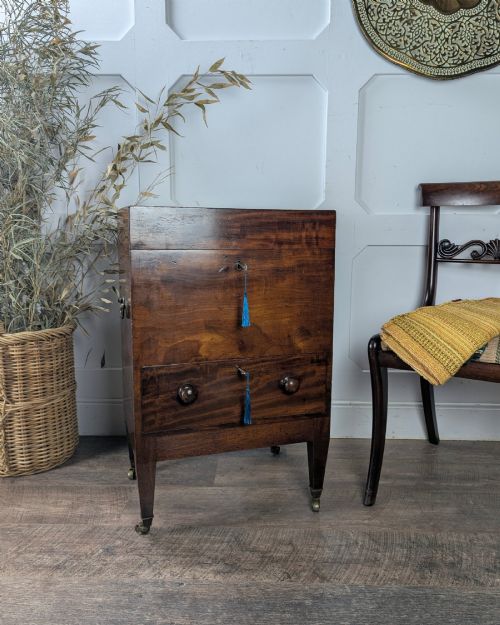
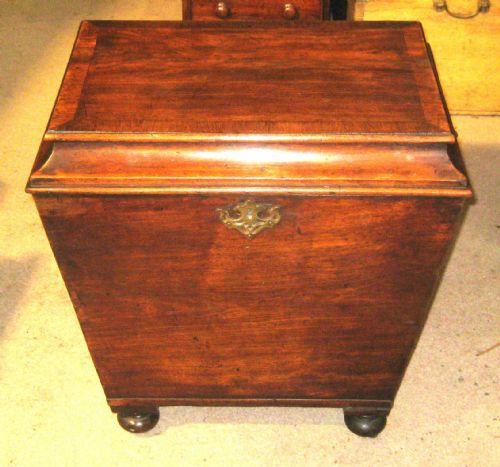
Makers constructed these storage boxes to sit beneath sideboards or upon dedicated stands and pedestals, keeping heavy glass bottles close at hand during formal meals. The primary forms function as cellarettes, wine coolers, and bottle carriers, occasionally featuring lead linings or internal wooden dividers to separate individual bottles.
Materials and Construction
Craftsmen built these containers using dense tropical hardwoods, frequently selecting straight-grained timber or highly figured flame mahogany veneers to create rich surface patterns. Workshops enriched the exteriors with contrasting boxwood and satinwood inlay, ebonised wood details, or cast brass bands that held the heavy timber staves securely together.
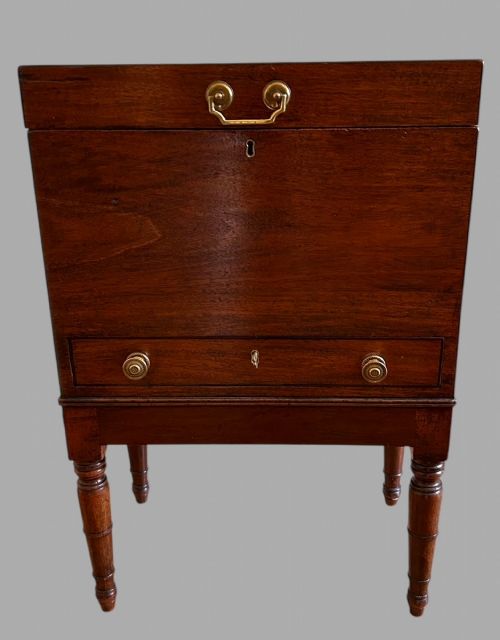
Internal hardware often included lead linings designed to hold melting ice for chilling bottles, alongside brass carrying handles mounted to the sides. Joinery methods relied on solid timber construction, with octagonal and sarcophagus bodies shaped to withstand the weight of multiple glass wine bottles.
Listings feature mahogany combined with brass, boxwood inlay, and ebonised wood across Georgian and Regency periods.
Design and Execution
Quality separates simple utility boxes from masterwork pieces through the choice of timber veneer and the precision of decorative inlays. Superior examples display striking flame mahogany grain matched across the lid and sides, complemented by crisp boxwood stringing or finely cast brass mounts rather than plain or replacement hardware.
The presence of original fittings, such as lead interior liners, internal bottle dividers, and matching stands or pedestals, elevates a piece significantly. Structural integrity and refined proportions, whether in an octagonal body or a sarcophagus curve, distinguish the finest workshop output from simpler vernacular items.
Edwards and Roberts·Gillingtons
The Georgian Mahogany Wine Box Glossary
- Cellarette
- A lockable timber box or chest designed to hold wine bottles safely inside a dining room. These vessels frequently stood beneath sideboards or rested upon their own legs.
- Sarcophagus form
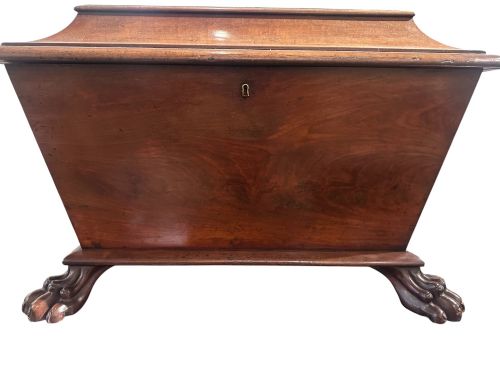
- A heavy coffin-like box shape with a peaked or domed lid, popular during the Regency period for large wine coolers. This classical silhouette often rested on paw feet.
- Flame mahogany
- A highly decorative wood veneer showing a flickering, flame-like grain pattern created by slicing across the branch junction of the tree.
- Boxwood inlay
- Light-coloured wood contrasting with dark mahogany, cut into thin strips to form geometric borders and stringing lines around panels.
Georgian Mahogany Wine Box: Frequently Asked Questions
What is a georgian mahogany wine box used for?
These timber boxes served as secure storage vessels for wine bottles within the dining room, keeping beverages ready for service near the main table.
Many examples included internal compartments and lead linings designed to hold ice, allowing hosts to chill wine before pouring it for guests.
How do I tell a Regency piece from a Georgian one?
Georgian pieces often display cleaner geometric lines, such as octagonal sides with brass bands or oval shapes resting on simple tapered stands.
Regency versions tend to adopt heavier classical forms like the sarcophagus shape, featuring carved paw feet, bold mouldings, and rich flame mahogany veneers.
Did these wine boxes always have stands?
Not all wine boxes required separate supports, as many smaller octagonal and rectangular versions were designed to sit directly on the floor or upon a sideboard top.
Larger coolers and cellarettes frequently came with dedicated pedestals, original stands, or integrated legs that raised the heavy timber container to a convenient height.
How should I care for the mahogany wood?
Keep the timber away from direct heat sources and strong sunlight to prevent the mahogany veneers and delicate boxwood inlays from drying out and cracking.
Apply a gentle application of appropriate wax polish periodically to nourish the wood surface and maintain the natural lustre of the grain.