
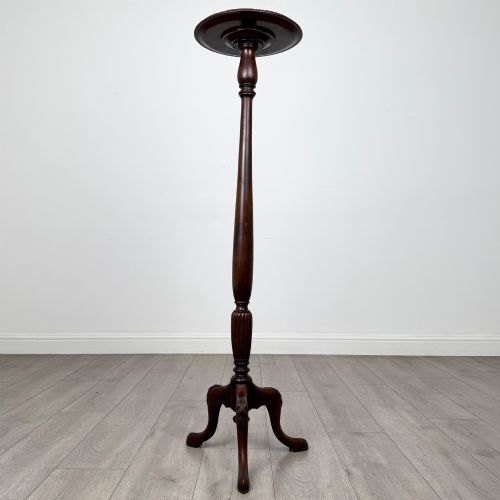
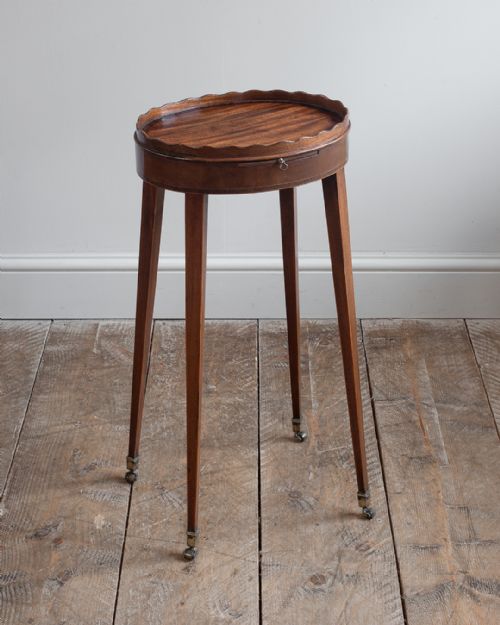
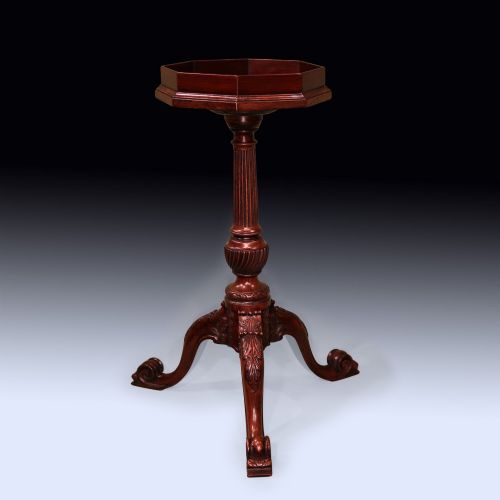
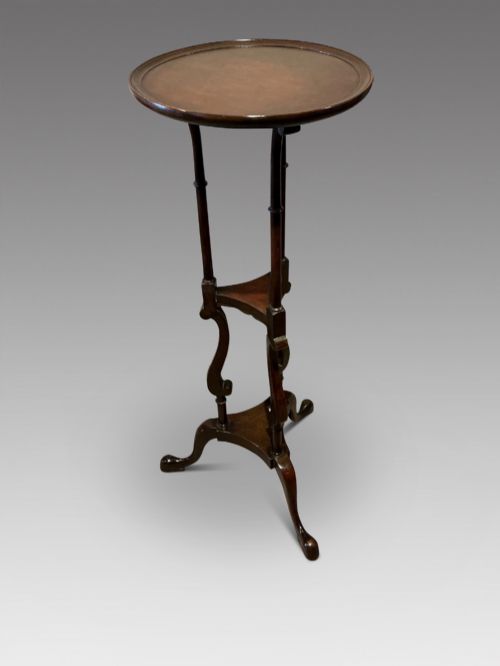



Georgian Mahogany Urn Stand
A georgian mahogany urn stand is a slender, raised platform designed to hold a hot water vessel, offering refined utility and timber warmth.

Georgian Mahogany Urn Stand
A georgian mahogany urn stand is a compact, elevated table created to support a tea urn or kettle safely near a table or hearth. These pieces belong primarily to the eighteenth and nineteenth centuries, spanning periods from George II and George III through to Regency, alongside later revival phases.
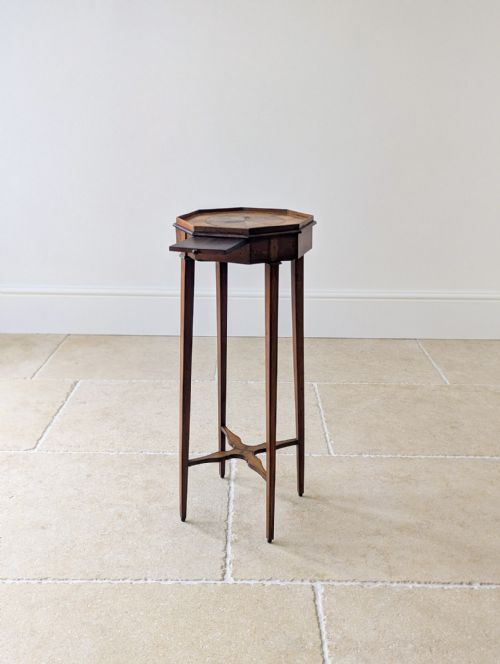
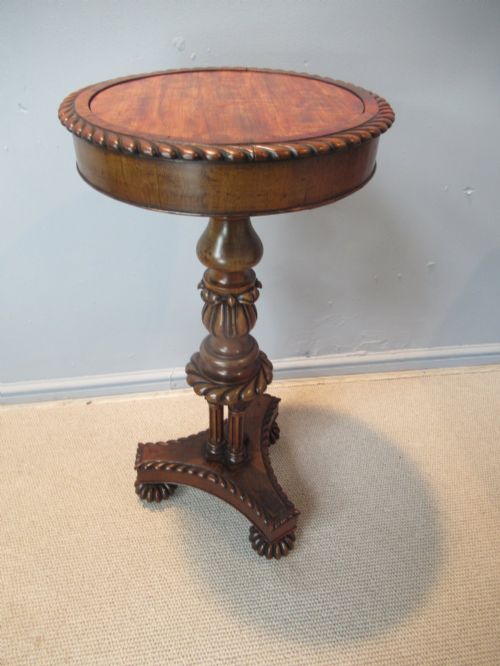
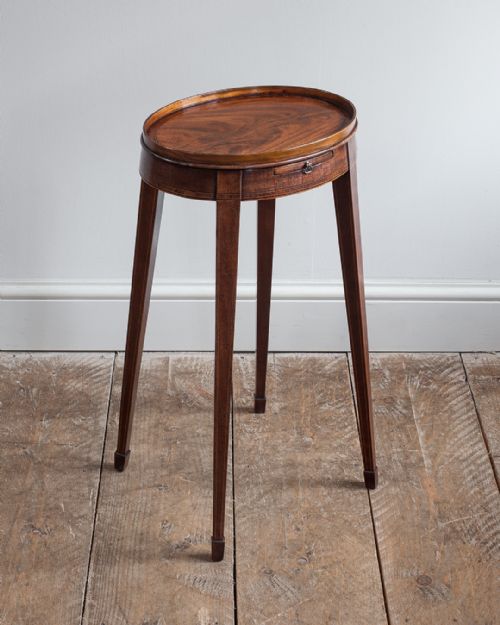
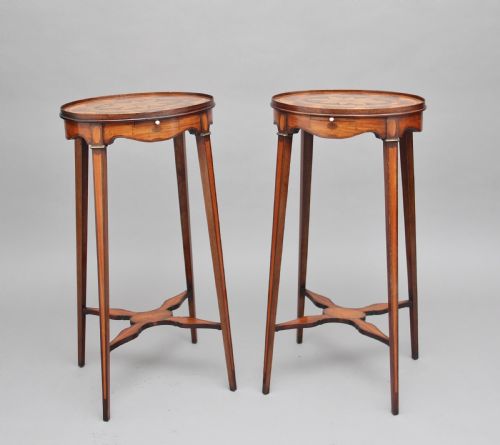
On this page, you will frequently encounter forms described as kettle stands, torcheres, and occasional or wine tables, fashioned with square, oval, or octagonal tops. They appear alongside related items like bedside cabinets, night stands, and plant stands in timber.
The regional and stylistic origins vary from strict eighteenth-century cabinet-making to Chinese Chippendale-style carving and Sheraton or Chippendale revivals. Their compact footprint makes them versatile display surfaces for modern rooms.
How they were made
The primary material across these pieces is mahogany, often selected for its dense grain and rich hue, occasionally accented with contrasting satinwood inlay or wood inlay. Cabinet-makers shaped these timbers into slender pedestals, delicate legs, and raised tray-tops designed to contain spills.
Construction techniques include precise joinery, fine carving seen in Chippendale-style examples, and decorative additions such as brass fittings or bone details. The interplay of solid timber framing and subtle inlay defines the physical presence of each stand.
Georgian Mahogany Urn Stand Retail Price Guide 2026
Typical asking prices for georgian mahogany urn stand among the pieces listed under this phrase on Sellingantiques today, from the lower quarter to the upper quarter. They describe what is for sale here now, not the wider market.
A few resilient stands survived centuries of tea service to double as nineteenth-century plant holders and twentieth-century lamp perches.
What varies in quality
Quality rests upon the crispness of the timber carving, the choice of mahogany grain, and the restraint or ambition of the inlay work. Pieces from the eighteenth century often display hand-carved detailing and proportion that distinguish them from later revivals.
The integrity of the pedestal base, the subtlety of edge moulding on the top, and the balance of the proportions dictate the visual standing of an individual piece. Finer examples maintain structural grace alongside decorative refinement.
The Georgian Mahogany Urn Stand Glossary
- Urn stand
- A small, tall table specifically designed to support a heavy tea urn or kettle, keeping boiling water off the main dining or tea table.
- Torchere
- A tall, slender stand or pedestal originally intended to hold a candle or lamp, frequently grouped with plant and urn stands in the evidence.
- Tray-top
- A tabletop edged with a raised moulding or gallery designed to prevent vessels from sliding off the surface.
- Satinwood
- A light-coloured, lustrous timber frequently utilised for contrasting stringing and geometric inlay on mahogany furniture.
- George III
- The period of British design spanning the long reign of King George III, known for refined classical proportions and fine cabinet-making.
Georgian Mahogany Urn Stand: Frequently Asked Questions
What was an urn stand used for?
An urn stand provided a steady, elevated surface for a heavy metal urn filled with hot water during tea service. This kept the heat and potential spills away from polished dining tables.
Over time, these versatile tables adapted to serve as lamp stands, plant holders, or general occasional tables in fashionable drawing rooms.
How do I tell an 18th-century stand from a revival piece?
Eighteenth-century pieces typically exhibit hand-cut joinery, mature timber patination, and period-specific carving techniques. Revival pieces from the Victorian or Edwardian eras often show more uniform machine-finished construction.
Examining the underside, the stability of the timber, and the style of the carving helps clarify the exact period of manufacture.
Are all urn stands square?
Not at all, as historical examples feature square, oval, and octagonal tops to suit different interior arrangements and vessel shapes. Octagonal and oval variants are common among surviving Georgian pieces.
The shape of the top often dictates how the legs and pedestal base are configured for stability.
How do I live with a mahogany urn stand?
These pieces fit easily into modern spaces as bedside tables, plant pedestals, or small lamp tables due to their compact footprints. Their slender proportions mean they occupy very little floor area while offering a distinct decorative accent.
Keep them away from direct heat sources and strong sunlight to protect the mahogany polish and prevent timber movement.