
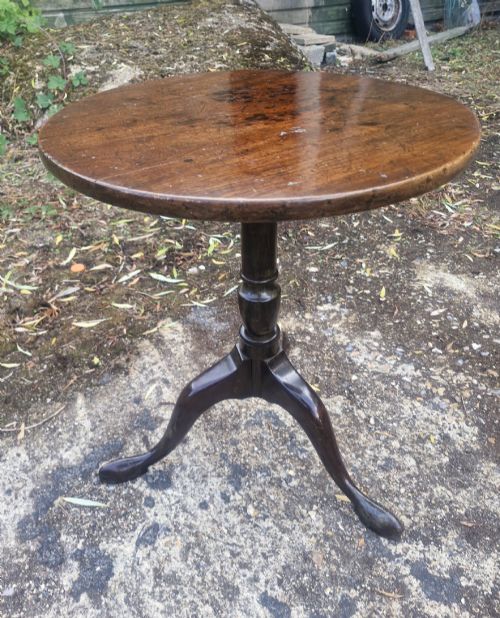
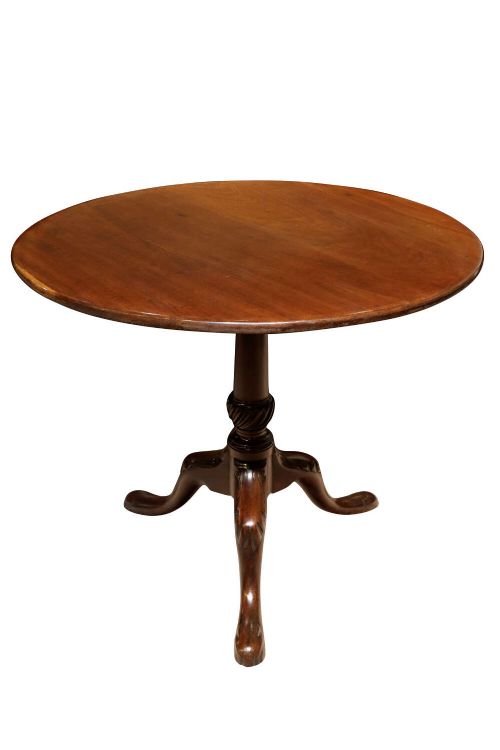
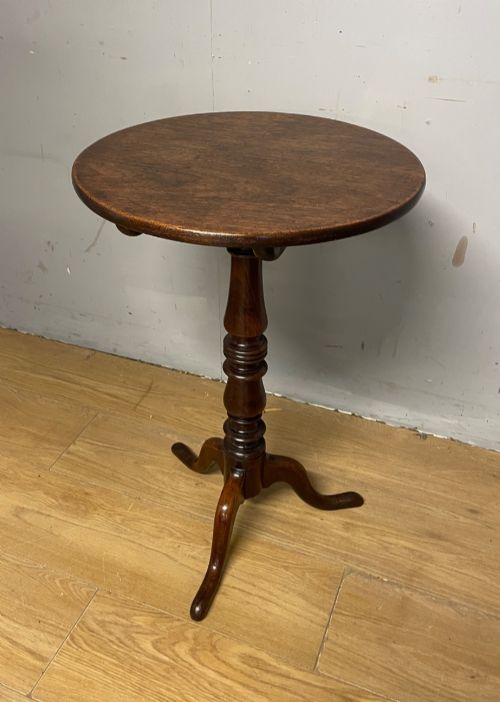
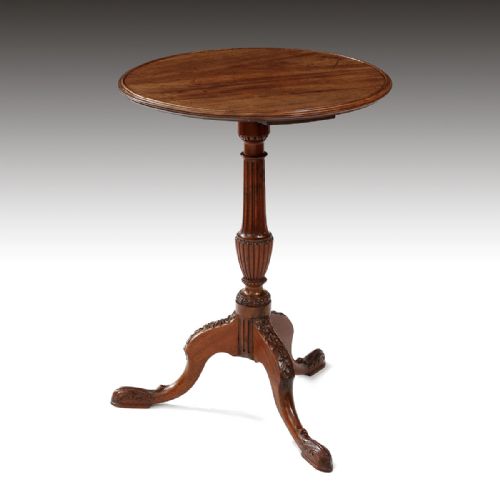
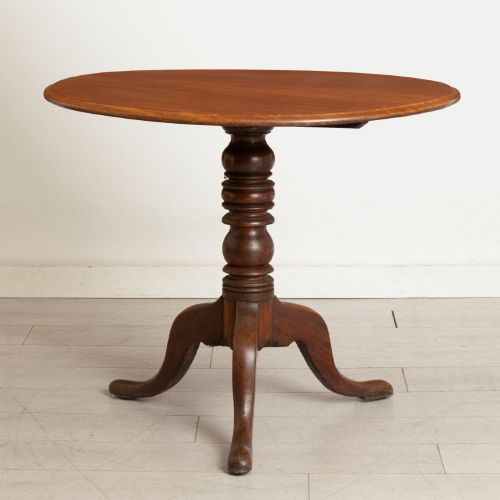
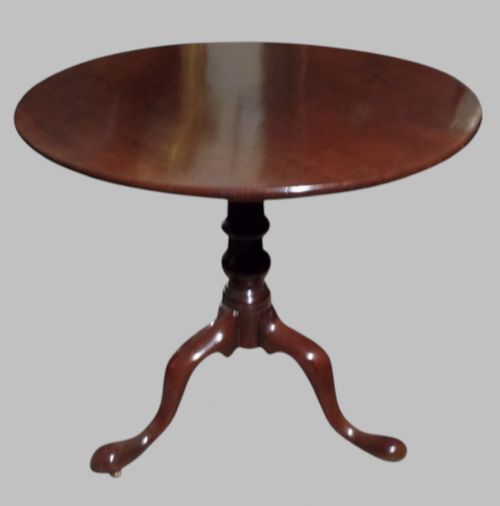
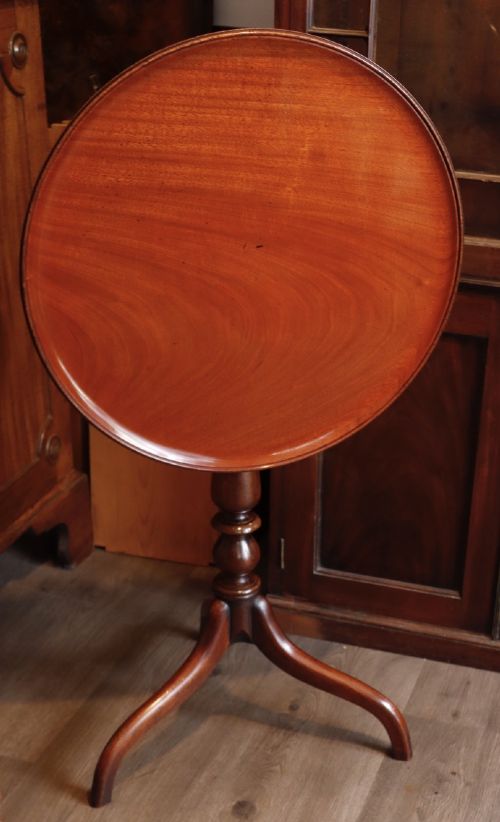
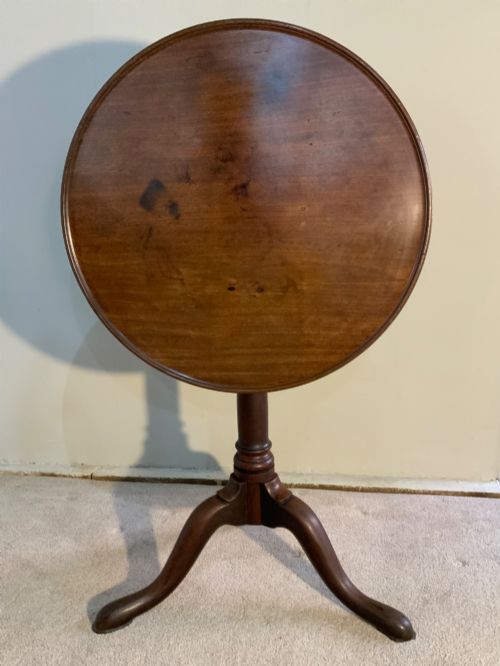
Georgian Mahogany Tilt Top
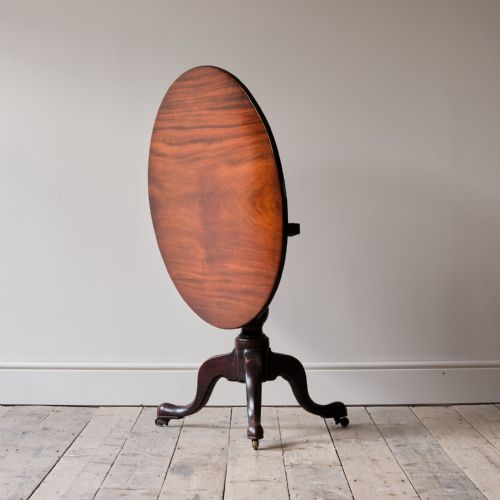
A georgian mahogany tilt top table offers a clever space-saving design that folds flat against the wall when not in use.
Georgian Mahogany Tilt Top
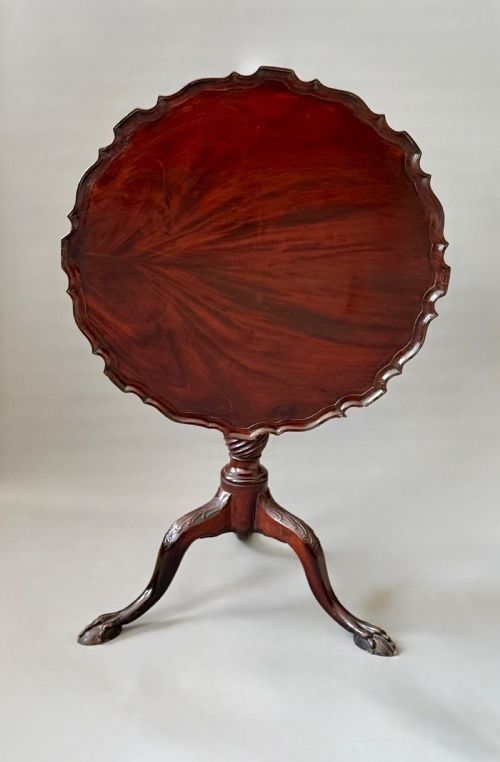
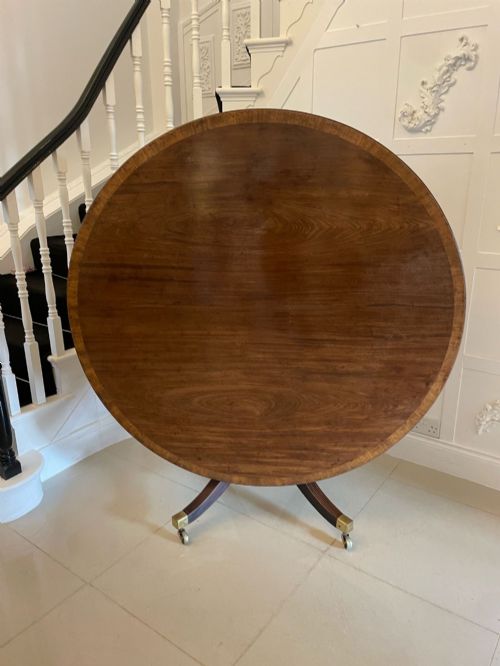
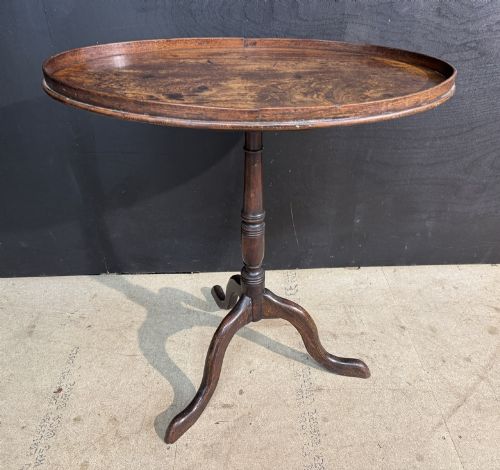
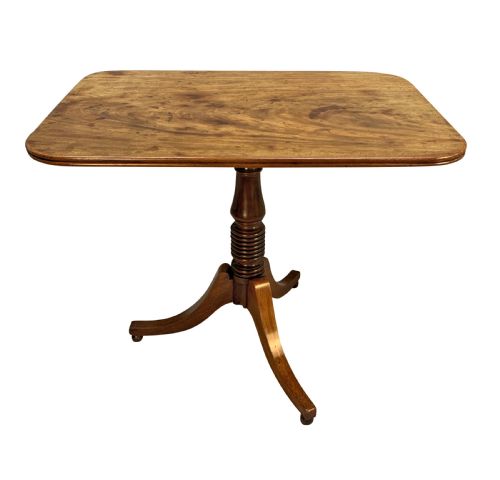
A georgian mahogany tilt top table spans multiple forms including wine tables, tea tables, breakfast tables, and occasional tables designed for domestic utility.
The pieces on this page originate primarily from the eighteenth century, the regency era, and the nineteenth century, bearing styles such as george iii and chippendale.
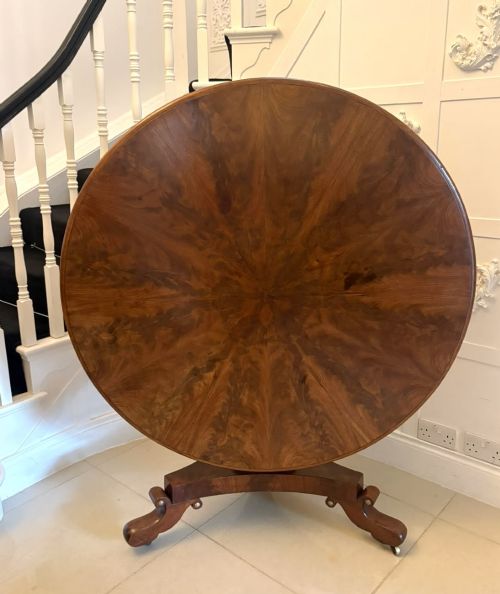
Buyers encounter circular, octagonal, and rectangular tops supported by central pedestals or tripod legs, often featuring mechanisms like birdcages for rotation and tipping.
Materials and Construction
Cabinet makers utilised solid mahogany, cuban mahogany, and flame mahogany veneer over sturdy timber frames to construct these tables.
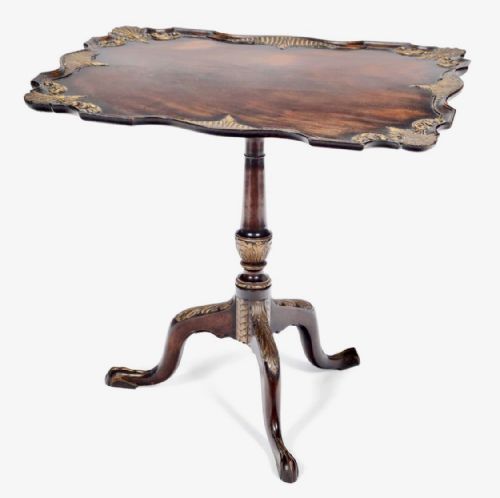
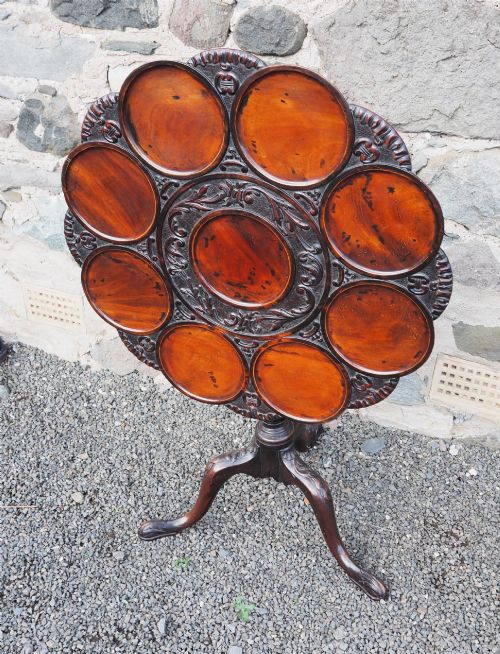
Decoration involved subtle additions such as boxwood inlay, brass fittings, parcel gilt accents, and carved edges including pie crust profiles.
Tripod bases and pedestals provide stability while allowing the top to pivot and lock into a vertical position through precise joinery.
Listings feature mahogany, walnut, and boxwood alongside brass hardware and parcel gilt accents.
Markers of Excellence
Quality rests upon the choice of timber, where figured mahogany and single plank tops demonstrate superior material selection by the maker.
Refinement shows in the crispness of the carving on tripod legs and the smooth mechanical operation of the birdcage or tilting pivot.
Proportion and the retention of a faded original patina separate standard utility tables from exceptional examples.
Gillow
The Georgian Mahogany Tilt Top Glossary
- Tilt-top table
- A table with a hinged top that pivots to a vertical position for storage.
- Birdcage
- A rotating wooden framework beneath the table top that allows the surface to both turn and tilt.
- Pie crust edge
- A raised, carved border shaped in undulating curves resembling pastry work on a baking dish.
- Tripod base
- A support structure featuring three legs radiating from a central pillar.
- Patina
- The surface sheen and colour acquired by wood through age, wear and polishing.
Georgian Mahogany Tilt Top: Frequently Asked Questions
What was a tilt top table used for?
These tables served flexible roles in period homes as tea tables, dining surfaces, or wine tables that moved easily around rooms.
When not in use, the top tipped vertically so the furniture could stand flat against a wall to preserve floor space.
How do I identify a George III table?
George III pieces date from the second half of the eighteenth century and often display characteristic mahogany timber, tripod legs, and fine carving.
Look for classical proportions and restrained decorative details such as boxwood stringing or subtle edge moulding.
What is a birdcage mechanism?
A birdcage is a small wooden assembly of vertical spindles and two circular plates placed beneath the table top.
This clever engineering allows the surface to revolve horizontally and tilt vertically without straining the central pillar.
How do I place one in a modern room?
Their compact footprints make these tables ideal as occasional side pieces next to seating or in corners.
Keeping the top tilted upright against a wall highlights the craftsmanship of the underside when the table is idle.