


Georgian Mahogany Swivel Mirror
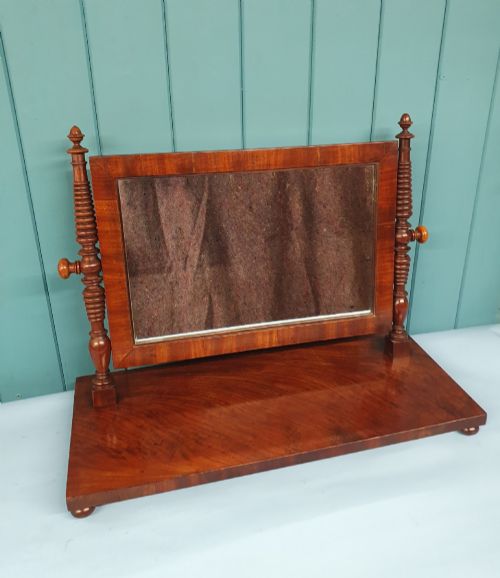
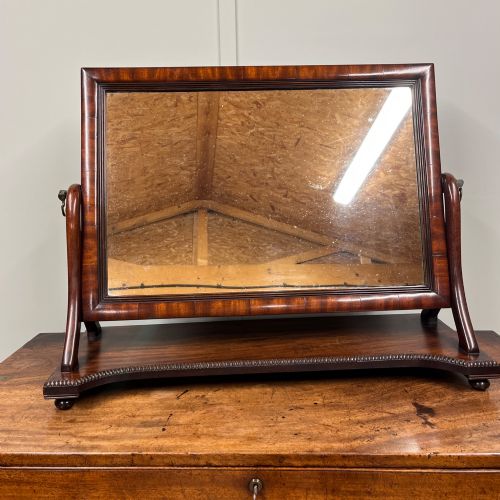
A georgian mahogany swivel mirror sits on a chest or dressing table, offering an adjustable reflection framed in rich timber.
Georgian Mahogany Swivel Mirror
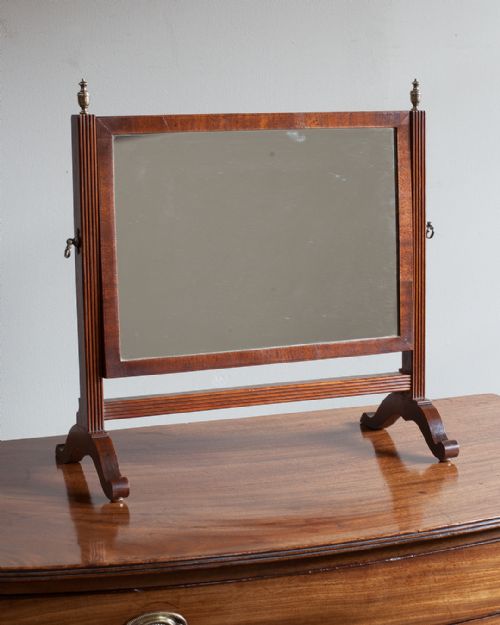
A georgian mahogany swivel mirror is a portable dressing glass designed to tilt on vertical pivots between upright supports. These pieces range from compact tabletop versions to large freestanding cheval glasses.
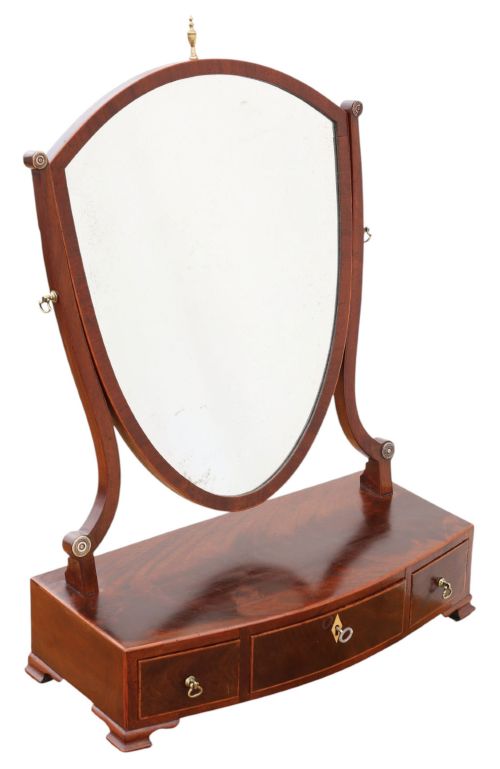
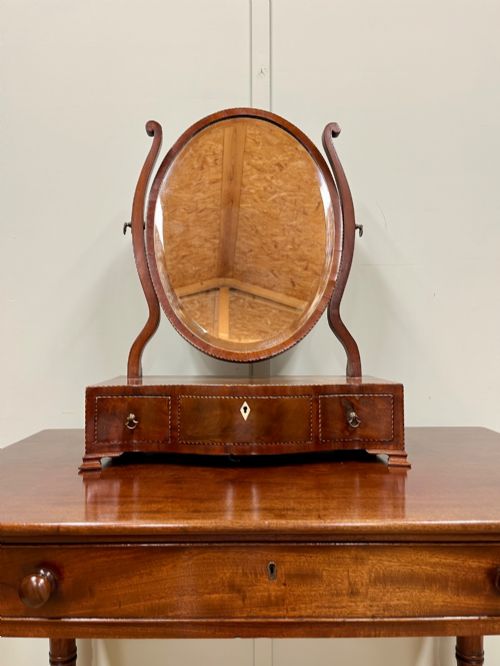
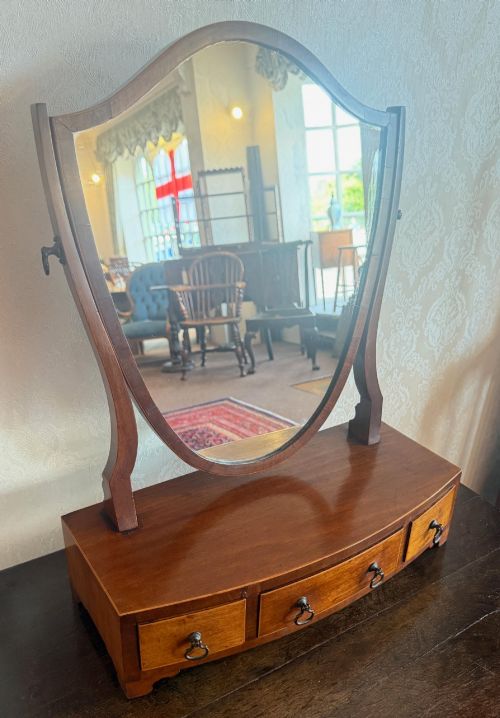
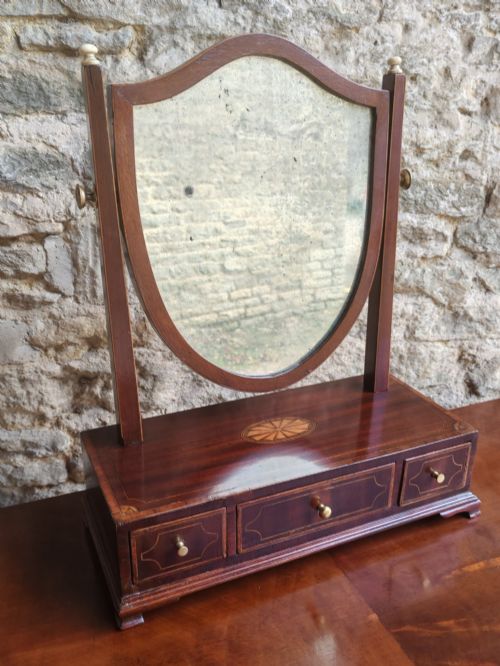
The selections on this page span the eighteenth and nineteenth centuries, taking forms such as shield, oval, and bowfront toilet mirrors. Makers constructed them to sit securely upon matching tables or floor bases.
Most examples function as dressing table or toilet mirrors with small drawer bases, though grander cheval formats appear in full length. Buyers encounter pieces from the Georgian, Regency, and William IV eras.
How They Were Made
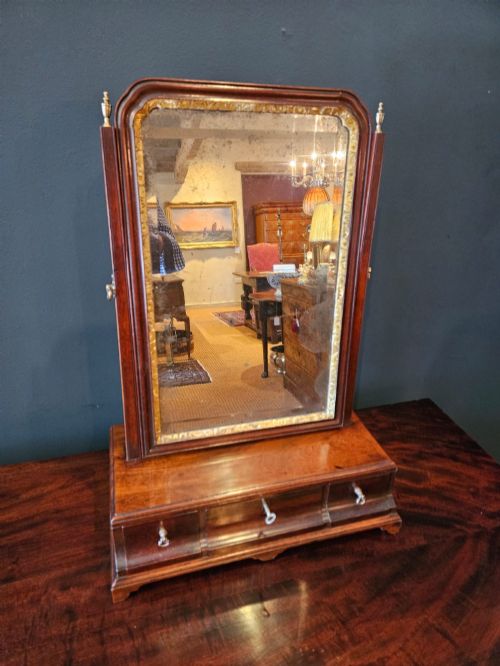
Joiners built the frames and base boxes primarily from solid mahogany, frequently embellishing surfaces with fine wood inlay, ebony stringing, or parcel-gilt details. Glass plates were fitted into adjustable swivel frames supported by upright arms.
Makers integrated brass hardware such as pivoting screw caps, decorative finials, sabots, and castors on larger floor-standing cheval models. Base boxes often incorporated small storage drawers constructed with traditional dovetail joints.
Bone escutcheons wink from tiny drawers designed for vanishing hairpins.
What Varies in Quality
The refinement of the timber figure and the subtlety of the carved or inlaid details dictate the standing of a piece. Finer workshops employed dense, well-figured mahogany and executed precise serpentine or bowfront shapes.
Original mirror plates, intact brass pivot hardware, and secondary woods consistent with the period elevate an example. Structural integrity in the upright supports and smooth action in the swivel mechanism distinguish superior craftsmanship.
Gillows
The Georgian Mahogany Swivel Mirror Glossary
- Cheval mirror
- A full-length freestanding swivel glass supported by four legs or a substantial floor frame. This large format allows a person to view their entire outfit.
- Toilet mirror
- A smaller tabletop dressing glass mounted on a box base containing drawers. These pieces sat atop chests of drawers or dedicated dressing tables.
- Shield mirror
- A dressing glass shaped like a heraldic shield, popular during the eighteenth century. The curved crest added a lighter decorative silhouette.
- Bowfront
- A convex curved front contour seen on the base boxes of certain dressing mirrors. This shape softens the rectilinear lines of the furniture.
- Sabot
- A metal sleeve fitted over the foot of a furniture leg for protection and ornamentation. Makers typically cast these in brass to match pivot hardware.
Georgian Mahogany Swivel Mirror: Frequently Asked Questions
What is a swivel mirror?
A swivel mirror is an adjustable dressing glass mounted on pivots between two upright posts, allowing the user to tilt the angle of reflection.
These pieces were essential bedroom furniture items for grooming and styling during the Georgian and Regency periods.
How do I date a mirror?
Dating relies on examining the timber species, secondary woods, construction methods of the drawer boxes, and the profile of the frame. Regional styles and inlay techniques also provide clear indicators of the period.
Earlier eighteenth-century examples often feature fine scrolling supports and parcel-gilt accents, while later nineteenth-century pieces display heavier proportions.
Where should I place it?
These mirrors suit placement on top of a sturdy chest of drawers, a console, or a dedicated dressing table. Freestanding cheval versions stand directly on the floor in a bedroom or dressing room.
Ensure the surface is level and capable of supporting the weight of the solid mahogany frame and base.
What is a cheval mirror?
A cheval mirror is a tall, freestanding dressing glass that is large enough to show a full-length reflection. The frame pivots within a stable floor-standing frame rather than sitting on a table.
Designers in the Regency and later periods created these grand pieces with sabots and castors for ease of movement.