
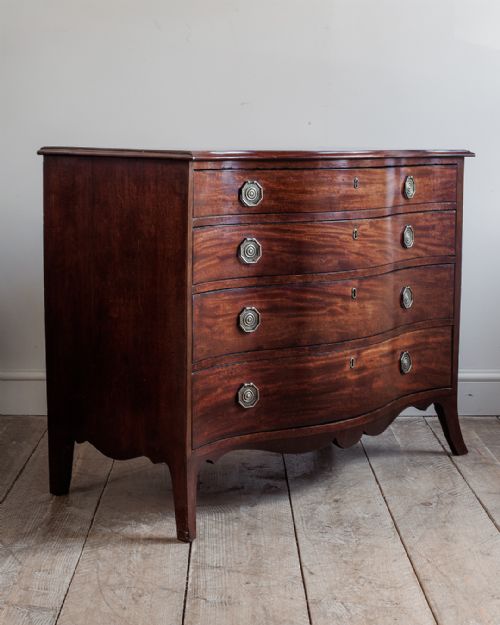
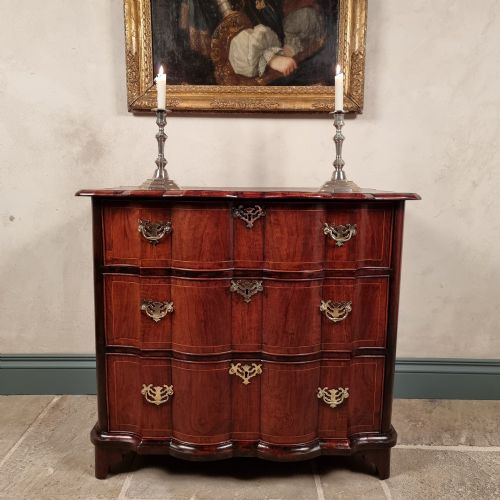
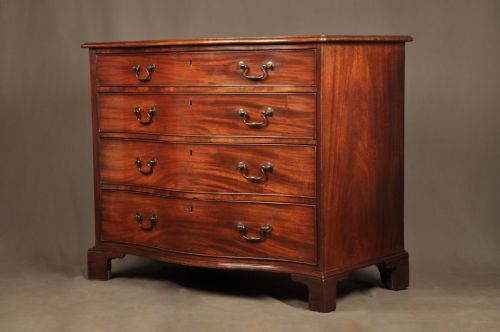

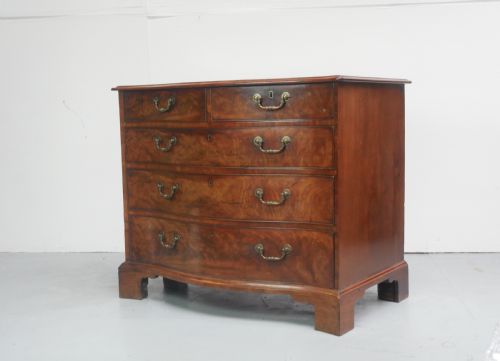

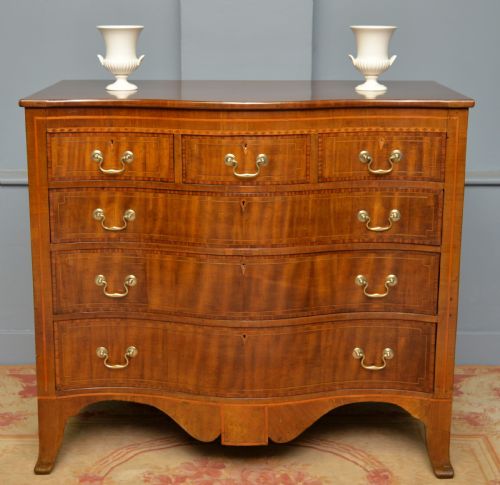
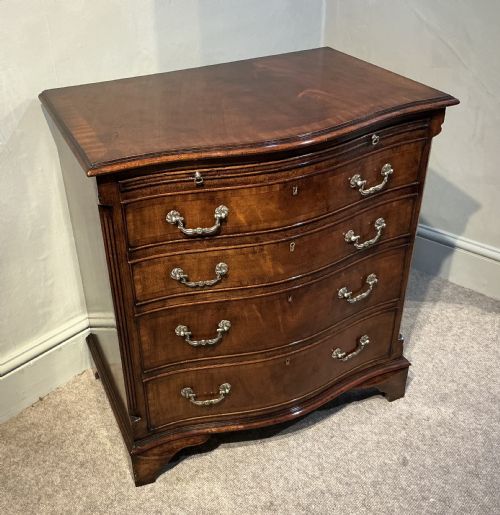


Georgian Mahogany Serpentine Bureau
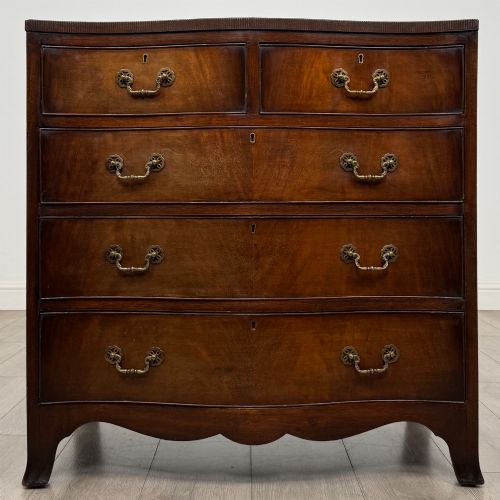
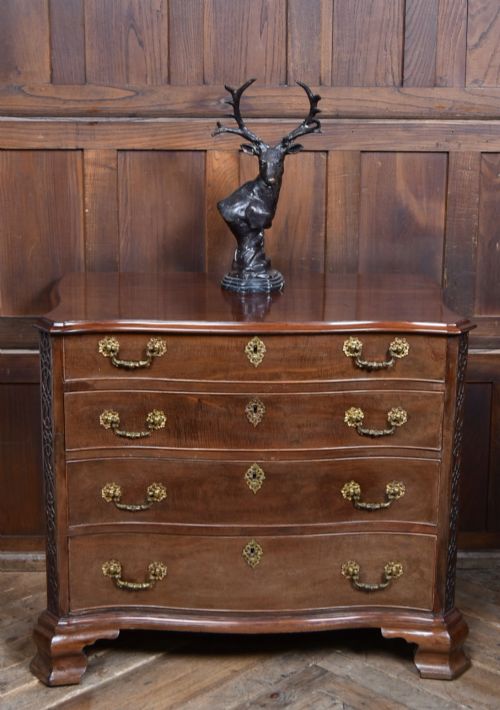
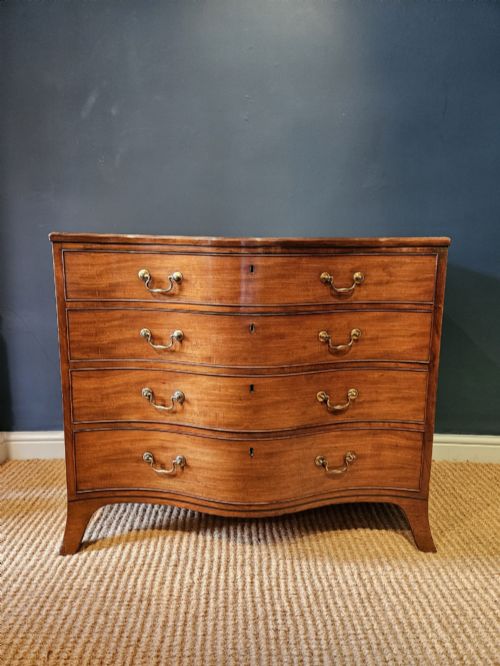
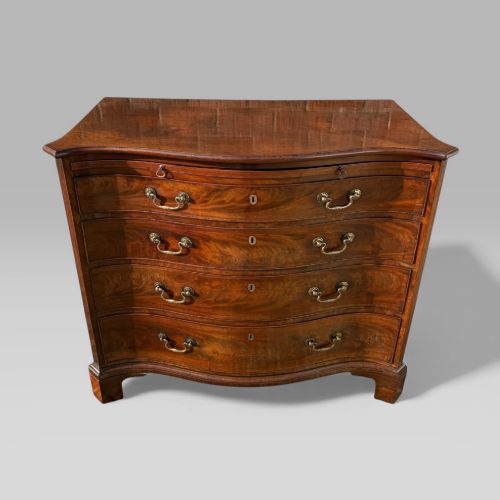
A georgian mahogany serpentine bureau brings together the undulating curves and rich timber tones characteristic of eighteenth-century cabinet making.
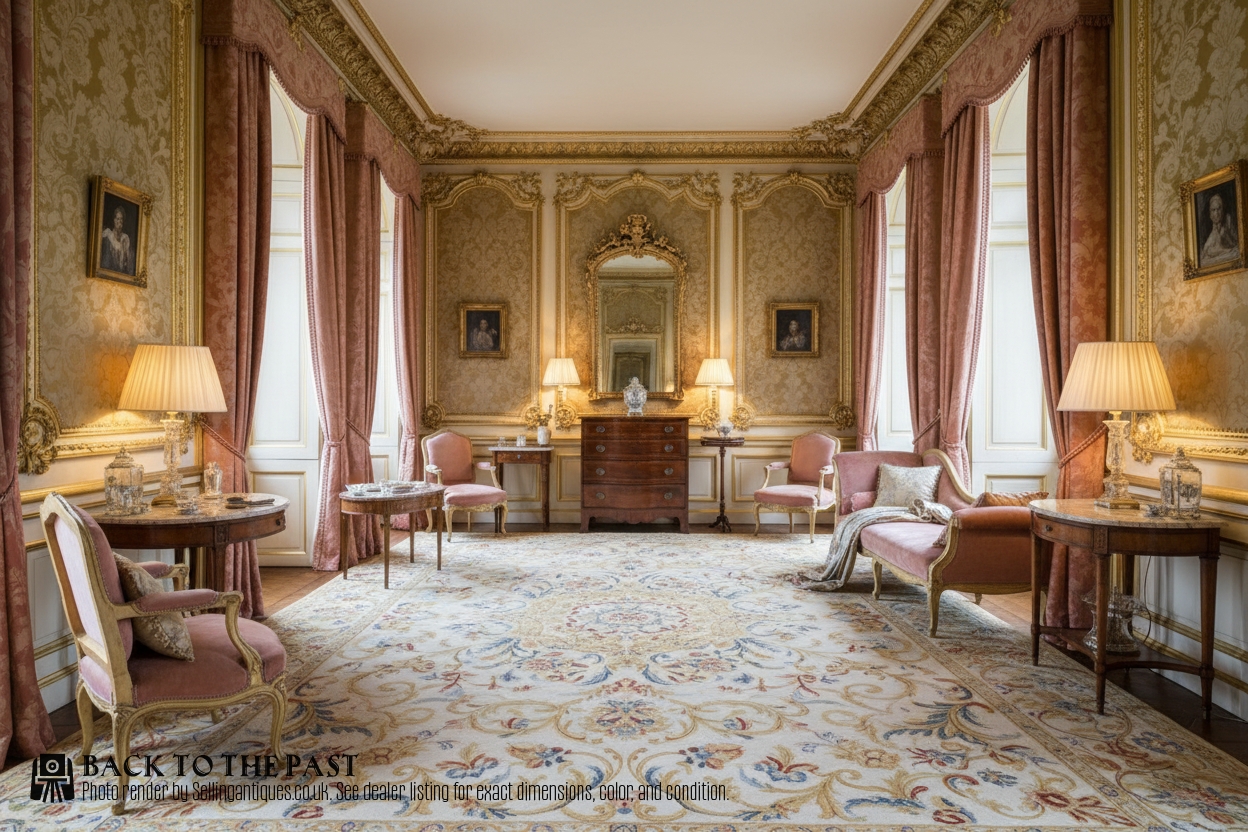
Georgian Mahogany Serpentine Bureau
The dominant material encountered is mahogany, frequently paired with secondary timbers such as oak and decorative stringing. Stylistic influences span George II, George III, and Sheraton periods, alongside Chippendale and Hepplewhite interpretations.
How they were made
Cabinet makers utilised solid and veneered mahogany over oak drawer linings, shaping the characteristic curved fronts with hand saws and planes. Boxwood inlay and satinwood details were integrated into specific panels to provide contrast against the deep grain of the primary timber.
Brass handles and escutcheons were fitted to drawer fronts, while secondary woods were employed for structural interior framing. Joinery relied on traditional dovetailed drawer construction to ensure stability along the curved carcase.
Listings span the eighteenth century through to revival periods in nineteen hundred, utilising mahogany, oak, and boxwood inlay.
What varies in quality
The degree of refinement in the timber figure and the precision of the serpentine curve determine the distinction between pieces. Figured grains such as fiddleback mahogany and intricate boxwood inlay indicate higher ambition in the original workshop.
Proportion and the handling of secondary details, such as pull-out writing slides or fitted interior compartments, separate standard production from more accomplished examples.
The Georgian Mahogany Serpentine Bureau Glossary
- Serpentine front
- A furniture front characterised by a convex centre flanked by concave curves, creating an undulating silhouette.
- Secretaire bookcase
- A tall cabinet combining a shelved upper section with a fitted writing drawer or drop-front desk below.
- Fiddleback mahogany
- A highly figured variety of mahogany exhibiting undulating grain patterns resembling the back of a violin.
- Kneehole desk
- A compact desk or dressing chest featuring a central recessed space for the legs flanked by banks of drawers.
- Boxwood inlay
- Narrow strips of pale boxwood inserted into grooves in the primary wood surface to create geometric or linear decoration.
Georgian Mahogany Serpentine Bureau: Frequently Asked Questions
How do I spot a George III serpentine chest?
Examine the timber selection and construction methods used within the drawers. Eighteenth-century pieces generally utilise oak secondary woods alongside hand-cut dovetails.
The undulating front should display a continuous flowing line rather than an abrupt transition between the convex centre and concave wings.
What is a writing slide?
A pull-out board positioned immediately above the top drawer or beneath the main surface. It provided an auxiliary writing space without requiring a dedicated desk.
Such additions are frequently integrated into compact chests designed for domestic bedchambers.
Are revival pieces well made?
Revival items produced around nineteen hundred often adopted traditional joinery techniques and quality mahogany timbers. Makers during this period frequently emulated eighteenth-century proportions.
Examining the interior linings and blockings helps differentiate these later interpretations from original pieces.
How should I clean mahogany furniture?
Apply traditional beeswax sparingly with a soft cloth to nourish the timber grain. Avoid modern silicon-based polishes that build up sticky residues over time.
Maintain stable humidity levels in the room to prevent timber movement across the curved drawer fronts.