


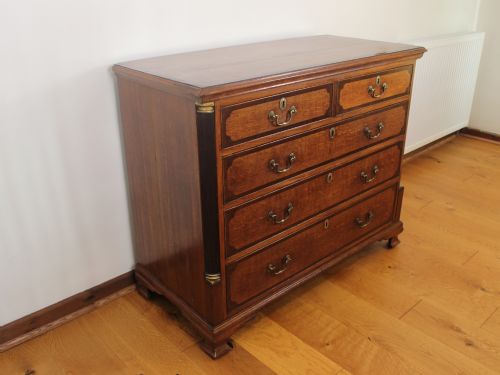
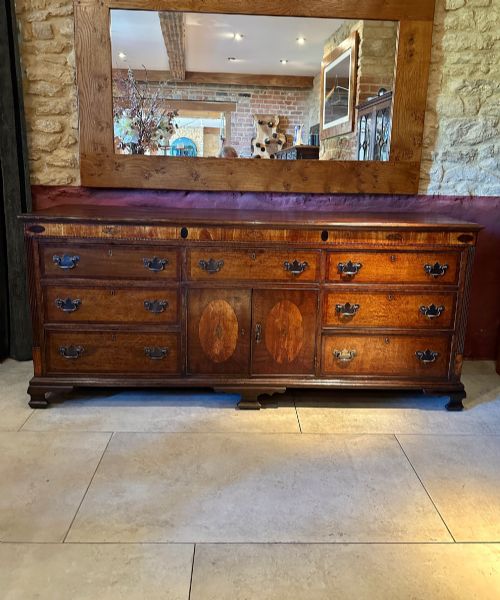
Crossbanded Mahogany Drawers
Crossbanded mahogany drawers combine rich timber and contrasting borders, originating primarily in Georgian and Regency workshops to provide structured storage with decorative precision.
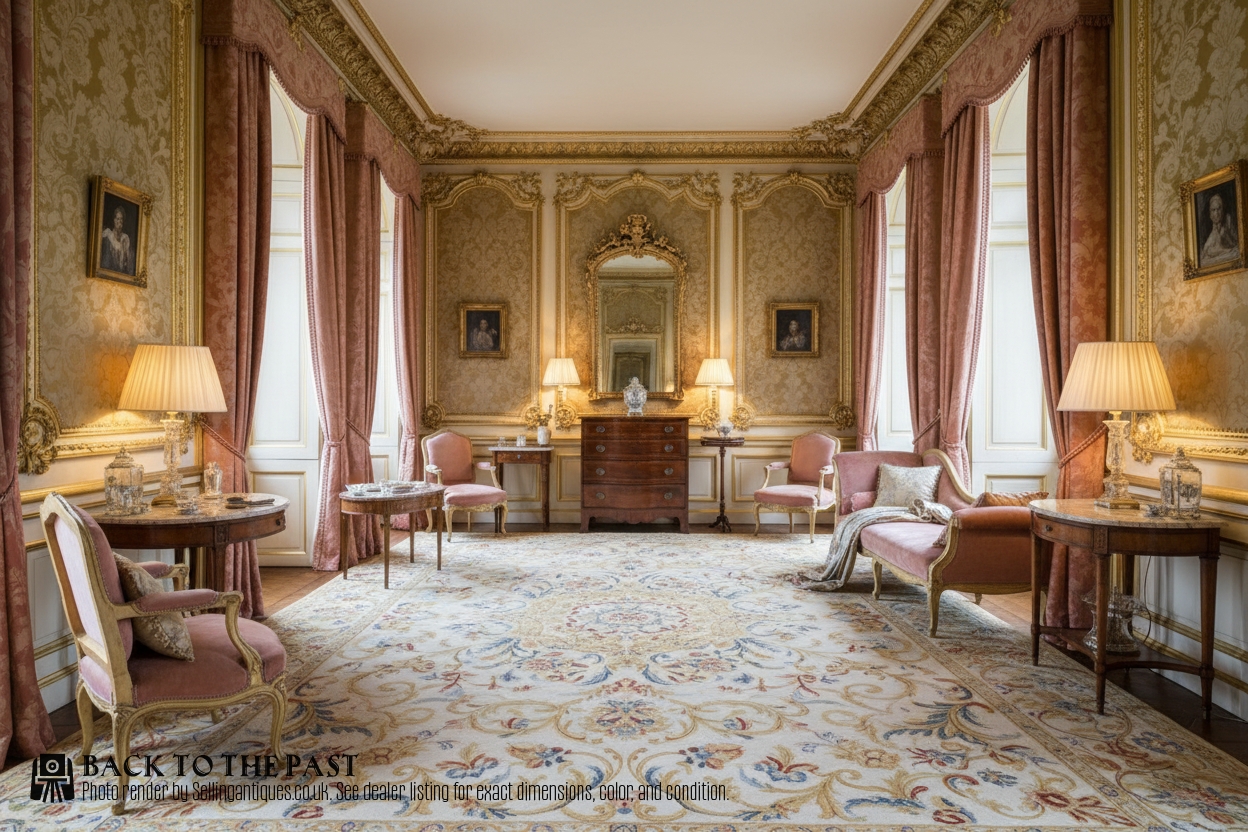
Crossbanded Mahogany Drawers
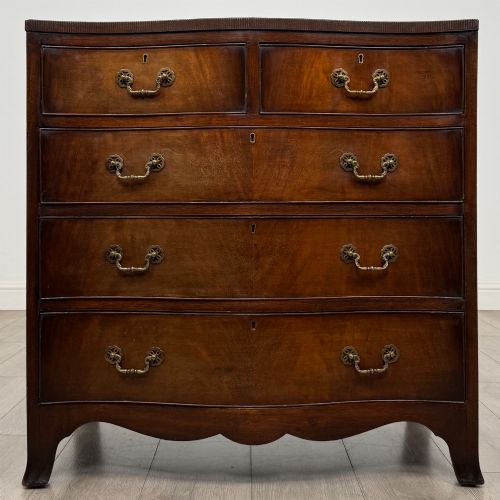
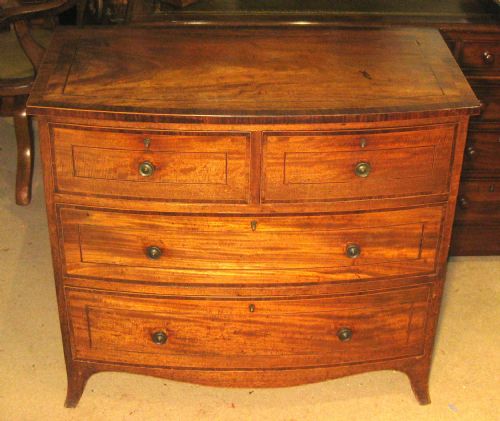
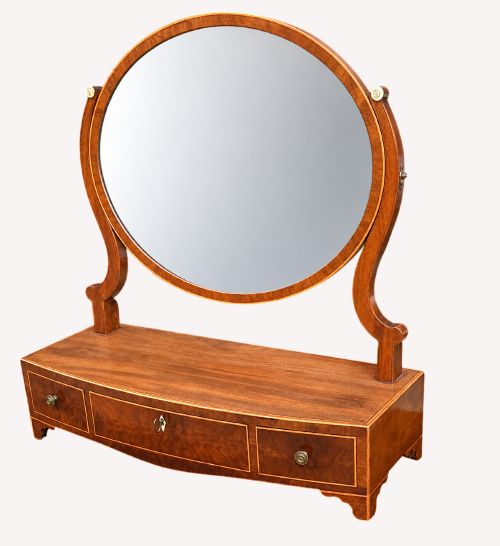
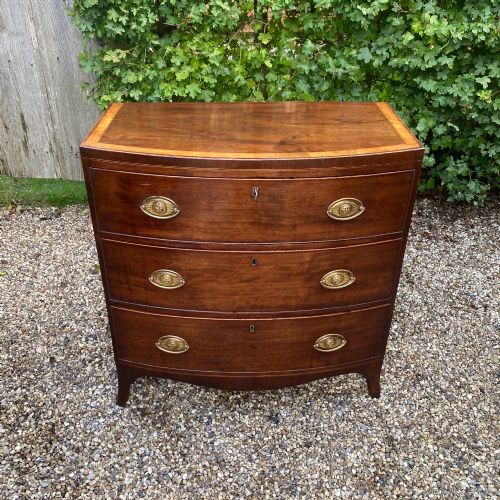
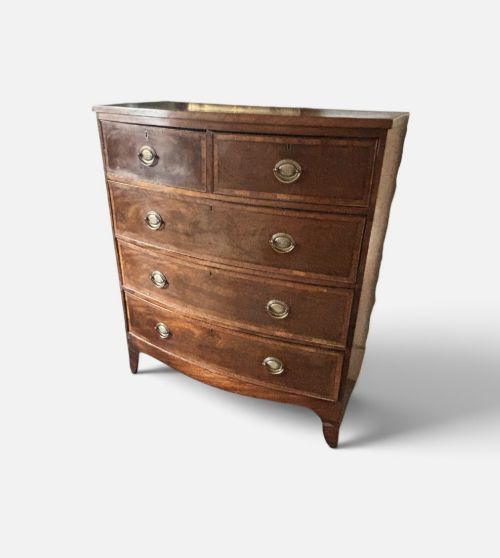
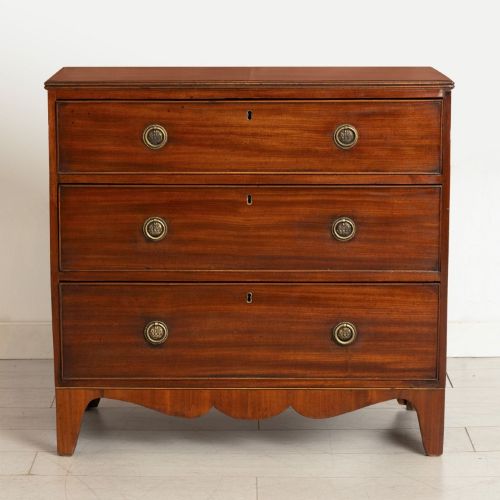
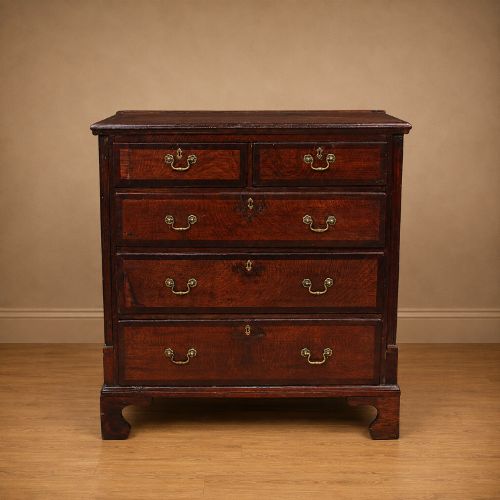
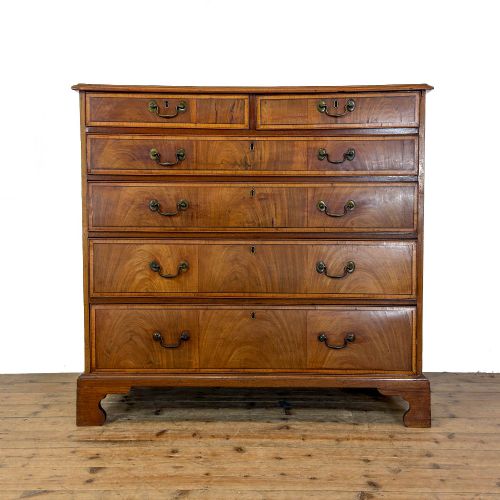
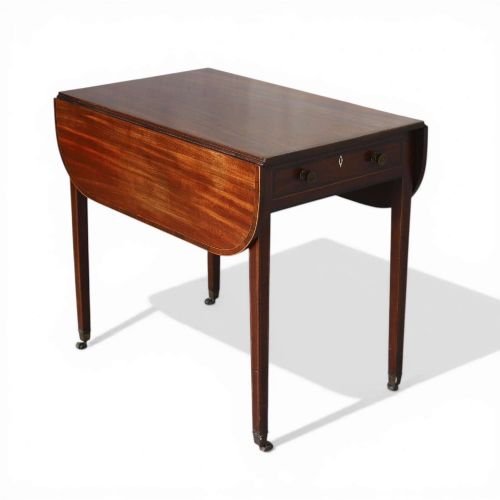
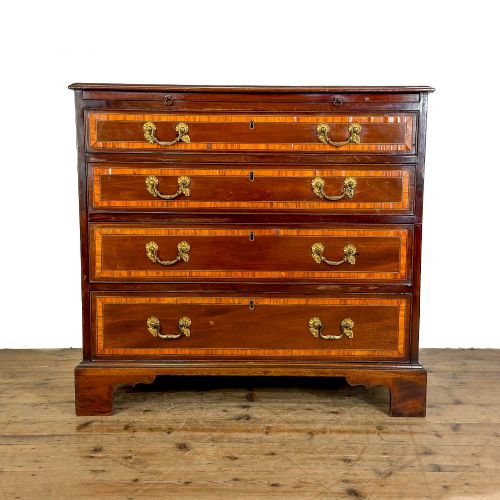
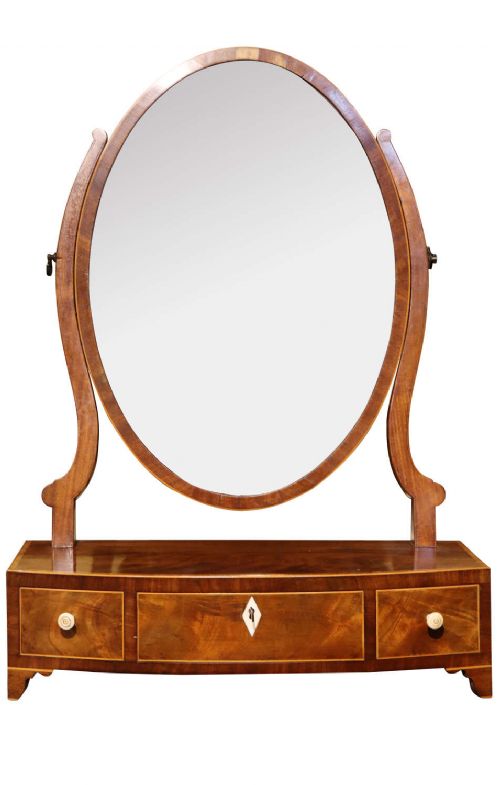
When buyers search for crossbanded mahogany drawers, they encounter case pieces defined by timber borders running perpendicular to the grain of the primary surface. The pieces appearing most frequently across these records span the Georgian, Regency, and Edwardian periods, taking the form of chests of drawers alongside occasional sofa tables and dressing table mirrors.
The dominant survival from these eras is the bow front or straight front chest, often combining a rich mahogany carcase with lighter contrasting crossbanding in satinwood, boxwood, or rosewood. These items were built for domestic storage and display, utilising sturdy oak for internal drawer linings while presenting refined timber veneers to the principal rooms of a house.
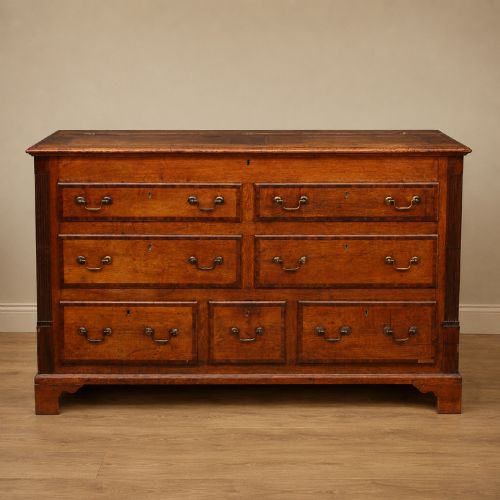
Beyond standard chests, the records encompass specialised forms such as Lancashire mule chests, bachelor's chests, and bureau desks incorporating the same characteristic border treatment. Each format relies on timber selection to establish its visual weight, ranging from golden early Georgian surfaces to deeply figured Victorian grains.
How they were made
Cabinet makers constructed these carcases using solid mahogany or applied mahogany veneers over secondary timbers like oak, arranging the grain to achieve stability and visual depth. The defining crossbanding technique involved applying narrow strips of veneer where the grain direction ran across the width of the strip rather than along its length, framing the top surface or drawer fronts.
Inlay work frequently accompanied this border technique, utilising boxwood and satinwood lines to divide the primary mahogany field from the outer crossbanded margin. Brass hardware, including drop handles and escutcheons, was pinned directly through the drawer fronts, while internal components relied on hand-cut dovetail joints.
Listings feature mahogany, satinwood, oak, and rosewood timbers across Georgian, Regency, and Edwardian periods.
What varies in quality
The degree of refinement in crossbanded mahogany drawers depends on the selection of timber figures and the precision of the veneer work at the corners and mitres. Pieces originating from the George III and Regency periods often demonstrate greater crispness in the integration of secondary woods like satinwood or rosewood.
Structural integrity is dictated by the thickness of the mahogany veneers and the preservation of original secondary timbers within the drawer linings. Finer examples maintain synchronous fading across the primary surfaces and the applied borders, indicating consistent exposure and uncompromised materials.
Whytock and Reid·Willmington and Cope
The Crossbanded Mahogany Drawers Glossary
- Crossbanding
- A decorative border technique where strips of veneer are laid with the grain running perpendicular to the edge of the board. This method creates a distinct visual frame around tabletops or drawer fronts.
- Bow front
- A convex curved cabinet front popular during the Georgian and Regency eras. This shape softens the profile of large storage pieces while showcasing figured mahogany veneers.
- Satinwood
- A durable, lustrous timber native to India and Ceylon, utilised widely for contrasting inlay and crossbanding. Its pale golden yellow tone provides a sharp visual boundary against darker mahogany.
- Mule chest
- A storage chest featuring one or more drawers at the base beneath a hinged trunk compartment. These hybrid pieces frequently combine oak carcases with mahogany crossbanding.
- Dovetail
- A traditional interlocking joint used to secure drawer sides to drawer fronts and backs. Hand-cut variations indicate earlier periods of manufacture before industrial machinery standardisation.
Crossbanded Mahogany Drawers: Frequently Asked Questions
What is crossbanding on antique furniture?
Crossbanding involves applying a border of veneer where the wood grain runs across the strip rather than along its length. It frames the primary panel of a drawer front or table top.
Cabinet makers used this technique to add geometric definition and visual contrast using alternative timbers like satinwood or rosewood.
How do I date a mahogany chest?
Dating relies on examining construction methods, timber choice, and hardware styles across periods like the Georgian era or the Edwardian revival. Early pieces often feature hand-cut dovetails and solid timber carcases.
Secondary woods inside the drawers, such as oak or pine, also help determine the likely decade of workshop production.
Were these drawers used in bedrooms?
Chests of drawers served primarily in private chambers and dressing rooms for storing garments and personal linens. Smaller configurations functioned as bachelor chests with writing compartments.
Their finished backs and refined surfaces occasionally allowed them to sit in parlours or hallways depending on the household layout.