

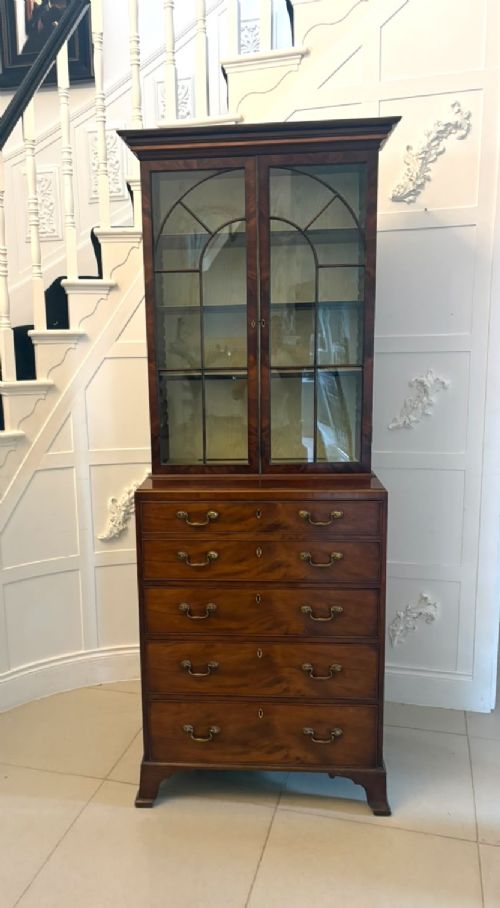
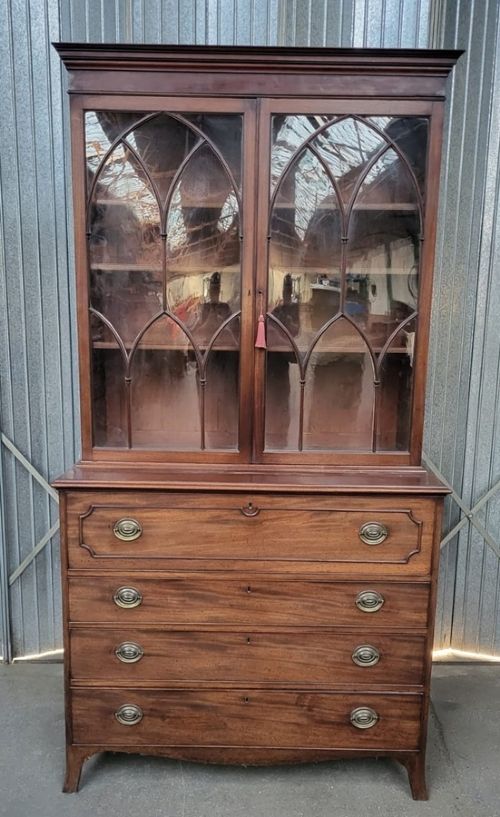
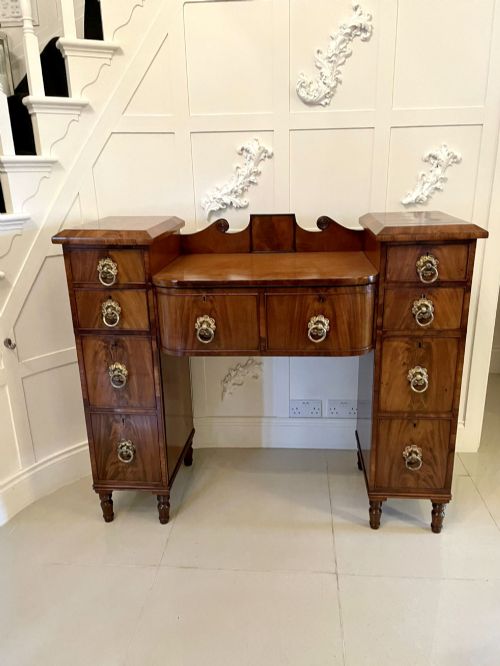
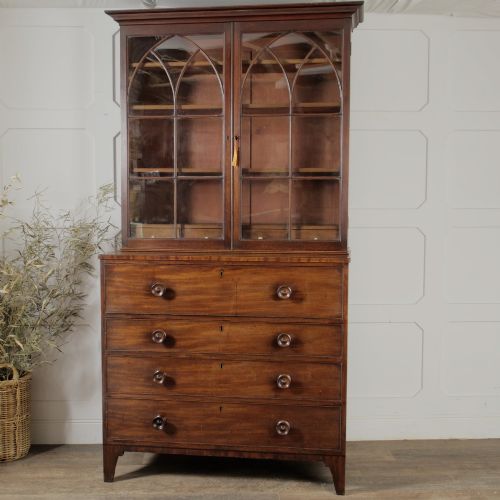

Georgian Mahogany Secretaire Chest
A georgian mahogany secretaire chest combines fine cabinet-making with a concealed writing drawer, offering period elegance alongside practical function for the home.
Georgian Mahogany Secretaire Chest
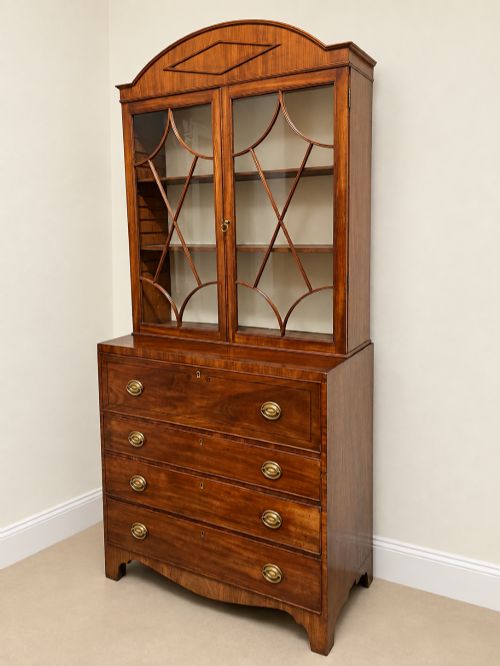
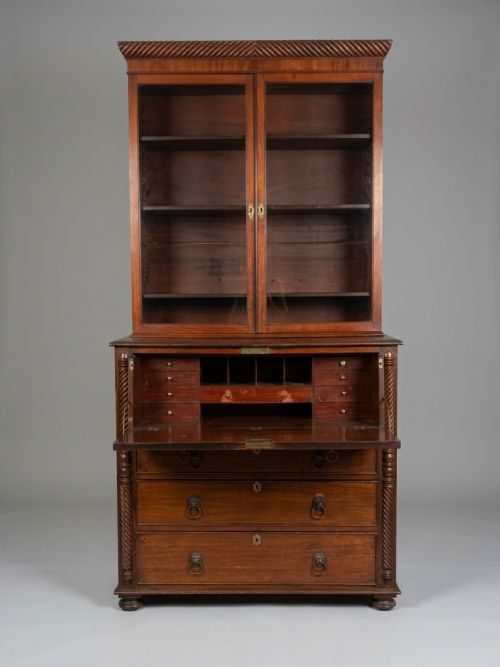
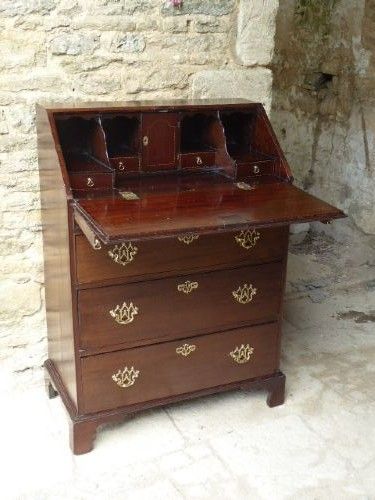
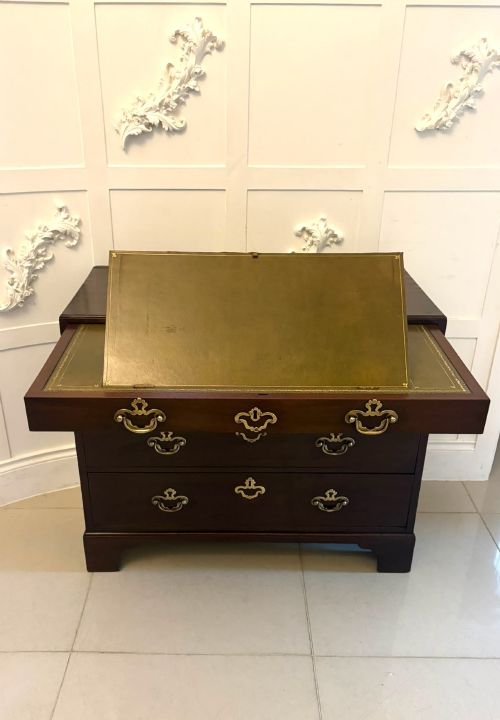
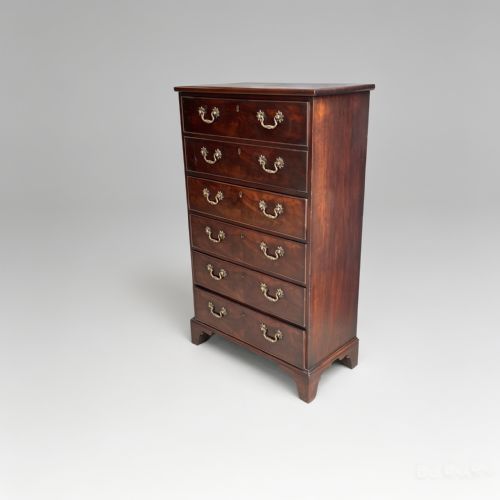
A georgian mahogany secretaire chest is a dual-purpose piece designed to serve both as a standard storage chest of drawers and a compact writing desk. The uppermost drawer pulls forward and drops down to reveal a fitted interior complete with small pigeonholes, tiny drawers, and often a baize or leather writing surface.
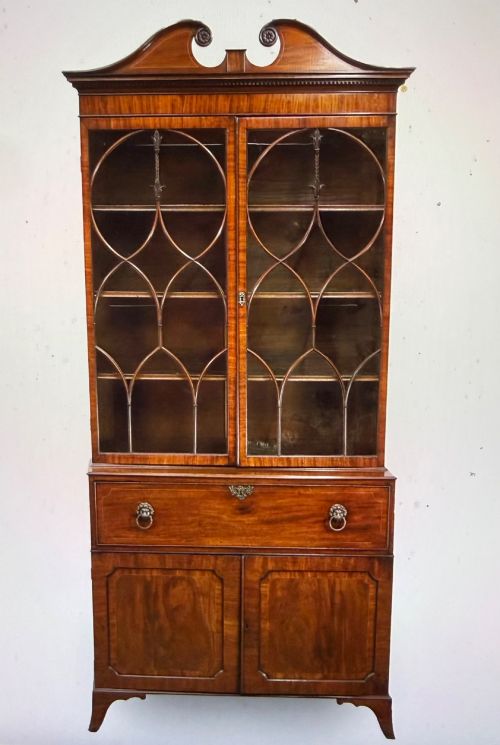
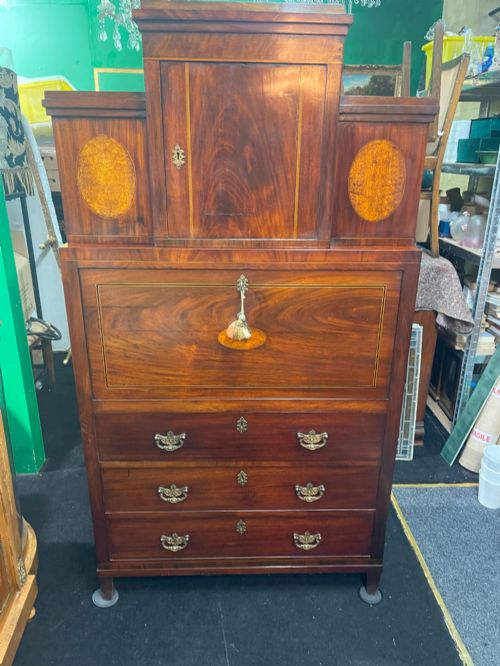
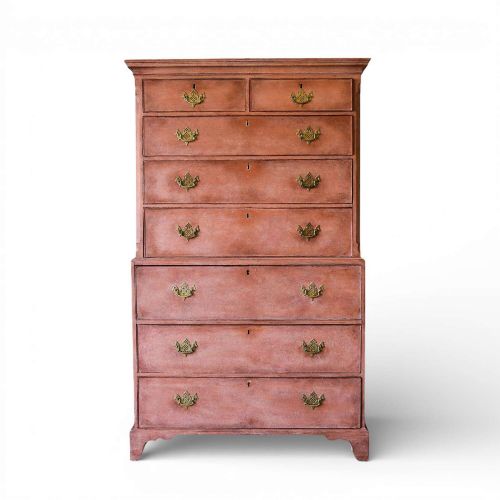
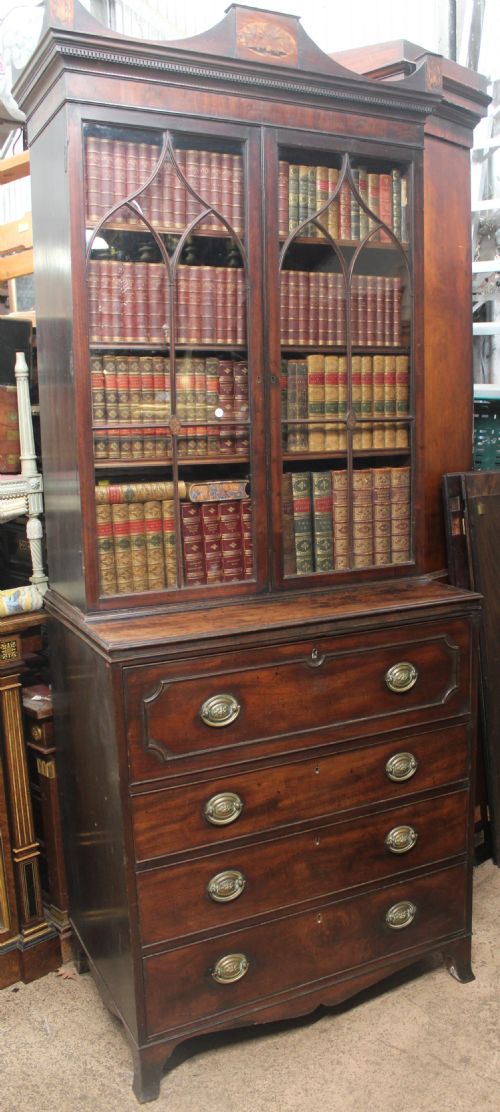
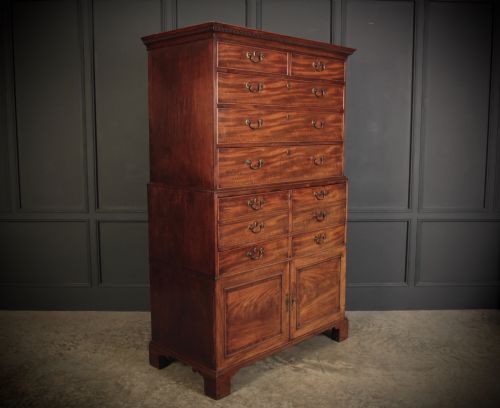
The pieces on this page span the Georgian, Regency, and nineteenth-century periods, taking various forms from straightforward chest of drawers to towering tallboys, press cupboards, and grand glazed bookcases. The most common iteration met here is the classic chest of drawers housing a fall-front writing drawer, accompanied frequently by tall chest-on-chest configurations.
Makers and workshops of the eighteenth and nineteenth centuries constructed these items from dense imported hardwoods, adding satinwood inlay or brass hardware in the styles of George II, George III, Sheraton, and Chippendale. They represent a sophisticated domestic evolution, keeping paperwork hidden away while maintaining a formal facade in a bedroom or parlour.
How They Were Made
Craftsmen built the primary carcase using sturdy native oak for drawer linings and internal framing, then faced the exterior with dense, figured mahogany boards that took a deep polish. Selected pieces incorporated contrasting satinwood inlay to highlight drawer borders and central panels.
The drop-front secretaire drawer required clever internal engineering, utilising quadrant brass hinges and clever wooden struts to support the weight of the writing flap without straining the frame. Secondary materials such as baize and leather lined the interior writing surface, while cast brass drop handles and escutcheons secured the exterior.
Georgian Mahogany Secretaire Chest Retail Price Guide 2026
Typical asking prices for georgian mahogany secretaire chest among the pieces listed under this phrase on Sellingantiques today, from the lower quarter to the upper quarter. They describe what is for sale here now, not the wider market.
Listings here feature mahogany, oak, brass, and glass alongside satinwood inlay.
What Varies in Quality
The visual appeal of a secretaire chest rests largely on the grain selection of the mahogany veneers, where book-matched timber yields a striking symmetrical pattern across the drawer fronts. Superior examples display meticulous attention to the internal fitments of the drop-front desk, featuring finely dovetailed miniature drawers and neat pigeonholes.
Proportion and scale dictate the success of the piece, with narrower proportions and crisp carved mouldings distinguishing finer cabinet work from utilitarian regional output. Original brass hardware, unblemished timber surfaces, and retaining the original glass in glazed bookcase variants elevate the stature of an individual item.
Gillows
The Georgian Mahogany Secretaire Chest Glossary
- Secretaire
- A piece of furniture incorporating a writing drawer with a drop-down front. It usually conceals internal compartments for stationery and inkwells.
- Tallboy
- A tall chest of drawers made in two stacked sections, often combining a lower chest with a smaller chest on top. This form maximises vertical storage space in a room.
- Astragal glazed
- A glass door divided into smaller panes by wooden glazing bars. These fine strips create a decorative grid pattern on bookcase cabinets.
- Baize
- A coarse woollen fabric resembling felt used to line writing surfaces. It provides a soft, flat pad for writing letters.
- Tallboy secretaire
- A tall chest of drawers featuring an integrated writing drawer within the upper section. It merges the height of a tallboy with the utility of a desk.
Georgian Mahogany Secretaire Chest: Frequently Asked Questions
How do I use the secretaire drawer?
Pull the top drawer forward using the handles and release the internal catches to let the front flap drop level. This reveals the pigeonholes and writing surface for everyday correspondence.
Push the flap back up and secure the catches before pushing the entire drawer shut when you finish writing.
Where should I place a tallboy?
A tallboy requires a stable wall position where its height and narrow footprint will not be subjected to tipping risks. Placing it in a bedroom or study makes practical use of its deep drawers.
Ensure adequate clearance in front of the piece if it incorporates a pull-out writing drawer at waist height.
How do I clean mahogany surfaces?
Dust the timber regularly with a soft, dry cloth to prevent grit from accumulating on the polished grain. Avoid silicone sprays and modern polishes that build up a hazy film over the wood.
Apply a traditional beeswax sparingly once or twice a year to maintain the natural lustre of the antique polish.
How do I tell Georgian from Regency?
Georgian pieces often feature restrained classical carving, bracket feet, and mahogany with a warm, rich figure. They date from the reigns of the Georges spanning the eighteenth century.
Regency examples tend toward bolder brass inlay, sabre feet, and heavier architectural forms inspired by classical antiquity from the early nineteenth century.