



Georgian Mahogany Planter
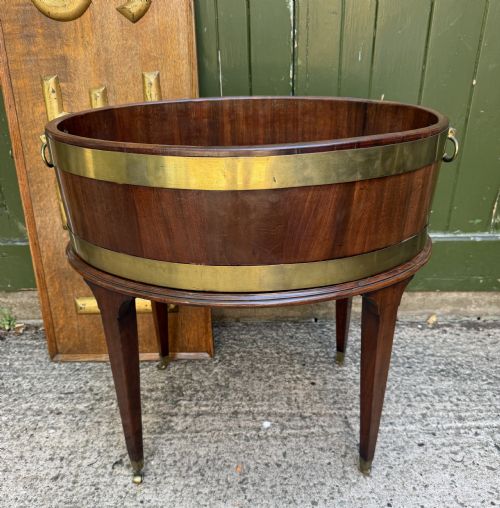
A georgian mahogany planter brings together rich timber and metal banding to hold plants or ice with traditional country house elegance.
Georgian Mahogany Planter
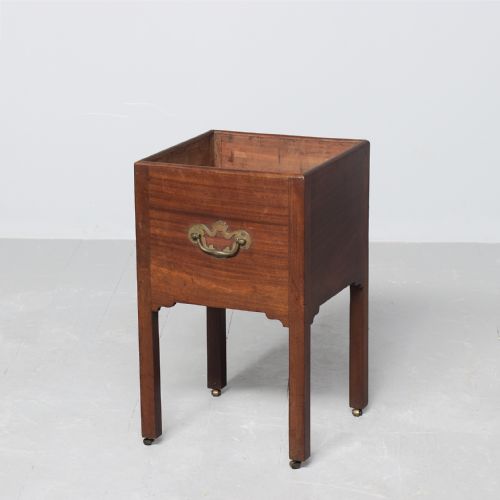
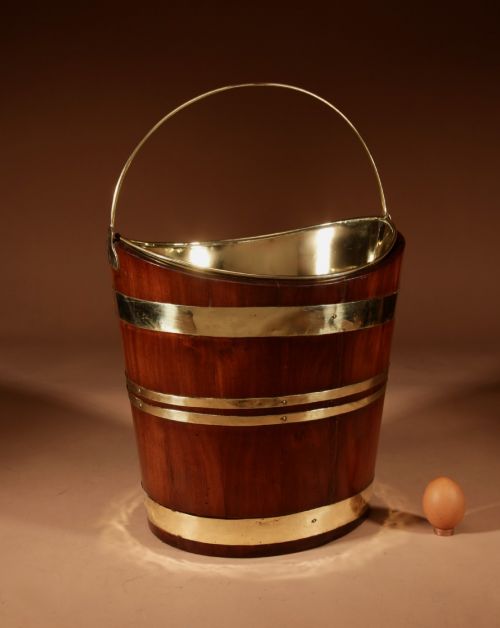
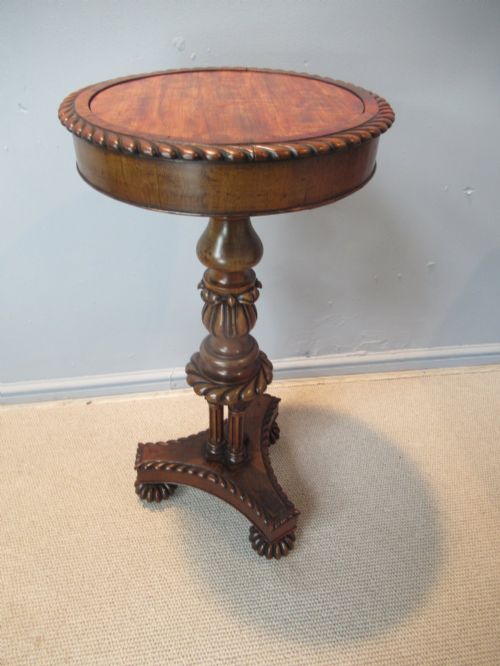
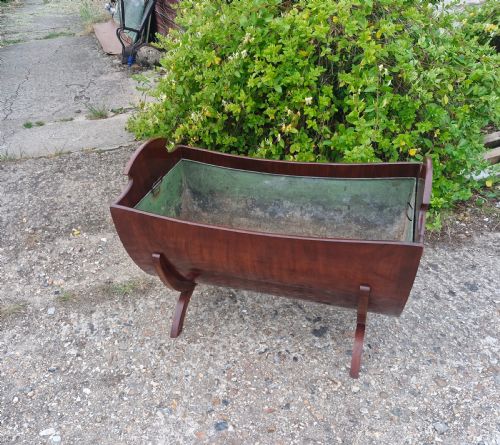
A georgian mahogany planter sits among a rich variety of coopered vessels, wine coolers, cellarettes, peat buckets, and tea stoves designed for domestic use. The pieces seen here span the eighteenth and nineteenth centuries, alongside later revivals and specific iterations such as boat-shaped vessels and wall-bound or freestanding plant stands.
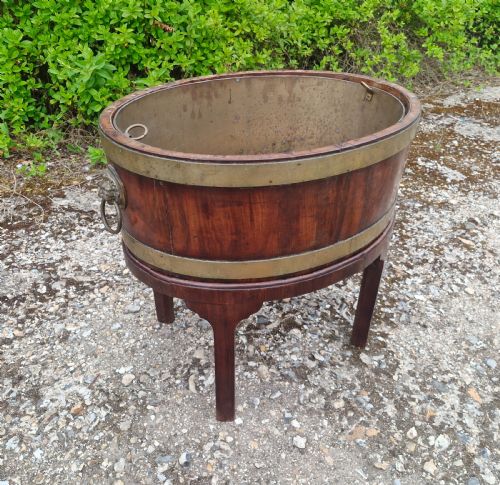
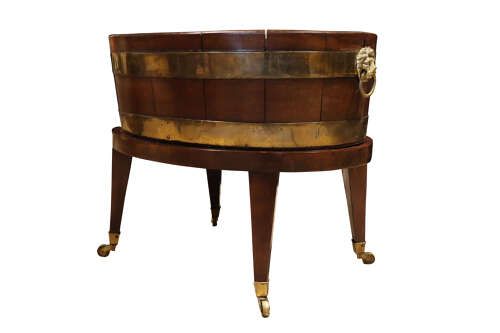
Buyers will most frequently encounter oval and round brass-bound vessels, many of which double as wine coolers or jardinières. These items often rest on dedicated stands or legs, while others take the form of country house log baskets, oyster buckets, and compact cellarettes.
Origins stretch from formal Georgian and Regency workshops to later nineteenth-century adaptations and twentieth-century revival pieces. Craftsmanship crosses British, Dutch, and Anglo-Indian influences, reflecting varied domestic requirements for indoor greenery, fuel storage, and entertaining.
Materials and Construction
Makers utilised solid mahogany, walnut, and satinwood, frequently employing coopered construction with tight vertical stave joints similar to barrel-making. This structural method provided the necessary strength to contain damp soil, heavy peat, or melting ice without splitting the timber.
Brass bands, hoops, and liners formed an essential part of the construction, holding the wooden staves firmly in place while protecting the interior from moisture. Additional materials such as zinc, metal, glazed ceramic, and iron appeared as linings or internal water reservoirs.
Detailing often included fine box tree stringing, inlay, and carved handles, while stands incorporated torchere supports, tripod bases, and dedicated feet. The combination of warm timber grain and polished metal highlights the practical yet decorative nature of each piece.
Materials recorded across the archive and current inventory include mahogany, walnut, satinwood, brass, zinc, iron, and glazed ceramic.
Standards of Execution
The fineness of the cooperage work and the crispness of any inlaid decoration distinguish exceptional examples from simpler utilitarian vessels. Tighter stave joints and heavier gauge brass bands indicate superior workshop practice.
Proportion and form play a major role in establishing the visual weight of a piece, particularly when paired with a matching stand or base. Well-balanced oval curves and restrained brass mounts carry greater presence than heavier, unrefined proportions.
The integrity of the timber grain and the survival of original interior linings influence the overall character. Pieces that retain their structural honesty without excessive timber replacement demonstrate better historical continuity.
The Georgian Mahogany Planter Glossary
- Coopered
- Constructed from curved wooden staves bound together with metal hoops, much like a barrel. This technique provided the watertight strength required for wine coolers and plant tubs.
- Cellarette
- A lockable container used for storing bottles of wine and spirits in the dining room. Many examples share identical coopered forms with planters and peat buckets.
- Peat Bucket
- A deep wooden bucket fitted with a metal liner, originally used to hold dried turf or peat for a fireplace or tea stove. Their generous proportions make them suitable for housing large indoor plants.
- Jardiniere
- A decorative container or stand designed to hold live plants or floral arrangements indoors. They appear in ceramic, metal, and banded timber.
- Torchere
- A tall, slender stand or pedestal originally designed to support a candlestick or lamp. Later examples frequently serve as elevated plant stands.
Georgian Mahogany Planter: Frequently Asked Questions
What is a georgian mahogany planter used for?
These vessels originally served multiple household functions, including cooling wine, holding peat for fires, or storing bottles as cellarettes. Today, collectors primarily utilise them as decorative planters or jardinières for large indoor foliage.
Their robust timber construction and waterproof liners make them well-suited for holding potted plants while adding traditional character to a room.
How do you tell a wine cooler from a planter?
Historical wine coolers and planters share nearly identical coopered construction, brass banding, and oval or round forms. Many pieces were designed to serve multiple purposes depending on domestic needs.
Original interior lead or metal linings, sometimes with internal partitions for bottles, typically point towards a wine cooling origin, whereas simpler waterproof inserts suggest plant use.
Are all these planters from the Georgian period?
The selection includes genuine eighteenth and early nineteenth-century pieces alongside later Victorian examples and twentieth-century revival items. Craftsmanship styles span original George III and Regency designs through to later interpretations.
Examining the timber ageing, construction joints, and brass mounting techniques helps determine whether a piece dates to the Georgian era or represents a later revival.
How do you care for an antique mahogany planter?
Protecting the timber from excessive moisture and sudden temperature changes is essential for maintaining the wood and brass work. Using a secondary inner pot rather than planting directly into the vessel prevents water damage.
Applying a traditional beeswax polish helps nourish the mahogany grain and preserve the warmth of the polished surface over time.