
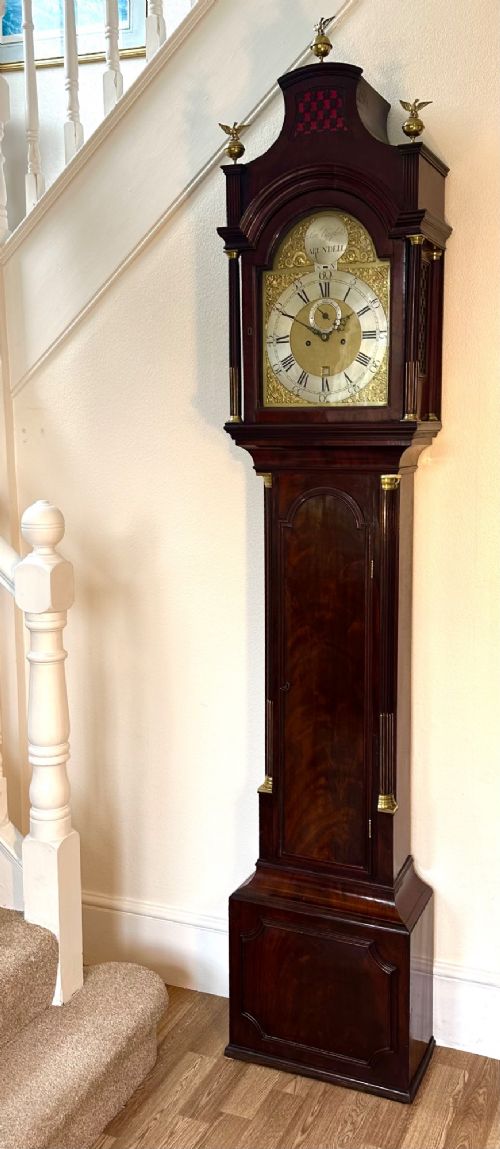
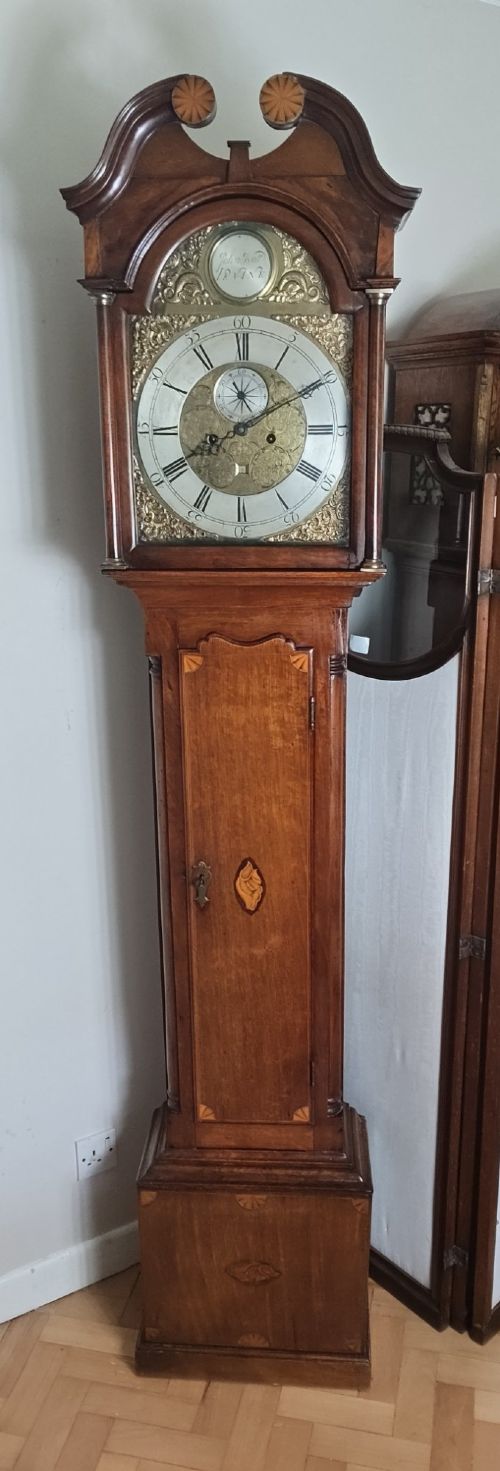
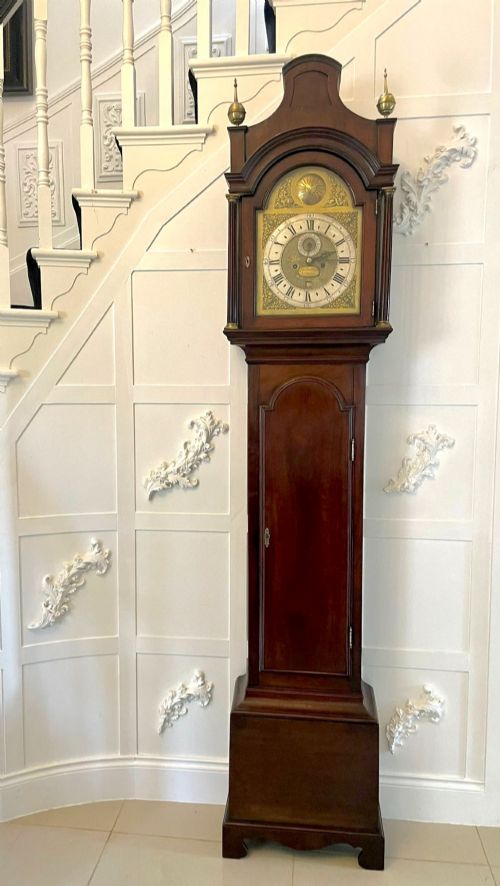
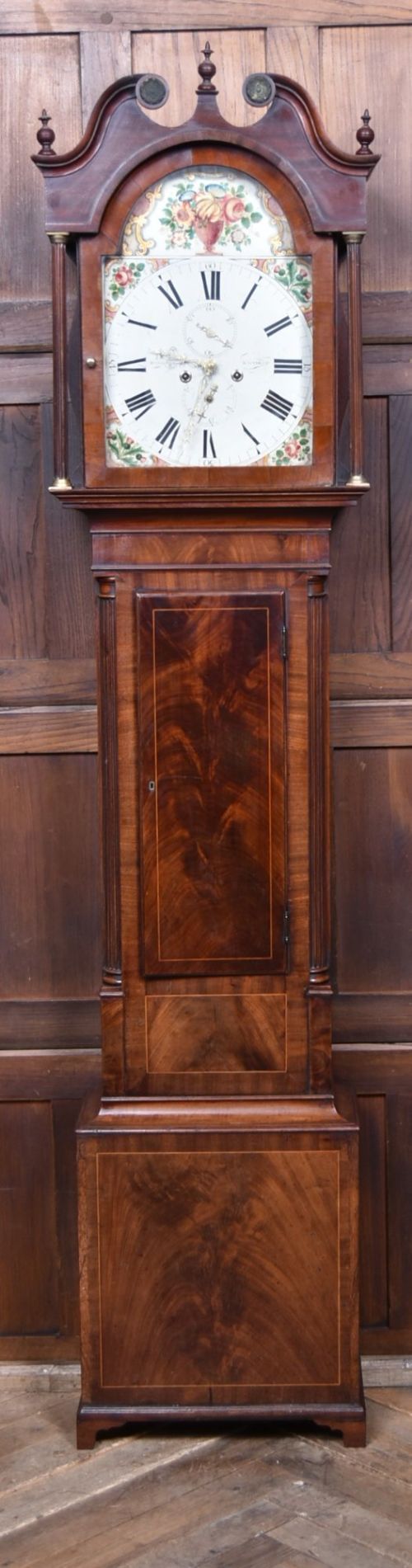
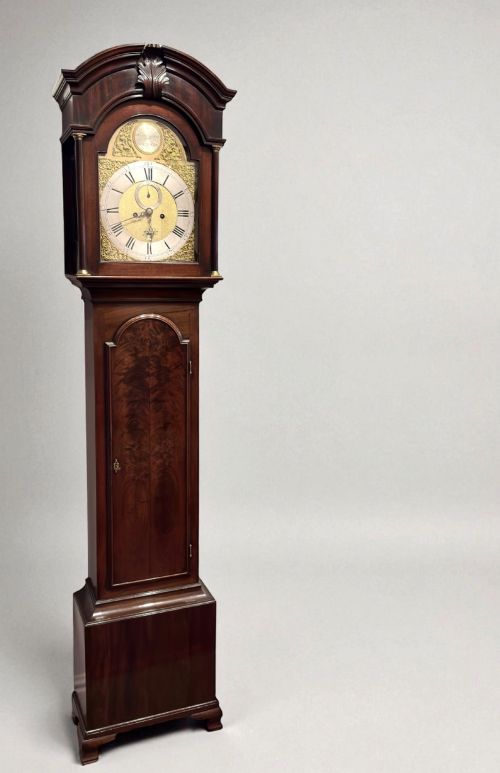
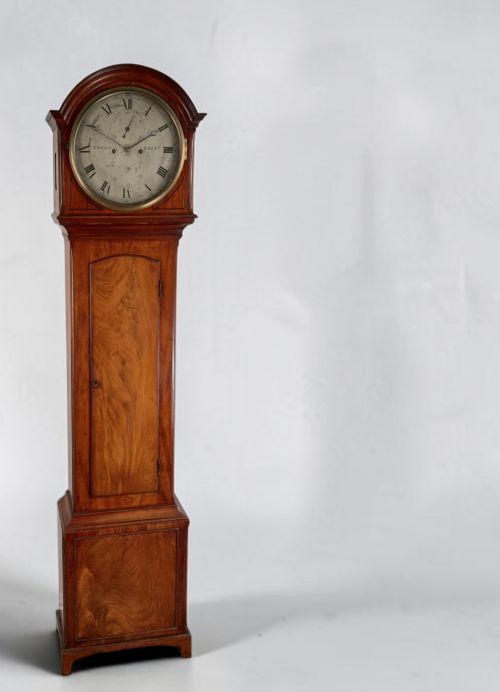
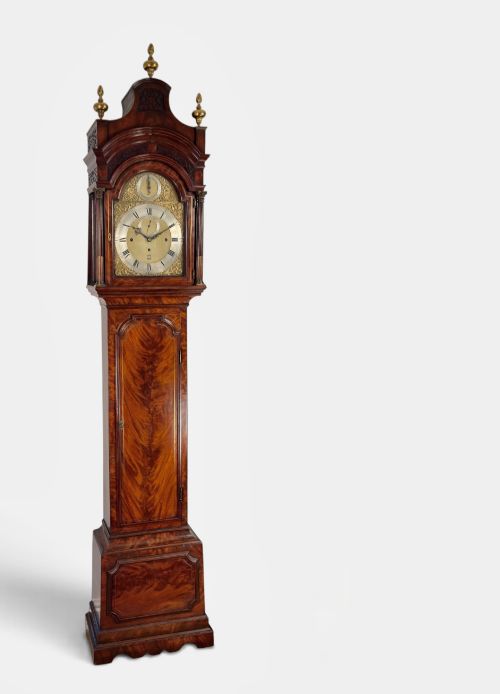
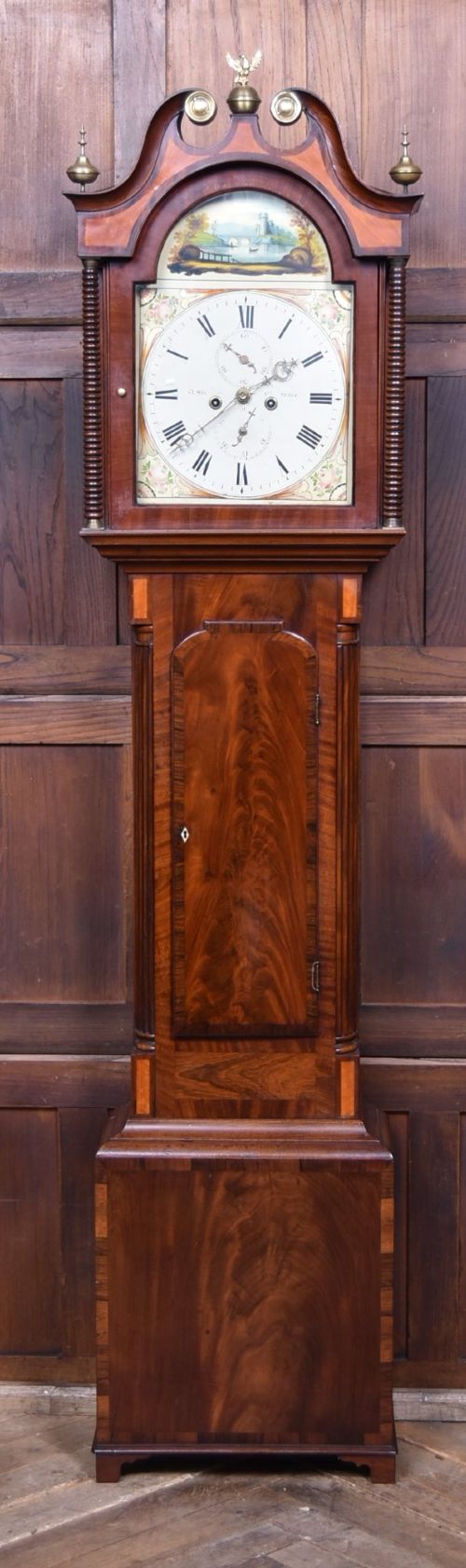

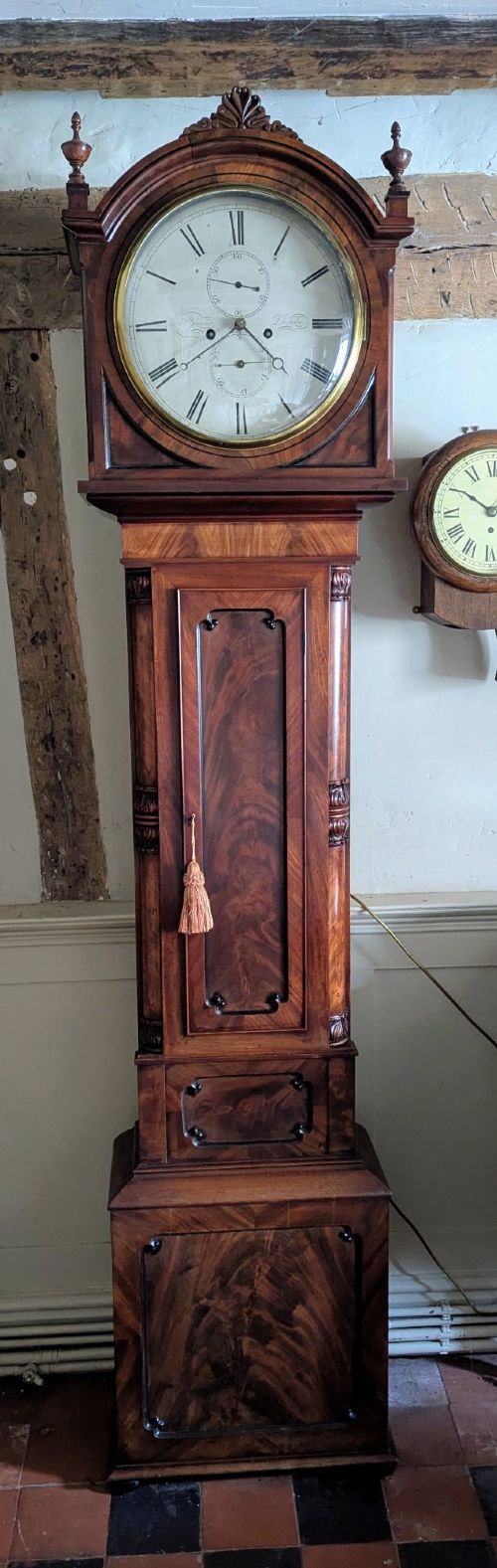
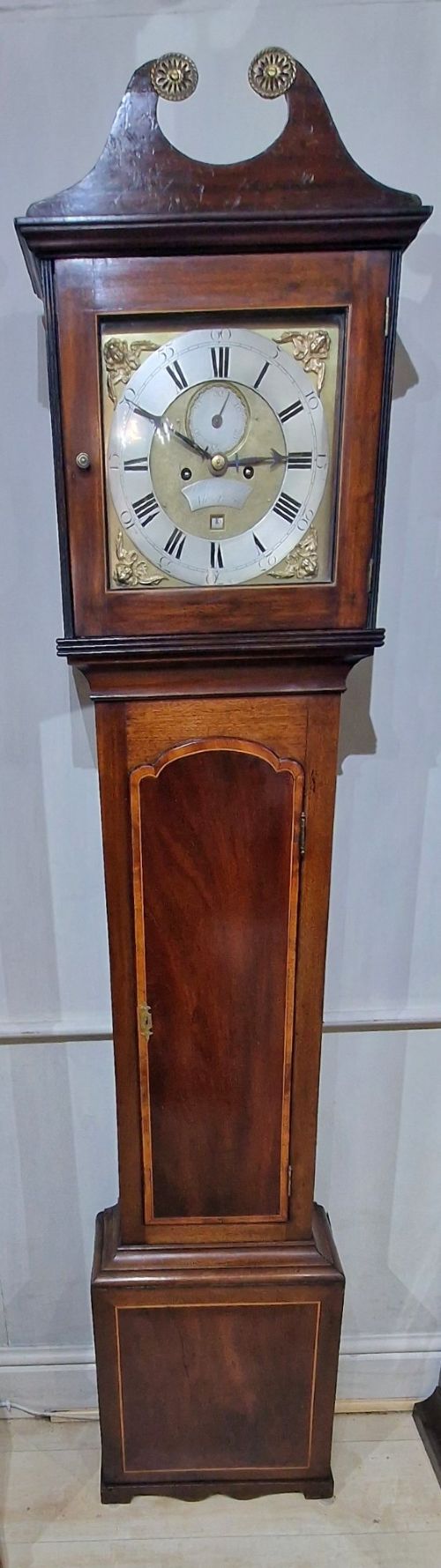
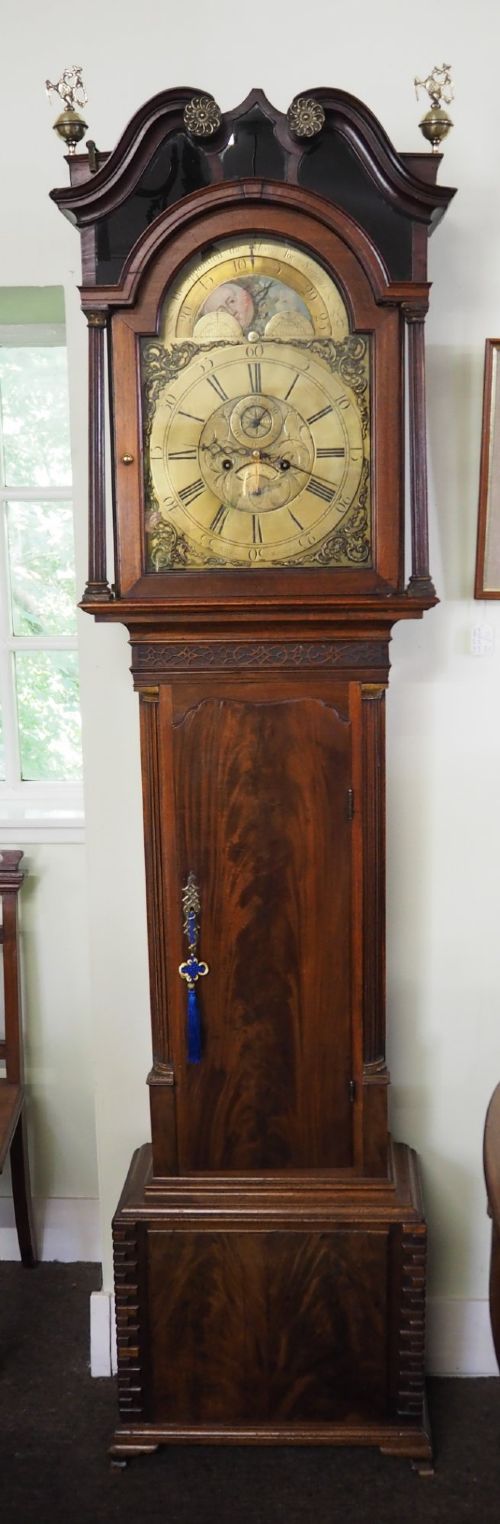
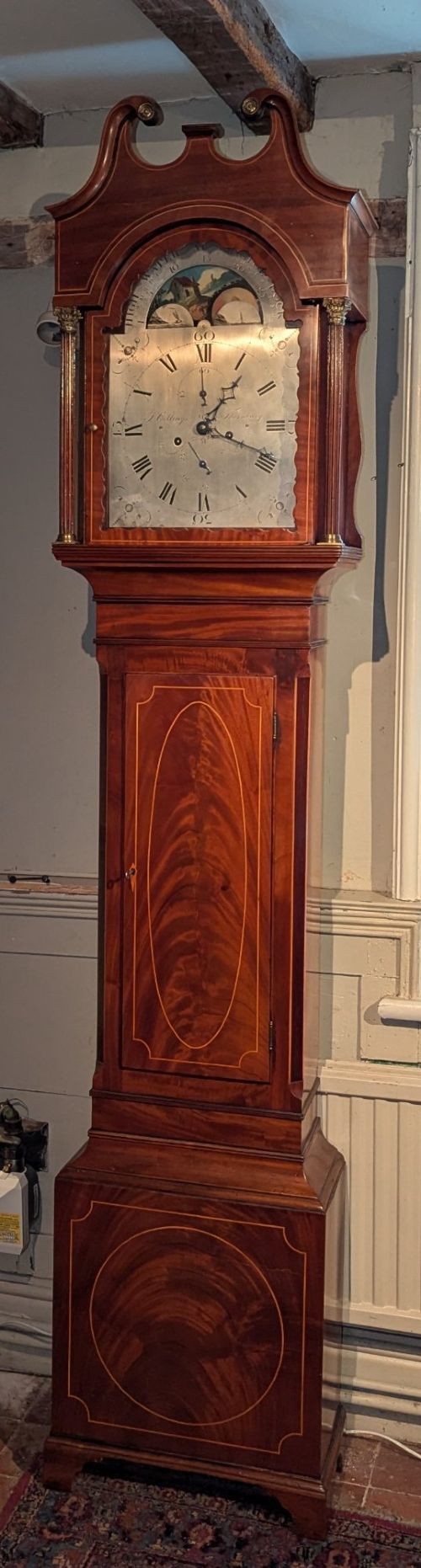
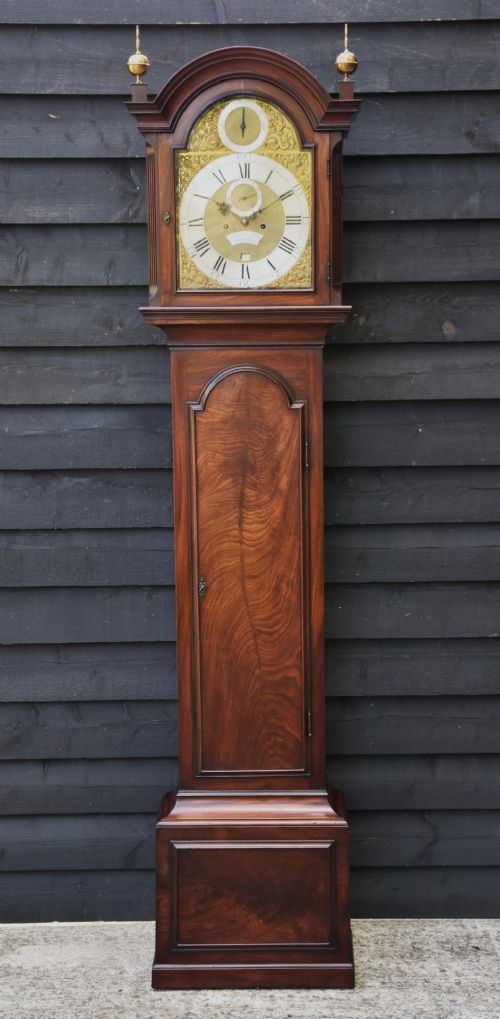
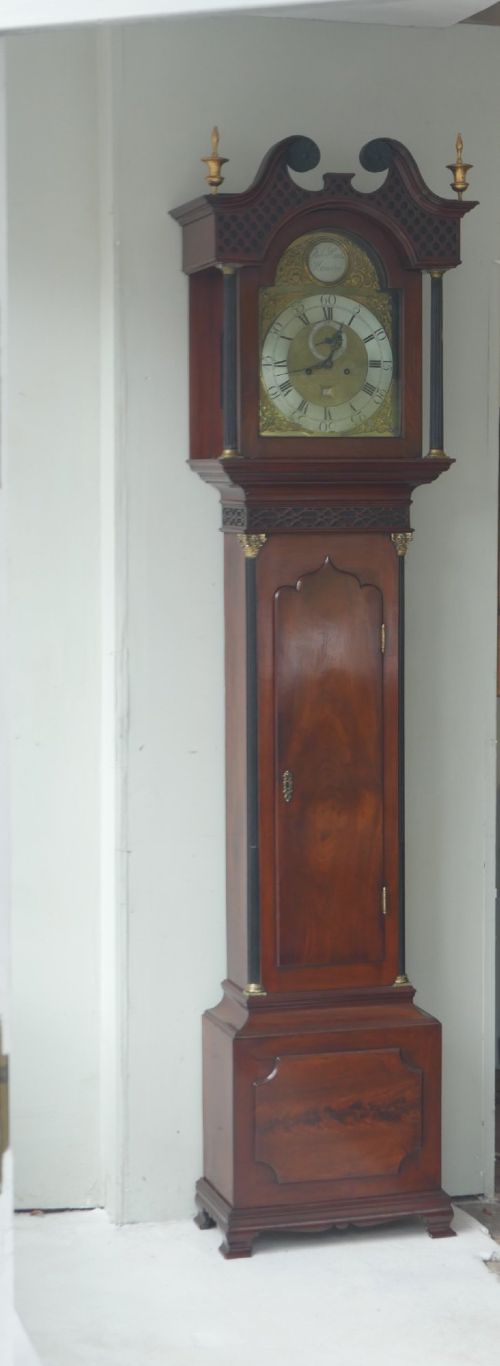
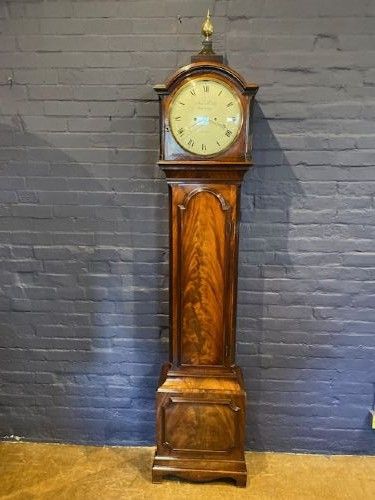
Georgian Mahogany Longcase Clock
When you search for a georgian mahogany longcase clock, you find tall floor-standing timepieces combining dense cabinetry with precise mechanical movements.
Georgian Mahogany Longcase Clock
A georgian mahogany longcase clock stands upright in a tall timber case, enclosing a weight-driven movement and a swinging pendulum. These tall pieces span eras from the eighteenth century into the nineteenth, often carrying regional signatures from London makers or Scottish workshops.
Most examples found here date from the Georgian and George III periods, though later nineteenth-century interpretations also appear. They range from full-height floor models down to smaller proportions termed grandmother or dwarf clocks.
The housing typically protects a brass or painted iron dial, sometimes detailed with moon phases, subsidiary seconds, or calendar circles. Buyers encounter provincial makers from towns across Britain alongside celebrated metropolitan clockmakers.
Materials and Construction
Movements rely on steel arbors, brass wheels, and lead or iron weights suspended by cords or chains. Dials transition from engraved brass plates to painted iron surfaces bearing roman numerals and maker signatures.
A rocking ship automaton on the dial kept weary travellers company by tossing across painted waves with every swing of the pendulum.
Markers of Distinction
Quality rests in the precision of the cabinetwork and the reputation of the dial's signatory. Figured timber veneers, balanced proportions, and crisp dial painting separate superior examples from standard domestic pieces.
Complications like strike-silent mechanisms, quarter-striking trains, or automated rocking ships elevate a piece above a standard time-and-strike movement. The integration of movement and housing reflects the original maker's ambition and workshop standard.
Charles Shuckburgh·Hendrie Ogg·Gordon of Aberdeen·Green of Edinburgh·John Ellicott·D. Straiton·James Field·James McCabe·Handley & Moore·Parkinson Bros·William Jourdain·Benjamin Taylor·D Williams·Priory of Dundee·George Hallifax·Henry Weedon·Thomas Wagstaffe·Stedman of Godalming·Birch of Tenterden·Simon Levin·John Carter·Robert Clidesdale·Waring & Gillow·Harrison of Liverpool·Chaffey of Sherborne
The Georgian Mahogany Longcase Clock Glossary
- Longcase clock
- A tall, weight-driven pendulum clock housed in a wooden floor-standing case, commonly called a grandfather clock. These tall enclosures protected the delicate mechanical movement from dust and air currents.
- Moon phase
- A dial mechanism tracking the lunar cycle through a rotating disk behind the clock face. This complication required careful gear calculations to display the phases accurately over a lunar month.
- Flame mahogany
- Timber sliced from the fork of a mahogany tree to produce a distinctive flickering flame pattern. Cabinetmakers reserved this figured wood for prominent surfaces on the door and hood.
- Crossbanding
- A decorative border of veneer laid across the grain of the surrounding wood. This technique created neat framing lines around drawer fronts and door panels.
- Regulator
- A precision timekeeper designed for high accuracy, often utilised in public buildings or workshops to set other clocks. These movements prioritised exact timekeeping over decorative complications.
Georgian Mahogany Longcase Clock: Frequently Asked Questions
What is a grandmother clock?
A grandmother clock is a scaled-down version of the traditional longcase clock, built with shorter and narrower proportions.
These smaller floor-standing timepieces appeared in various periods to fit modern domestic rooms with lower ceilings.
How do eight-hour and thirty-hour movements differ?
Thirty-hour movements require winding once a day and often use a simpler gear train without a strike train or with fewer complications.
Eight-day movements need attention only once a week and typically feature heavier weights and more intricate striking mechanisms.
Why do some dials show painted iron instead of brass?
Painted iron dials became the dominant fashion during the late eighteenth century, replacing the engraved brass plates of earlier decades.
Dial painters decorated these iron faces with floral corners, phases of the moon, and maker signatures.
How do you wind a longcase clock?
Winding involves inserting a key into the winding holes on the dial face to draw the suspended weights back up toward the top of the case.
Owners must follow the specific instructions for their movement type to avoid damaging the gear train.