

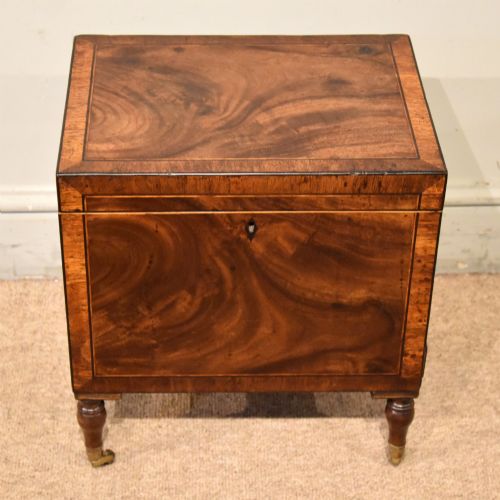
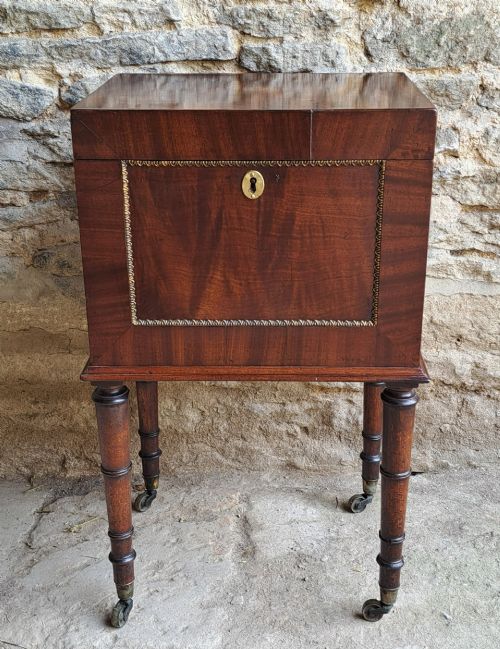
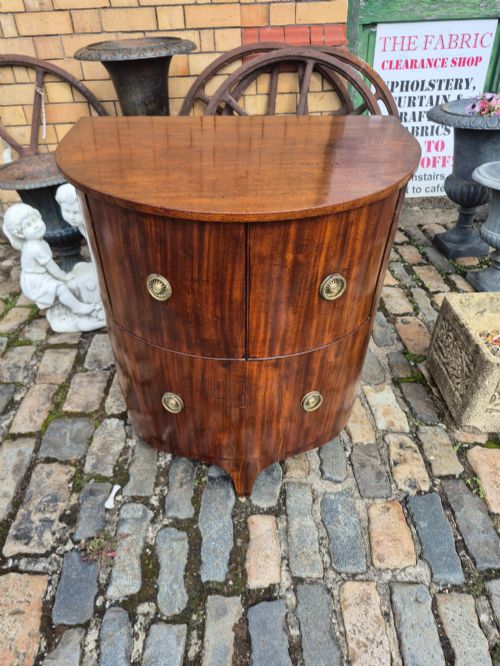
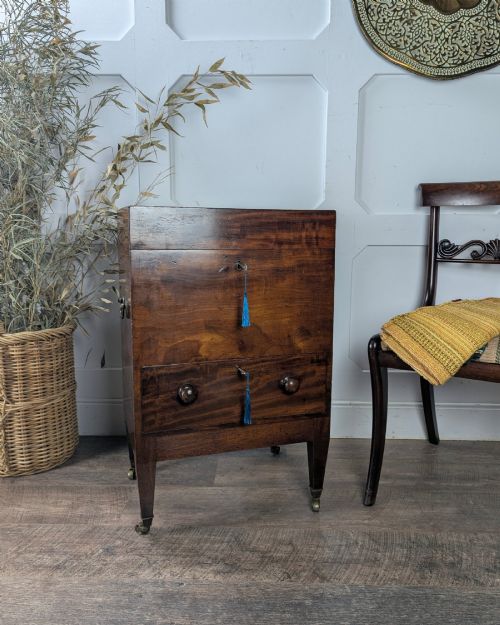
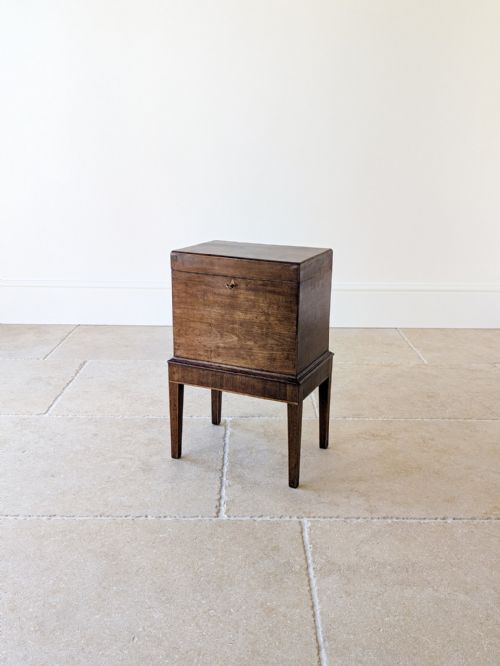
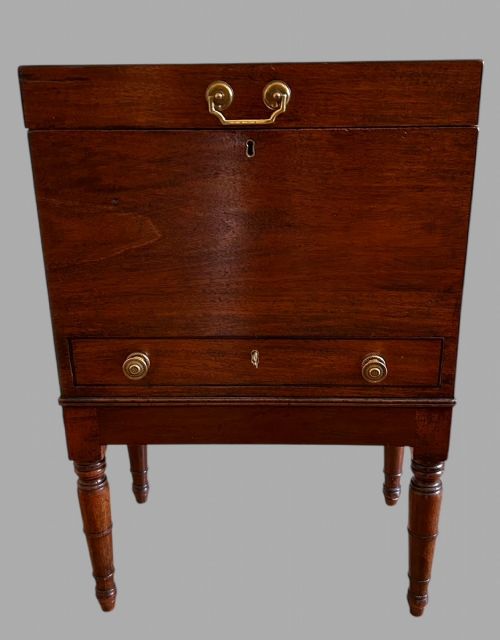
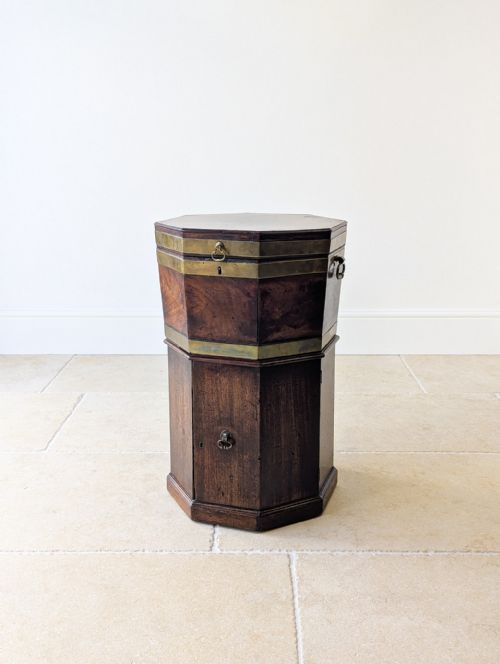
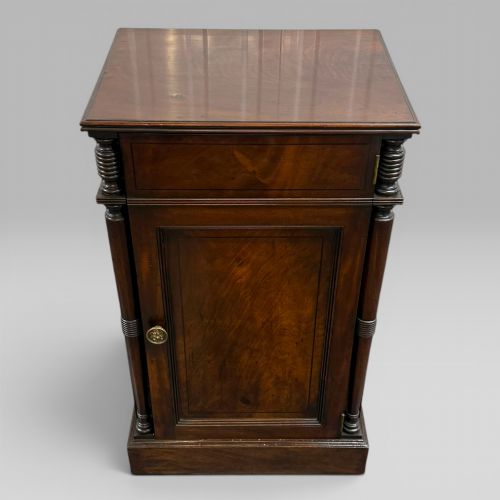
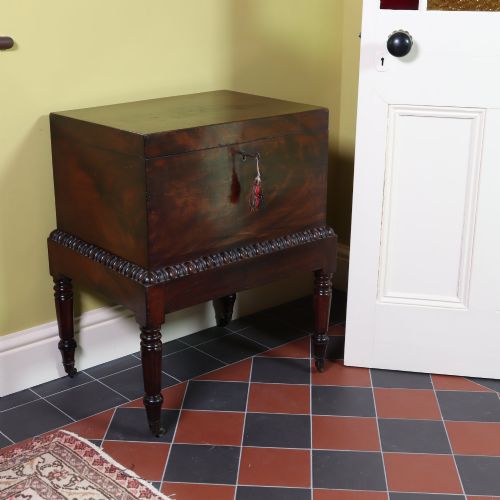
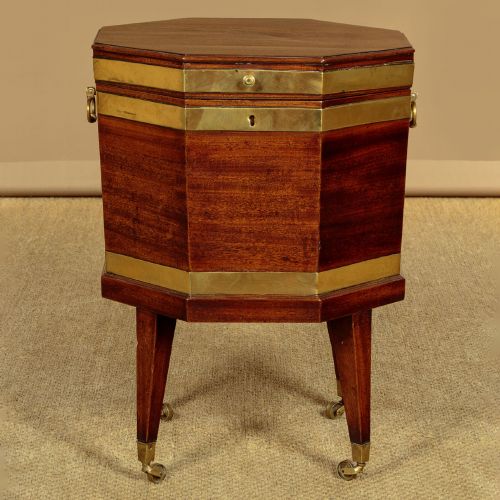

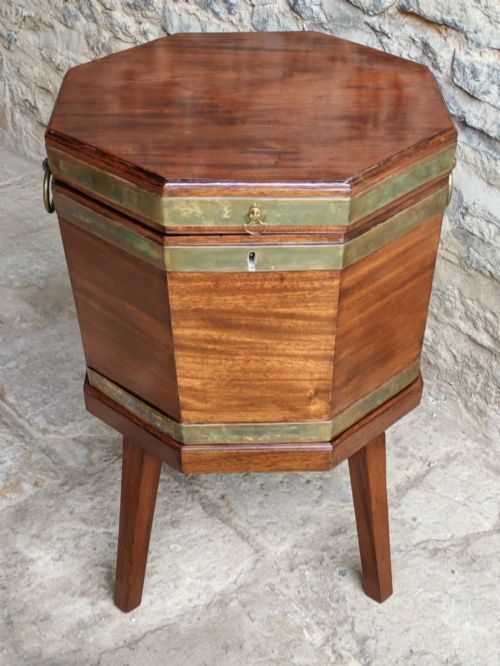
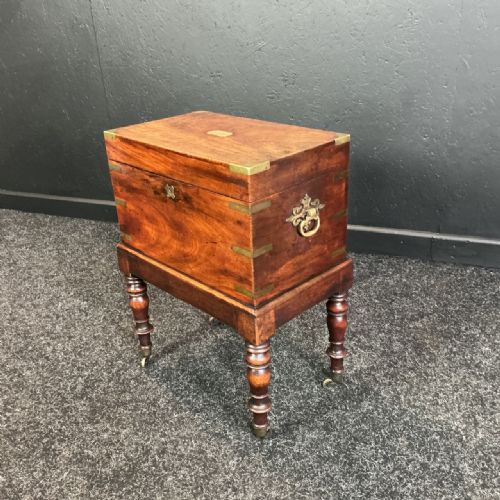


Georgian Mahogany Liquor Cabinet
A georgian mahogany liquor cabinet is a sturdy, timber-bound receptacle designed to keep vintage bottles secure and chilled.
Georgian Mahogany Liquor Cabinet
When you search for a georgian mahogany liquor cabinet, you encounter cellarettes and wine coolers dating chiefly from the Georgian, Regency, and 18th century periods. These vessels served dining rooms as secure containers for storage and cooling before refrigeration existed.
The most common forms on this page include octagonal and sarcophagus-shaped cellarettes, alongside occasional cabinets and stands. They appear in solid mahogany, flame mahogany, and padouk, frequently banded with satinwood or boxwood inlay.
Origins stretch across English workshops, Irish makers, and Anglo-Indian colonial production. Alongside period originals, later revival pieces from the nineteenth and early twentieth centuries also appear.
How they were made
Cabinet makers built these pieces using solid mahogany and flame mahogany, sometimes incorporating padouk or satinwood veneers. They shaped timber into octagonal, oval, and serpentine forms, requiring precise joinery to house heavy bottle loads.
Metal fittings formed an essential structural and decorative element, with brass bands encircling bodies and heavy handles secured to the sides. Ormolu mounts and lead linings occasionally supplemented the timber construction for functional cooling.
Georgian Mahogany Liquor Cabinet Retail Price Guide 2026
Typical asking prices for georgian mahogany liquor cabinet among the pieces listed under this phrase on Sellingantiques today, from the lower quarter to the upper quarter. They describe what is for sale here now, not the wider market.
Several boxes doubled as plate-warmers, proving that historical hosts took hot dinner plates just as seriously as cold wine.
What varies in quality
The character of the timber and the crispness of the joinery separate standard examples from finer outputs. Flame mahogany figuring, intricate satinwood banding, and substantial brass mounts elevate the presence of a piece.
Attribution to documented makers such as Gillows elevates historical significance. Furthermore, original interior partitions and functional metal linings preserve the integrity of the design.
Gillows·Gillingtons·Gillows of Lancaster and London
The Georgian Mahogany Liquor Cabinet Glossary
- Cellarette
- A lockable container or chest designed to hold bottles of wine and spirits beneath lock and key. They sit directly on the floor or upon dedicated stands.
- Sarcophagus
- A monumental cabinet shape featuring a sloping lid and flared sides, popular during the Regency period for grand dining rooms. This form echoes ancient stone burial chests.
- Serpentine
- A front profile curving outward in the centre and inward toward the ends, requiring advanced woodworking skill. This contour appears on select George III pieces.
- Ormolu
- Gilded bronze mounts applied to furniture for decoration, providing metallic contrast against dark mahogany surfaces. It marks high-status items.
- Tantalus
- A locking wooden frame displaying spirit decanters visibly while preventing access without a key. Irish examples feature prominently in this category.
Georgian Mahogany Liquor Cabinet: Frequently Asked Questions
What is a georgian mahogany liquor cabinet used for?
These vessels were built to store, lock, and chill wine and spirits in the dining room. Interiors often contained lead linings or wooden partitions to hold individual bottles upright.
Today they function effectively as standalone drinks cabinets, side tables, or decorative storage chests within modern living spaces.
How do I tell a Georgian piece from a later revival?
Period pieces from the eighteenth and early nineteenth centuries exhibit authentic hand-cut joinery, period timber patination, and functional interior wear consistent with age. Maker attributions and specific construction methods help anchor the date.
Revival pieces produced during the Victorian and Edwardian eras often show standardised machine milling and cleaner, less oxidized interior timber.
What is the difference between a cellarette and a wine cooler?
Cellarettes typically feature lockable lids to secure valuable spirits from household staff, whereas wine coolers often served open or functioned as standing basins for ice and bottles.
In historical listings, the terms frequently overlap as makers adapted forms for both storage and cooling duties.
How do I care for mahogany furniture?
Keep mahogany timber away from direct heat sources and strong sunlight to prevent the polish from fading or the wood from drying out. Periodic application of appropriate wax maintains the natural lustre of the surface.
Avoid placing damp glasses or bottles directly on historic polished tops to protect the finish from water marks.