




Georgian Bottle Caddy
A georgian bottle caddy offers a handsome and practical way to keep your finest decanters close at hand.
Georgian Bottle Caddy
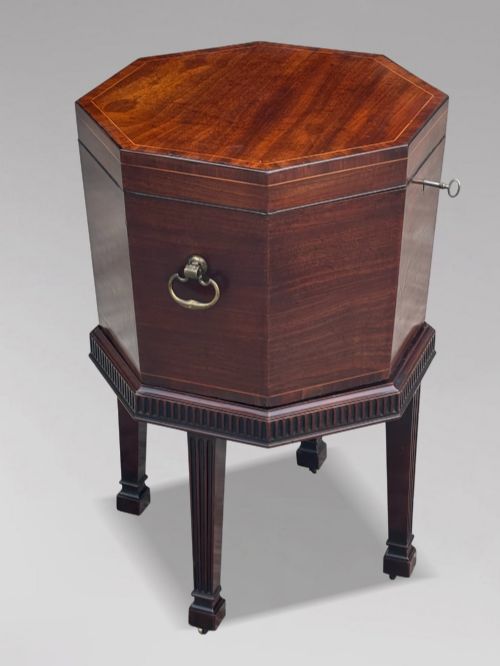
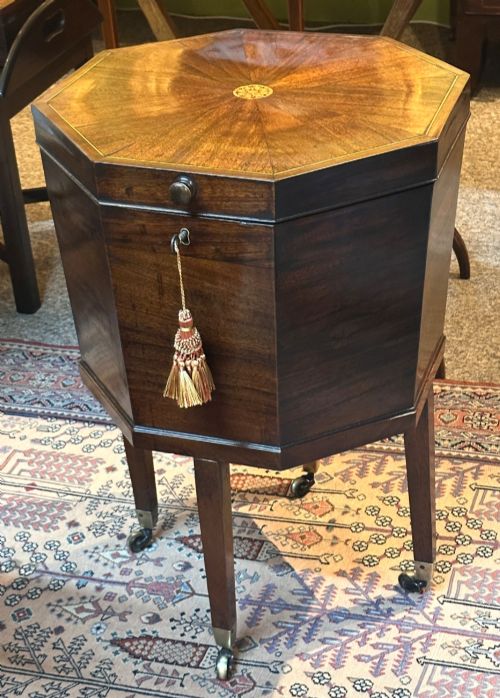
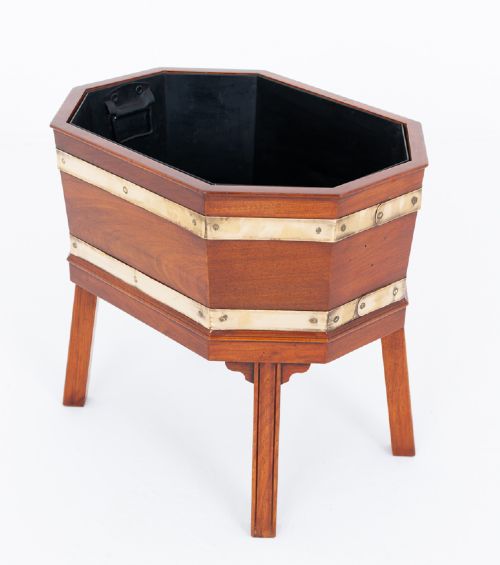
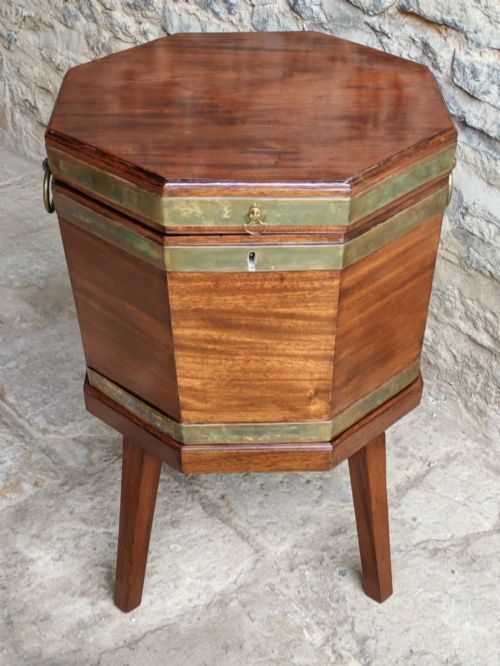
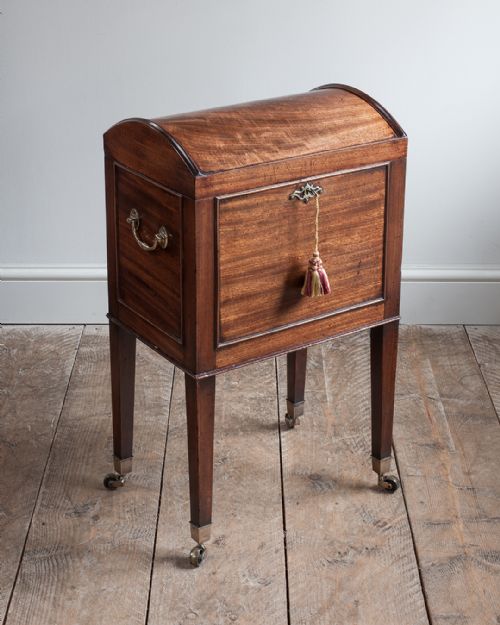
When you search for a georgian bottle caddy, you are looking at substantial wooden cellarettes, wine coolers, and bottle carriers designed to hold multiple glass containers securely. The examples you will most commonly meet on this page date from the eighteenth and nineteenth centuries, appearing in forms ranging from octagonal boxes to sarcophagus shapes.
Makers of the period constructed these pieces primarily in mahogany, often incorporating brass binding, handles, and intricate wood inlay. Many rest on distinct stands or retain their original interior divisions for bottles and decanters.
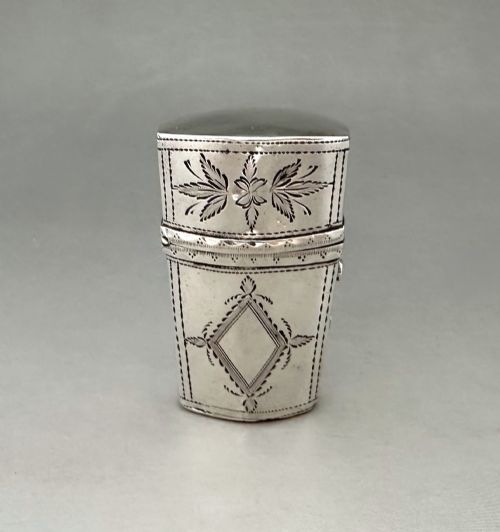
The assortment on this page also includes related serving vessels such as cruet sets in sterling silver and silver-cased scent bottles. These smaller containers share the precise craftsmanship and refined proportions typical of the period.
Materials and construction
Cabinet makers relied heavily on solid mahogany and figured veneers, shaping octagonal, oval, and sarcophagus bodies to house fragile glassware safely. Skilled joinery ensured the heavy lids and box frames remained stable over centuries of use.
Metalwork played a crucial structural and decorative role, with heavy brass bands, drop handles, and castors fitted securely to the timber frames. Sterling silver appeared in matching cruet sets and bottle mounts, worked with traditional piercing and casting methods.
Interior divisions were carefully measured to separate individual glass bottles and prevent them from striking one another during movement. Fine stringing and wood inlay added surface detail without compromising the strict utility of the carrier.
Georgian Bottle Caddy Retail Price Guide 2026
Typical asking prices for georgian bottle caddy among the pieces listed under this phrase on Sellingantiques today, from the lower quarter to the upper quarter. They describe what is for sale here now, not the wider market.
Listings feature mahogany, brass, sterling silver, cut glass, and satinwood across eighteenth and nineteenth-century periods.
Assessing quality in bottle carriers
The distinction between standard examples and superior pieces rests largely on the choice of timber and the crispness of the cabinet work. Finely figured mahogany and well-executed brass binding elevate a simple box into a work of master joinery.
Proportion and detail dictate the standing of a piece, particularly in the precision of the octagonal geometry or the execution of inlay. Well-preserved interior partitions and original hardware contribute significantly to the integrity of the object.
Gillows
The Georgian Bottle Caddy Glossary
- Cellarette
- A lockable container or box designed to hold wine bottles and decanters near the dining table. These pieces often feature fitted interiors to keep glass securely separated.
- Sarcophagus
- A monumental container shape featuring a domed lid and tapered sides, popular during the Regency period. This architectural form provided substantial capacity for multiple bottles.
- Cruet set
- A collection of small glass bottles or castors mounted in a silver frame for condiments and spices. Complete sets retain their original matched bottles.
- Padouk
- A dense tropical hardwood with a rich reddish brown tone, utilised in colonial cabinet making. It offers exceptional durability and a deep natural lustre.
- Inlay
- The technique of embedding contrasting woods or materials into the surface of a primary timber to create decorative patterns. Stringing is a narrow variety of this work.
Georgian Bottle Caddy: Frequently Asked Questions
What is a georgian bottle caddy used for?
These pieces served to transport and store wine bottles, decanters, and drinking vessels around the dining room. Their fitted interiors kept heavy glass containers safe from damage while offering a decorative addition to the room.
Wealthy households used them during formal meals to keep refreshments close to the table without requiring constant trips to the cellars. Today, they function effectively as standalone display boxes or practical drinks cabinets.
How do I distinguish a cellarette from a wine cooler?
Cellarettes are typically enclosed wooden boxes with lids, designed to stand on the floor or on a dedicated base. Wine coolers often take an open or bucket-like form, historically lined to hold ice and water.
Both terms appear frequently across eighteenth and nineteenth-century pieces, sometimes describing similar forms with internal partitions. Examining the interior depth and presence of a lid provides the clearest indication of function.
Are these pieces suitable for modern homes?
Their robust construction and practical storage compartments make them well suited for contemporary living spaces. Many collectors use them to house modern wine bottles or bar accessories.
Placing them away from direct heat sources and sudden humidity changes helps preserve the nineteenth-century timber and brass fittings. Regular dusting and occasional wax application keep the mahogany surfaces in good condition.
How can I tell the period of a wine carrier?
Stylistic details such as the shift from straight-sided Chippendale boxes to sweeping Regency sarcophagus shapes indicate the era of manufacture. The presence of brass binding, specific inlay patterns, and the weight of the timber offer further clues.
Eighteenth-century examples often lean towards simpler geometric forms with restrained brasswork, while later nineteenth-century pieces embrace bolder architectural outlines and figured veneers.