




Antique Wooden Cellaret
An antique wooden cellaret is a sturdy drinking vessel storage box built to chill wine or house spirits safely beside the dining table.
Antique Wooden Cellaret
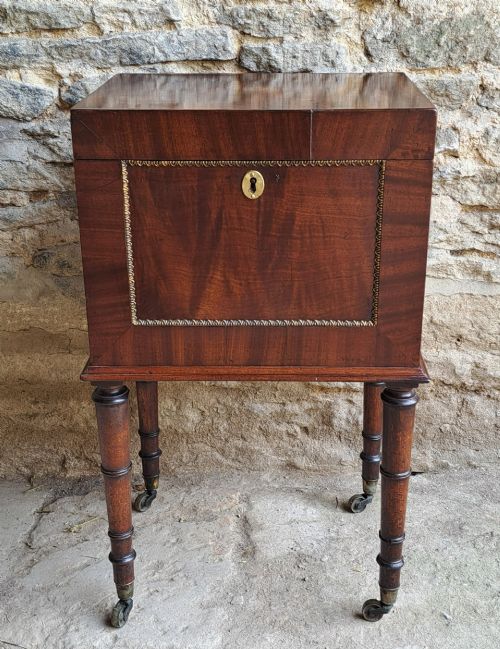
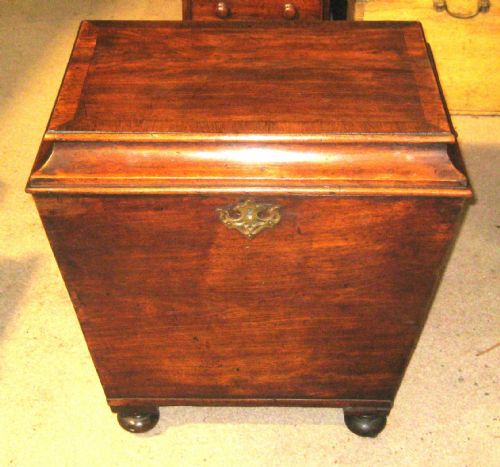
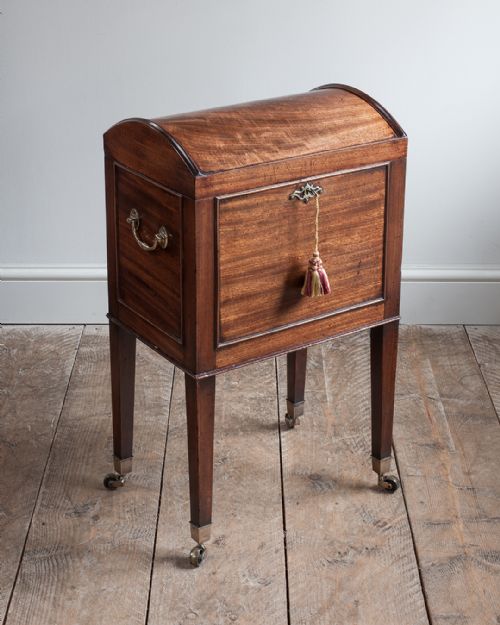
An antique wooden cellaret is a specialised container designed to keep wine bottles or spirit decanters cool and secure during formal dining. Collectors encounter these pieces in various historic forms, ranging from modest boxes to grand wine coolers.
The versions most commonly met on this page belong to the Georgian and Regency periods, spanning the eighteenth and nineteenth centuries. These examples typically take rectangular, octagonal, or sarcophagus shapes intended to sit beneath sideboard tables or directly on the floor.
Makers fashioned these storage boxes primarily to house liquid refreshment close to hand in domestic dining rooms. Surviving specimens demonstrate how dining customs required dedicated receptacles to manage heavy bottles and ice.
How these pieces were constructed
Cabinet makers built the primary carcass of an antique wooden cellaret using dense timbers like mahogany, oak, and pine. Selected woods were frequently chosen for their grain pattern and stability during daily domestic use.
Many examples incorporate decorative details such as satinwood inlay, brass fittings, and ormolu mounts. These metal elements reinforced structural corners and provided secure handles for lifting heavy contents.
Internal partitions were often lined with metal or lead to hold ice and water safely without rotting the surrounding timber. Master craftsmen joined panels using traditional dovetail joints to withstand the heavy weight of full wine bottles.
Antique Wooden Cellaret Retail Price Guide 2026
Typical asking prices for wooden cellaret among the pieces listed under this phrase on Sellingantiques today, from the lower quarter to the upper quarter. They describe what is for sale here now, not the wider market.
Some nineteenth-century makers evidently decided wine storage required the solemn dignity of a miniature stone coffin.
What separates the finest examples
The grade of timber selection dictates much of the visual distinction across these pieces. Fine grain figures in mahogany and delicate satinwood banding mark out superior cabinet work from utilitarian boxes.
The refinement of brass handles, cast ormolu mounts, and internal metal linings reflects the original commission cost. Skilfully executed decorative details demonstrate the specialised skill applied by the workshop.
Proportion and structural integrity remain central to an assessment of quality. Pieces that retain their original internal divisions and solid base plinths carry greater architectural balance.
Robert Strahan and Co
The Antique Wooden Cellaret Glossary
- Cellaret
- A lockable container designed for storing wine bottles or spirits near the dining table. They evolved from simple wooden boxes into elaborate architectural pieces during the Georgian era.
- Sarcophagus
- A coffin-shaped architectural style popular for large wine coolers during the Regency period. These containers often featured carved paw feet and hinged domed lids.
- Ormolu
- Gilded bronze mounts applied to furniture for decorative enrichment. This technique added metallic contrast against dark mahogany surfaces.
- Satinwood
- A pale, lustrous timber utilised for contrasting stringing and inlay work. It provided bright geometric details on darker cabinet fronts.
- Serpentine
- A gently undulating curved front line characteristic of refined eighteenth-century case furniture. This profile softened rigid rectangular box designs.
Antique Wooden Cellaret: Frequently Asked Questions
What is an antique wooden cellaret used for?
An antique wooden cellaret served as a secure, movable container for chilling wine bottles and storing spirits near the dining table. Wealthy households relied on them to keep drinks cool before modern refrigeration existed.
Inside the box, compartmentalised linings held ice or water around the bottles. They also kept expensive wines locked away from household servants.
How do I date an antique cellaret?
Dating relies on examining the timber species, construction joints, and stylistic details like brass hardware or inlay. Georgian pieces often display straight-grained mahogany and simple bracket feet.
Later Regency examples introduce heavier neoclassical motifs, such as paw feet and sarcophagus lids. Cabinet construction methods inside the box also shift from hand-cut dovetails to later machine assistance.
Where were cellarets placed in a room?
These boxes typically sat directly on the floor beneath a sideboard or dining table. Their low profile allowed them to remain tucked out of the way until service time.
Some smaller table models rested on sideboards or dedicated stands. Their placement ensured easy access for hosts pouring drinks during long meals.
Why do some cellarets have metal linings?
Metal linings were installed to hold ice and water safely against the wine bottles without rotting the wood. Lead or zinc protected the structural timber from moisture damage.
These waterproof inserts turned the wooden box into a functional cooler. Drainage plugs were sometimes included to empty melted ice after dinner.