

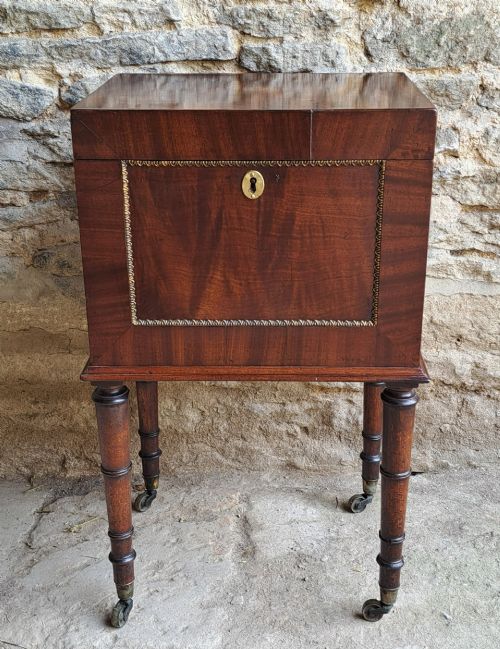
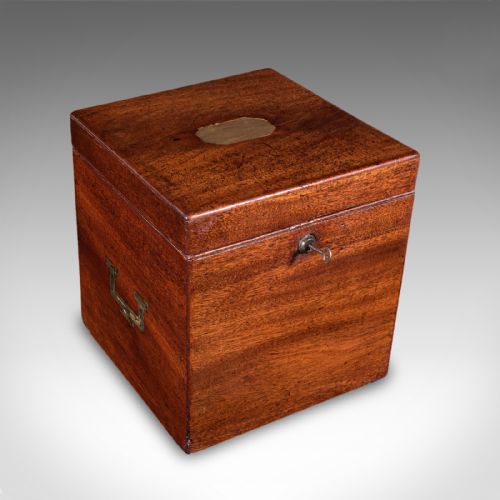
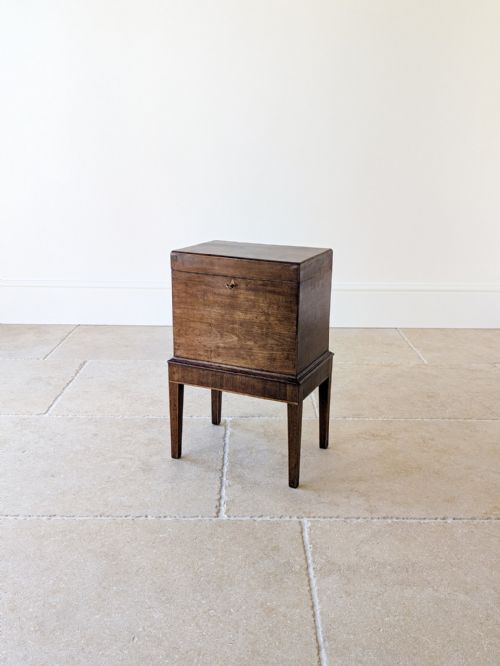
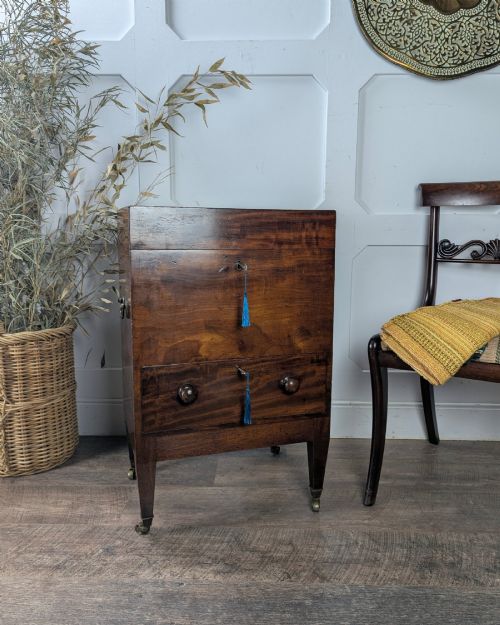
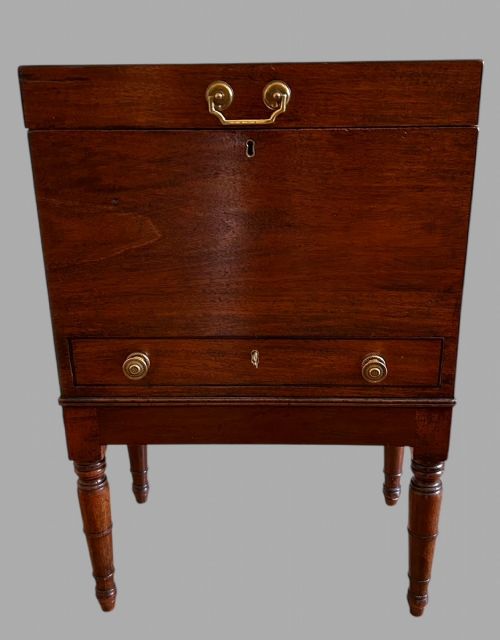
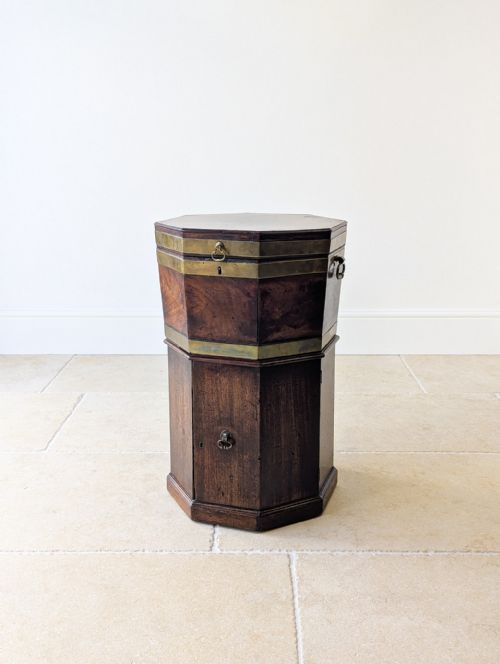
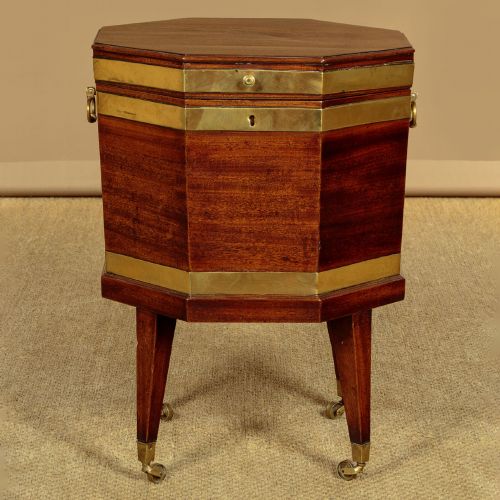

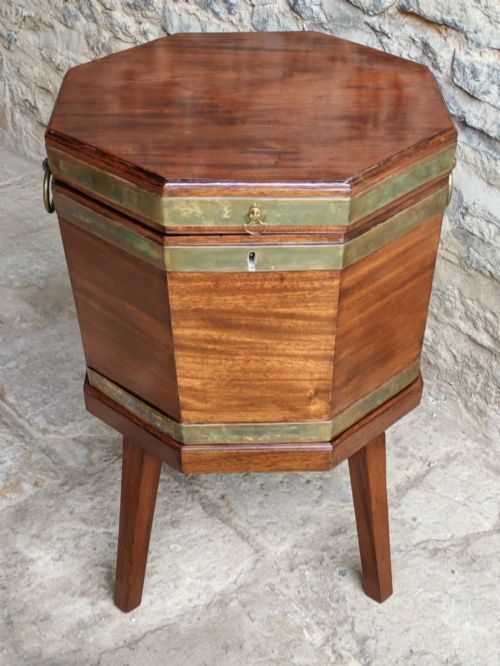



Georgian Mahogany Liquor Box
A georgian mahogany liquor box is a robust timber container designed to protect and transport bottles safely across dining rooms and estates.
Georgian Mahogany Liquor Box
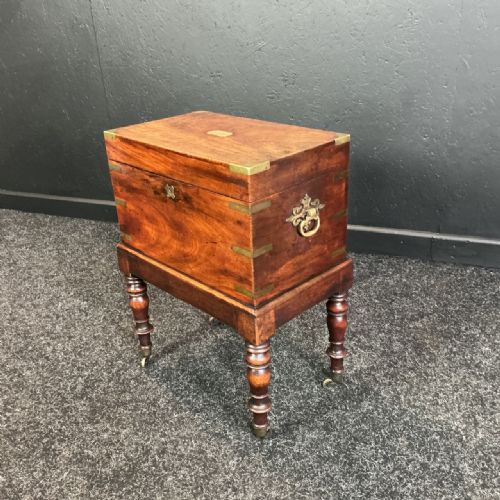
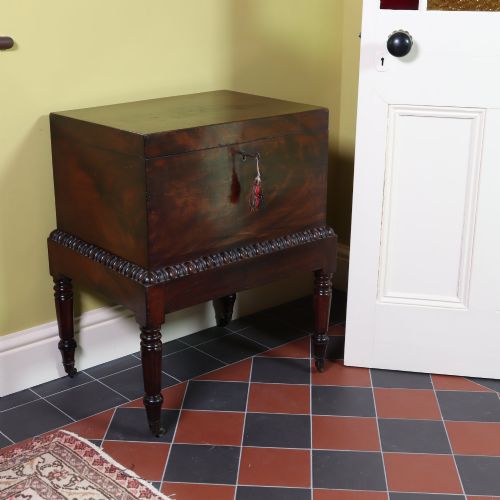
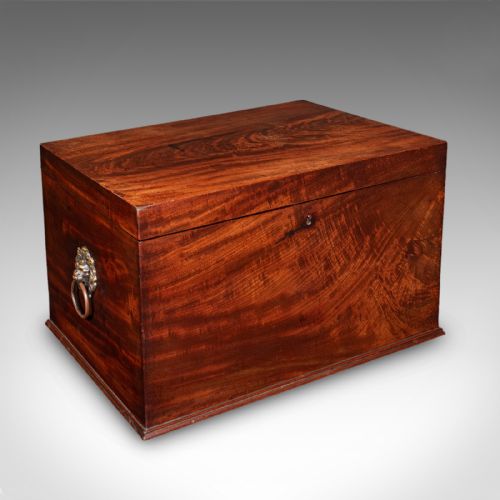
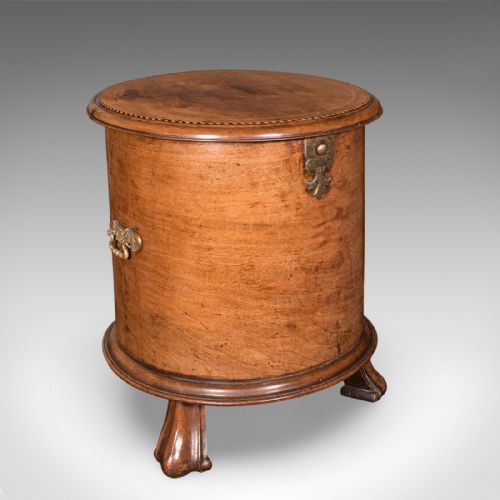
A georgian mahogany liquor box encompasses cellarettes, wine coolers, and decanter boxes originating from the eighteenth and nineteenth centuries. These pieces emerge in straightforward octagonal shapes, sarcophagus silhouettes, and fitted table boxes designed to secure glass bottles.
The most common examples on this page date from the Georgian and Regency periods, utilising rich timber and secure locking mechanisms to store spirits. Cabinetmakers constructed these containers to stand beside dining tables or travel with officers on campaign.
Regional variations span English workshops, Irish makers, and Anglo-Indian colonial pieces executed in padouk. Each version reflects the dining customs of its era, prioritizing bottle safety and orderly storage.
Quality and Craftsmanship
The standard of a georgian mahogany liquor box depends upon the selection of timber figures, such as the depth of flame mahogany and the crispness of boxwood inlay. Superior pieces display harmonious proportions in octagonal or sarcophagus forms rather than plain rectangular boxes.
Internal arrangements dictate utility and execution, separating standard storage cases from elaborately fitted wine coolers with original dividers and intact glass decanters. The integration of quality brass mounts and functioning locks elevates the work of the cabinetmaker.
Georgian Mahogany Liquor Box Retail Price Guide 2026
Typical asking prices for georgian mahogany liquor box among the pieces listed under this phrase on Sellingantiques today, from the lower quarter to the upper quarter. They describe what is for sale here now, not the wider market.
Gillingtons·Gillows of Lancaster and London
The Georgian Mahogany Liquor Box Glossary
- Cellarette
- A lockable container used for holding wine bottles and decanters near the dining table. These pieces often feature fitted interiors and heavy timber construction.
- Sarcophagus
- A monumental cabinet form shaped like an ancient stone coffin, popular during the Regency period for large wine coolers. These containers typically rest on paw feet or plinth bases.
- Flame mahogany
- Timber cut from the fork of the mahogany tree to produce a distinctive flickering pattern. Cabinetmakers reserved this decorative veneer for the primary exterior surfaces of boxes.
- Bramah lock
- A patented security mechanism invented in the late eighteenth century known for exceptional precision and reliability. These locks appear on superior campaign and storage boxes.
Georgian Mahogany Liquor Box: Frequently Asked Questions
What is a georgian mahogany liquor box?
A georgian mahogany liquor box is a specialised wooden chest built to hold glass decanters and wine bottles securely. These containers kept valuable spirits locked and organised during the eighteenth and nineteenth centuries.
Craftsmen utilised durable hardwoods and fitted interiors to prevent bottles from shifting during transport or daily use in dining rooms.
How were these boxes used?
Servants used these containers to store and transport wine or spirits from cellars to dining tables. The locked compartments ensured that expensive contents remained secure.
Certain variations served officers on campaign, housing glass sets and decanters safely within robust timber frames during travel.
How do I identify a Regency piece?
Regency examples frequently display sarcophagus silhouettes, classical brass paw feet, and bolder architectural proportions than earlier eighteenth-century designs. The use of ormolu mounts and heavy ring handles became common during this era.
Cabinetmakers of this period favored dramatic flame mahogany veneers and crisp geometric lines inspired by classical antiquity.
Where should I place one at home?
These boxes function well as side tables, cocktail cabinets, or decorative storage surfaces in living rooms and dining spaces. Their sturdy timber lids provide flat surfaces for displaying objects.
Keeping the interior dividers intact allows collectors to continue using the containers for their original purpose of holding bottles.