



Wooden Decanter Chest
A wooden decanter chest brings order to fine spirits, offering a fitted home for your bottles and glassware.
Wooden Decanter Chest
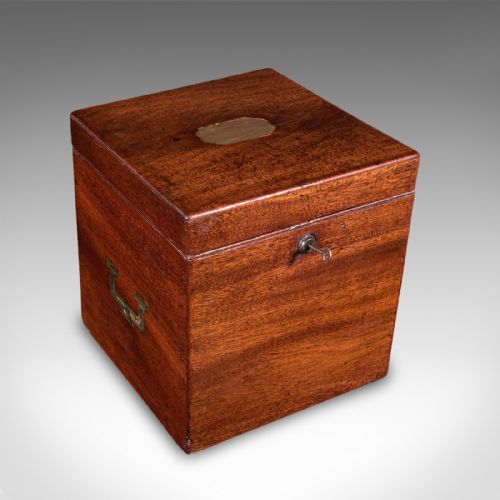
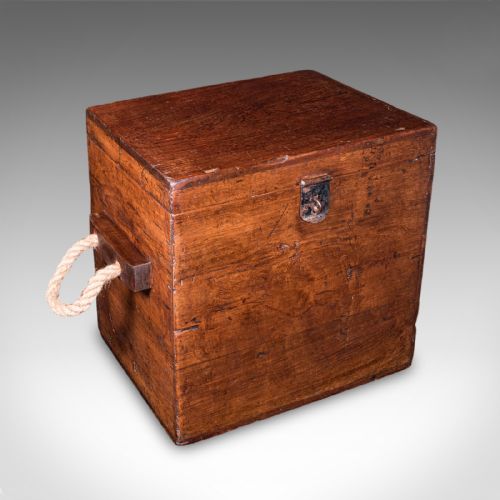
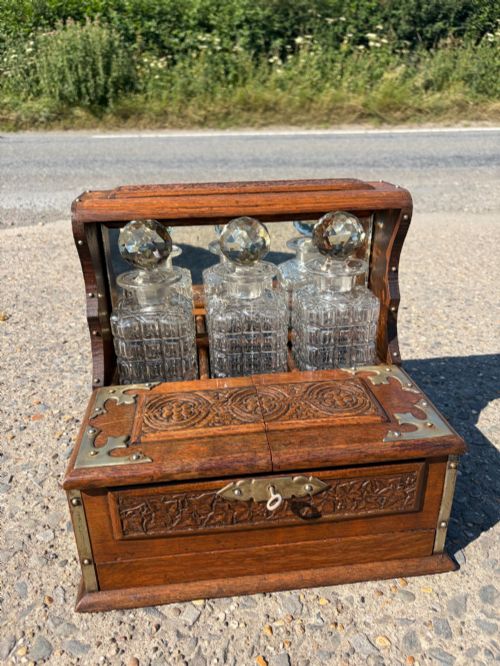
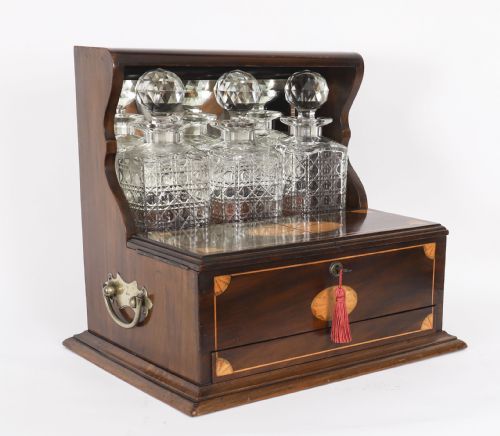
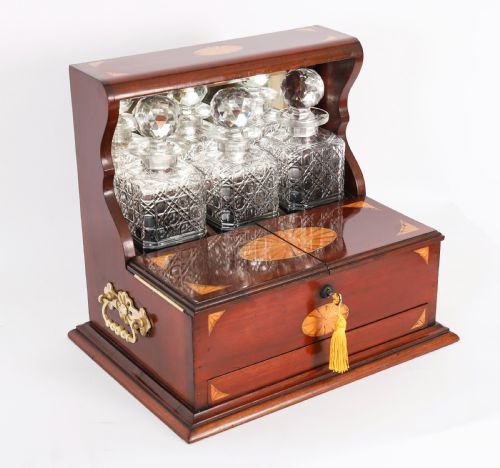
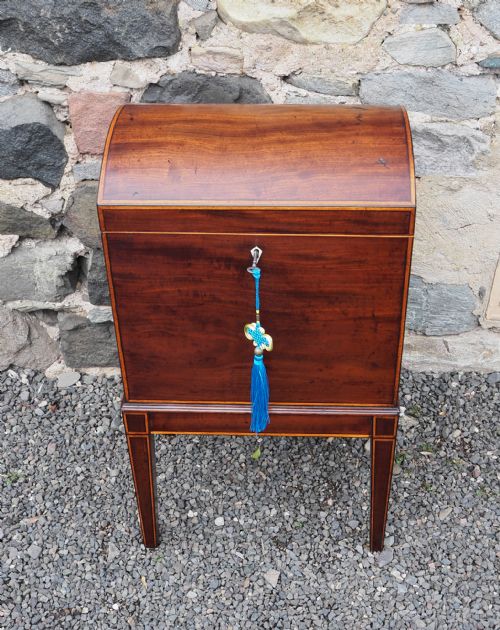
A wooden decanter chest encompasses cellarettes, tantaluses, and fitted dry bar compendiums designed to secure and display spirits. These pieces surface most frequently from the Georgian, Victorian, and Edwardian eras, spanning the nineteenth century.
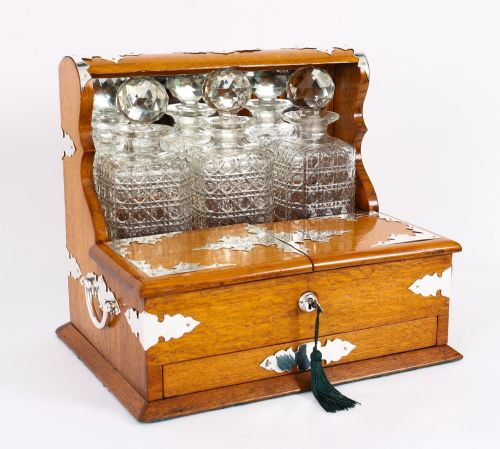
The form ranges from compact single-bottle cases to large compendiums incorporating games drawers and cut crystal decanters. Oak and mahogany dominate the selection, often enriched with satinwood inlay or brass mounts.
How they were made
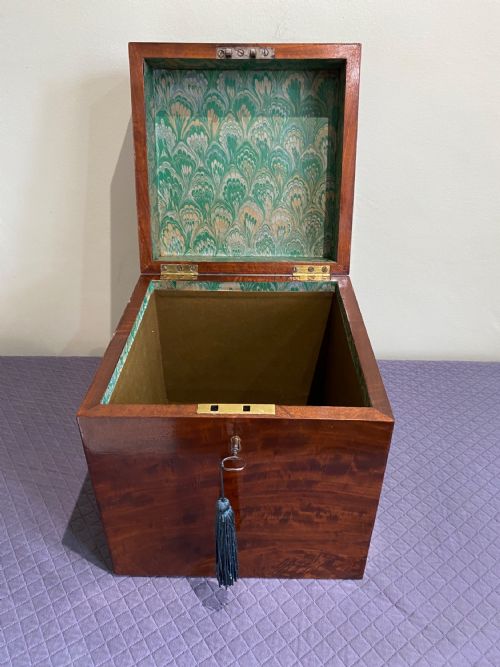
Cabinetmakers utilised dense hardwoods such as oak, mahogany, and burr birch, constructing sturdy boxes designed to withstand heavy bottles and frequent travel. Interiors were meticulously fitted with wooden dividers and velvet or silk linings to cushion the glassware.
Metalwork played a structural and decorative role, featuring heavy brass carrying handles, escutcheons, and locking mechanisms that secured the contents. Glass components typically arrived as hand-cut crystal decanters, shaped to fit precisely within the wooden framework.
Victorian hosts kept the gin secure from the butler while inviting guests to admire the crystal through the wooden bars.
What varies in quality
The calibre of a wooden decanter chest rests upon the selection of timber and the precision of its interior joinery. Finely figured mahogany or marquetry-strung oak paired with integrated games compendiums mark out the more ambitious examples from simpler single-bottle boxes.
Hardware and glass integrity dictate the overall standard of surviving pieces. Original cut crystal decanters matching the fitted compartments and functioning brass locks separate standard containers from exceptional library or drawing room pieces.
The Wooden Decanter Chest Glossary
- Tantalus
- A locking drink cabinet that holds decanters upright while displaying the bottles but preventing their removal without a key. This clever mechanism protected household spirits from unauthorized access by staff.
- Cellarette
- A lockable storage container for wine bottles and decanters, placed near the dining table in Georgian and Regency dining rooms. They often stood on sturdy legs or rested directly on the floor.
- Games compendium
- A multi-purpose box containing equipment for board games alongside a fitted decanter set and dry bar. These multifunctional pieces catered to Victorian and Edwardian leisure habits.
- Marquetry
- Decorative woodwork where thin pieces of veneer are fitted into a wooden panel to form intricate patterns. This technique frequently embellished nineteenth-century oak and mahogany boxes.
- Sheraton
- A neoclassical furniture style from the late eighteenth and early nineteenth centuries characterised by straight lines and satinwood inlay. Pieces from this tradition display refined geometric proportions.
Wooden Decanter Chest: Frequently Asked Questions
What is a tantalus?
A tantalus is a locking bar frame that secures decanters in place with a metal bar across their stoppers. The design allows guests to see the contents while keeping the bottles secure.
Most examples seen here date from the Victorian and Edwardian periods, often housing three cut crystal decanters alongside games compartments.
How do I date a decanter chest?
Dating relies on timber choice, hardware style, and construction methods. Georgian and Regency pieces typically show plain or inlaid mahogany, while Victorian and Edwardian versions favour oak, walnut, and elaborate brass mounts.
Interior fittings such as games boards and cut crystal sets also point to the specific decades of manufacture.
Can I use these with modern bottles?
Many historical decanter chests feature bespoke interior compartments tailored to the specific girth and height of period glassware. Modern bottles may not fit into the exact cavities designed for nineteenth-century cut crystal decanters.
Buyers intending to store contemporary spirits should check the internal dimensions of each fitted wooden section.