





Mahogany Bottle Box
These mahogany bottle box pieces are sturdy timber containers made to hold wine or medicine securely.
Mahogany Bottle Box
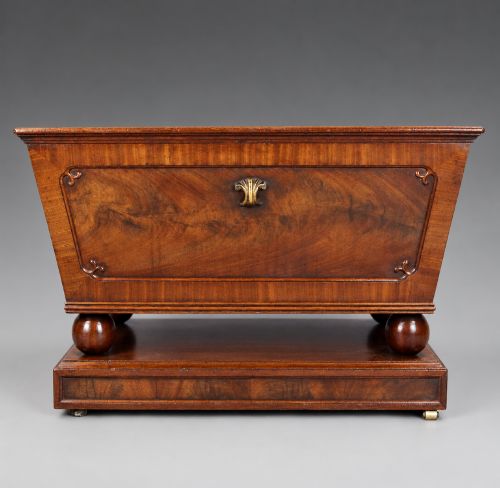
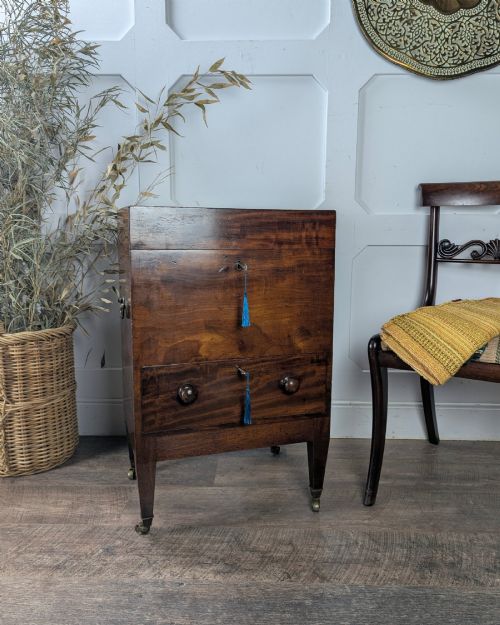
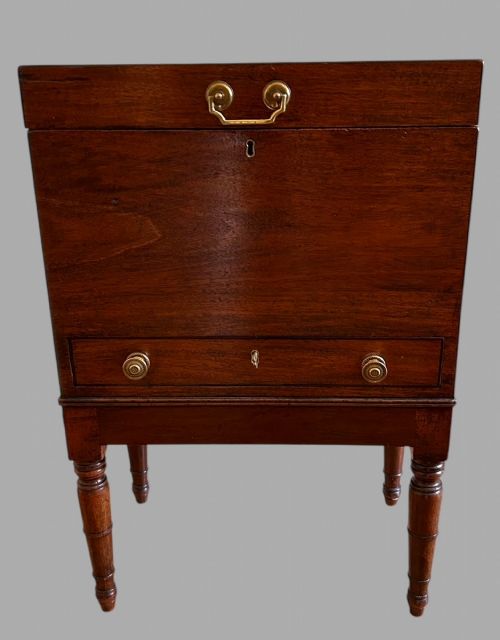
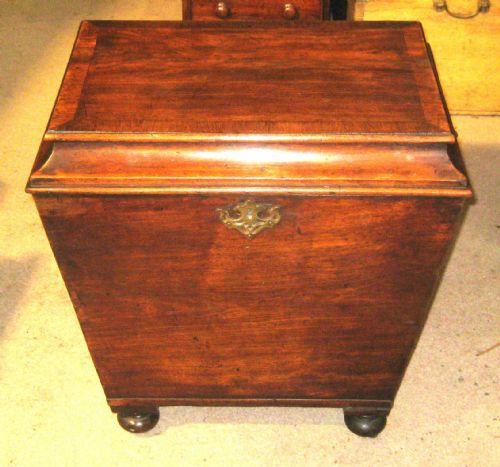
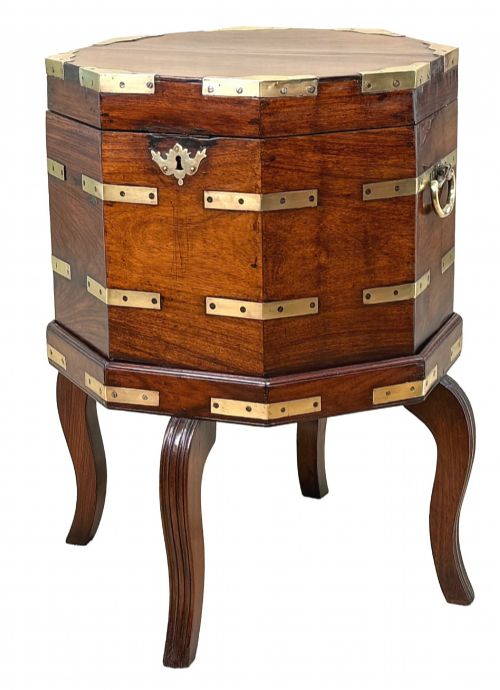
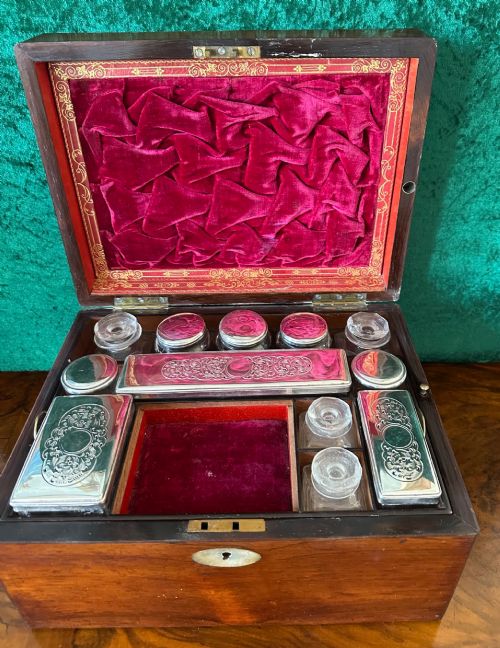
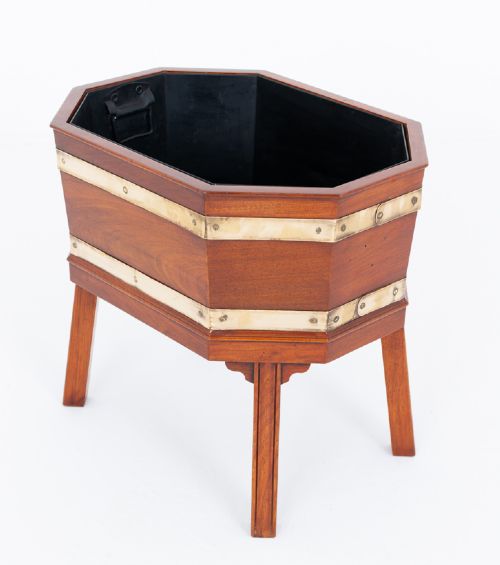
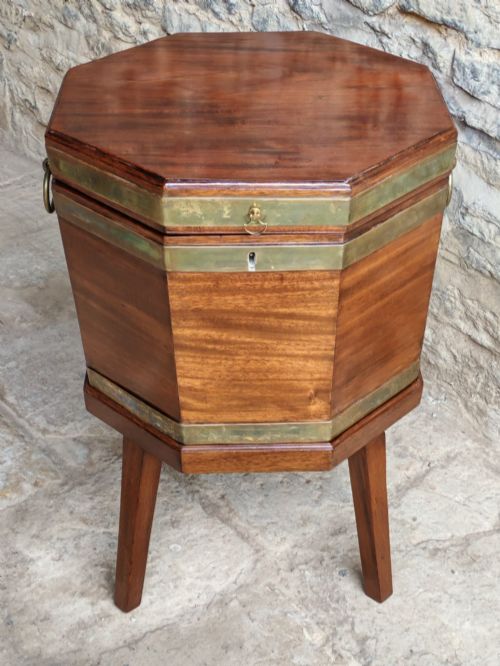
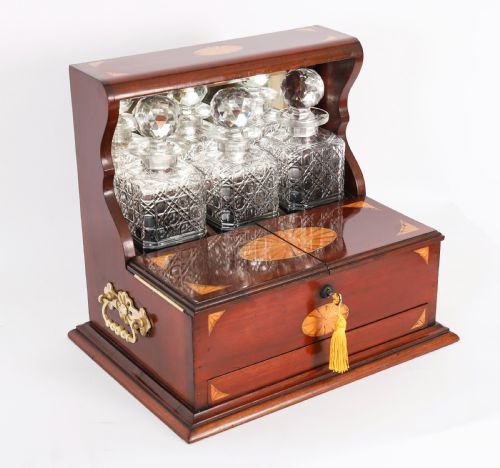
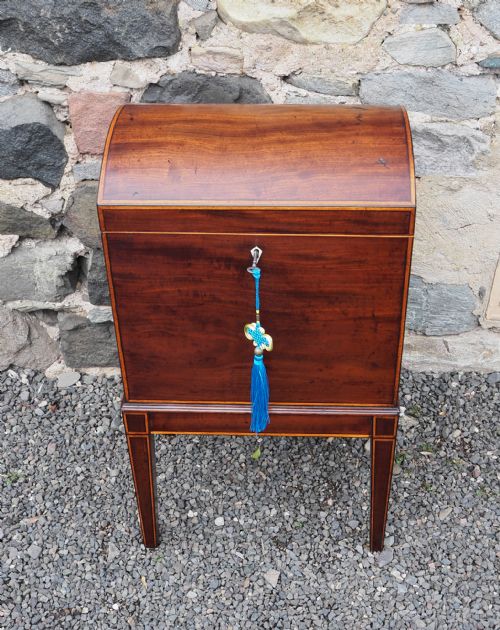
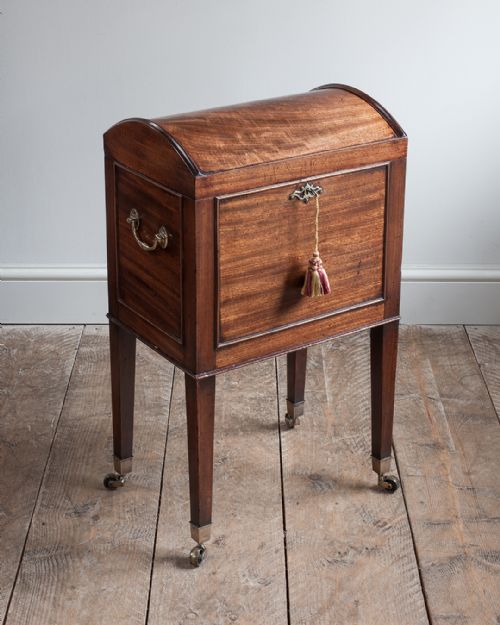
A mahogany bottle box is typically encountered on this page as a wine cooler, cellarette, or apothecary case dating from the 18th, 19th, and early 20th centuries. These timber containers served domestic and travel purposes, housing glass bottles or decanters safely within fitted interiors.
Most examples originate from the Georgian, Regency, and Victorian periods, often taking sarcophagus, octagonal, or oval forms. Makers utilised rich timbers to construct receptacles that sat in dining rooms or accompanied travellers on journeys.
How they were made
Craftsmen built these containers primarily using solid or flame mahogany, sometimes incorporating satinwood inlay, boxwood, and ebonised wood for contrast. Brass fittings, including bands, carrying handles, and locks, provided structural reinforcement and security.
Interiors frequently contained glass bottles, velvet linings, and compartmentalised sections designed to hold individual decanters or apothecary jars securely in place.
Listings feature 18th century, Georgian, Regency, and Victorian periods, alongside Edwardian and early 20th century examples.
What varies in quality
Quality rests in the selection of timber grain, such as figured flame mahogany, and the precision of boxwood or satinwood inlay work. Superior examples display robust brass mountings and well-preserved internal fittings, including original glass bottles.
Proportion and cabinet-making execution distinguish finer pieces, particularly where complex shapes like sarcophagus or octagonal forms meet careful jointing and patination.
Gillows of Lancaster and London
The Mahogany Bottle Box Glossary
- Cellarette
- A lockable container used for holding wine bottles, often kept in the dining room during the Georgian and Regency periods.
- Flame mahogany
- A veneer cut from the fork of the mahogany tree, prized for its distinctive torch-like grain pattern.
- Sarcophagus form
- A box shape featuring a domed lid and tapered sides, popular for wine coolers during the early nineteenth century.
- Apothecary box
- A fitted wooden chest designed to transport medical bottles, scales, and powders securely.
- Tantalus
- A locking beverage cabinet that displays decanters while preventing unauthorised access to the contents.
Mahogany Bottle Box: Frequently Asked Questions
What is a mahogany bottle box used for?
These boxes served primarily to store and transport glass wine bottles, decanters, or medical phials. They kept contents secure and organised in the dining room or during travel.
Interior compartments and fitted racks prevented glass bottles from shifting and breaking while moving between rooms or on journeys.
How do I identify a Georgian wine cooler?
Georgian wine coolers often feature classical architectural proportions, brass carrying handles, and solid mahogany or flame mahogany construction. Many take octagonal, oval, or sarcophagus shapes.
Dates typically range from the late eighteenth century through the early nineteenth century, displaying traditional cabinet-making techniques like hand-cut dovetailing.
How do I care for antique mahogany furniture?
Keep wooden boxes away from direct sunlight and sudden temperature changes to prevent the timber and veneer from splitting. Regular dusting with a dry cloth maintains the surface.
Apply traditional wax sparingly when the timber appears dry, buffing gently to preserve the natural patina developed over centuries.