

Georgian Mahogany Linen Press
A georgian mahogany linen press provides substantial storage while anchoring a room with dense timber and formal proportions.
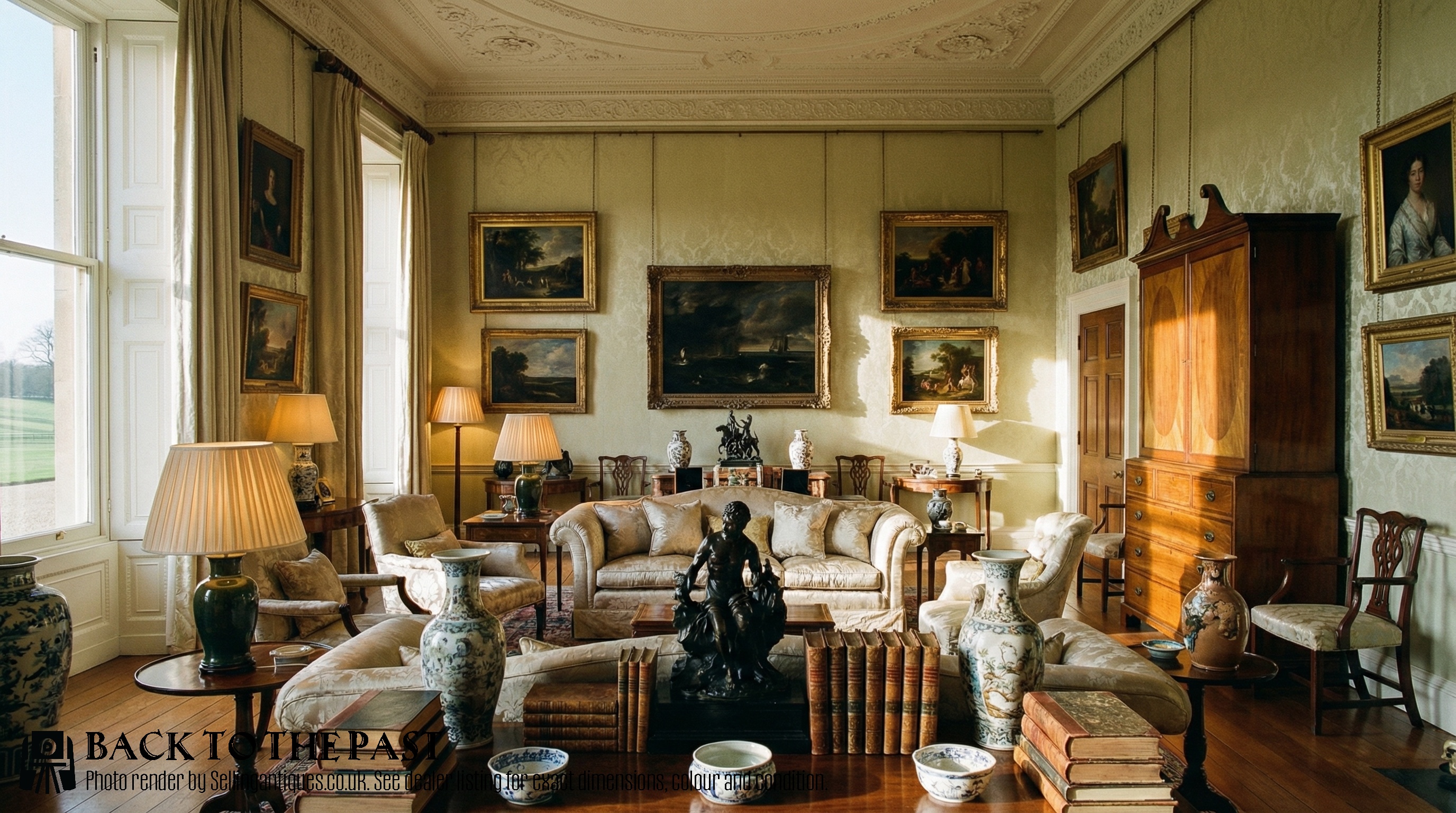
Georgian Mahogany Linen Press
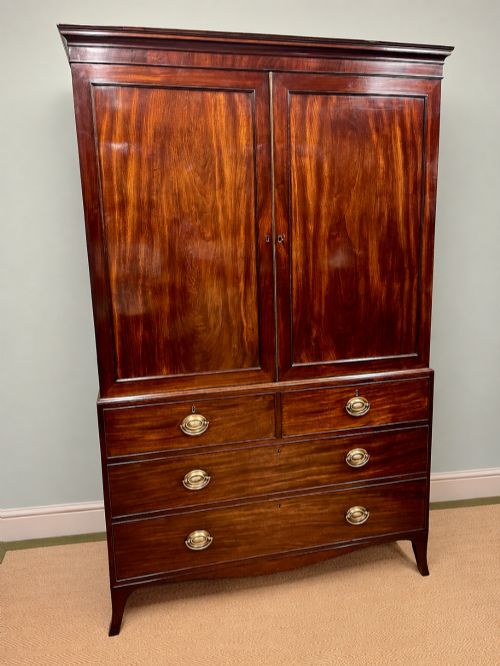
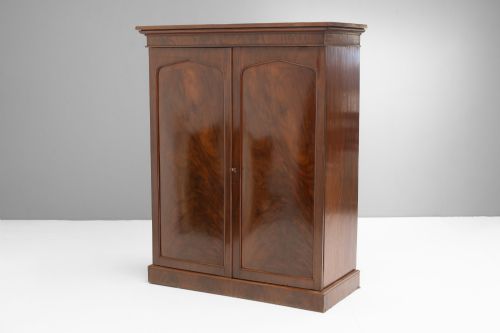
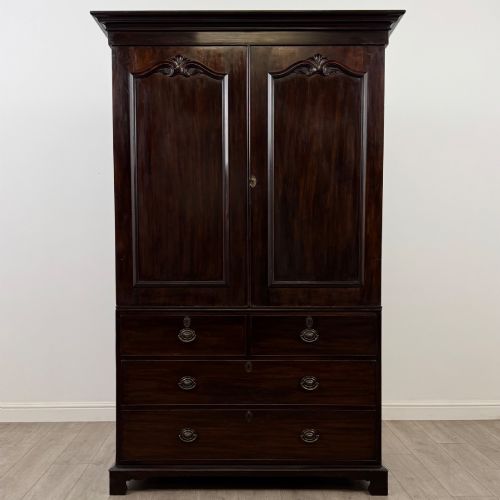
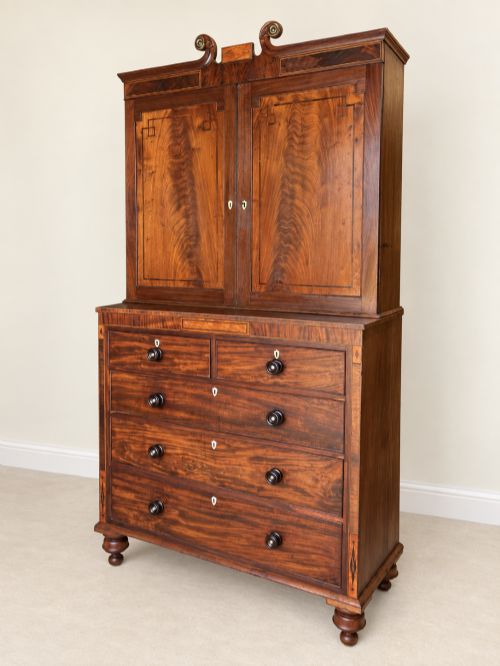
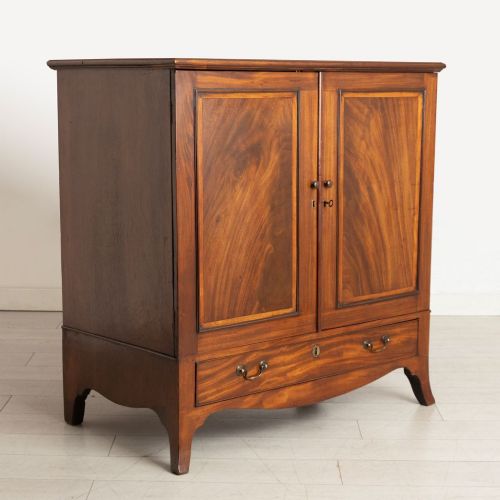
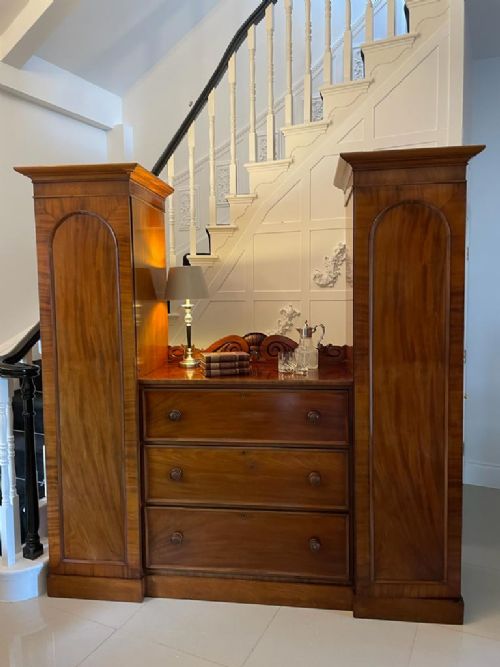
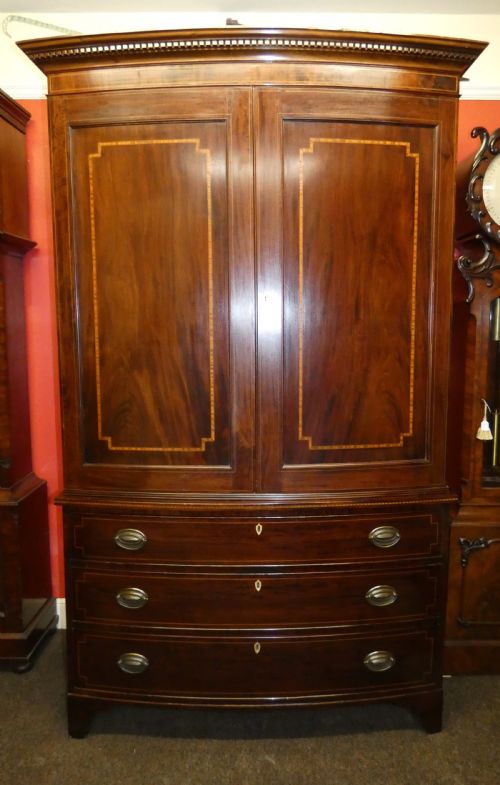
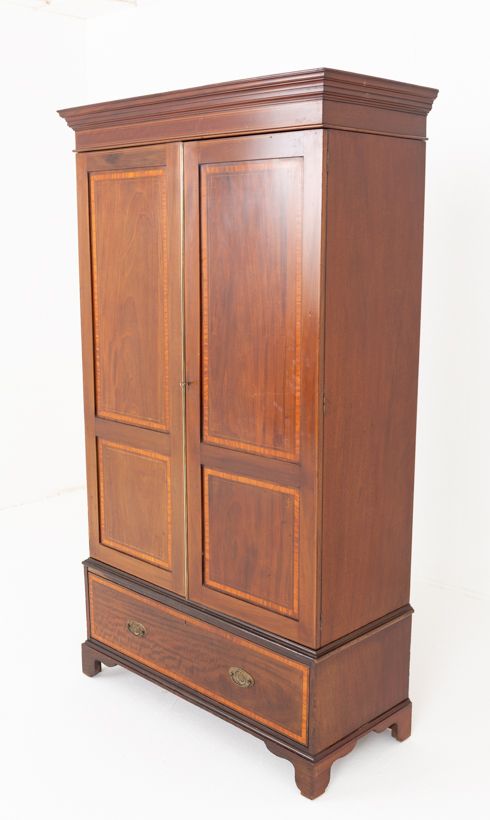
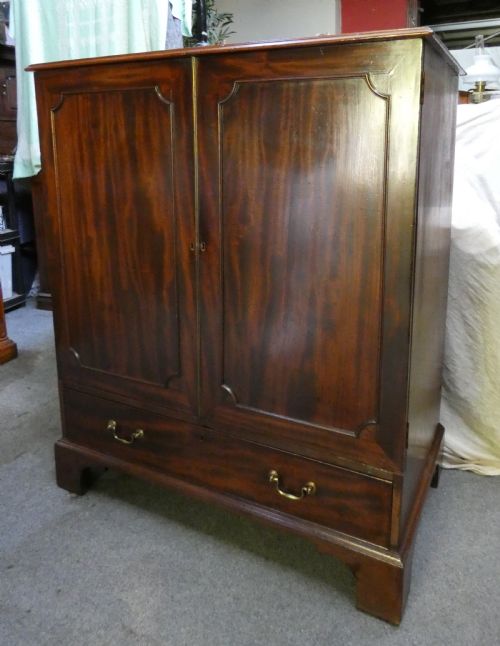
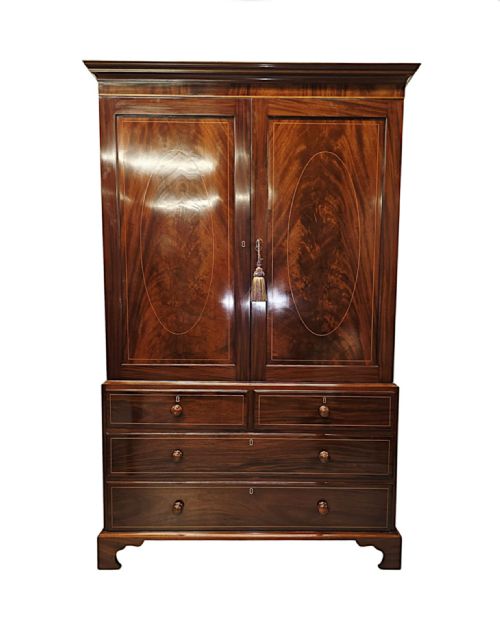
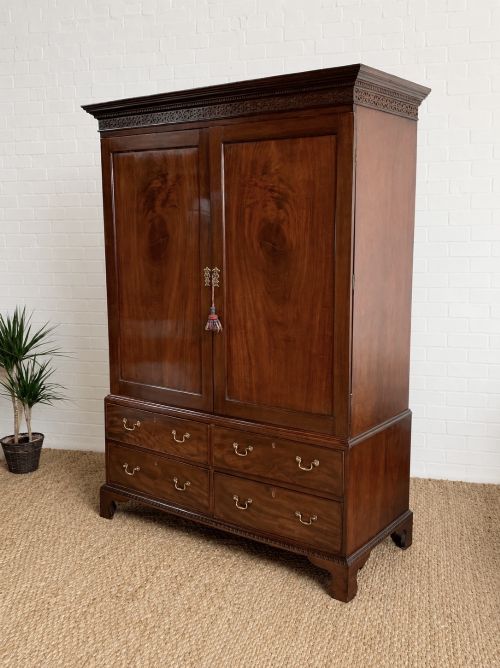
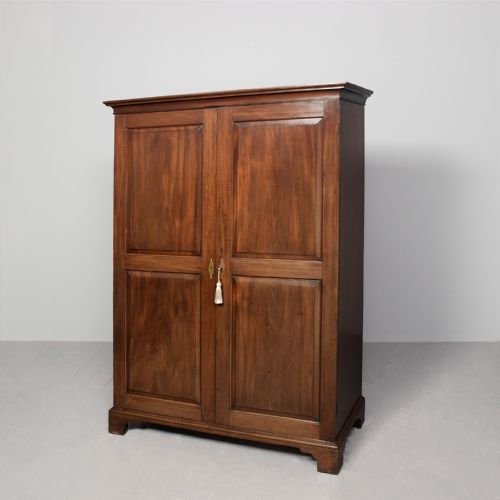
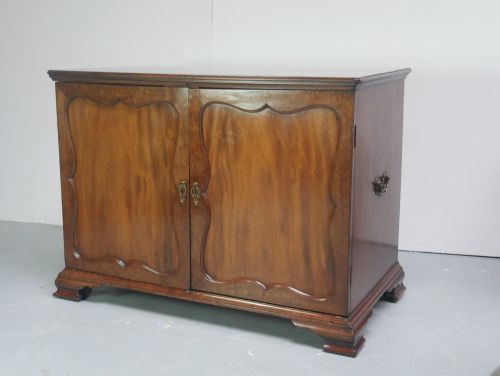
A georgian mahogany linen press is a tall, two-part piece of furniture combining upper sliding trays or shelves enclosed by doors with a lower chest of drawers. The pieces seen here span the eighteenth century, the regency era, and the nineteenth century, including dwarf formats, low linen presses, and grand breakfront designs.
The upper section typically houses linen slides or sliding trays behind panelled doors, whilst the base acts as a functional chest of drawers. Variants range from country house proportions to compact examples and tallboy forms with carved detail or blind fretwork cornices.
Makers utilised these dual-purpose cabinets in bedrooms and housekeepers' rooms to store folded garments and textiles safely. The surviving examples demonstrate domestic storage traditions evolving across the georgian and regency periods.
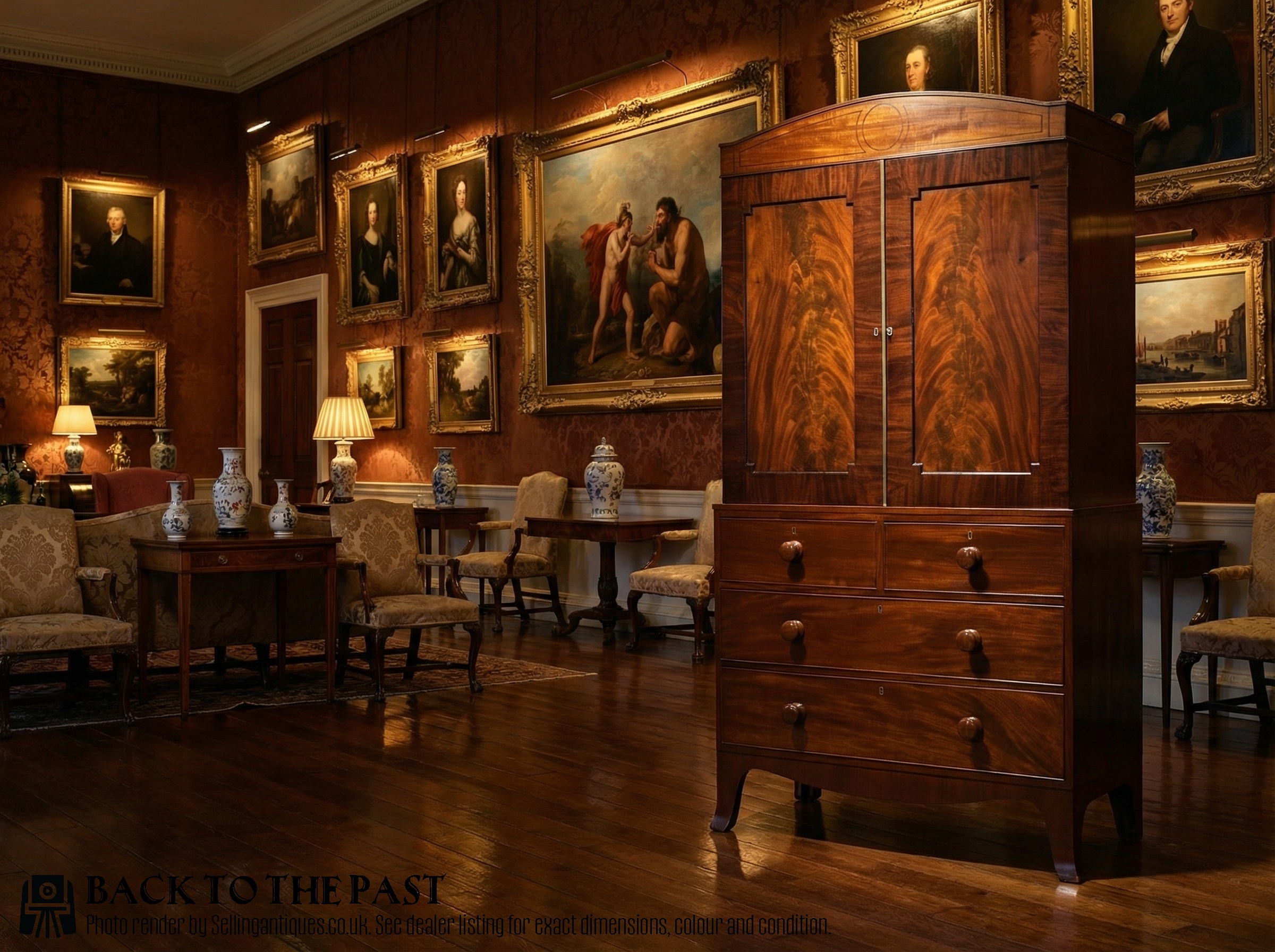
Materials and Techniques
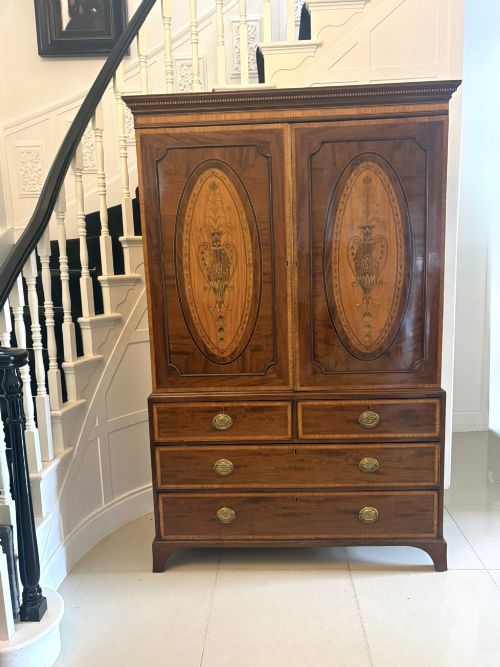
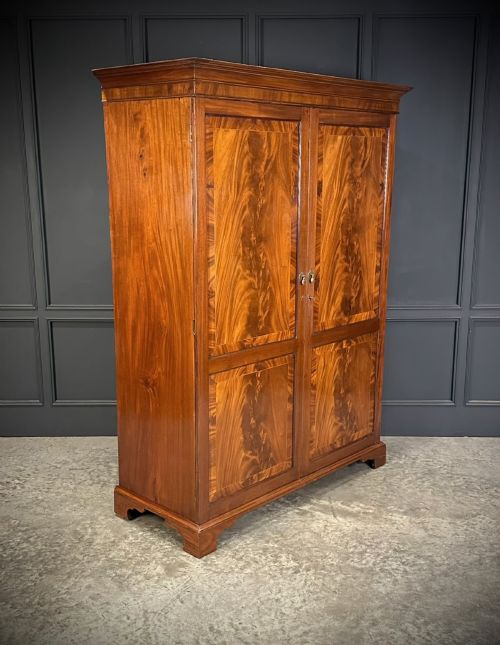
Makers constructed these cabinets using solid mahogany and flame mahogany veneer, often enhanced with satinwood inlay, boxwood, ebony line inlay, and rosewood crossbanding. Secondary woods such as oak appear in internal drawer linings and carcass framing.
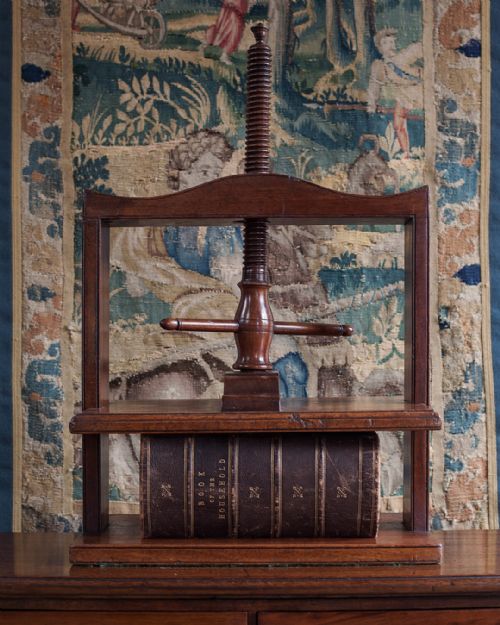
Surface decoration relies on figured timber grains, marquetry panels, and brass hardware including original lion head handles. Structural joinery incorporates hand-cut dovetails within the drawers and specialised mechanisms such as internal screw presses in provincial examples.
Georgian Mahogany Linen Press Retail Price Guide 2026
Typical asking prices for georgian mahogany linen press among the pieces listed under this phrase on Sellingantiques today, from the lower quarter to the upper quarter. They describe what is for sale here now, not the wider market.
Surviving forms span standard linen presses, dwarf presses, compactums, and secretaire bookcases.
Assessing Craftsmanship
Quality rests in the selection of timber veneers, where highly figured flame mahogany and crisp satinwood inlay elevate the visual presence of the facade. The harmony of proportions between the upper cabinet and the lower chest dictates the visual success of the piece.
Refinement shows in the execution of secondary details, from hand-carved blind fretwork cornices to the retention of original brass handles and working interior slides. Lesser examples display plainer secondary timbers and simplified joinery without decorative banding.
Gillows
The Georgian Mahogany Linen Press Glossary
- Linen Press
- A tall storage cabinet featuring upper doors enclosing sliding trays above a chest of drawers. It originally stored flat textiles before the widespread use of hanging wardrobes.
- Flame Mahogany
- A veneer cut from timber fork where the grain pattern resembles flickering flames. It provides the striking rippled figures seen on high-end cabinet doors.
- Blind Fretwork
- Carved decorative openwork glued onto a solid background surface without piercing right through to the timber beneath. This technique ornaments cornices on cabinet pieces.
- Crossbanding
- A narrow strip of veneer laid across the grain direction around the perimeter of a panel or drawer front. It creates a formal border using contrasting timber species.
- Compactum
- A multi-compartment wardrobe combining hanging space, shelves, and drawers within one unified carcass. These large units emerged during the nineteenth century.
Georgian Mahogany Linen Press: Frequently Asked Questions
What is inside a linen press?
The upper section contains wooden sliding trays or shelves originally designed to hold folded linen and household textiles. The lower section consists of a chest of drawers for additional clothing storage.
These interior compartments allowed households to keep garments flat and organised before hanging wardrobes became standard bedroom furniture.
How do I date a georgian linen press?
Dating relies on architectural details, timber choices, and hardware styles across different periods. Eighteenth-century examples often feature solid proportions and restrained cornices, whilst later pieces incorporate satinwood inlay and figural flame veneers.
Secondary woods and construction methods inside the drawers also help verify the manufacturing era.
Where were linen presses used?
They stood primarily in bedrooms, dressing rooms, and housekeepers' rooms within large country houses and town residences. Their dual-purpose storage made them essential pieces for managing domestic linens and gentleman's attire.
Today, they function effectively in modern bedrooms as substantial wardrobes or linen storage cabinets.
What is a dwarf linen press?
A dwarf linen press is a lower, more compact version of the standard tall cabinet. These pieces sit closer to the floor while retaining the dual configuration of upper doors and lower drawers.
They were built for rooms with lower ceilings or spaces requiring less vertical bulk than a traditional tallboy.