



Georgian Mahogany Library Table
These pieces combine the rich grain of mahogany with the practical design of the Georgian era, offering a centrepiece for study or writing.

Georgian Mahogany Library Table
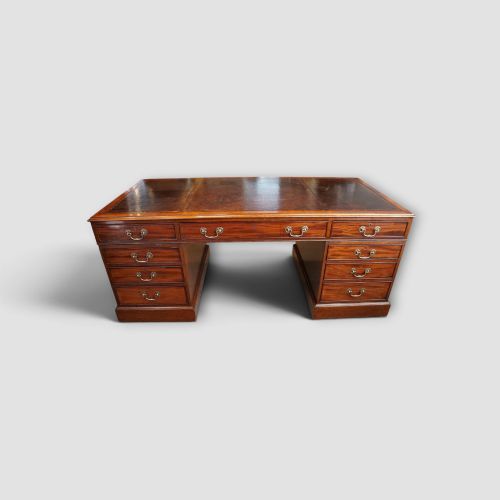
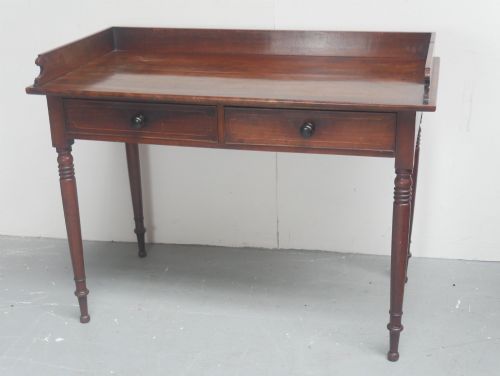
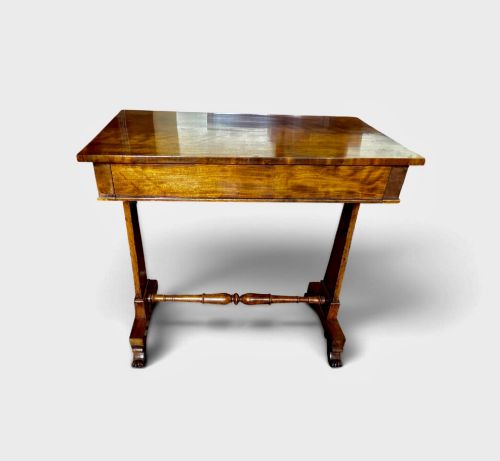
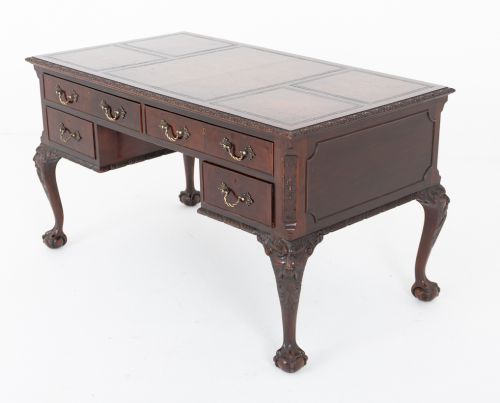
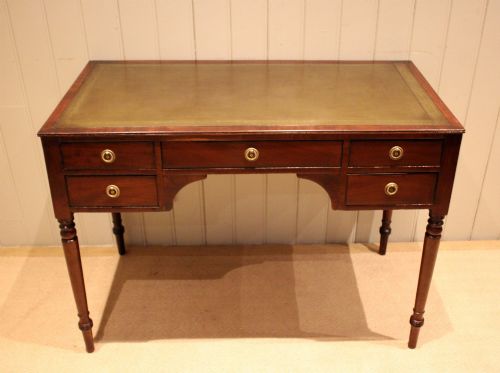
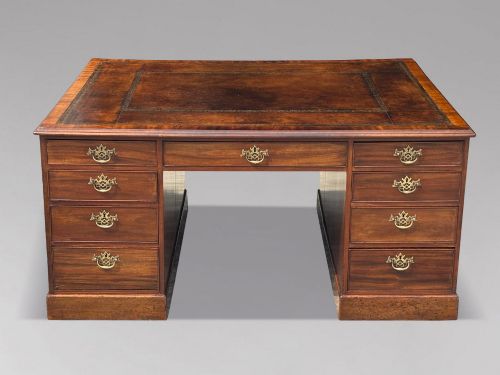
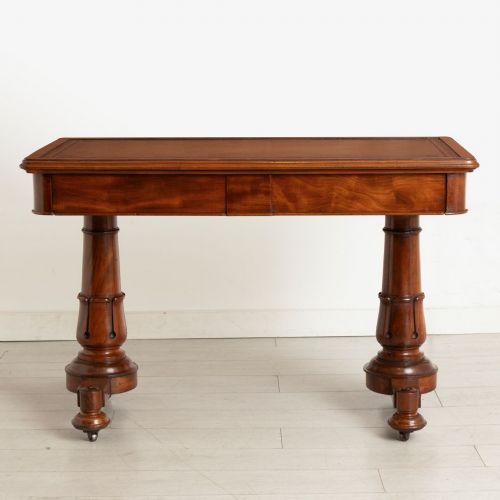
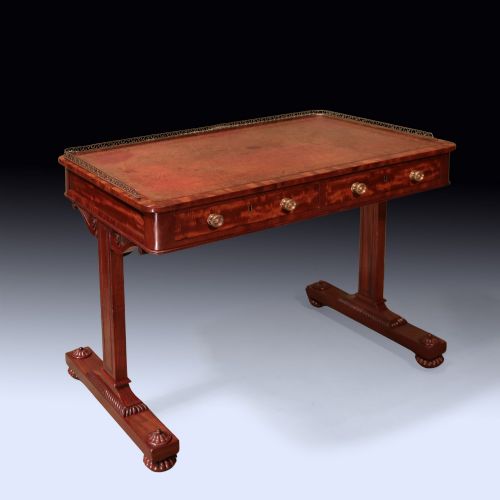
When you search for a georgian mahogany library table, you encounter substantial writing surfaces, partners desks, and drum tables originating from the eighteenth and nineteenth centuries. The listings span Georgian, Regency, and Victorian periods, reflecting the enduring demand for functional antique workspace furniture.
The selection ranges from small reading tables and drop-leaf sofa tables to large partners desks featuring wide kneeholes and multiple drawers. Most examples utilise mahogany as the primary timber, occasionally paired with rosewood or satinwood details.
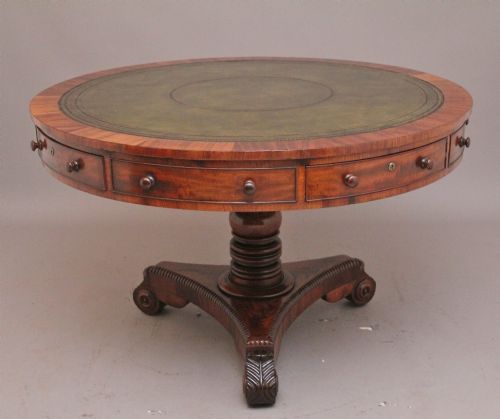
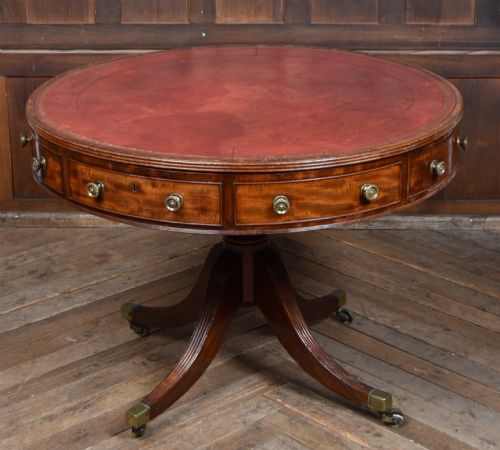
The forms encompass drum tables, pedestal desks, and writing tables styled in the manner of Chippendale or Sheraton. Buyers find both authentic period items and later revival pieces designed for scholarly or domestic use.
How they were made
Cabinet makers constructed these items primarily from solid and veneered mahogany, incorporating brass fittings such as castors, handles, and inlay. Leather inserts appear frequently on writing surfaces, providing a durable plane for daily correspondence.
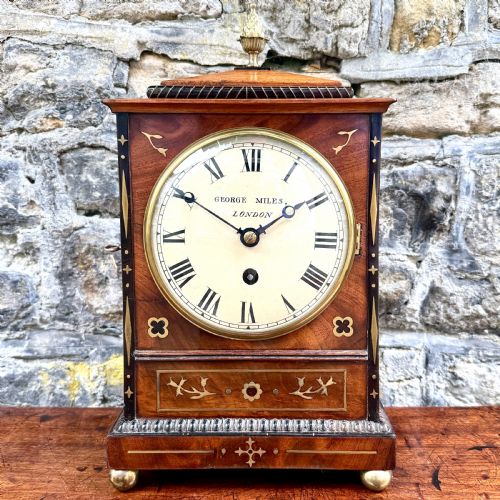
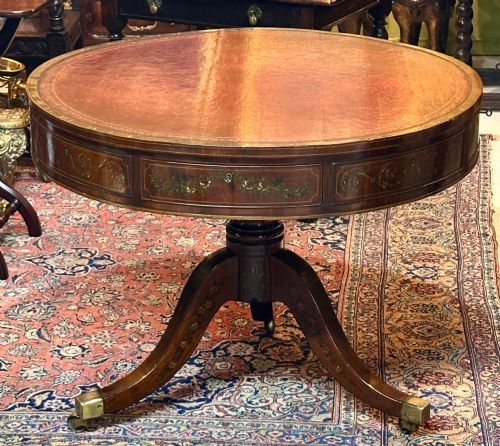
Joinery techniques relied on precise timber selection, with secondary woods supporting the heavier structural elements of pedestals and drawers. Brass inlay and wood inlay decoration adorned the borders of tops and friezes on select Regency and Georgian pieces.
The inventory spans Georgian, Regency, Victorian, George III, and Chippendale Revival styles dating from the eighteenth to the late nineteenth century.
What varies in quality
The standard of a piece rests upon the figure of the mahogany timber and the crispness of any carved detailing or brass inlay. Original surface patination and intact leather writing inserts indicate careful preservation over centuries.
Construction integrity distinguishes workshop output, seen in the smooth operation of drawer runners and the stability of pedestal bases. Pieces retaining their original brass hardware and period castors hold greater architectural harmony.
Nairne and Blunt·Bush of London·Webster Cornhill London·Gillows
The Georgian Mahogany Library Table Glossary
- Mahogany
- A durable tropical hardwood imported from the West Indies and Central America, prized for its deep reddish-brown colour and stable grain. Cabinet makers utilised it extensively for high-status domestic furniture from the eighteenth century onwards.
- Drum table
- A circular library table containing a rotating or stationary top with an arrangement of frieze drawers around the perimeter. These stood typically on a single central pillar supported by tripod or quadruped legs.
- Partners desk
- A large double-sided desk designed for two people to work opposite one another, featuring drawers and cupboards on both faces. They became essential furnishings in libraries and studies during the Georgian and Victorian periods.
- Sofa table
- A rectangular drop-leaf table designed to stand in front of a sofa, characterised by end-supports or twin pedestals and small drawers. Makers introduced them during the Regency period for versatile entertaining and writing.
- Brass inlay
- A decorative technique involving the precise insertion of thin brass strips or motifs into channels cut within the wood surface. This ornamentation defines many fine Regency and late Georgian tables.
Georgian Mahogany Library Table: Frequently Asked Questions
How do I date a library table?
Dating relies on examining the timber species, construction methods, and stylistic cues of the period. Georgian pieces often display restrained lines and bracket or pedestal feet, whereas Regency examples introduce brass inlay and bolder pedestal supports.
Secondary woods inside drawers and the type of fixings used also provide evidence of age. Comparing the design to known eighteenth and nineteenth-century workshop patterns helps narrow the decade of manufacture.
How were drum tables used?
Drum tables provided a compact workspace with accessible storage arranged in a circle around the user. The rotating top allowed a person to reach different compartments without moving from the seat.
Placed in the centre of libraries or drawing rooms, they held books, writing instruments, and documents. Their freestanding nature meant they could be approached from any angle.
Are these tables suitable for daily office use?
These tables adapt well to contemporary workspaces, offering sturdy surfaces and functional drawer storage for modern equipment. Their generous dimensions accommodate laptops and paperwork comfortably.
Placing a protective glass sheet over a leather writing top prevents accidental damage during daily tasks. Regular waxing preserves the polish and protects the mahogany from wear.