
Georgian Mahogany Library Bookcase
A Georgian mahogany library bookcase is a formidable piece of architectural furniture designed to house serious volumes in grand rooms.
Georgian Mahogany Library Bookcase
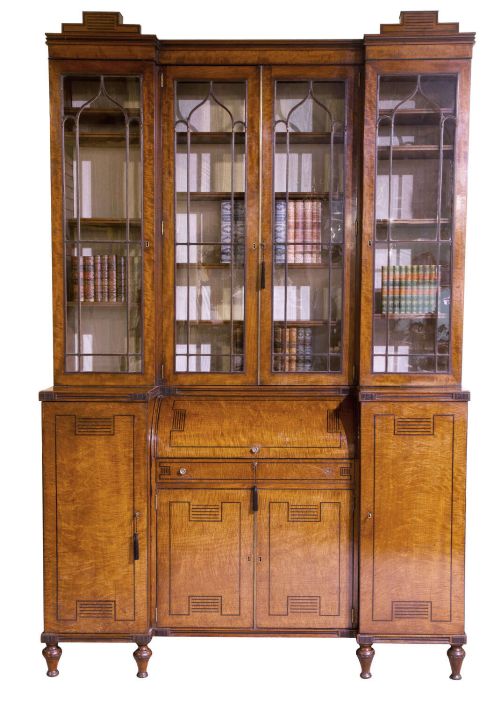
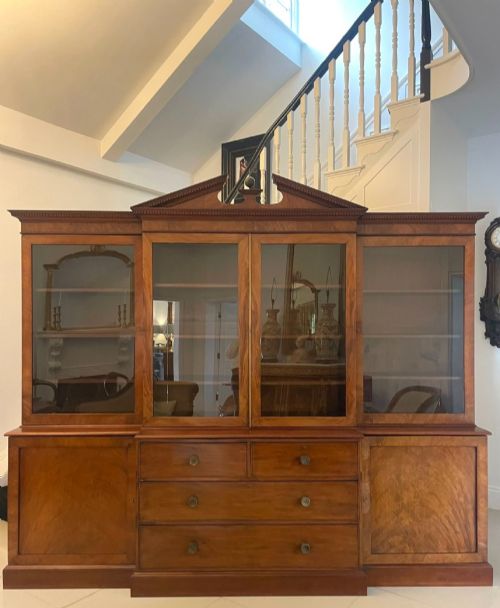
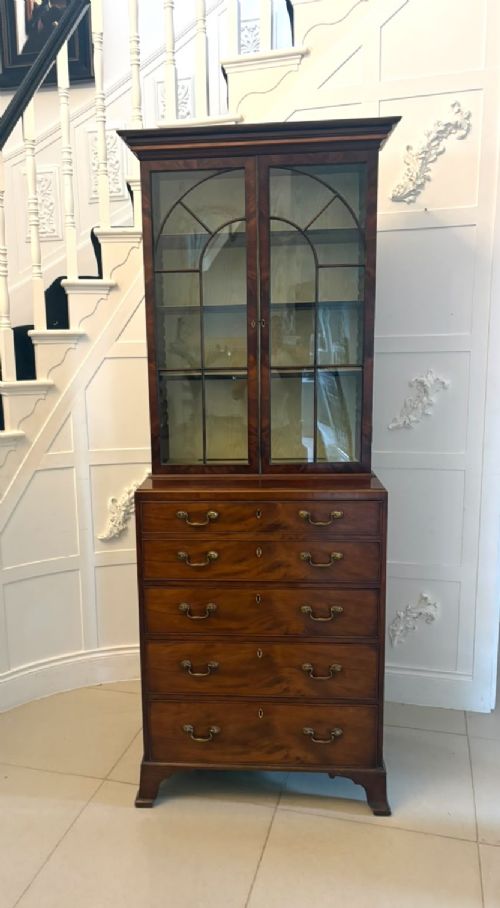
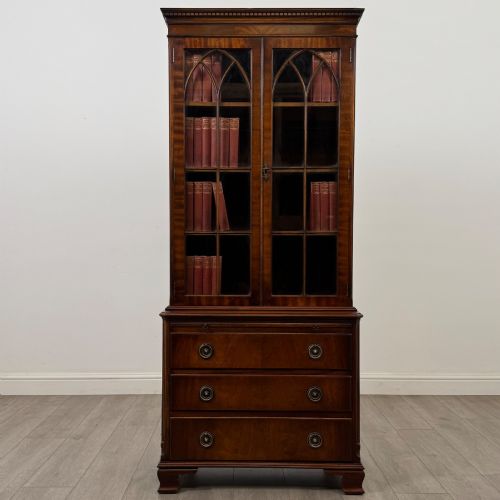
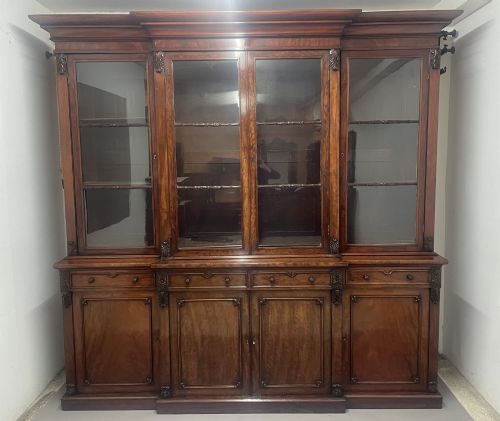
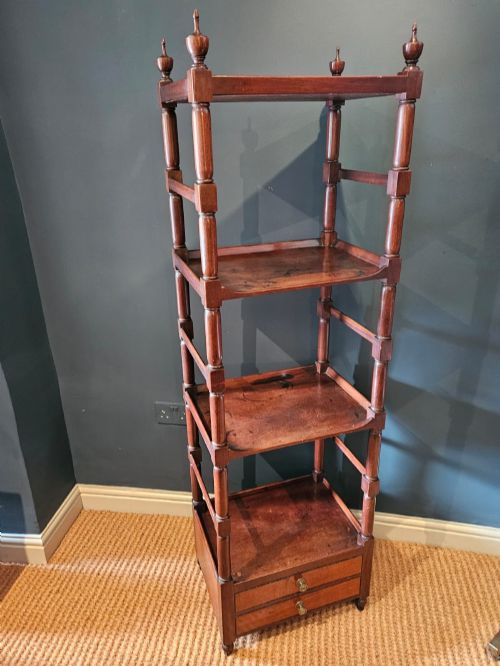
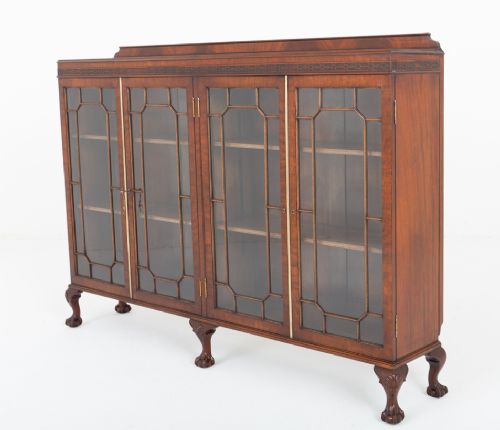
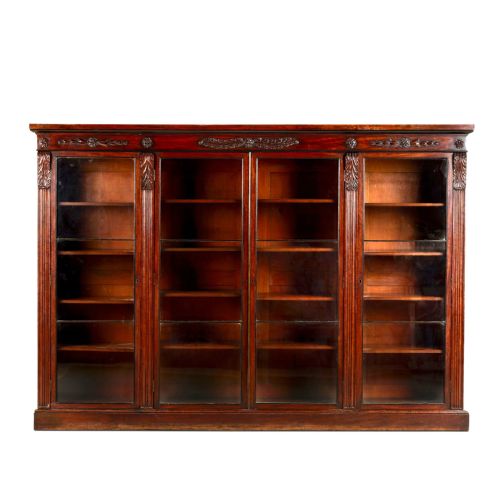
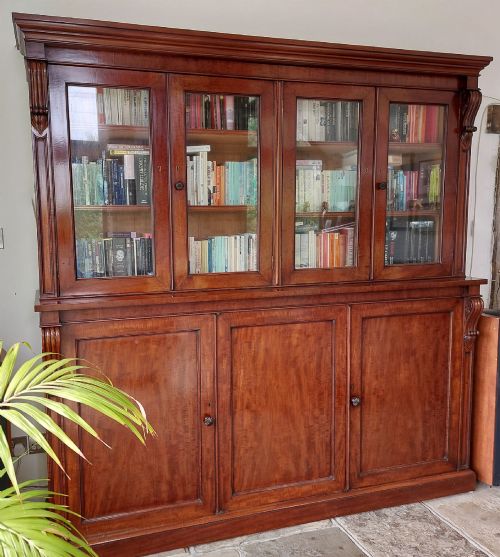
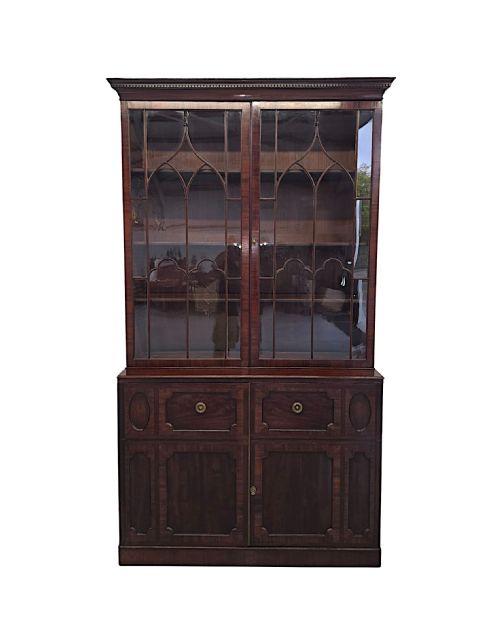
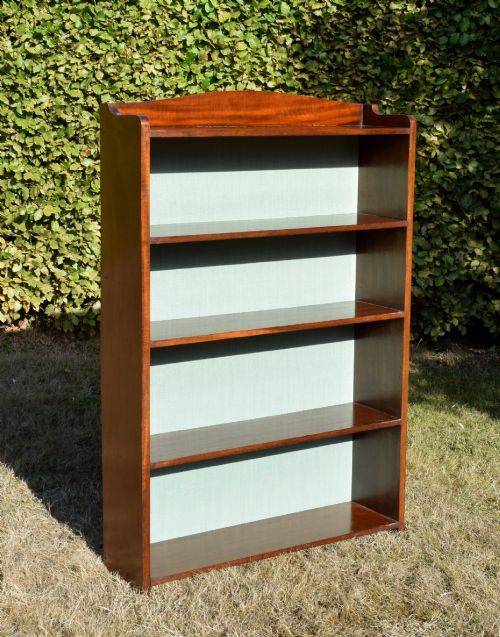
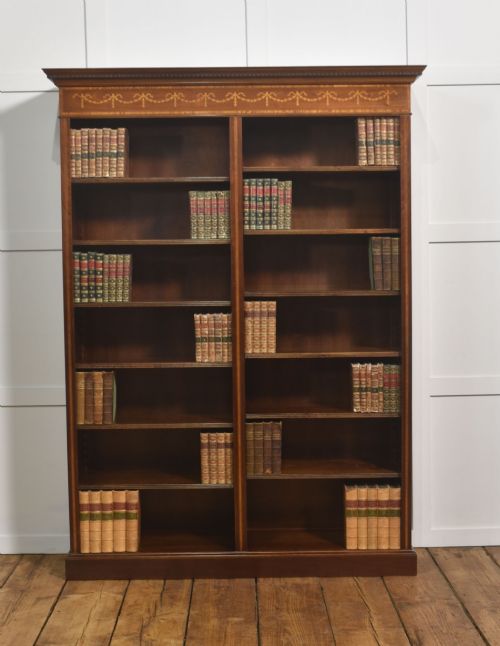
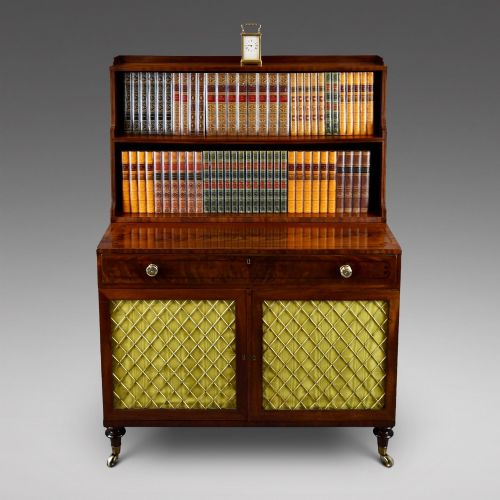
A Georgian mahogany library bookcase brings together architectural presence and functional storage, appearing here in formats ranging from grand breakfront cabinets to open shelf units and secretaire models. The pieces span the Georgian era proper, the Regency period, and later revivals such as Edwardian and Sheraton Revival interpretations.
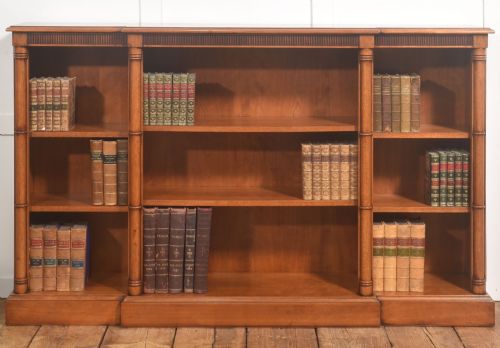
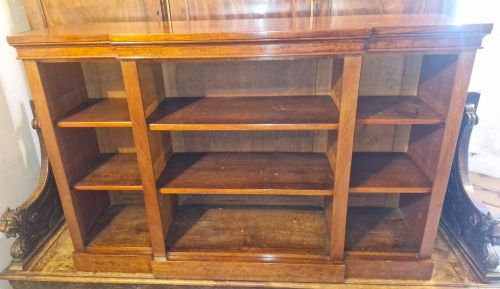
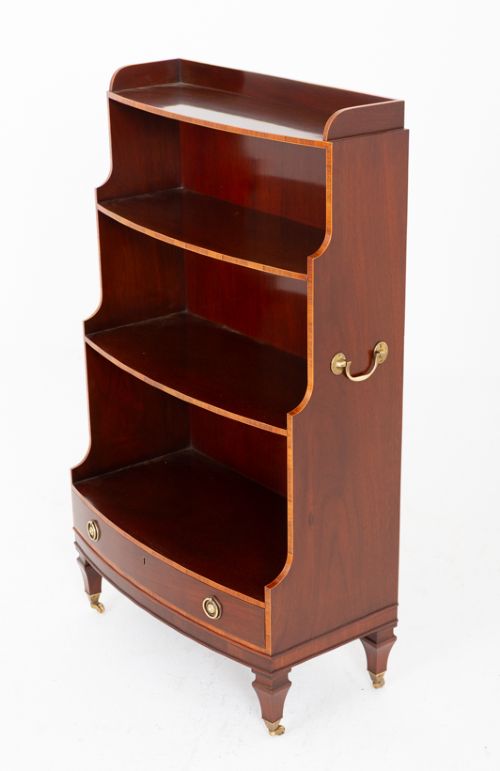
Buyers will encounter tall glazed top bookcases, multi-door breakfront carcasses, and smaller waterfall or open shelf variants. These works frequently incorporate lower cupboards or chest bases beneath glazed upper sections, reflecting the traditional demands of domestic and institutional libraries.
Materials and construction methods
Makers utilised solid mahogany and figured mahogany veneers over secondary timbers such as pine, combining structural stability with rich grain patterns. Glass panels are held within delicate astragal bars, while brass hardware provides functional fittings and decorative accents.
Listings feature periods spanning the eighteenth, nineteenth, and early twentieth centuries, utilising mahogany, satinwood, glass, and brass.
Distinctions in craftsmanship and design
Quality rests upon the selection of timber figures, such as flame mahogany, and the precision of the cabinetmaker's joinery in the glazing bars and drawer linings. Finer examples display harmonious proportions, sophisticated wood inlay, and original brass fittings.
The architectural hierarchy of the cornice and the execution of breakfront styling separate standard utilitarian storage from pieces originating in notable workshops. Greater refinement shows in balanced door configurations and the integration of secretaire drawers with fitted internal compartments.
Gillows·Waring and Gillows·Wylie and Lochhead·Maple and Co.
The Georgian Mahogany Library Bookcase Glossary
- Breakfront
- A cabinet design where the central section projects forward from the flanking wings. This configuration creates architectural depth and commands greater visual weight in a room.
- Astragal glazed
- A glass door divided into panes by thin wooden strips called glazing bars. These intersecting bars form geometric or Gothic patterns across the bookcase front.
- Secretaire bookcase
- A hybrid form featuring a pull-down writing drawer with fitted small drawers and pigeonholes concealed inside. It combines a writing desk with upper shelving.
- Waterfall bookcase
- A set of open shelves that progressively step back or widen from top to bottom in a cascading profile. This lighter form suits smaller collections or domestic studies.
- Wood inlay
- The technique of inserting contrasting veneers into the primary timber surface to create decorative borders or motifs. Satinwood and ebony are frequent choices for this ornament.
Georgian Mahogany Library Bookcase: Frequently Asked Questions
How do I fit a large bookcase into a modern room?
Measure ceiling height and wall space carefully before selecting a breakfront or tall library bookcase, ensuring clearance for doors to open fully.
Anchor heavy pieces securely to the wall to guarantee stability, particularly when housing substantial collections of heavy books.
What is the difference between glazed and open bookcases?
Glazed bookcases protect valuable bindings from dust, light, and atmospheric moisture behind glass doors, often featuring lockable mechanisms.
Open bookcases offer immediate accessibility and visual lightness, making them suited for everyday volumes and decorative displays.
How do I distinguish a Regency piece from a Georgian original?
Regency pieces often incorporate bolder brass mounts, classical architectural motifs, and darker exotic veneers inspired by ancient Roman and Greek designs.
Georgian examples tend to emphasise cleaner proportions, subtle carving, and traditional mahogany grain without heavy decorative metalwork.
Where were these pieces originally used?
These cabinets stood in the private libraries, studies, and drawing rooms of large country houses and urban townhouses.
They served scholars and collectors who required secure, organised storage for large leather-bound volumes and manuscripts.