
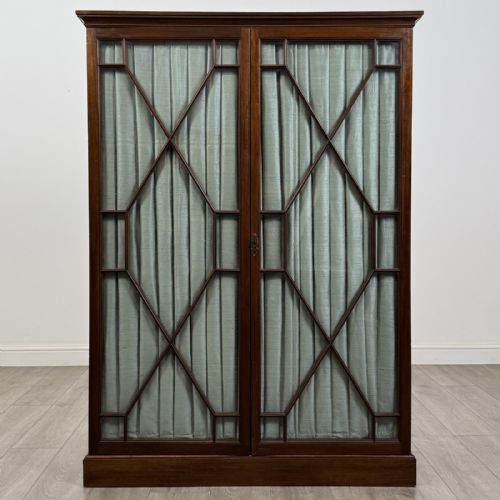
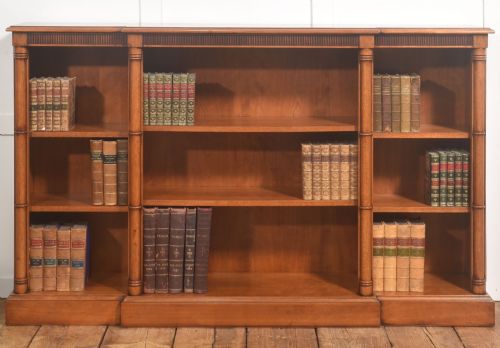
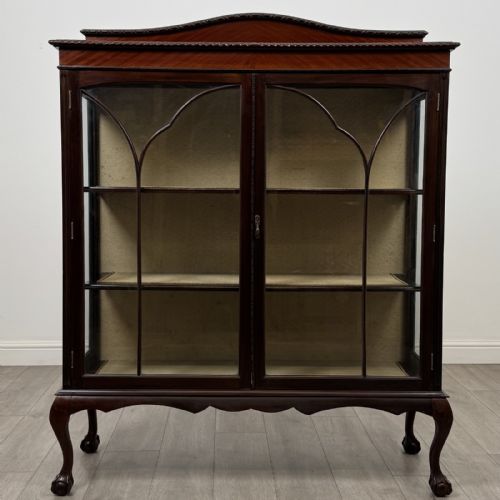
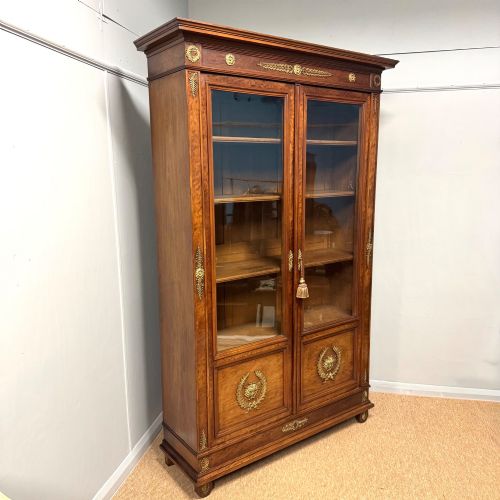
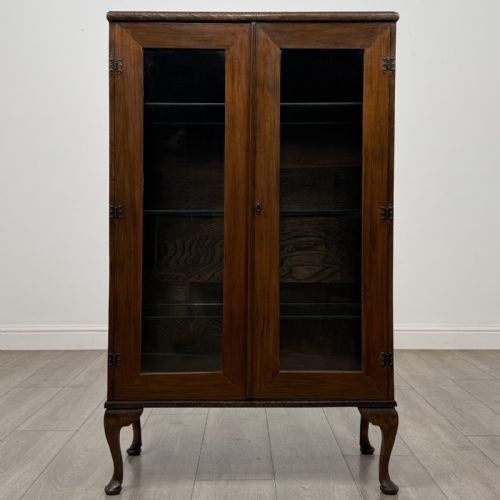
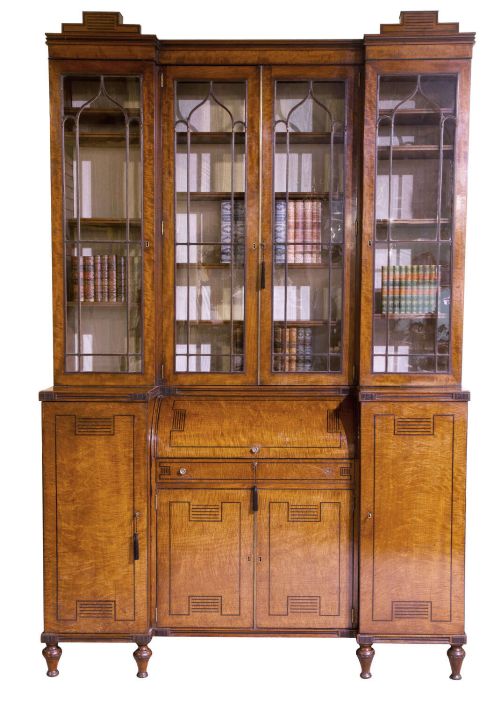
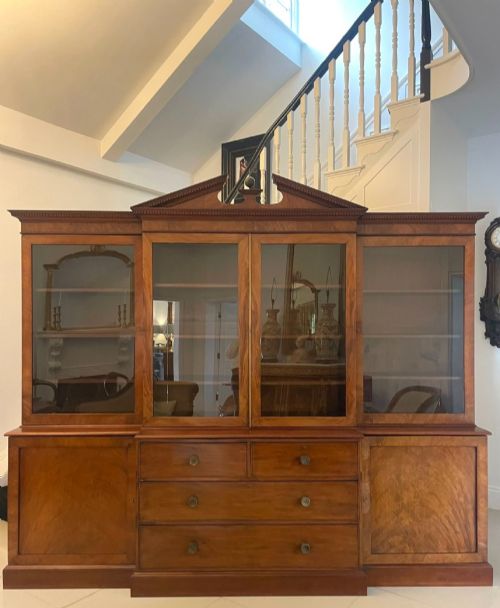
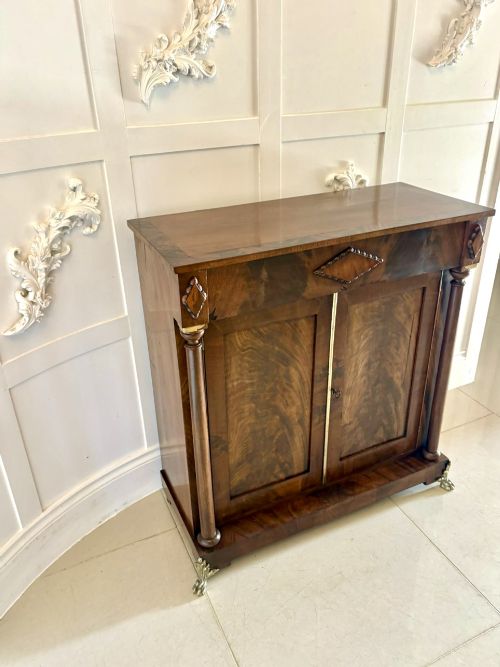
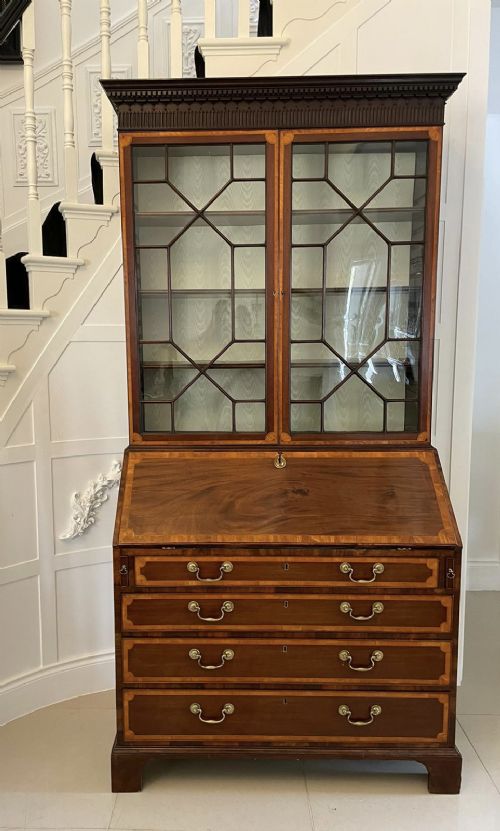
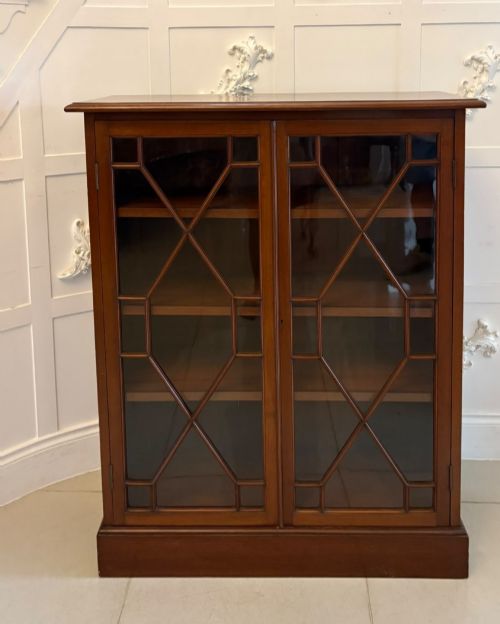
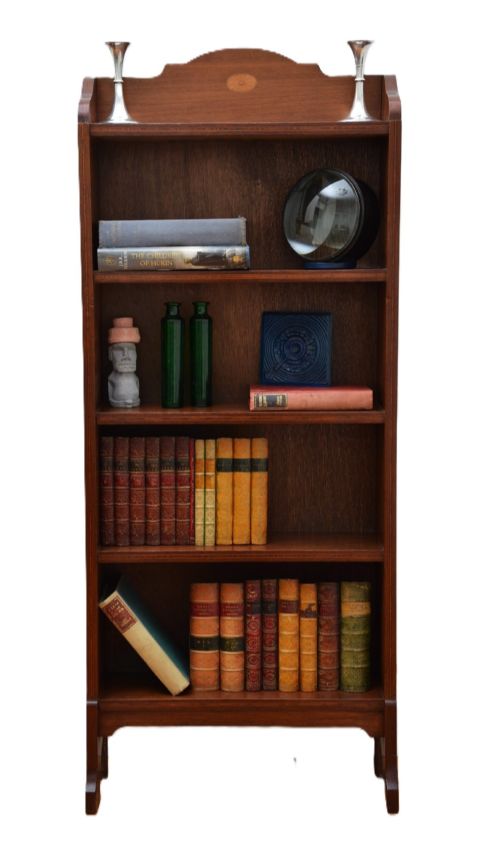
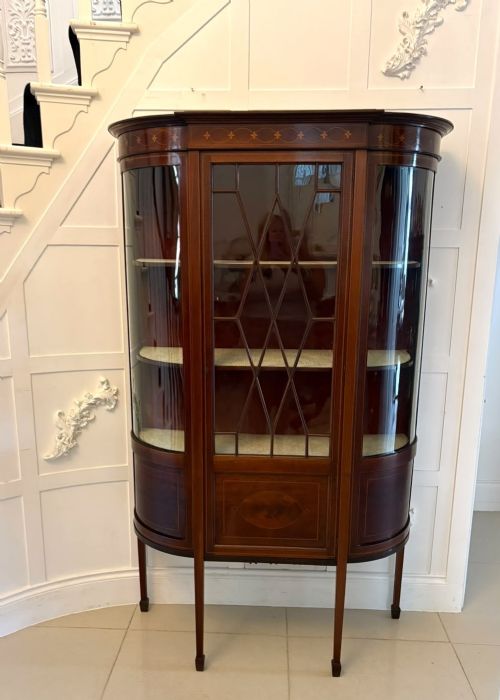
Brown Mahogany Bookcase Cabinet
These brown mahogany bookcase cabinet designs combine timber storage with display, offering a practical home for volumes and porcelain.
Brown Mahogany Bookcase Cabinet
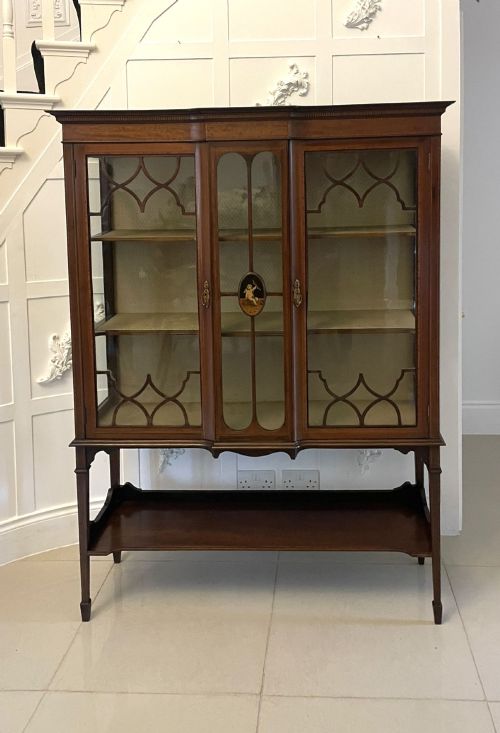
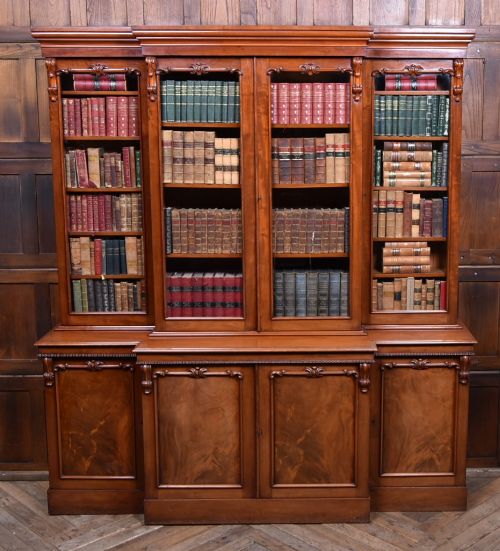
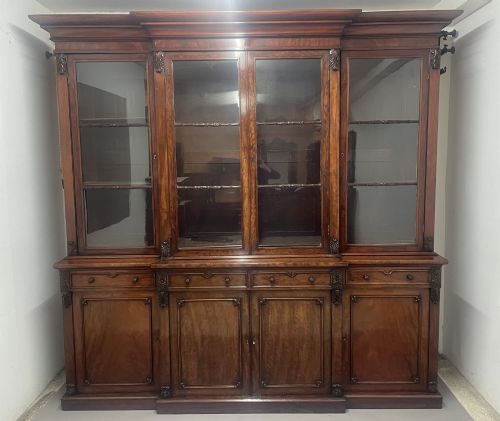
A brown mahogany bookcase cabinet merges shelving with enclosed storage or display space, uniting two essential room functions in one timber silhouette. Pieces span George II, George III, Regency, William IV, Victorian, and Edwardian periods, stretching from the eighteenth century into the twentieth.
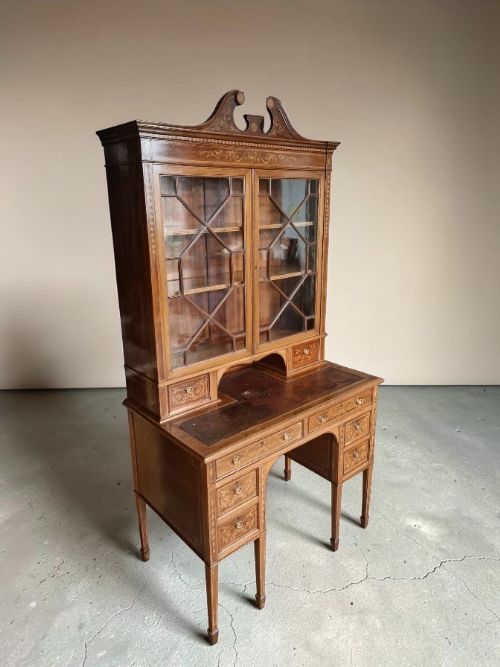
The Edwardian iterations often feature satinwood inlay, bow-ends, or delicate spade feet, while earlier Georgian and Regency examples favour architectural breakfront proportions and figured timbers. Glazed doors appear frequently to protect books and display items from dust whilst keeping them visible.
Bureau bookcases and secretaire variants integrate a fitted writing drop-front desk into the central section, providing workspace alongside upper shelving. Open bookcases and side cabinets supplement these taller formats for rooms requiring lower profiles.
Quality differences
The distinction between standard items and superior examples lies in the selection of timber figure, such as highly figured flame mahogany or carefully matched veneer panels. Finer pieces demonstrate meticulous attention to inlay work, such as delicate satinwood banding and stringing.
Proportion and architectural harmony dictate the upper tier of craftsmanship, where breakfront cornices and well-balanced door divisions show deliberate planning by the maker. Original glass, painted interior decoration, and stable brass castors elevate the historical integrity of a piece.
Display cabinets and secretaire bookcases form the predominant object types within these furniture records.
The Brown Mahogany Bookcase Cabinet Glossary
- Breakfront
- A piece of furniture with a central section that projects forward from the flanking sides. This architectural arrangement creates depth and shadow on large library bookcases.
- Secretaire
- A cabinet incorporating a pull-down drawer front that conceals a writing surface and small pigeonholes. It provides a concealed desk space within a tall bookcase carcass.
- Flame mahogany
- A veneer cut from the fork of the mahogany tree where the branch meets the trunk, producing a distinctive flickering flame pattern. Cabinetmakers used this figure on prominent drawer fronts and doors.
- Vitrine
- A glass-panelled display cabinet designed specifically for exhibiting porcelain and objects. These pieces rely on clear glazing to maximise visibility from multiple angles.
- Spade foot
- A tapered furniture foot that swells slightly near the bottom into a rectangular spade shape. This detail appears frequently on Edwardian inlaid cabinets.
Brown Mahogany Bookcase Cabinet: Frequently Asked Questions
How do I clean a mahogany bookcase cabinet?
Dust the timber regularly with a soft, dry cloth to prevent particulate buildup on the polished surfaces. Avoid silicone-based sprays and instead apply a traditional beeswax sparingly when the wood appears dry.
Clean glass panels using a standard window solution applied to a cloth rather than sprayed directly onto the glass. This protects the surrounding timber frame from moisture damage.
Can I adjust the shelves inside?
Many antique cabinets feature fixed wooden shelving integral to the original carcass construction. Later Edwardian and Victorian iterations occasionally incorporate adjustable rack systems for shelf placement.
Check the interior uprights for peg holes or ratchet strips before attempting to alter shelf heights. Forcing fixed shelves can compromise the structural integrity of the side panels.
Where should I place it in a room?
Position your cabinet against an interior wall away from direct sunlight to prevent the mahogany finish from fading unevenly. Maintain distance from radiators and heating vents to protect the timber and veneers from drying out.
Ensure the floor is level so the doors hang true and latch correctly within their frames. Large breakfront designs require adequate clearance for doors to swing fully.
How do I distinguish Edwardian from Georgian pieces?
Edwardian examples from around 1900 frequently display lighter satinwood inlay, slender proportions, and delicate spade feet. They often adopt revival styles that reference earlier Georgian or Chippendale motifs with lighter construction.
Georgian pieces from the eighteenth century rely on heavier architectural proportions, solid timber construction, and deeper natural mahogany tones without modern revival influences.