



Breakfront Glazed China Cabinet
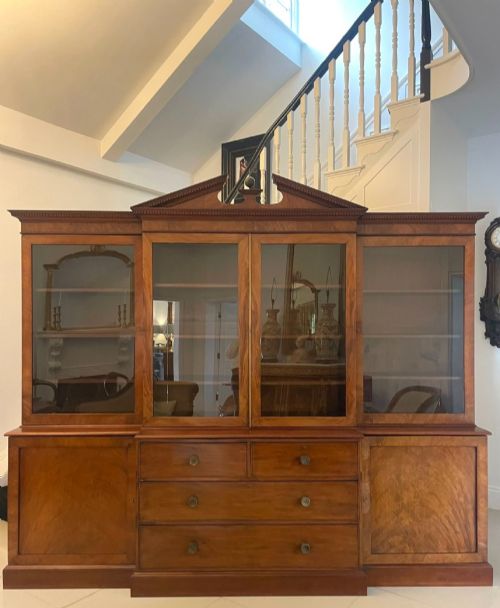
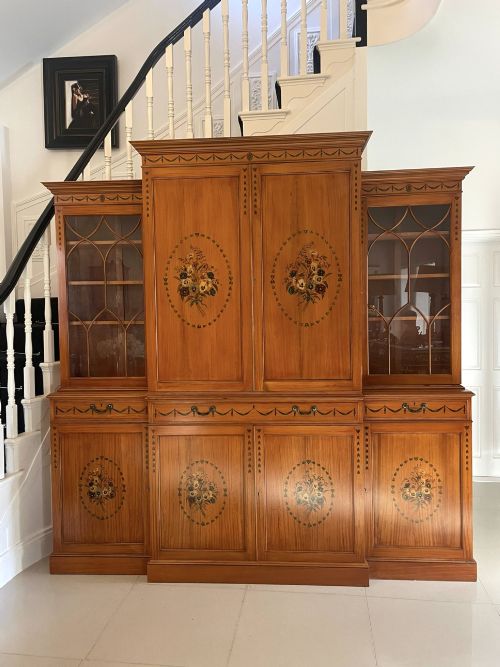
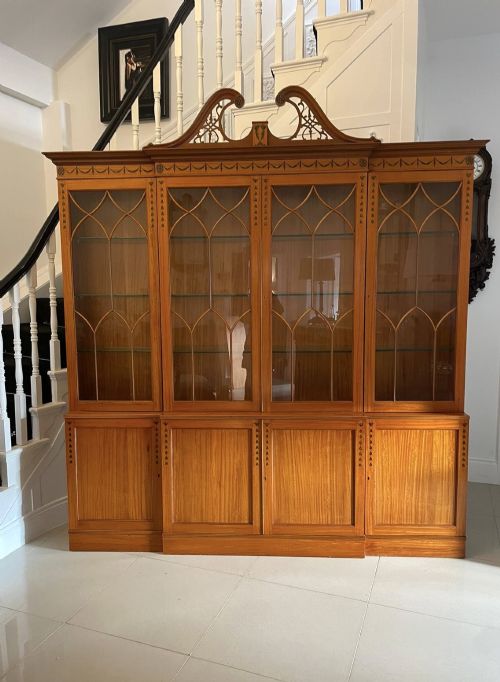
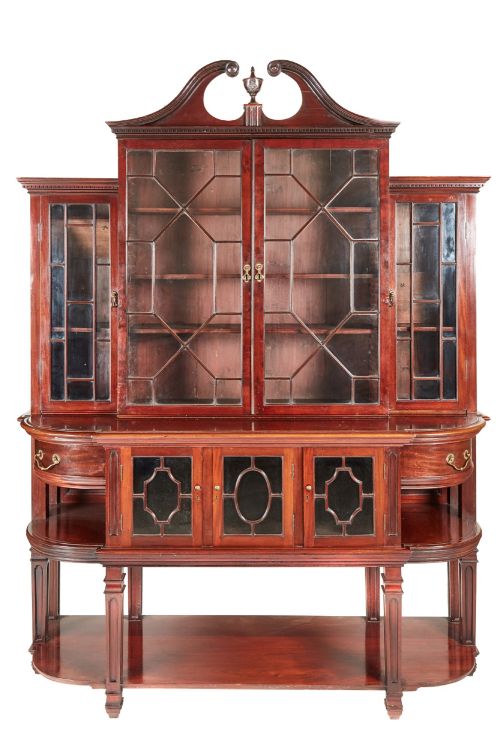
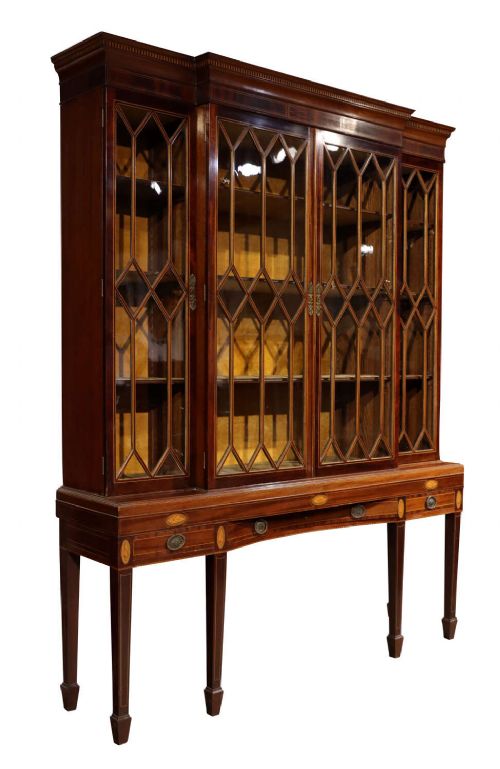
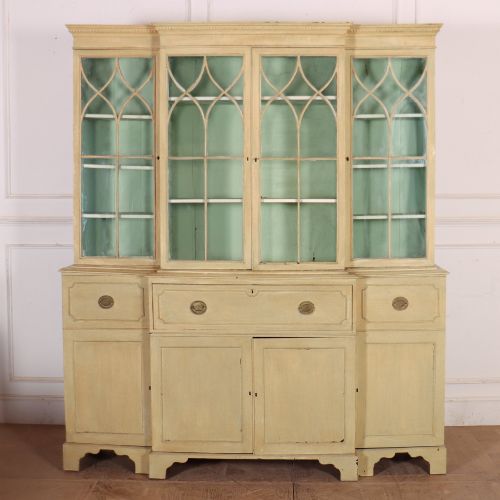
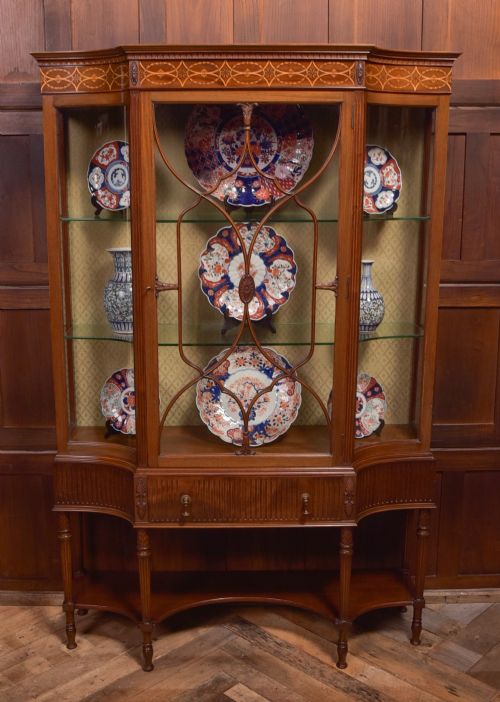
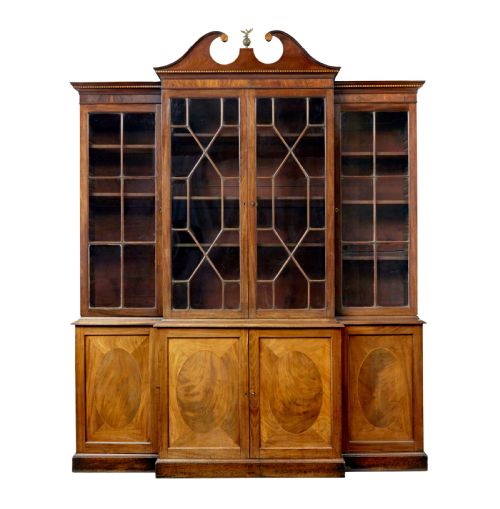
A breakfront glazed china cabinet offers a commanding display with its projecting centre section, designed to show off fine porcelain and books.
Breakfront Glazed China Cabinet
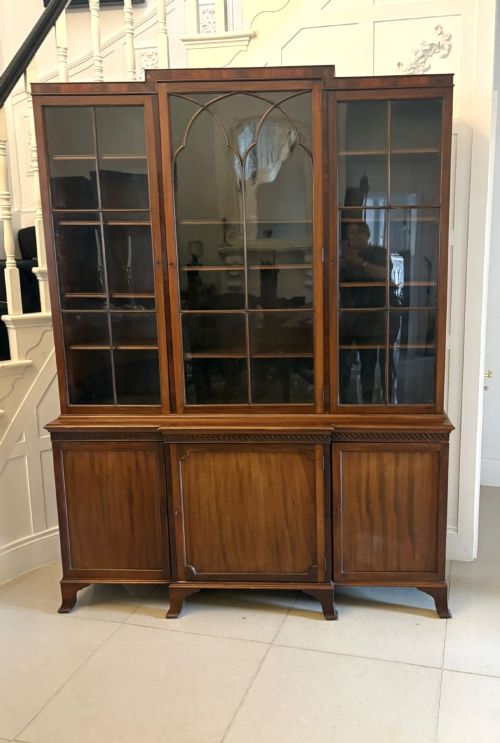
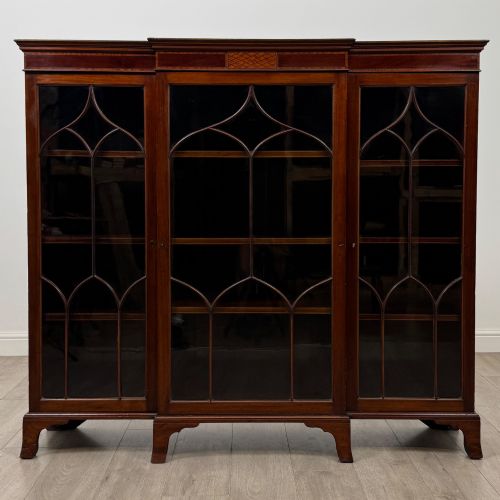
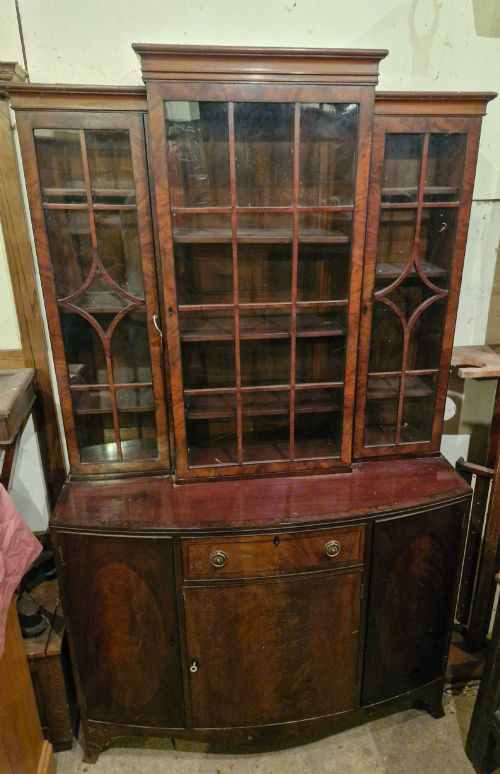
A breakfront glazed china cabinet is a substantial piece of furniture defined by its multi-sectioned front, where the central portion projects forward from the flanking wings. When searching for a breakfront glazed china cabinet, buyers encounter grand architectural storage furniture primarily built to house libraries and display prized ceramics.
The examples gathered here span from the George III period and the nineteenth century through to Edwardian and later revivals. Most pieces met on this page are constructed from mahogany or satinwood, often featuring glazed doors that protect the contents while keeping them visible.
Forms range from tall library bookcases with adjustable shelves to dedicated display cabinets and kitchen dressers. Makers of the late nineteenth and early twentieth centuries, such as Edwards and Roberts, Maple and Co, and Jas Shoolbred, adapted earlier Georgian and Chippendale styles to create these imposing focal points for large rooms.
Materials and Construction
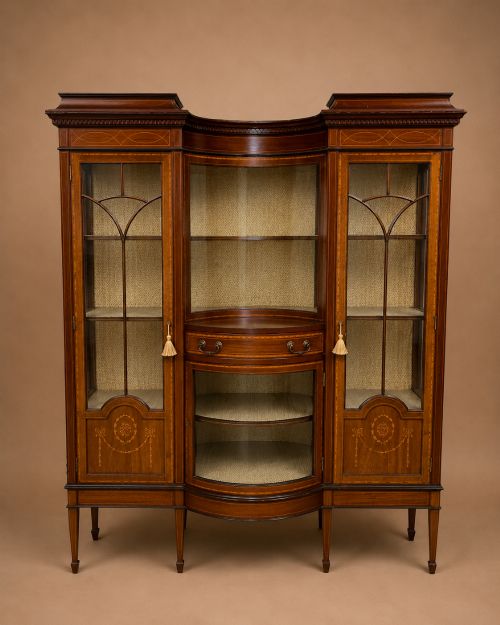
Cabinet makers relied heavily on timber selection, using solid and veneered mahogany alongside satinwood, walnut, and ebonised wood to achieve rich colour and grain patterns. Brass hardware supports the doors and internal fittings, while mirrored backs and fabric linings enhance the display of porcelain.
Glazing techniques define the visual character, utilising individual glass panes held by delicate wood glazing bars in astragal or astral patterns. Marquetry inlay, parcel-gilding, and original painted decoration frequently embellish the surfaces, particularly on Sheraton Revival and Edwardian pieces.
Many a Victorian book collector found that a glazed breakfront was the only polite way to keep visitors from reorganising the poetry.
Assessing Quality and Craftsmanship
Quality rests upon the proportion of the breakfront facade and the crispness of any carved mahogany details or inlaid marquetry. Finer cabinets demonstrate superior timber selection, where figured satinwood or mahogany veneers align with deliberate precision across the projecting sections.
The joinery of the glazing bars and the weight of the timber used in the doors dictate the structural integrity of the piece over centuries. Maker attribution through stamps or signatures further elevates certain cabinets, reflecting the high standards of workshops like Edwards and Roberts.
Jas Shoolbred·Edwards and Roberts·Maple and Co
The Breakfront Glazed China Cabinet Glossary
- Breakfront
- A cabinet design where the central section extends further forward than the left and right sections. This architectural arrangement creates depth and visual rhythm across the piece.
- Astragal glazed
- A method of dividing glass panes using thin wooden strips called astragals or glazing bars. These form intricate geometric patterns across the doors.
- Marquetry
- Decorative inlay work using various coloured veneers to create pictorial or geometric patterns on the cabinet surface. Craftsmen carefully fit pieces of satinwood and other fine timbers into the primary wood.
- Sheraton Revival
- A late nineteenth and early twentieth-century design movement inspired by the neoclassical furniture of Thomas Sheraton. Pieces in this style typically feature light satinwood, painted decoration, and refined classical proportions.
- Vitrine
- A glass-fronted display cabinet specifically designed for exhibiting porcelain, curiosities, or objects d'art. These pieces prioritise maximum visibility through extensive use of side and front glass panels.
Breakfront Glazed China Cabinet: Frequently Asked Questions
What is a breakfront cabinet?
A breakfront cabinet is a large storage and display piece featuring a central section that projects forward from the two side sections. This design breaks up a flat wall and adds architectural presence to a room.
Historically used in libraries and formal reception rooms, these cabinets provide deep central storage flanked by narrower display or shelving areas.
How do I date a mahogany cabinet?
Dating a mahogany cabinet involves examining the construction methods, timber characteristics, and stylistic revival cues. Pieces from the Georgian era show different dovetailing and backboard construction compared to late nineteenth-century revival items.
Maker stamps, specific brass hardware styles, and the presence of satinwood inlay help narrow down whether a piece is eighteenth-century or an Edwardian reproduction.
Where should I place a large display cabinet?
Large display cabinets require a substantial wall space, ideally in a dining room, drawing room, or hallway where the proportions can be properly appreciated. Positioning them away from direct sunlight protects the timber veneers and any fabric linings from fading.
Ensure the floor is level so the heavy doors swing correctly and the glass panes remain under no structural stress.
What is astragal glazing?
Astragal glazing refers to glass doors divided into smaller panes by narrow wooden bars known as astragals. This technique was essential before large sheets of plate glass were easily manufactured.
On antique cabinets, these delicate wooden frameworks contribute significantly to the aesthetic charm and authenticity of the piece.