


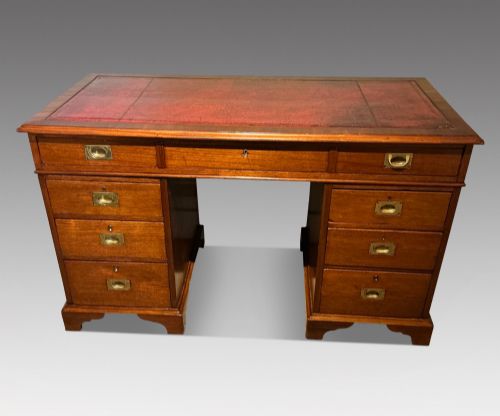
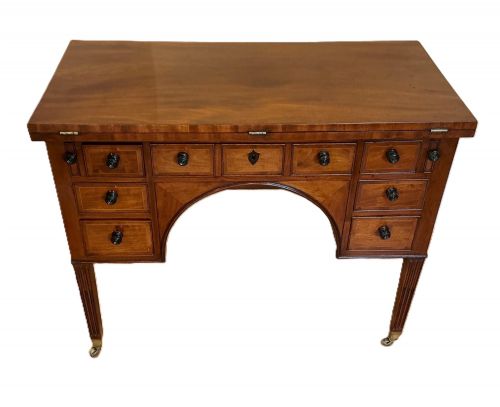

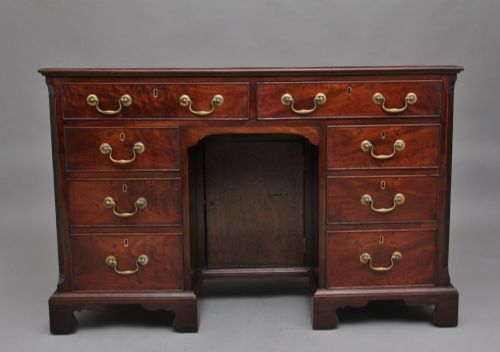

Georgian Mahogany Executive Table
A georgian mahogany executive table offers working surfaces and storage, bringing period presence and durable timber to a study.
Georgian Mahogany Executive Table
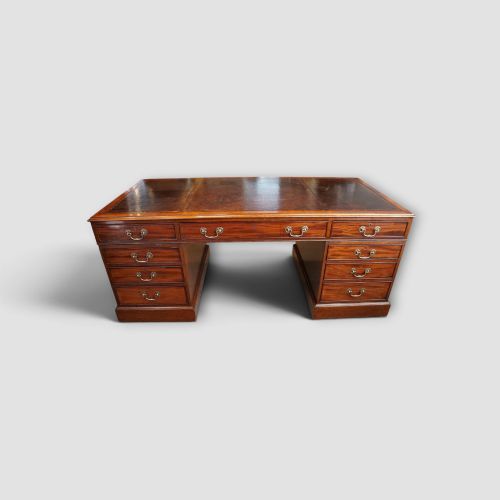
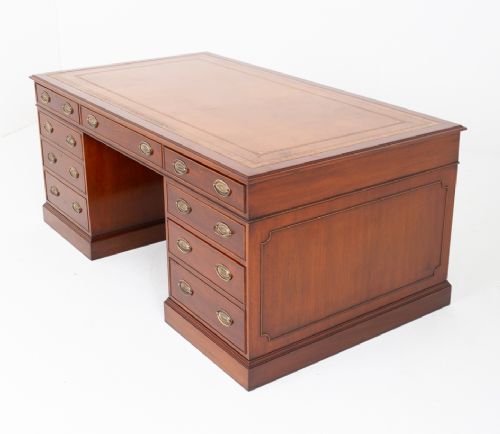
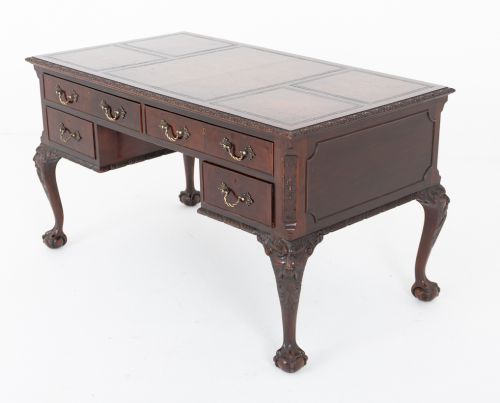
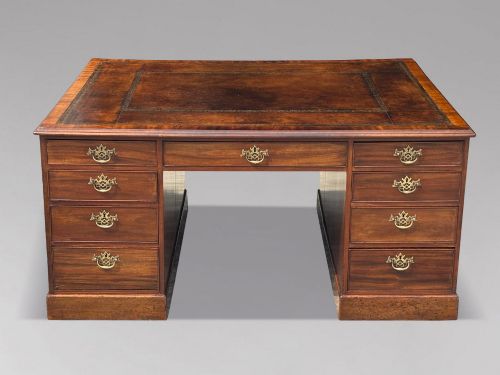
A georgian mahogany executive table typically encompasses large partners desks, library tables, and pedestal desks designed for writing and storage. These pieces combine substantial timber construction with functional drawers and cupboards arranged around a central kneehole.
The versions most commonly met on this page span the 18th century, the Georgian and Regency eras, and later revival styles. Surviving examples range from George III period pieces to Victorian and 1920s interpretations in the Chippendale and Sheraton manner.
Makers and craftsmen built these large tables to stand centrally in rooms, often featuring finished backs and pedestals accessible from multiple sides. Their configurations serve traditional study requirements with ample surface area and integrated storage compartments.
How they were made
Makers utilised solid mahogany and flame mahogany veneer over secondary timbers, shaping panels with characteristic rich grain patterns. Brass hardware such as drop handles, escutcheons, and castors provided functional and decorative accents.
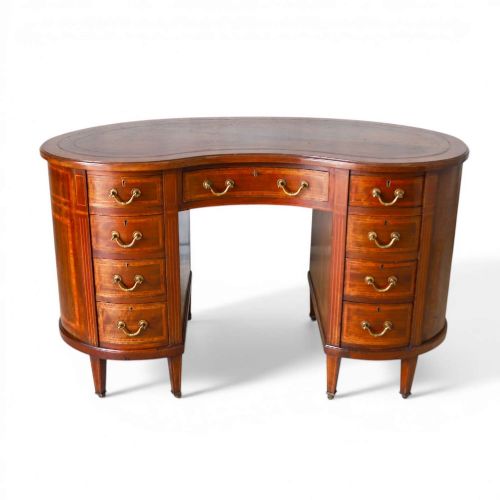
Writing surfaces incorporated tooled leather inserts, often edged with gilt tooling, set directly into the mahogany tops. Inlays of satinwood and ebony, along with marquetry details, added contrast to drawer fronts and borders.
Carving appeared on legs and friezes, particularly in Chippendale and revival styles, while structural stability relied on sturdy pedestals and panelled construction. Drawers featured traditional dovetail joints to ensure long-term durability.
Materials recorded across the inventory include solid mahogany, flame mahogany veneer, brass hardware, leather tops, and satinwood inlay.
What varies in quality
The standard of a georgian mahogany executive table depends heavily on the selection of timber figures, such as matched flame mahogany veneer, and the crispness of carved details. Superior examples exhibit precise proportions and harmonious integration of brass hardware.
Construction methods also separate the finest pieces from simpler iterations, particularly in the execution of hand-cut dovetails and the retention of original leather writing surfaces. Secondary wood choices and the complexity of marquetry inlay further distinguish finer workshops.
The Georgian Mahogany Executive Table Glossary
- Partners desk
- A large double-sided desk designed for two people to work opposite one another, featuring drawers and cupboards on both sides. These pieces often anchor large libraries and studies.
- Pedestal desk
- A freestanding desk comprising two supporting pedestals of drawers beneath a single wide writing top. They provide substantial storage capacity.
- Library table
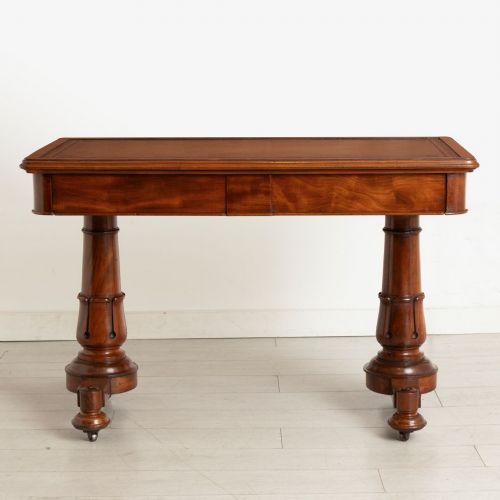
- A large freestanding table utilised for reading and sorting papers, typically fitted with frieze drawers. They lack the twin pedestal cupboards of partners desks.
- Kneehole desk
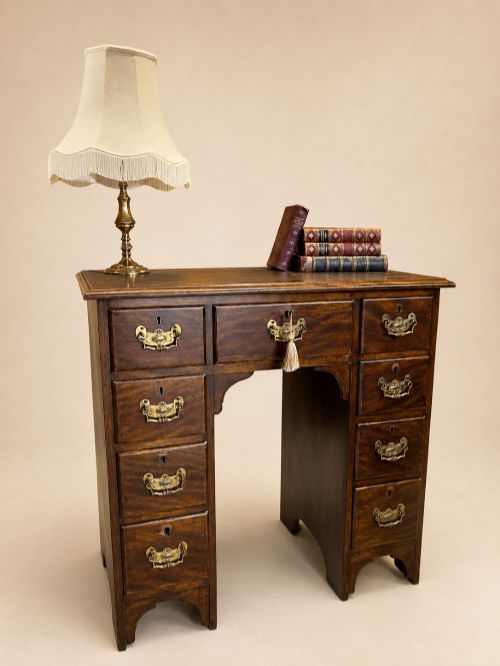
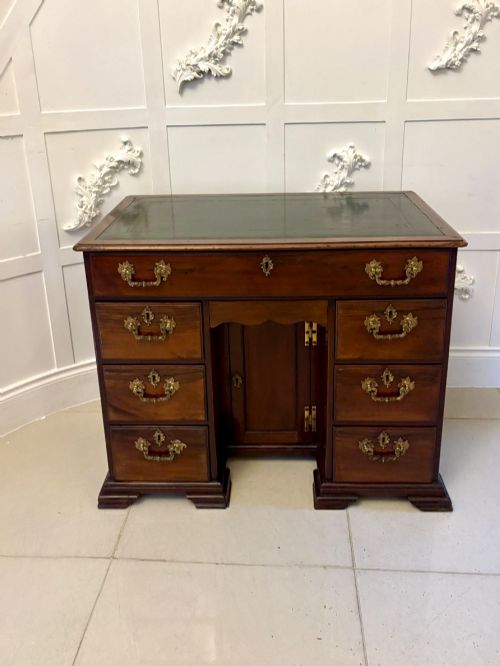
- A compact desk featuring a central recess for the user's legs, flanked by banks of smaller drawers. This form was popular throughout the Georgian period.
- Flame mahogany veneer
- A decorative wood veneer sliced from timber where the branch meets the trunk, creating a characteristic rippled flame pattern. It was favoured for high-status drawer fronts.
- Satinwood inlay
- Contrasting pale exotic timber inserted into dark mahogany surfaces to create geometric borders or decorative motifs. This technique defined many Sheraton revival pieces.
Georgian Mahogany Executive Table: Frequently Asked Questions
How do I care for leather desk tops?
Leather desk tops require gentle cleaning with a slightly damp cloth followed by a neutral leather cream to keep the surface supple. Avoid harsh chemical cleaners and excessive moisture.
Because many surfaces feature tooled gilt borders, care must be taken around the stamped gold decorations to prevent rubbing. Placing a blotter or writing pad on the leather protects the antique hide from daily wear.
What distinguishes a library table?
A library table is a large freestanding table primarily designed for reading and displaying books rather than heavy clerical work. It usually rests on four legs or sturdy end pedestals rather than twin pedestals of drawers.
These tables frequently incorporate frieze drawers just beneath the top for holding writing implements and small papers. They offer a lighter visual profile than a massive partners desk while still providing a generous surface area.
How do I tell George III from revival pieces?
George III pieces date from the late 18th century and display period construction methods, such as hand-cut dovetails, native secondary timbers, and authentic wear patterns. Their proportions reflect the functional design priorities of the original era.
Revival pieces, often dating from the late 19th century or the 1920s, emulate these earlier styles using machine assistance or different secondary woods. Examining the interior drawer construction and the ageing of the timber helps determine the true age.