
Georgian Mahogany Bow Front
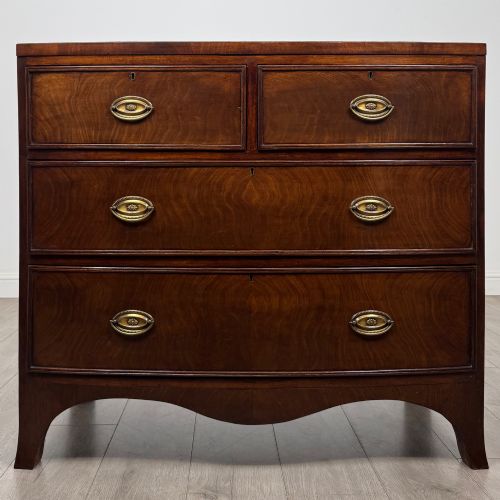
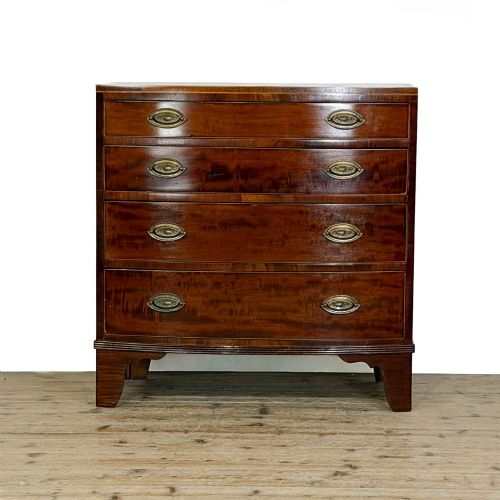
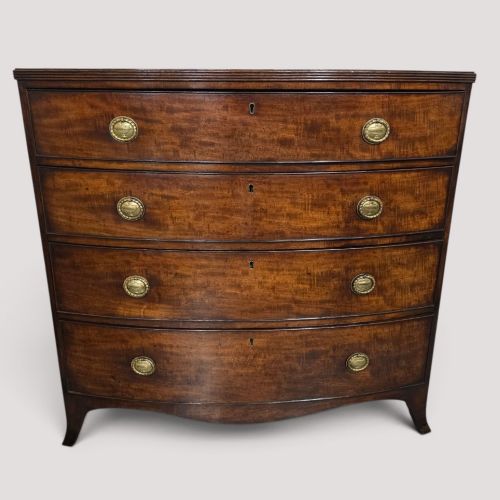
A georgian mahogany bow front brings a rounded facade and deep timber tones to a room, offering practical storage with distinct period proportion.
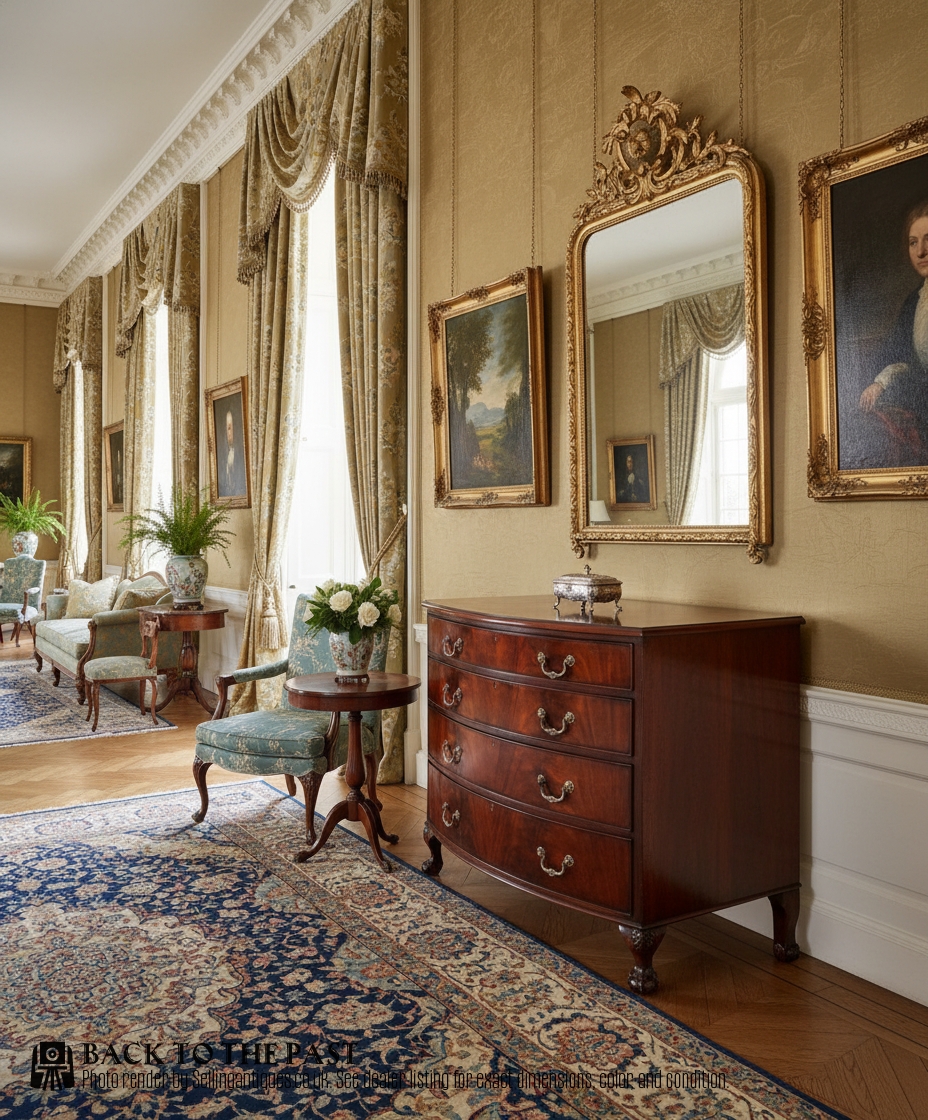
Georgian Mahogany Bow Front
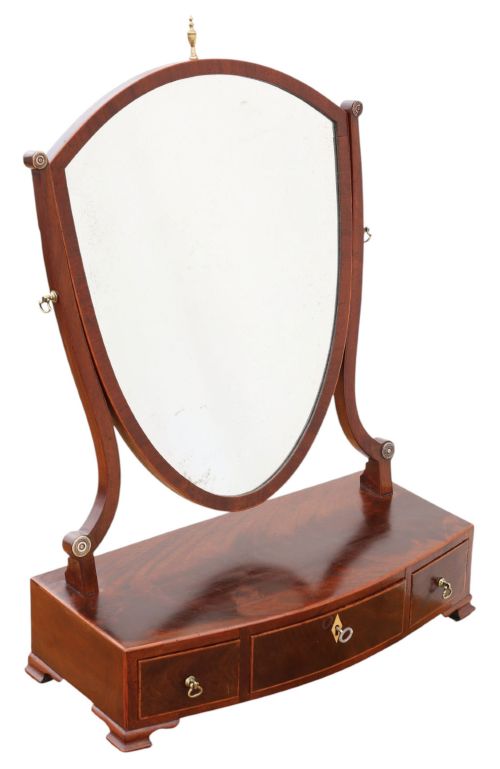
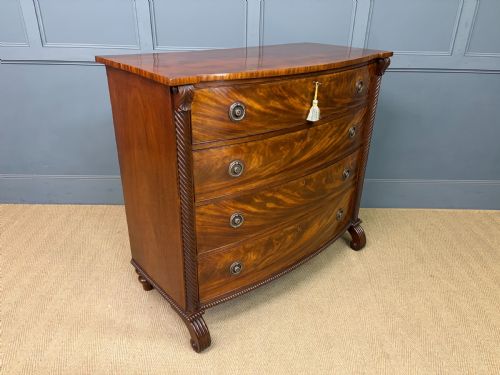
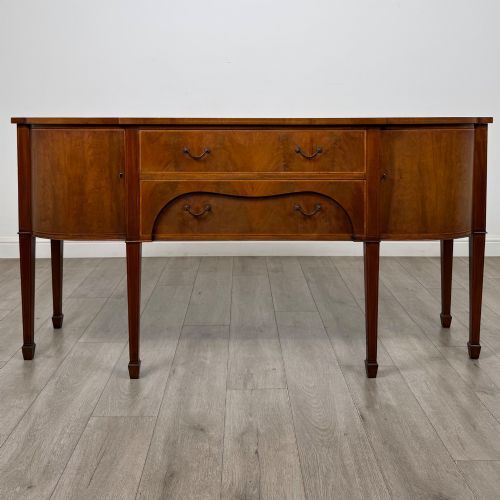
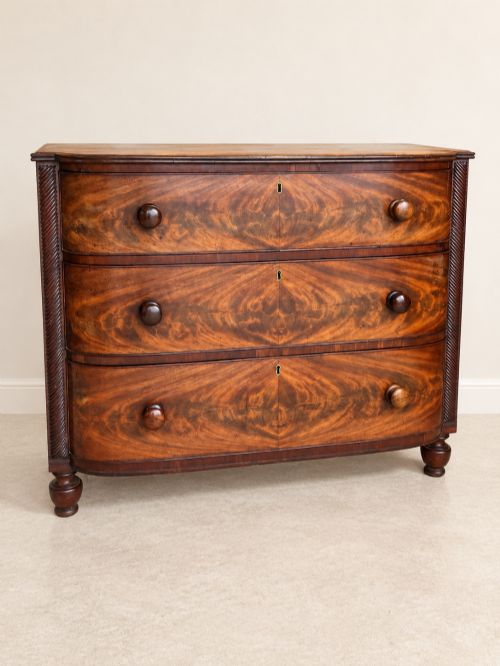
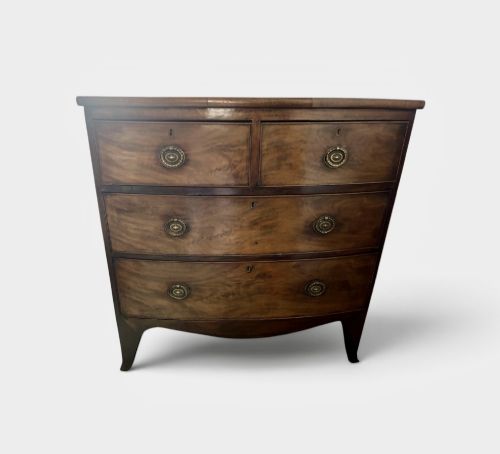
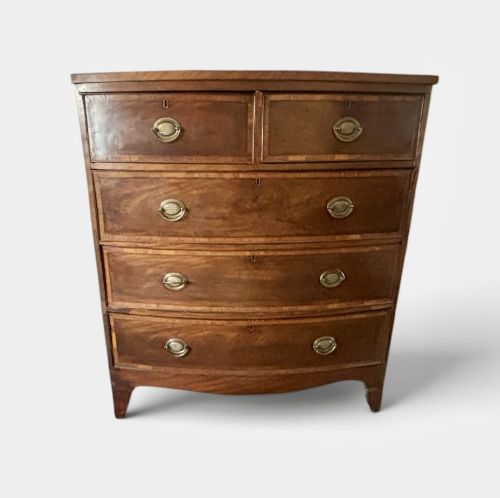
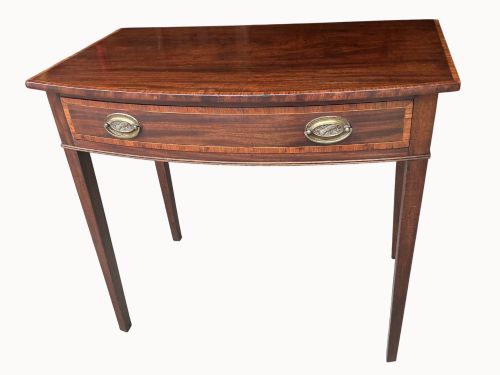
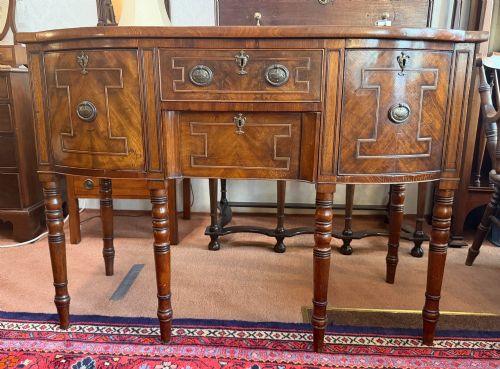
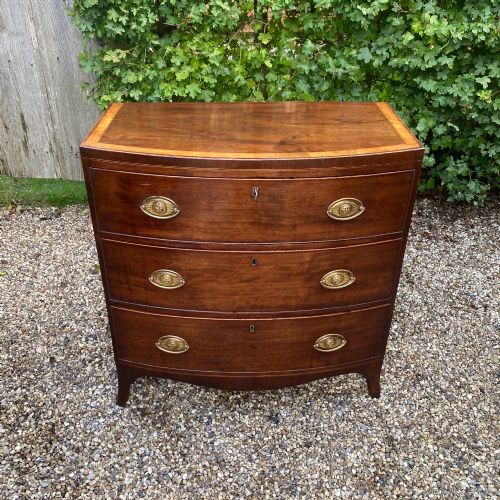
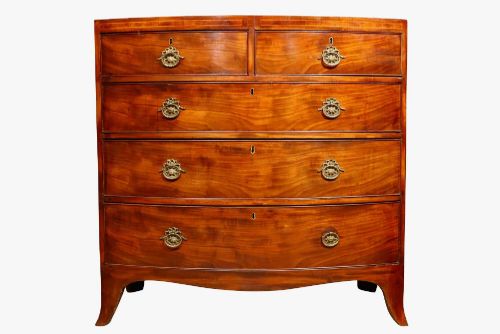
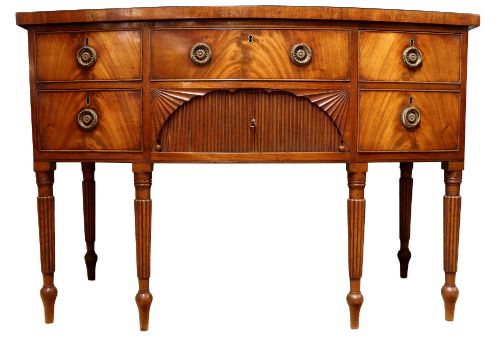
A georgian mahogany bow front most frequently appears as a chest of drawers, alongside sideboards, corner cupboards, and side tables produced during the Georgian, Regency, and early nineteenth-century periods.
The curved front profile defines the group, softening the rectangular lines common to case furniture while retaining standard domestic utility.
Makers of these pieces adapted standard forms like chests and sideboards to the curved aesthetic, resulting in pieces spanning full dimensions down to small proportions.
Materials and Construction
Craftsmen built these pieces primarily from solid mahogany and flame mahogany veneer, often incorporating secondary timbers such as oak for drawer linings and carcase framing.
Decorative detailing relies on contrasting stringing and banding using satinwood and boxwood, alongside applied brass handles and escutcheons.
Curved drawer fronts required specialised bending techniques and careful veneer selection to maintain grain continuity across the sweeping facade.
Listings feature mahogany, oak, satinwood, and boxwood applied across chests of drawers, sideboards, corner cupboards, and side tables spanning Georgian to Edwardian periods.
Evaluating Execution
Quality rests on the selection of timber figures, particularly where flame mahogany veneers display matched grain patterns across multiple drawer fronts.
Refinement shows in the tightness of dovetail joints, the crispness of inlay work, and the original retention of brass hardware and secondary woods like oak.
The Georgian Mahogany Bow Front Glossary
- Bow front
- A convex curved cabinet front that projects outward in an arc. This rounded shape softens the profile of case furniture.
- Flame mahogany
- A veneer cut from timber where the branch meets the trunk, producing a rippling, flame-like pattern. It is prized for decorative surfaces.
- Crossbanding
- A strip of veneer applied perpendicular to the grain of the surface it borders. This technique frames drawer fronts and tabletops.
- Stringing
- Thin lines of contrasting wood inlaid into grooves on a surface. Satinwood and boxwood are common choices for this linear decoration.
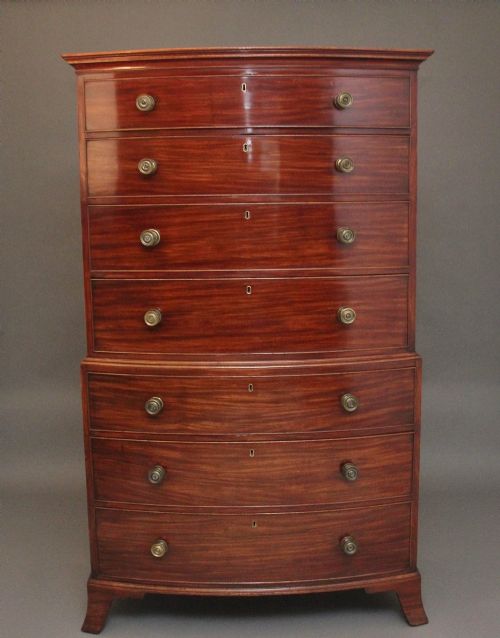
- Tallboy
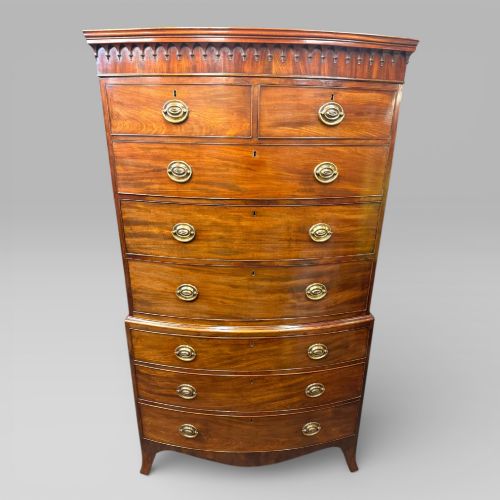
- A tall chest of drawers stacked vertically, often comprising a smaller chest set upon a larger base. These pieces maximise vertical storage.
Georgian Mahogany Bow Front: Frequently Asked Questions
What rooms suit a bow front chest?
These chests function well in bedrooms and hallways where a curved profile reduces sharp corners in tight spaces.
The deep drawers provide standard storage capacity while the projecting front adds architectural interest to plain walls.
How do I date a piece?
Dating relies on observing construction methods, timber choices, and secondary woods like oak versus later softwoods.
Hardware styles and the presence of satinwood inlay or flame mahogany veneer also help narrow the period from the eighteenth into the nineteenth century.
Were these pieces used for dining?
Sideboards with bow fronts served dining rooms by holding silver, linen, and serving dishes during meals.
Smaller side tables and corner cupboards similarly furnished dining spaces and parlours for display and storage.
What is satinwood banding?
Satinwood banding is a decorative border of pale, figured timber inlaid around the darker mahogany edges of drawers or tabletops.
This technique creates contrast and highlights the curved geometry of the bow front.