
Georgian Mahogany Bedroom Storage
Georgian mahogany bedroom storage comprises practical chests and presses built to house garments in period rooms.
Georgian Mahogany Bedroom Storage
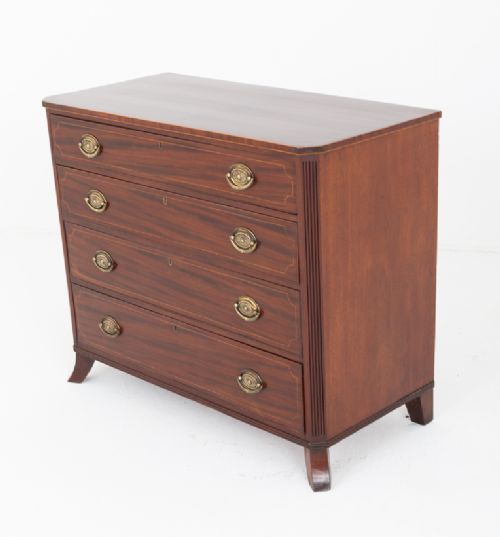
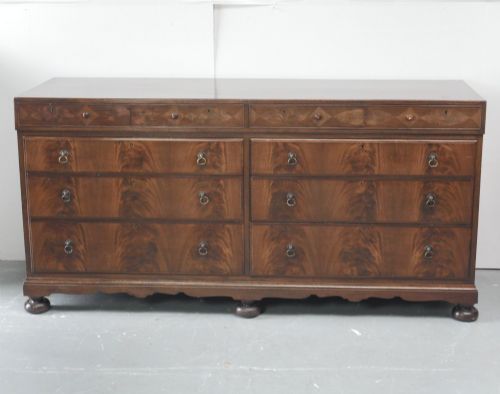
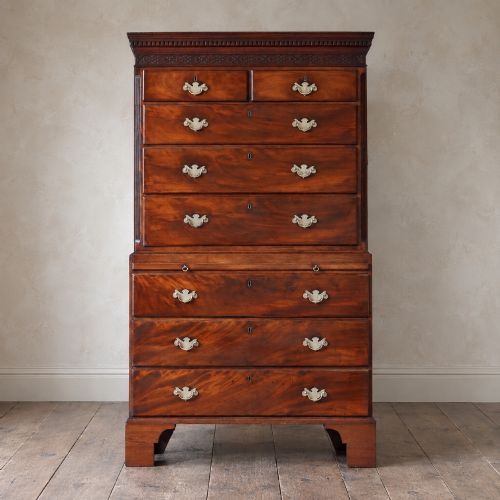
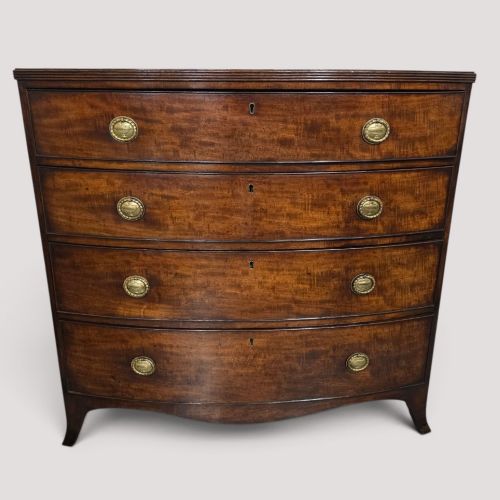
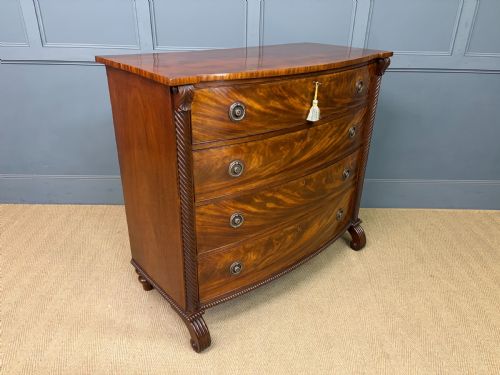
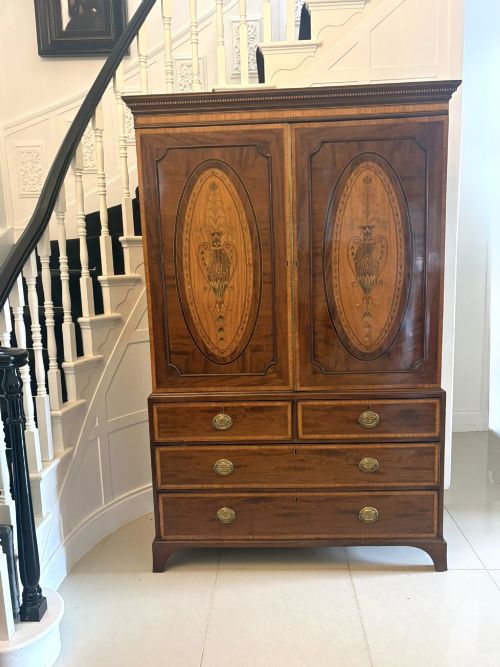
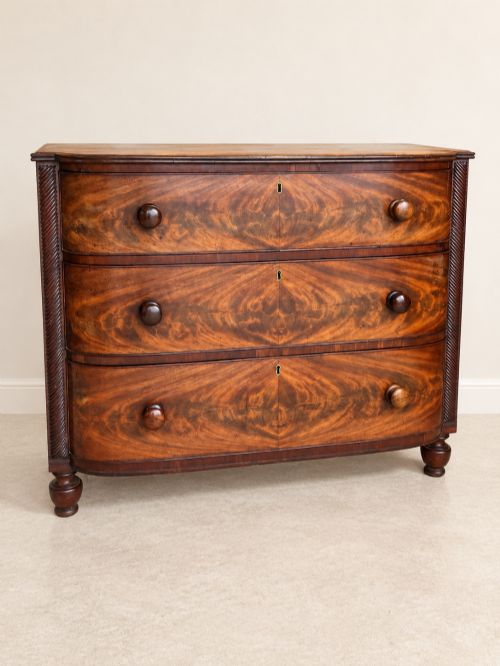
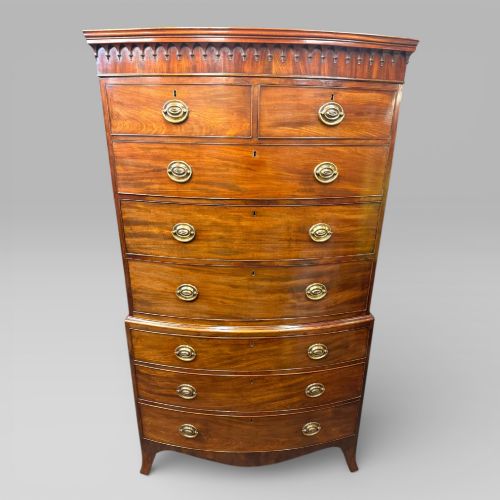
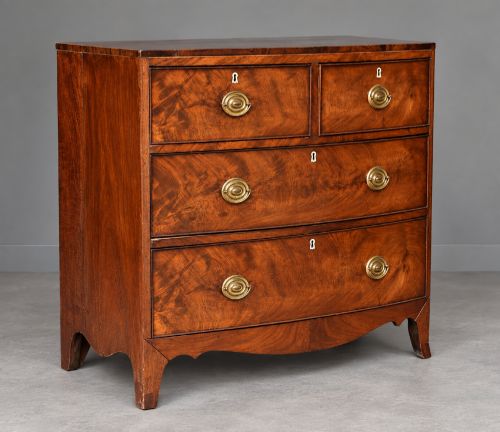
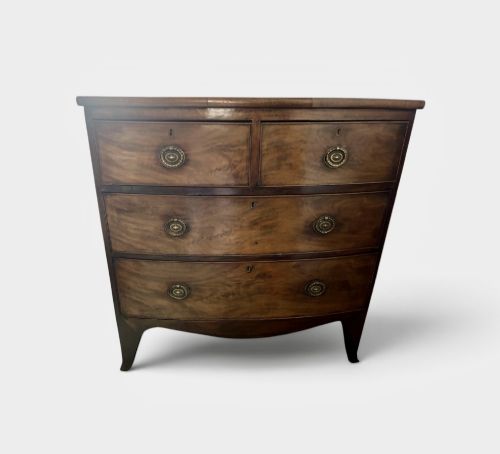
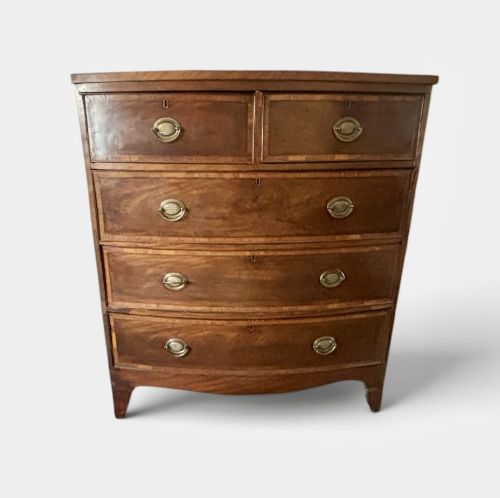
Georgian mahogany bedroom storage consists primarily of chests of drawers, bow front chests, chests on chests, linen presses, and bedside cabinets dating from the eighteenth and nineteenth centuries. These pieces were constructed to hold clothing, linen, and personal items in domestic chambers.
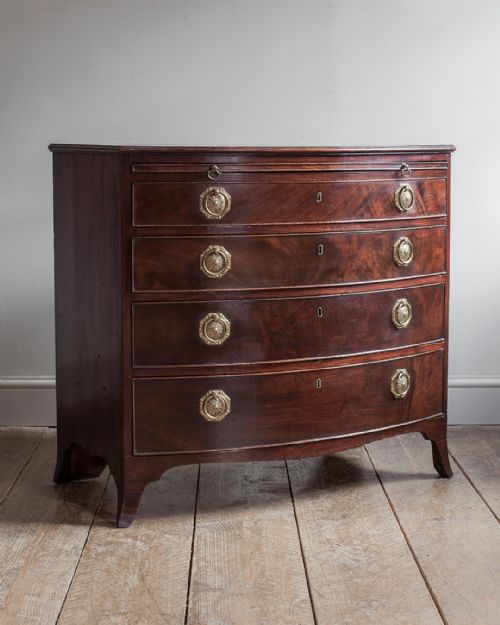
The versions met most frequently on this page include straight and bow front chests of drawers from the George III and Regency eras, alongside larger linen presses and tall tallboys. Later revival pieces from the twentieth century also appear.
Makers such as Whytock & Reid and J Moorcroft are represented among the listings, adding specific provenance to standard domestic forms.
Materials and Construction
Makers utilised solid mahogany and flame mahogany veneer, frequently accented with satinwood banding, crossbanding, and inlay. Secondary timbers such as oak appear in drawer linings and internal framing.
Hardware typically involves cast brass handles and escutcheons, occasionally paired with bone details. Construction relies on traditional dovetail joints for drawers and panelled carcases for larger wardrobes and linen presses.
Listings feature periods spanning from the eighteenth century through the Regency era to twentieth-century revivals.
Standards of Execution
Quality separates through the selection of timber figure, such as highly grained flame mahogany and carefully matched veneers, compared against plain stock. The crispness of satinwood inlay and crossbanding also distinguishes finer workshops.
Structural refinement shows in the thickness of drawer linings, the neatness of hand-cut dovetails, and the retention of original brass hardware. Proportions, particularly in small-scale bow front chests, dictate desirability.
Whytock & Reid·J Moorcroft
The Georgian Mahogany Bedroom Storage Glossary
- Bow front
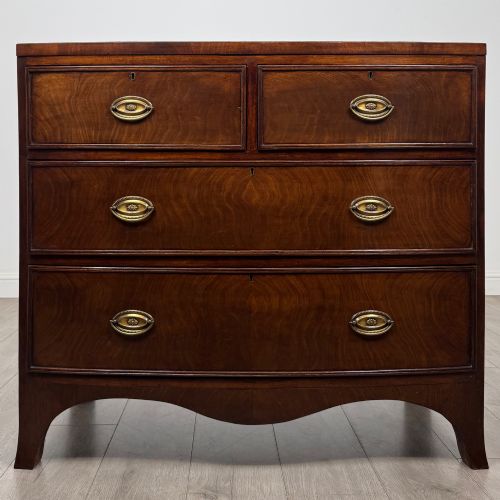
- A convex, curved front to a chest of drawers that swells outwards from the corners. This design softened the geometric lines of standard bedroom furniture.
- Chest on chest
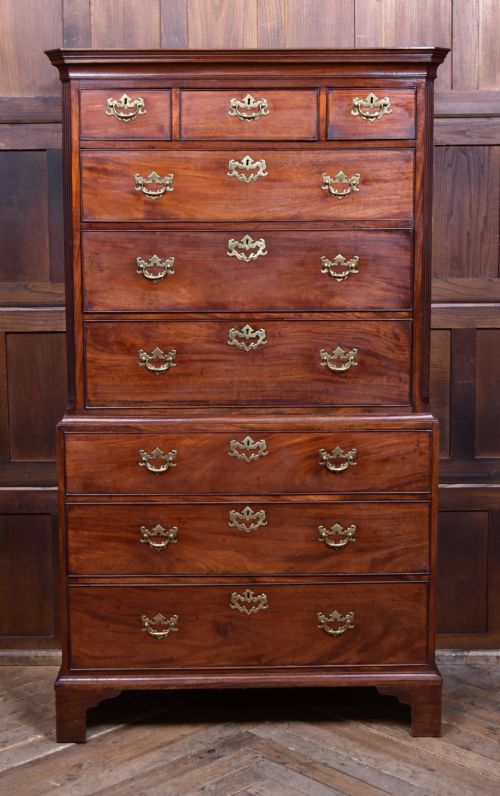
- A tall storage unit formed by stacking a smaller chest of drawers directly on top of a larger base chest. It is also commonly known as a tallboy.
- Linen press
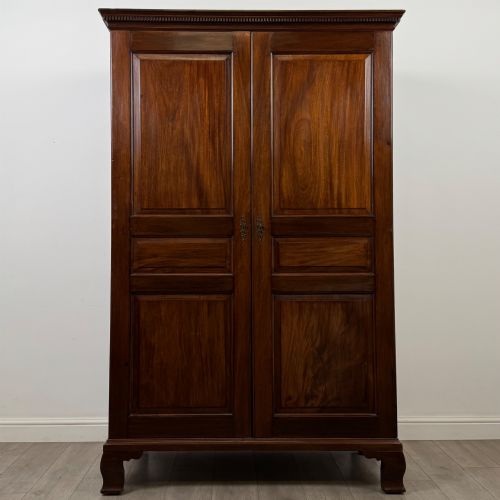
- A tall cupboard featuring sliding trays or shelves in the upper section for folded textiles, positioned above a configuration of lower drawers. These served as primary wardrobe space before hanging closets became standard.
- Brushing slide
- A pull-out shelf integrated into the upper carcase of a chest, used for folding clothes or temporary placement. It typically sits just beneath the top surface.
- Crossbanding
- A narrow strip of veneer laid around the border of a drawer front or top with the grain running perpendicular to the surrounding wood. This technique created a defined decorative frame.
Georgian Mahogany Bedroom Storage: Frequently Asked Questions
What is a linen press?
A linen press is a tall storage piece featuring upper doors enclosing sliding trays for folded textiles, combined with lower drawers. They provided flexible storage for garments in period bedchambers.
Over time, many of these interiors were converted into hanging wardrobes to suit modern clothing requirements while retaining their original exterior appearance.
How do I identify a George III chest?
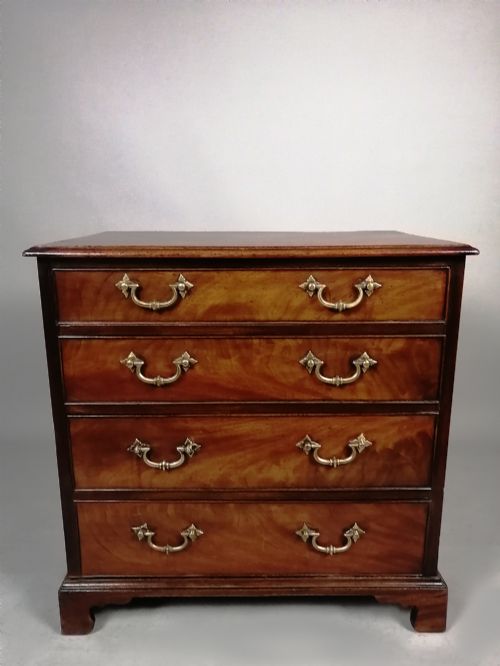
George III chests typically display dense mahogany timbers, hand-cut dovetails on the drawer linings, and period brass drop handles or bail pulls. Proportions tend to be balanced and restrained.
Examining the secondary wood inside the drawers, such as oak or pine, helps confirm the period of construction.
Where were bedside cabinets placed?
Bedside cabinets and tables sat beside sleeping quarters to hold chamber pots, candles, or personal items during the night. They matched the timber and style of the main bedroom suite.
These compact items offered enclosed cupboard space or small drawers within a minimal footprint.
What is flame mahogany?
Flame mahogany is a figured veneer cut from the branch junctions of the tree, producing a distinctive flickering flame pattern. Cabinetmakers reserved this timber for prominent drawer fronts and tabletops.
It was prized for its optical depth and rich reddish-brown colour under polished finishes.