

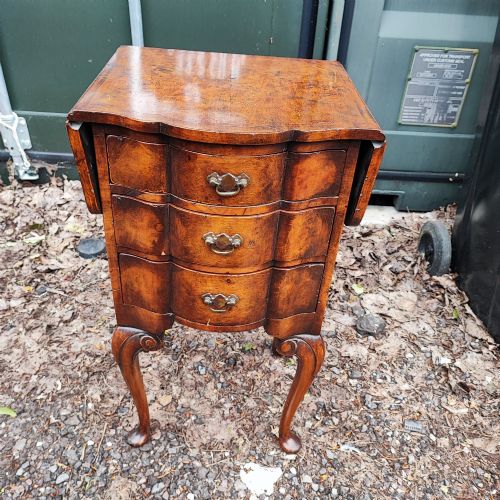


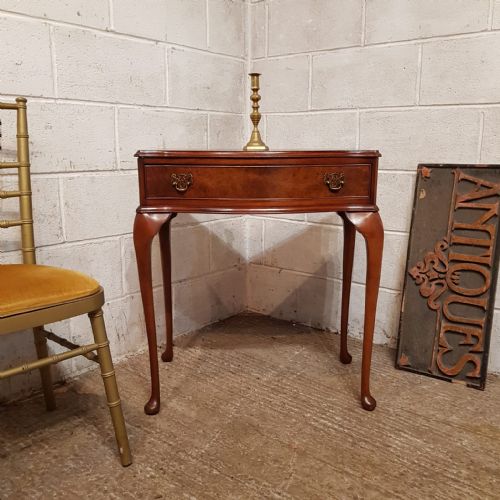


Small Serpentine Front Drawers
Small serpentine front drawers bring rhythmic curves and compact scale into a room, offering practical storage disguised as sculpture.
Small Serpentine Front Drawers
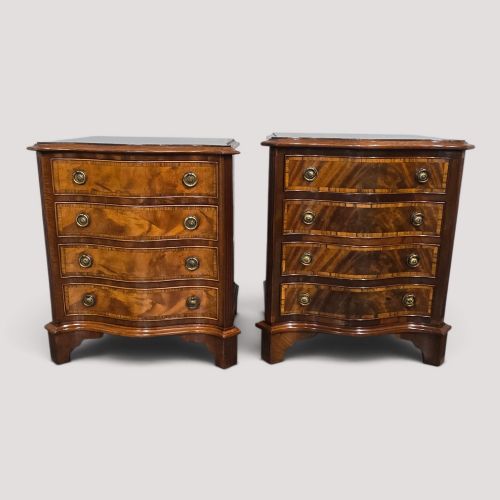
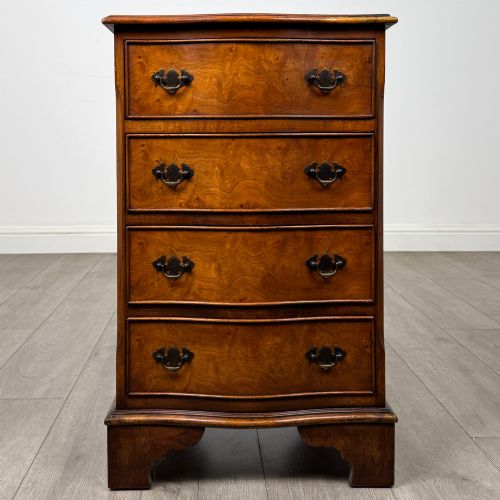
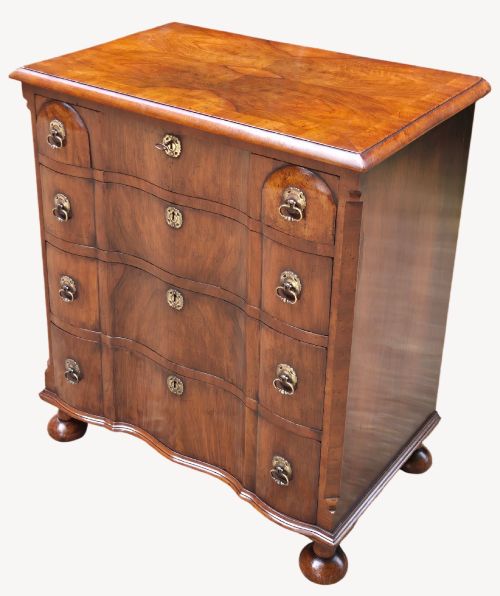
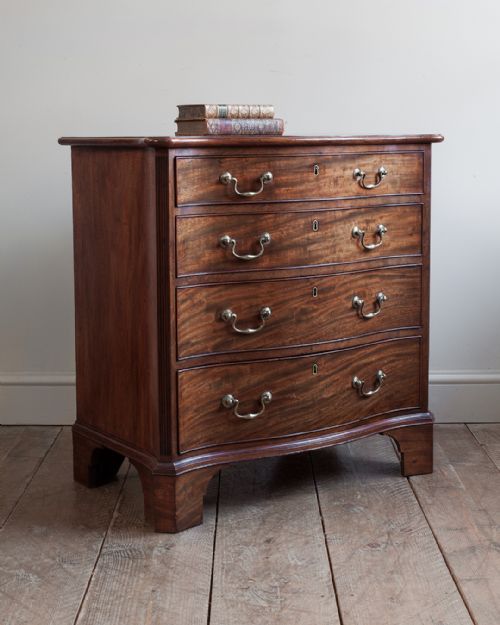
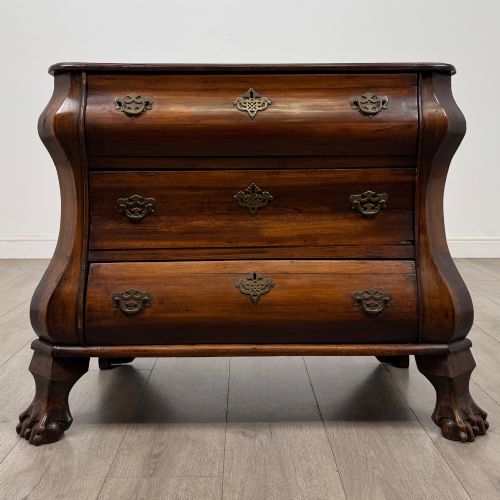
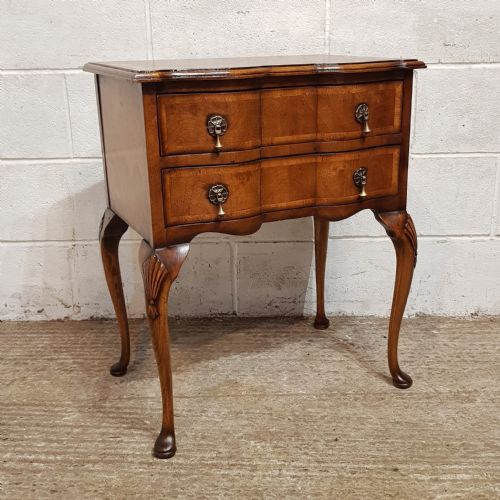
Small serpentine front drawers comprise a distinct lineage of case furniture defined by a convex centre flanked by concave ends, creating an undulating facade. When searching for small serpentine front drawers, buyers encounter pieces spanning the eighteenth century through to the early twentieth century, with revival periods well represented alongside genuine Georgian originals.
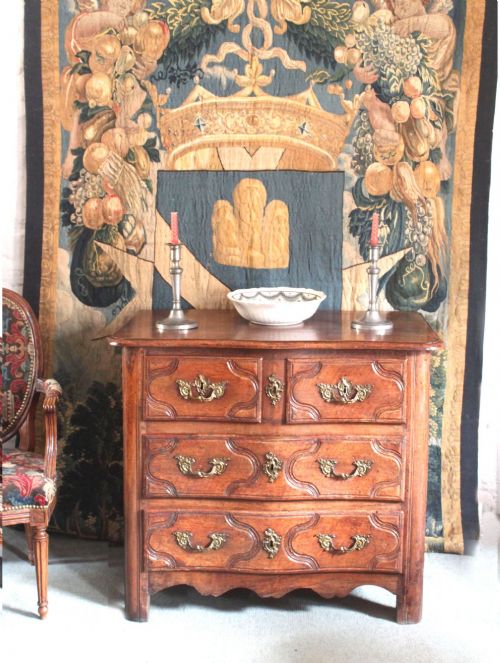
Mahogany and walnut dominate the offerings, appearing in both solid timber and figured veneers such as burr walnut. Forms range from traditional chests of drawers and bedside cabinets to compact commodes and side tables, reflecting diverse domestic uses across English, French, Swedish, and Dutch traditions.
Materials and construction methods
Cabinetmakers utilised dense timbers including mahogany and walnut, frequently applying decorative veneers like burr walnut or kingwood over secondary woods to achieve rich grain patterns. Drawer fronts required careful shaping of the solid wood or complex lamination to maintain the signature undulating curve without warping.
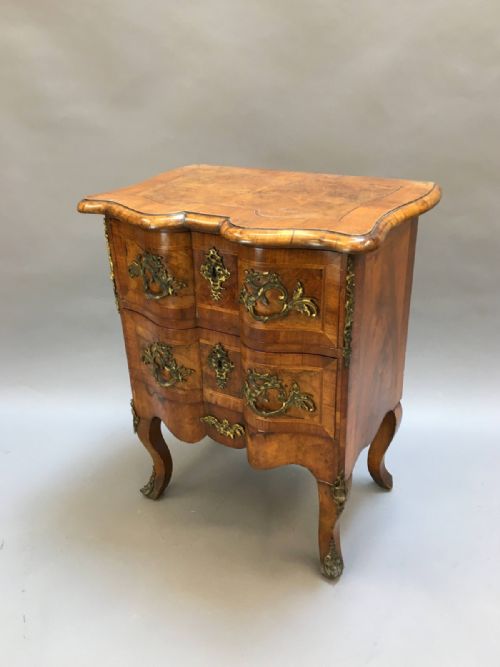
Fine brass hardware, ranging from classical drop handles to ornate pulls, accompanied the joinery, sometimes complemented by ormolu mounts on continental pieces. Painted finishes on pine and wood veneer also appear, demonstrating varied regional techniques for finishing compact case pieces.
Swedish makers occasionally curved the air right out of the room, leaving drawers that demand a very polite approach.
Factors that define quality
The sophistication of the timber figure largely dictates the distinction between ordinary and exceptional examples, particularly in burr walnut and figured mahogany veneers. Cabinetmakers who selected symmetrical grain patterns across undulating drawer fronts achieved a visual harmony that lesser pieces lack.
Construction integrity in the curved carcass and the smooth operation of drawers within shaped housings reveal the maker's hand. Crispness in the execution of the serpentine sweep and restrained use of decorative elements such as brass mounts separate refined antique examples from heavier revival interpretations.
The Small Serpentine Front Drawers Glossary
- Serpentine front
- A furniture facade shaped with a convex central section between two concave ends. This undulating profile creates a sense of movement and requires considerable skill from the cabinetmaker.
- Commode
- A low chest of drawers or cabinet, often of French origin. The term frequently applies to decorative continental pieces with serpentine profiles.
- Burr walnut
- Timber taken from a tree growth or burl, yielding intricate, swirling grain patterns. It was highly prized for veneering luxury case furniture.
- Ormolu
- Gilded bronze used for decorative mounts and furniture hardware. It appears frequently on continental commodes and revival pieces.
- George III
- The period spanning from 1760 to 1820, renowned for refined cabinetmaking and balanced proportions. Pieces from this era set the standard for later revivals.
Small Serpentine Front Drawers: Frequently Asked Questions
What rooms suit small serpentine front drawers?
These compact chests and cabinets fit easily beside a bed, in a narrow hallway, or as an accent piece in a drawing room. Their curved profile softens rigid corners in smaller spaces.
Because they provide enclosed storage without dominating a floor plan, they serve well as bedside tables or lamp stands while holding books and small items.
How do I date a serpentine chest?
Examine the secondary timbers inside the drawers, the style of the brass hardware, and the construction methods used for the carcass. Georgian originals display hand-cut dovetails and older timber patination.
Revival pieces from the Edwardian era or the early twentieth century often utilise machine-sawn elements and standardised fixings while mimicking earlier eighteenth-century aesthetics.
Are walnut and mahogany equally common?
Both timbers appear frequently across the available pieces, with mahogany favored in English Georgian designs and walnut prevalent in both eighteenth-century work and later Edwardian revivals.
Figured veneers and burr walnut are especially typical of the decorative side tables and smaller commodes produced around nineteen hundred and the nineteen twenties.
What is the difference between a commode and a chest?
The term commode often denotes continental European pieces, such as French provincial or Swedish designs, which frequently feature painted finishes or elaborate marquetry.
Chests of drawers typically refer to English forms in mahogany or walnut, emphasising timber grain and classical proportions over painted decoration.