
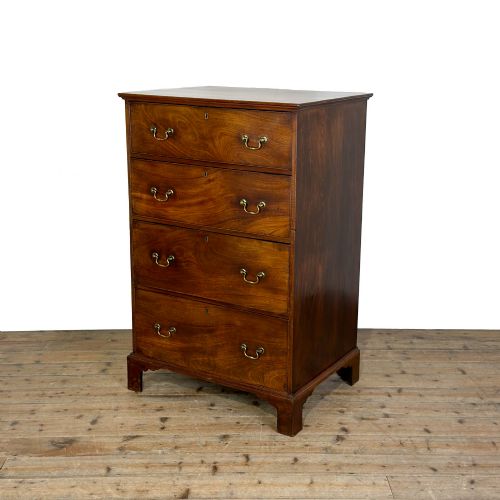
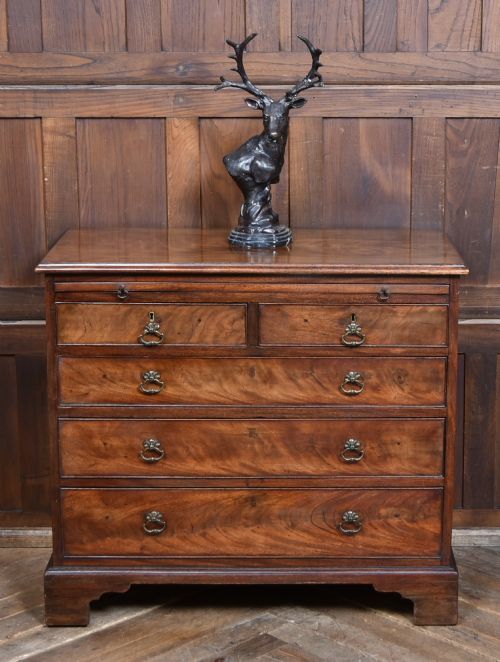
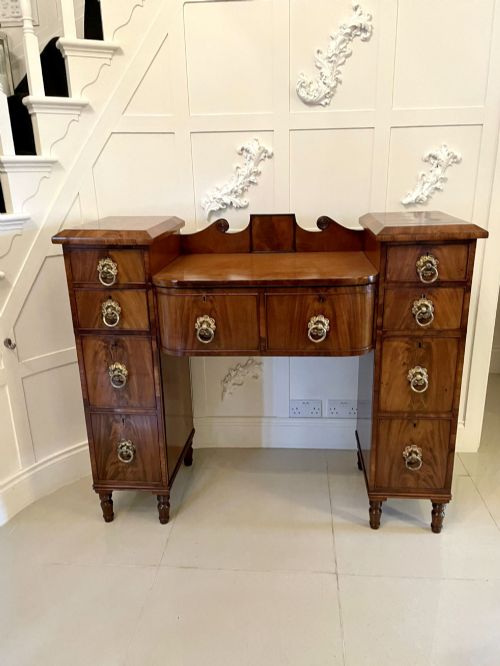
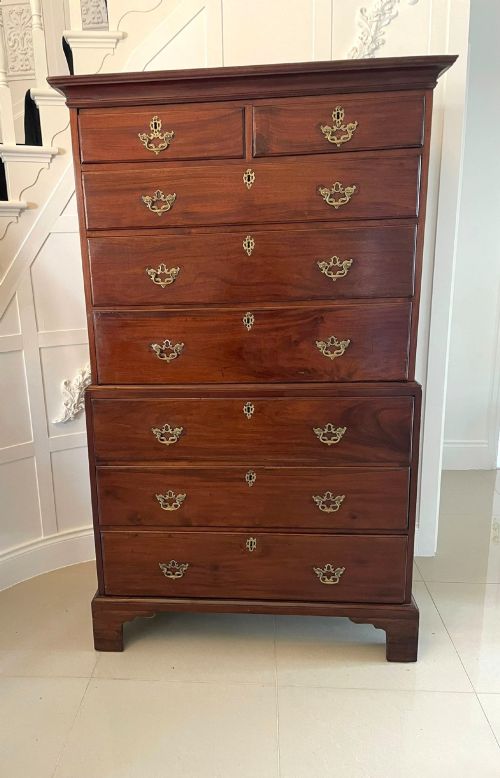
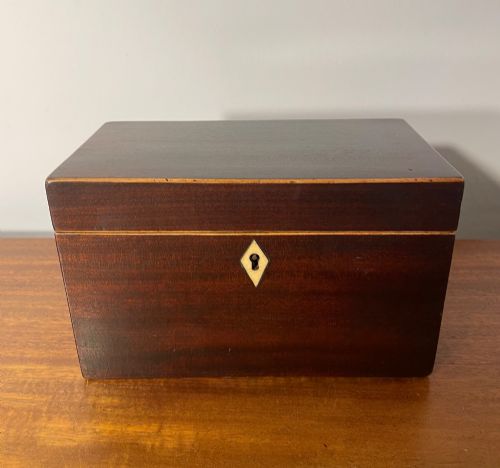
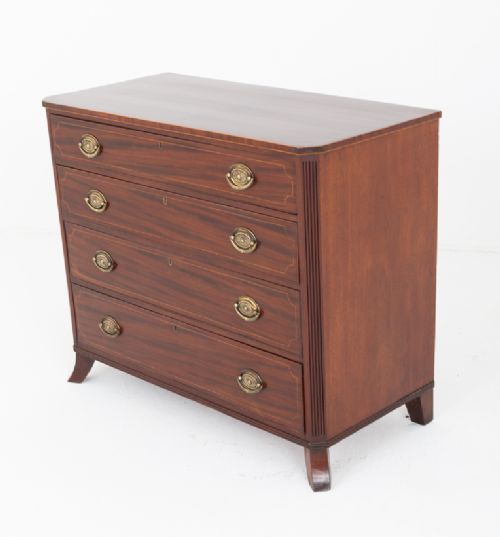
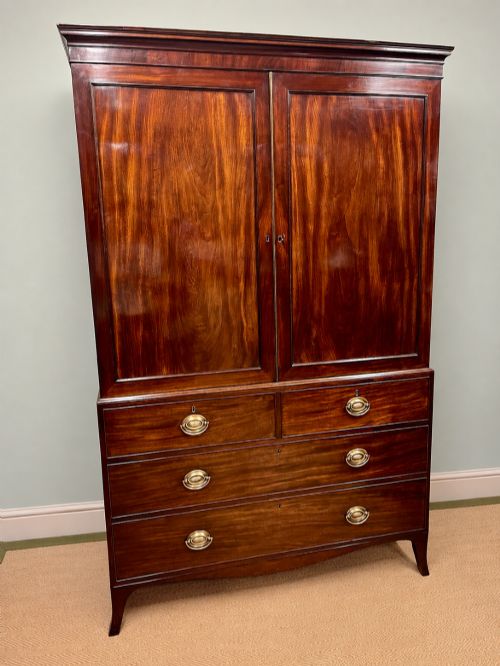
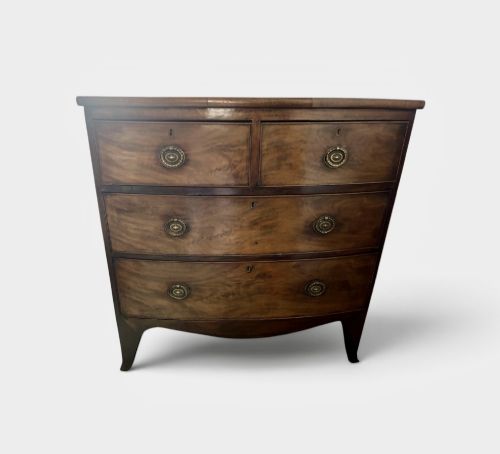
Georgian Period Mahogany Chest
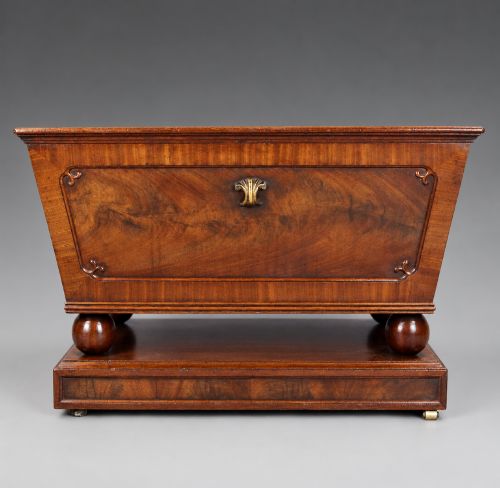
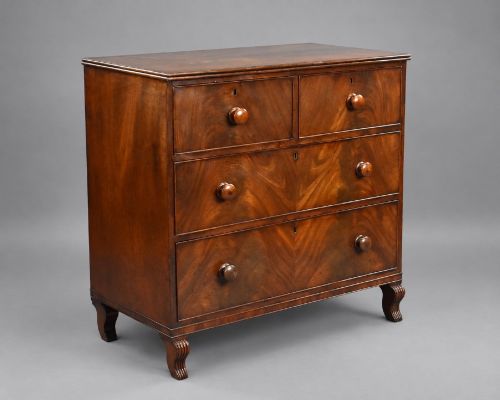
A georgian period mahogany chest brings deep timber grain and functional proportion into a room, serving as a steadfast anchor for daily life.
Georgian Period Mahogany Chest
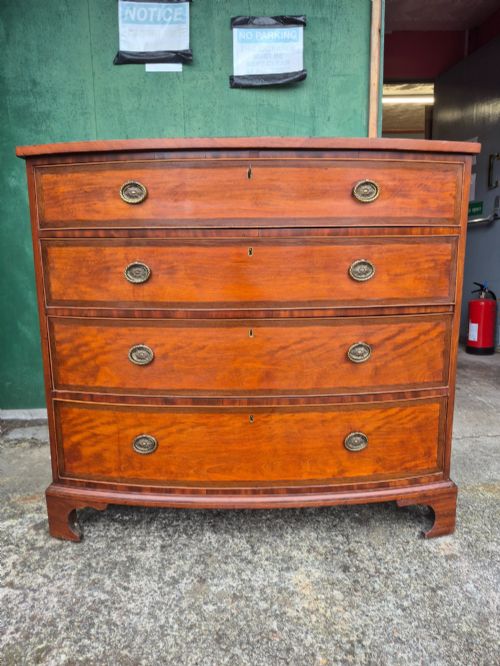
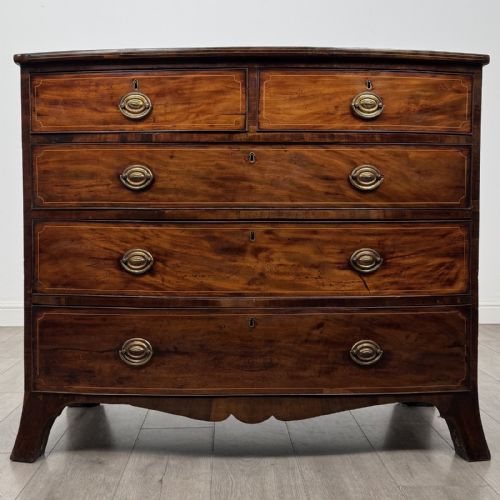
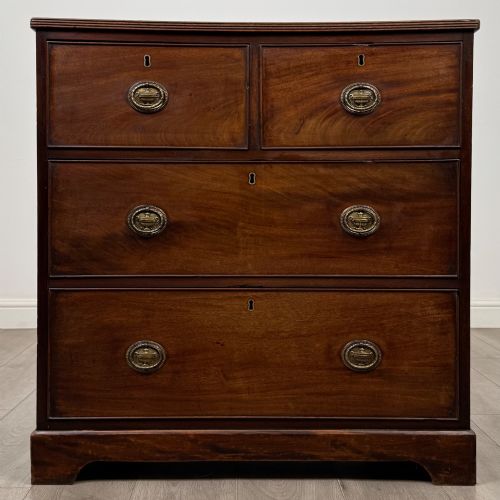
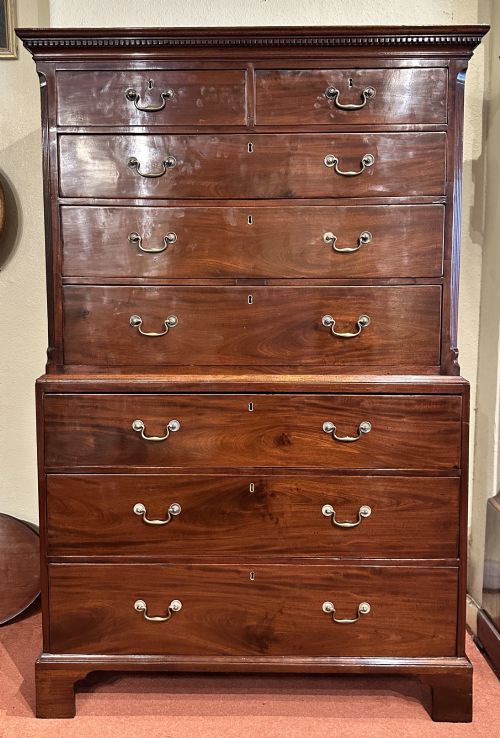
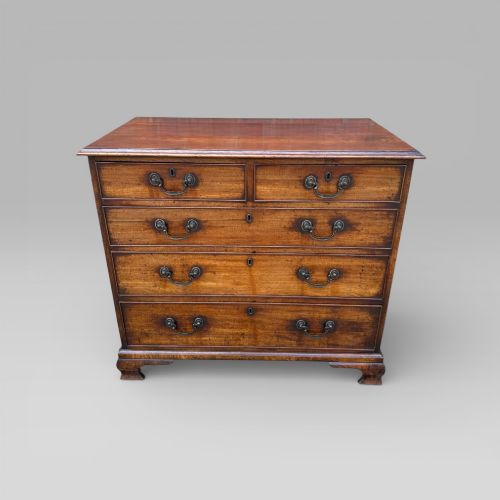
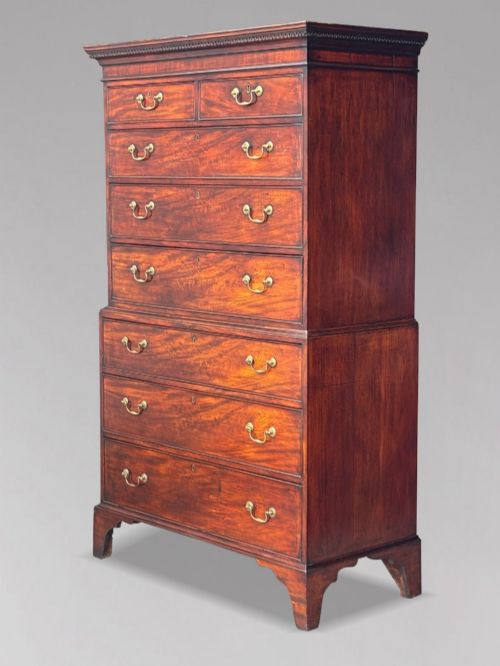
A georgian period mahogany chest typically presents as a chest of drawers, a chest on chest, or a bow fronted piece originating from the eighteenth or nineteenth century.
The selections span standard four height drawer configurations, narrow hall chests, and bachelor variations equipped with bracket feet.
Buyers frequently encounter George III and Regency iterations that exhibit solid timber construction paired with brass handles.
How They Were Made
Cabinet makers utilised dense mahogany alongside oak and pine for internal carcases and drawer linings, ensuring structural longevity.
Selected pieces display flame mahogany veneer applied to primary surfaces, complemented by brass hardware and bone details.
Listings incorporate George III, Regency, and Chippendale styles executed in mahogany, flame mahogany veneer, and oak.
What Varies in Quality
The degree of refinement rests in the selection of figured mahogany veneers and the crispness of cabinet joints, such as dovetailing on drawer construction.
Proportions dictate distinction, where smaller or serpentine forms demonstrate greater skill than standard configurations.
J Moorcroft·Thomas Chippendale
The Georgian Period Mahogany Chest Glossary
- Bow front
- A convex curved cabinet front popular during the Georgian and Regency periods. This shape softens the corners of a room.
- Chest on chest
- A tall storage unit comprising two sections, with a smaller chest stacked upon a wider base. Also referred to as a tallboy.
- Flame mahogany
- A veneer cut from the fork of the mahogany tree to create a distinctive flickering grain pattern. It catches the light across the drawer fronts.
- Serpentine
- A cabinet front featuring an undulating line that curves outward in the middle and inward at the sides. It requires advanced woodworking skill to execute.
Georgian Period Mahogany Chest: Frequently Asked Questions
How do I identify a Georgian chest?
Look for hand-cut dovetails on the drawer sides and solid oak or pine secondary woods inside the carcase. These construction traits mark the period before machine production.
Examine the exterior for dense mahogany timber and period-appropriate brass handles secured with handmade nuts. Proportions often tend toward shorter heights with bracket or ogee feet.
Where should I place a hall chest?
A hall chest works well in narrow entryways or corridors because its shallower depth prevents it from obstructing passage through the room.
These pieces provide discreet storage for household items while introducing period character to transitional spaces without overwhelming the floor plan.
How do I care for antique mahogany?
Maintain the timber by keeping the piece away from direct heat sources and strong sunlight, which can dry out the wood and fade the finish.
Apply a traditional beeswax polish sparingly and buff with a soft cloth to preserve the natural lustre and patina built up over centuries.