
Georgian Lowboy with Drawers
A georgian lowboy with drawers is a compact writing or dressing table that offers versatile storage without cluttering a room.
Georgian Lowboy with Drawers
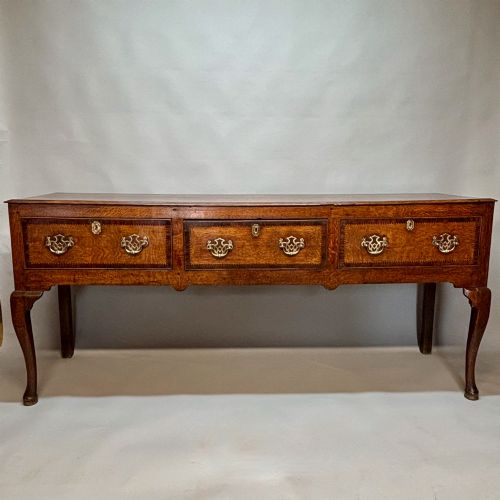
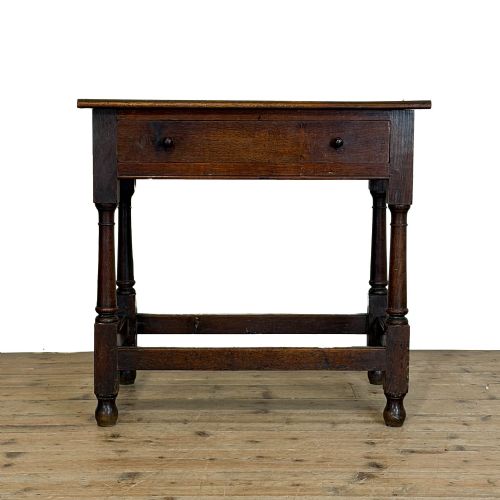
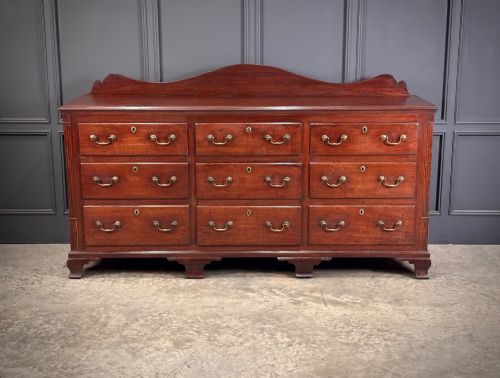
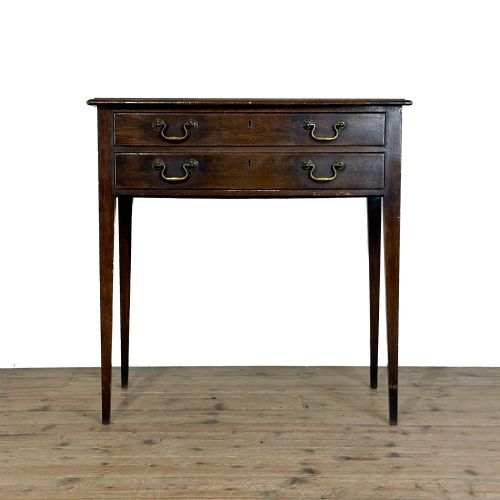
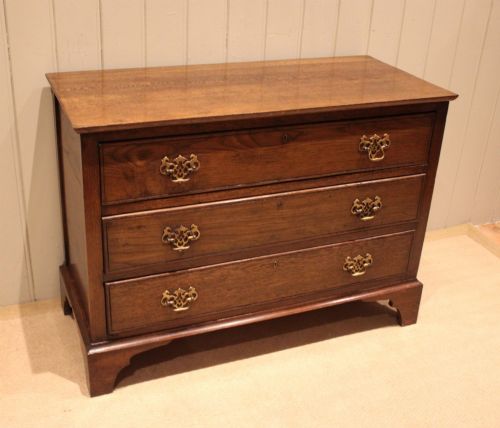
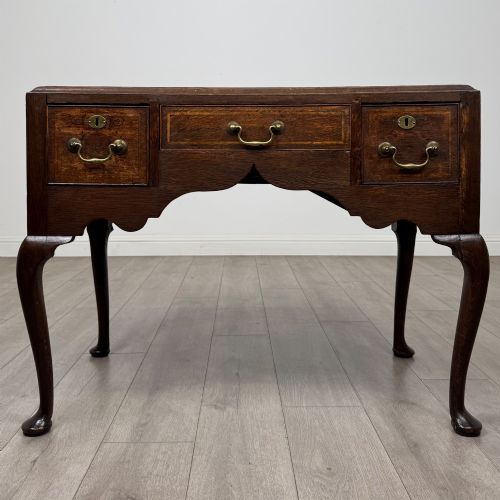
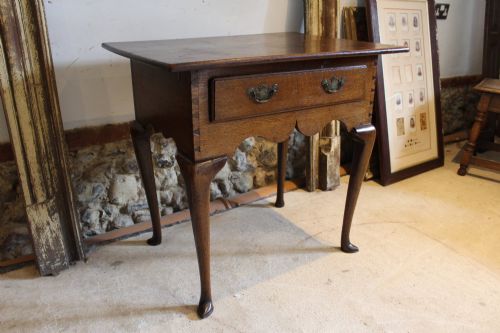
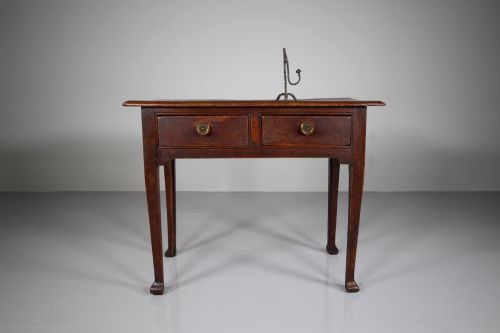
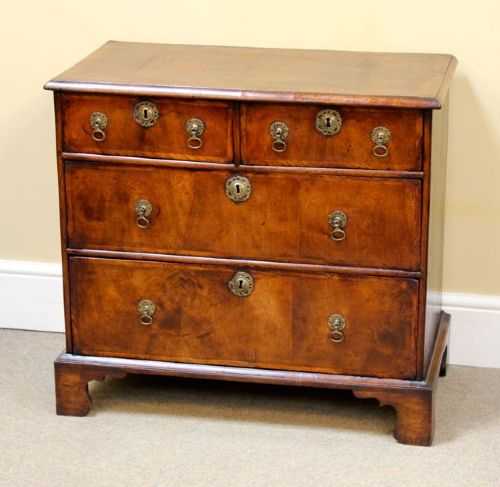
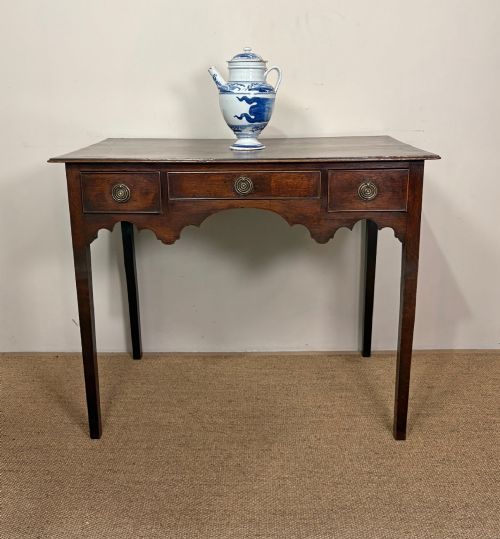
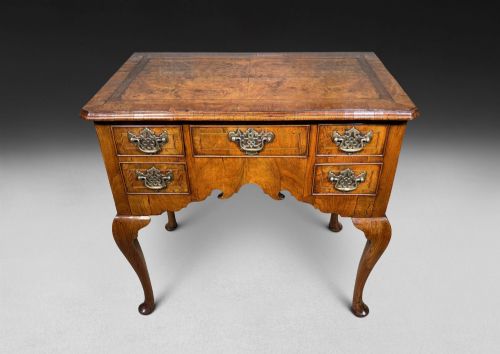
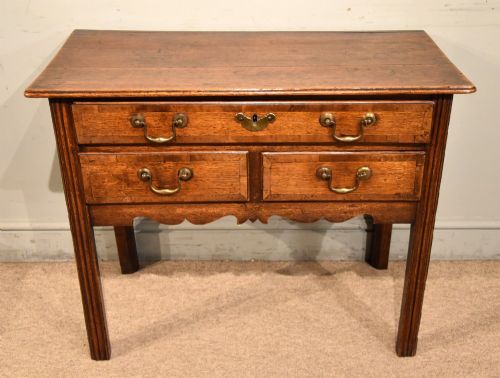
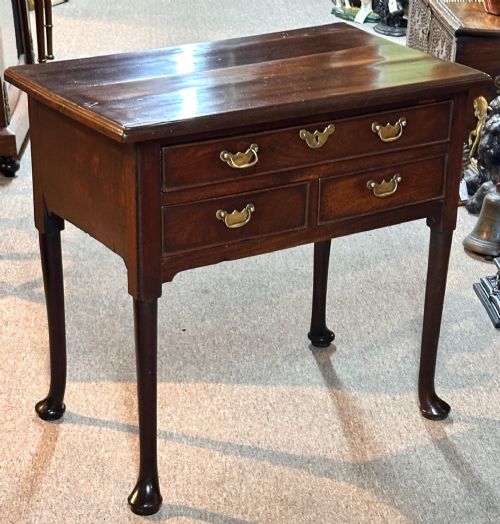
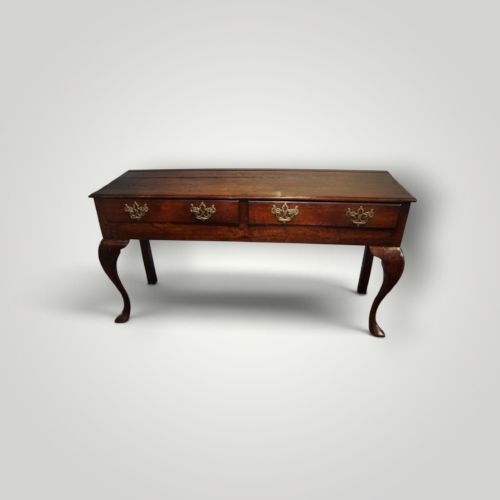
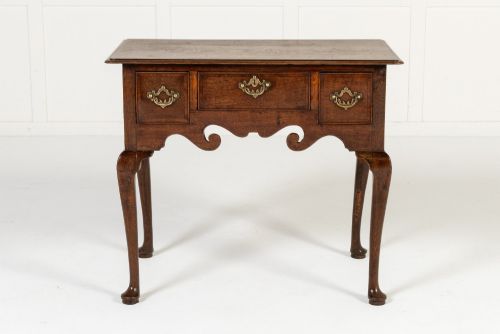
When you search for a georgian lowboy with drawers, you encounter low-standing tables designed for dressing, writing, or occasional use. The versions most commonly met on this page date from the eighteenth century, constructed primarily in oak, walnut, or mahogany, often featuring cabriole legs and multiple frieze drawers.
The form functions as a bridge between a side table and a small chest of drawers. Pieces range from country-made fruitwood examples to refined George II walnut designs with feather banding and trilobe feet, reflecting varied domestic needs across different regions.
Materials and construction methods
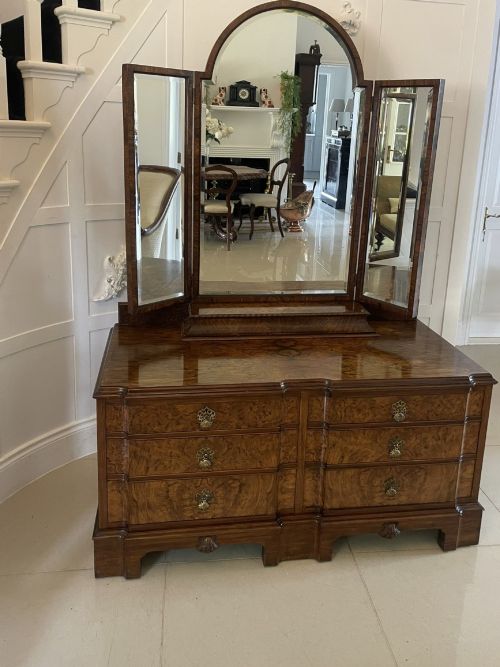
Cabinet makers utilised native and imported timbers, pairing sturdy oak carcases with decorative surfaces of walnut, burr walnut, mahogany, and satinwood. Crossbanding and geometric hand-painted details frequently adorned the drawer fronts and tabletops of finer pieces.
Structural support relied on wood-turned legs with stretchers or carved cabriole legs ending in distinct foot forms. Brass hardware, including pierced drop handles, completed the construction of the drawers.
Several examples include hand-painted geometric tabletops, proving that eighteenth-century owners occasionally enjoyed a bit of pattern under their teacups.
Distinctions in quality and execution
The division between standard provincial pieces and high-status examples lies in timber selection and decorative restraint. Figured veneers such as burr walnut or detailed feather banding separate ambitious urban commissions from simple country-made oak and fruitwood tables.
Carving execution on knees, legs, and aprons also dictates hierarchy, alongside the integration of original brass furniture and the crispness of dovetail joints within the drawer construction.
The Georgian Lowboy with Drawers Glossary
- Lowboy
- A small low table with drawers, typically used as a dressing or writing table during the eighteenth century.
- Frieze drawer
- A drawer fitted into the horizontal band immediately beneath the tabletop.
- Cabriole leg
- A furniture leg that curves out and then in, resembling the leg of an animal.
- Crossbanding
- A border veneer applied around the edges of a tabletop or drawer front with the grain running perpendicular to the centre.
- Feather banding
- Narrow strips of veneer laid in a herringbone pattern to frame drawer faces.
- Trilobe foot
- A foot shaped into three distinct lobes or lobes resembling a trefoil.
Georgian Lowboy with Drawers: Frequently Asked Questions
What was a lowboy used for?
These tables served primarily as dressing tables or compact writing desks in bedchambers and parlours. The drawers held personal items, documents, or grooming accessories.
Their modest proportions allowed them to fit easily into smaller rooms while providing accessible surface space.
How do I date an eighteenth-century lowboy?
Dating relies on timber choices, leg profiles, and drawer construction techniques. Oak and fruitwood often indicate earlier provincial or country-made examples, while walnut and mahogany frequently point towards more formal urban workshops.
Hardware styles and secondary woods inside the drawers also provide reliable chronological markers for the period.
Where should I place a lowboy at home?
A lowboy functions effectively as an entrance hall table, a dressing table in a bedroom, or a writing surface beneath a window. Its shallow depth ensures it stays clear of main pathways.
The drawers make it useful for keeping keys, stationery, and small household items organised.
What is the difference between a lowboy and a side table?
While a standard side table stands flat without built-in storage, a lowboy specifically incorporates one to three drawers beneath the top. This functional addition turns the table into a miniature desk or vanity.
Both forms share similar leg designs and timber palettes from the same periods.