
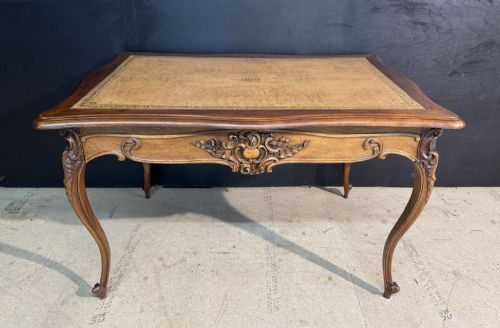
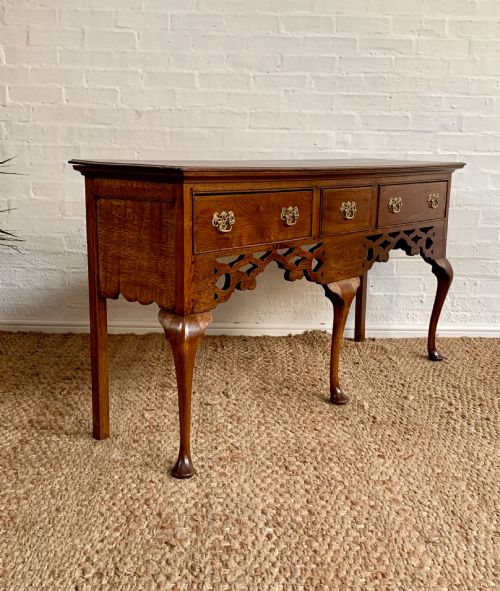

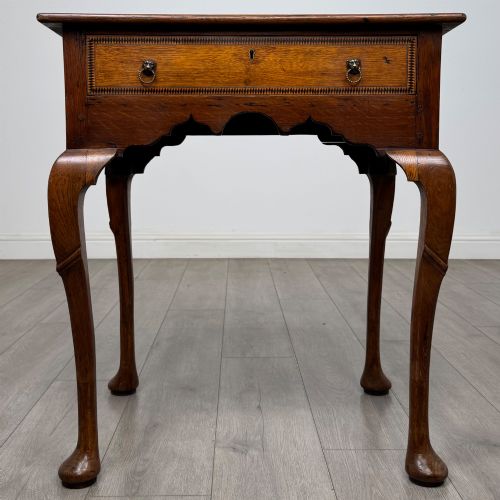

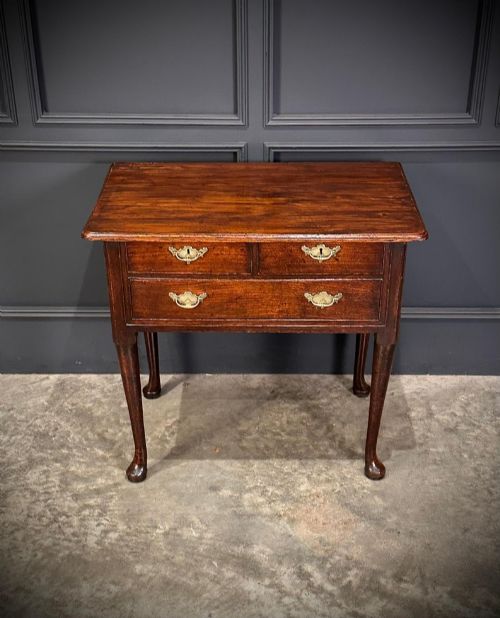
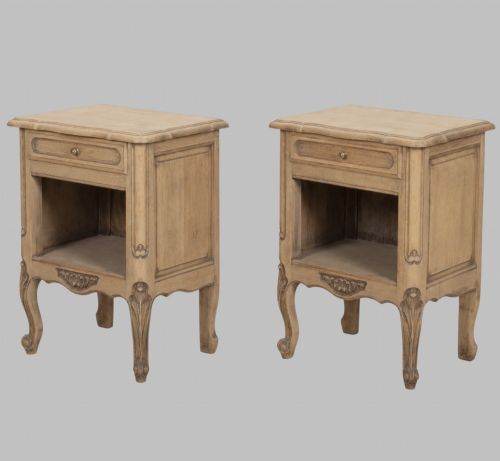
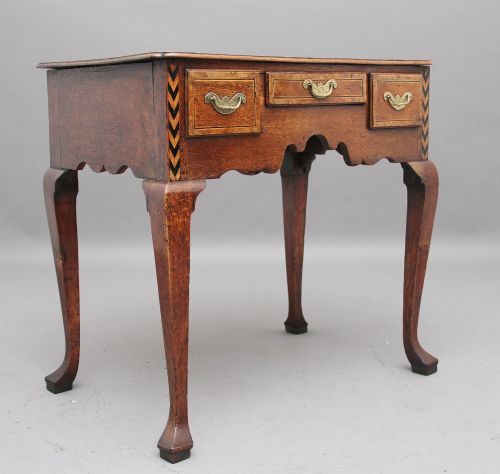
Carved Oak Cabriole Table
A carved oak cabriole table brings sturdy timber and curved legs together, offering practical surface space with distinct period character.
Carved Oak Cabriole Table
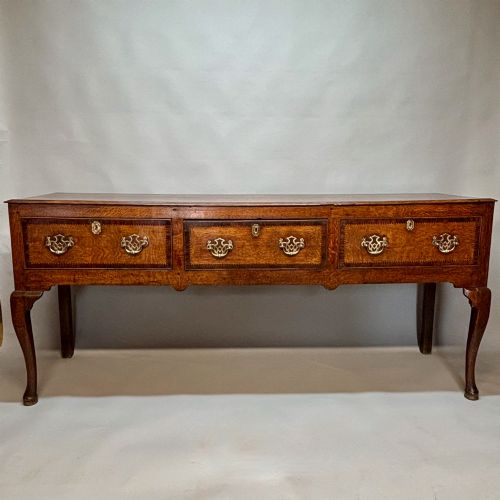
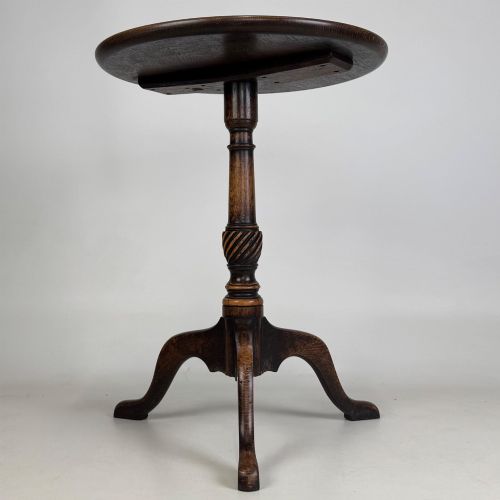
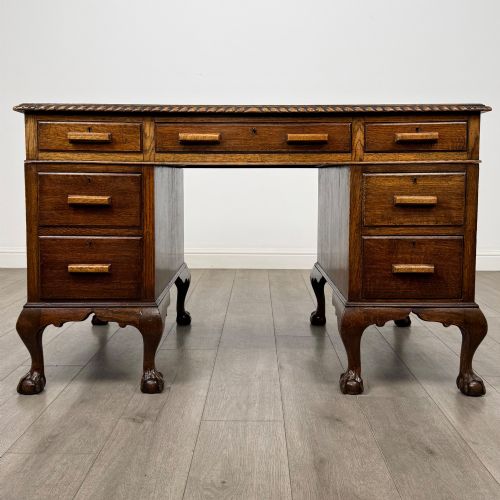
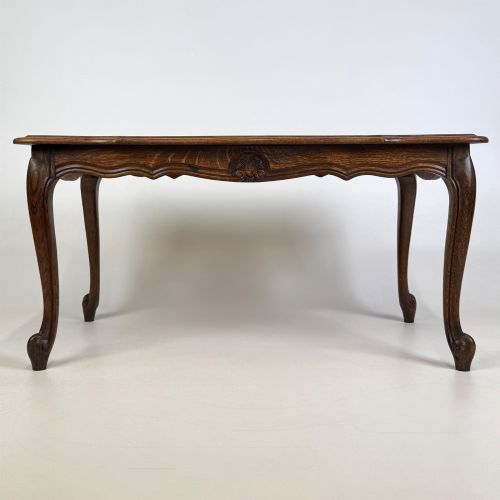
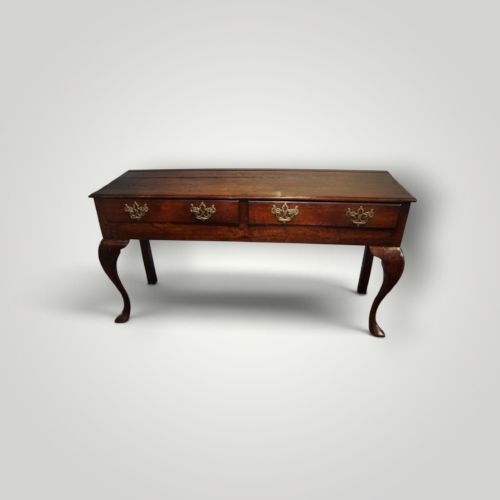
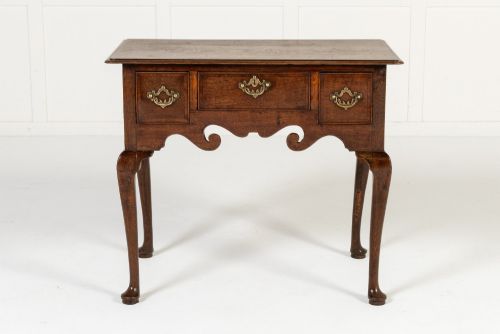
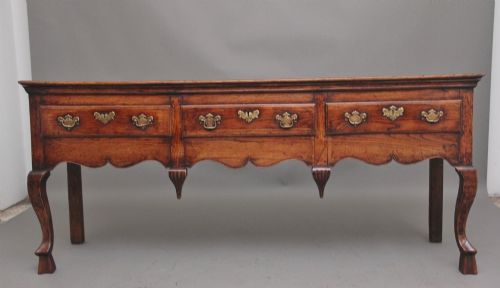
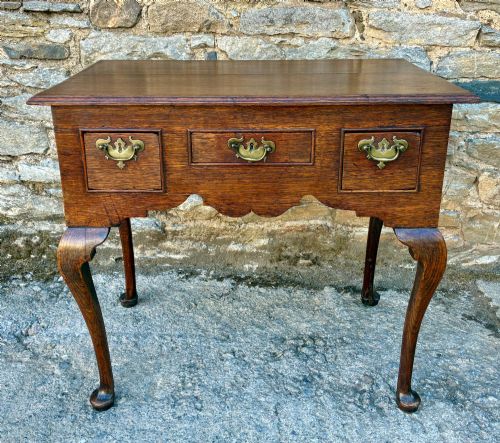
A carved oak cabriole table unites solid timber with the characteristic double-curved leg of period furniture, appearing across lowboys, side tables, and dressing tables. Buyers seeking a carved oak cabriole table encounter forms rooted in the eighteenth century alongside later revivals from the nineteenth and early twentieth centuries.
The material selection leans heavily on native oak, sometimes bleached or paired with walnut, marble, or leather inserts depending on the piece. Side tables and lowboys dominate the selection, bringing low-slung surfaces and drawer storage into domestic rooms.
Origins stretch from English country houses to French provincial workshops, incorporating regional styles such as Queen Anne, Georgian, and French Rococo. Surviving examples range from eighteenth-century originals to early twentieth-century interpretations.
How they were made
Construction relies on solid oak timbers, shaped and joined to support the sweeping lines of cabriole legs without losing structural stability. Carving is applied directly to the wood, defining knees, skirts, and edges with foliate or geometric motifs.
Secondary materials like brass handles, marble tops, and leather writing surfaces appear on specific forms such as desks and console tables. Surface finishes vary from traditional wax polish on dark oak to modern bleached treatments highlighting the natural grain.
Materials documented across the selection include solid oak, bleached oak, walnut, marble, glass, leather, and brass.
What varies in quality
The depth and crispness of the carving distinguish finer tables from simpler utilitarian pieces, particularly around the knees and apron. Timbers chosen for the top and legs show tighter grain and more deliberate matching in superior examples.
Structural integrity depends on how well the cabriole legs join to the frame, as the curved design places distinct stresses on the joints. Original hardware, undisturbed drawer linings, and consistent patina elevate the standing of older tables.
The Carved Oak Cabriole Table Glossary
- Cabriole leg
- A furniture leg featuring a double curve, bulging outward at the knee and tapering inward at the ankle. This form originated in antiquity and gained prominence during the eighteenth century.
- Lowboy
- A small oak or walnut table with one or more drawers, functioning historically as a dressing table or side table. These pieces typically stand on four tall legs.
- Dresser base
- A long low table fitted with drawers beneath the top surface, designed for storage and serving in dining rooms. Many examples stand on cabriole legs.
- Draw leaf table
- A dining table with extension leaves hidden beneath the main top that pull out from either end. This mechanism increases surface area without requiring loose boards.
- Parquetry
- Geometric wood mosaic work used for decorative surface patterns on tabletops. Artisans fit small wooden blocks together to create repeating motifs.
Carved Oak Cabriole Table: Frequently Asked Questions
What is a lowboy?
A lowboy is a small table equipped with drawers, standing on four legs that often terminate in pad or scroll feet. Eighteenth-century versions frequently utilise oak and serve as writing desks or dressing surfaces.
Over time, these tables found places in hallways and living rooms as decorative side pieces. Their compact proportions make them suitable for modern spaces requiring modest surface area.
How do I date an oak table?
Dating relies on construction methods, tool marks left by woodworking implements, and the style of the carving. Eighteenth-century pieces display hand-cut joints and timber movement consistent with age.
Revival pieces from the Edwardian period or the nineteen-twenties often mimic earlier styles but reveal twentieth-century manufacturing techniques upon closer inspection. Examining the drawer linings and secondary woods clarifies the manufacturing era.
Where should I place a console table?
Console tables fit naturally against living room walls, in narrow hallways, or beneath windows where depth is limited. Their narrow profile provides a surface for lamps, books, or decorative objects without obstructing pathways.
Marble-topped or carved oak variants add texture and weight to an interior scheme. Pairing them with a mirror creates a functional focal point in an entryway.
How do I care for oak furniture?
Oak furniture benefits from regular dusting with a soft, dry cloth and occasional applications of beeswax to nourish the timber. Avoiding direct sunlight and extreme humidity prevents the wood from drying out or splitting.
Spills require immediate wiping with a damp cloth to protect the finish. Natural oils in the wood maintain its resilience over decades of daily use.