


Georgian Low Dresser Base
When you set out to acquire a georgian low dresser base, you are looking at utilitarian serving furniture that now forms the practical anchor of a modern kitchen or dining room.
Georgian Low Dresser Base
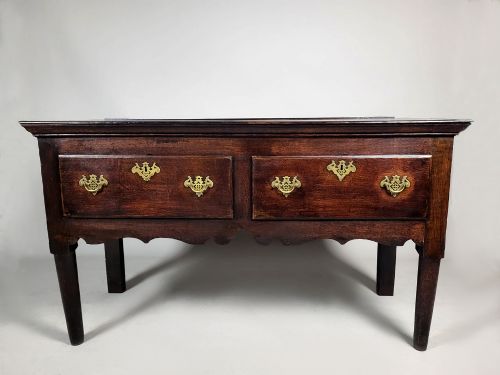
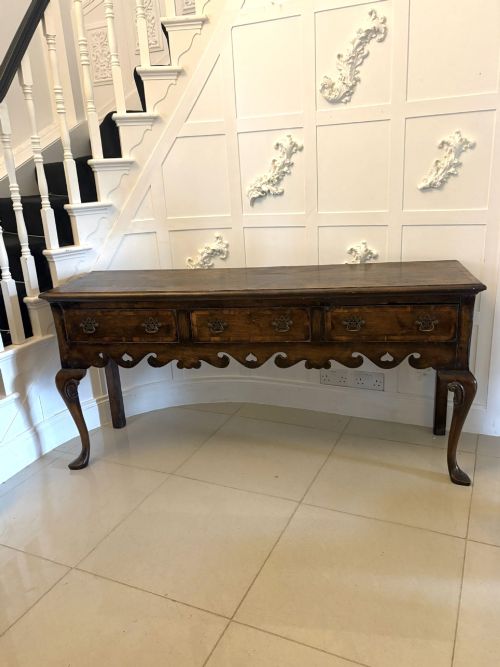
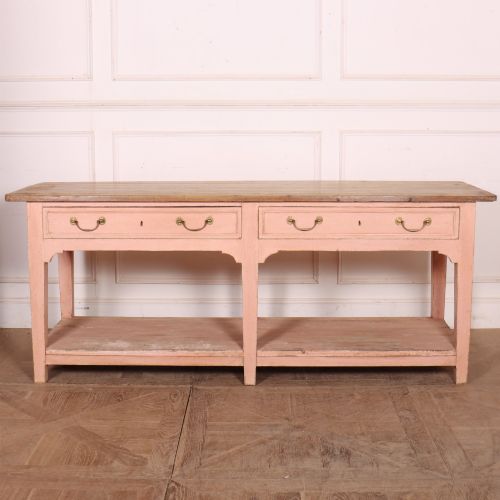
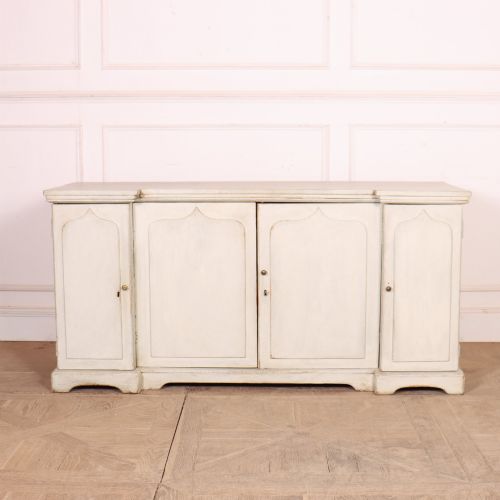
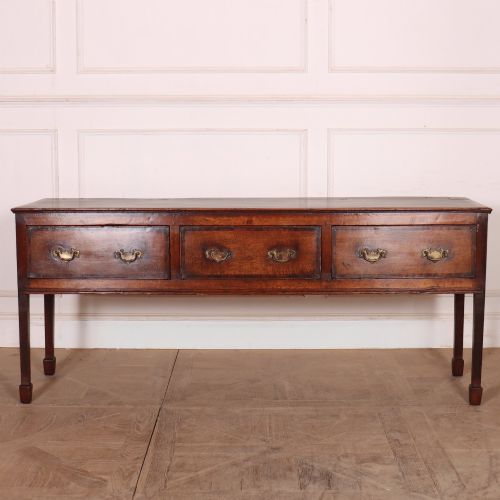
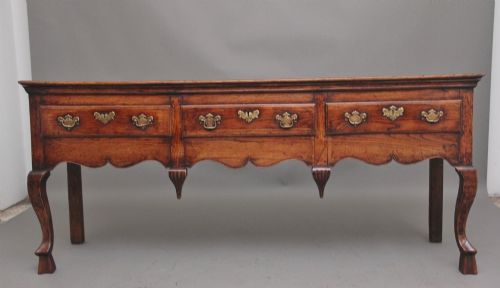
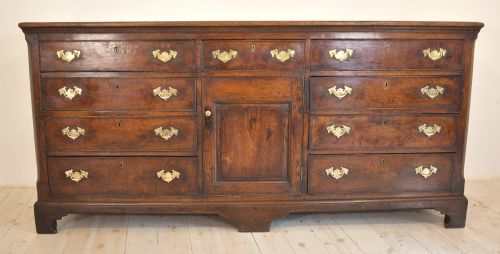
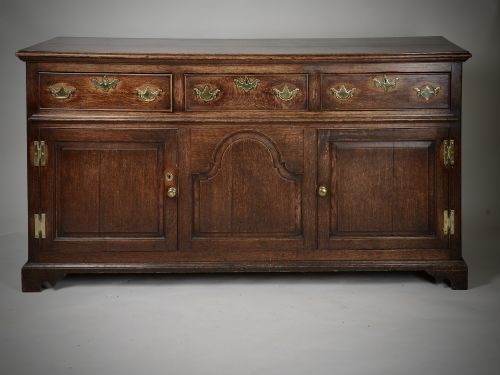
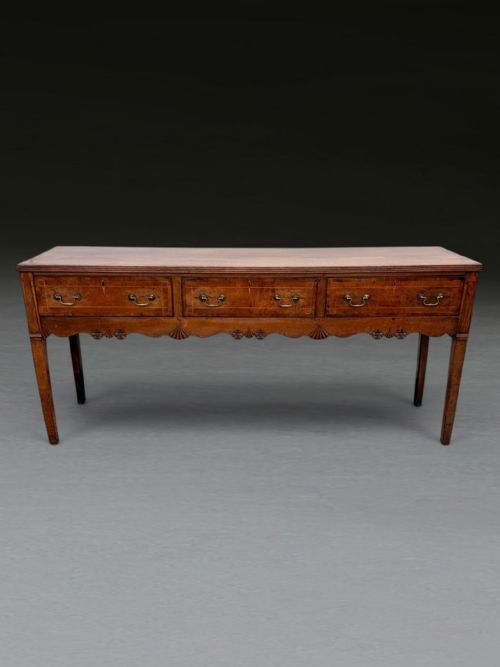
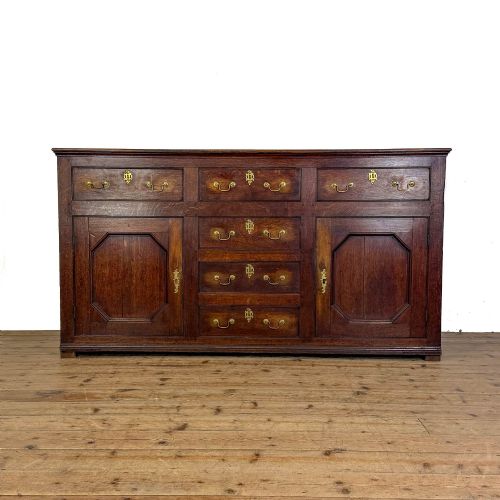
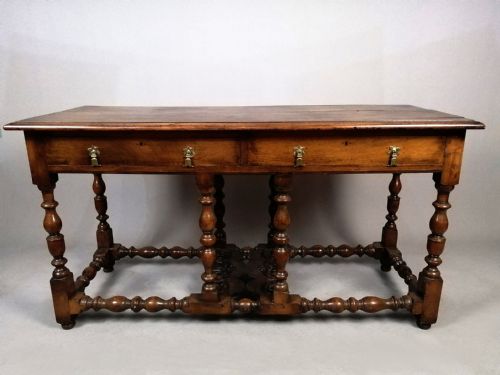
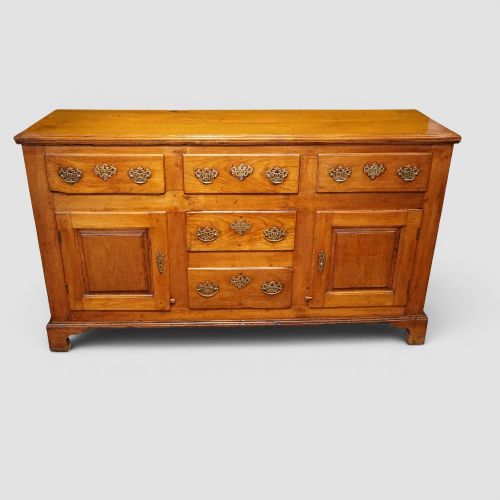
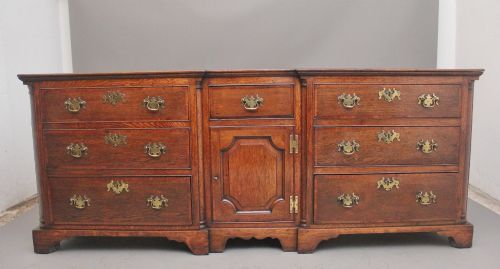
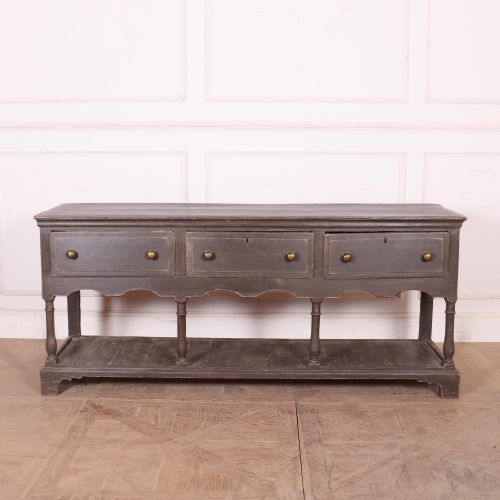
A georgian low dresser base is a heavy, low-slung timber sideboard designed originally for practical storage and food preparation in domestic kitchens or dining spaces. These pieces sit lower than standard modern sideboards, featuring long horizontal proportions with banks of drawers above cupboards or open potboards.
The version you are most likely to encounter on this page is constructed from solid English or Welsh oak, frequently dating from the eighteenth century or the George III period. Regional variations from Shropshire, Lancashire, and Wales frequently appear, showing distinctive drawer arrangements and leg designs ranging from simple cabriole supports to straight stile feet.
How they were made
Cabinet makers built these sturdy bases primarily using solid oak timbers for the structural framework and drawer linings, occasionally combining elm, fruitwood, or pine for secondary parts. Panels were traditionally fielded and fitted into grooved frames to accommodate seasonal wood movement without splitting.
Hardware such as brass drop handles and escutcheons were pinned through the drawer fronts, while construction relied heavily on hand-cut dovetails for the drawer construction and mortise and tenon joints for the frame.
What varies in quality
The quality of a georgian low dresser base depends heavily on the proportion and thickness of the timber selected by the maker, alongside the crispness of the hand-cut mouldings and drawer dovetails. Pieces retaining their original brass hardware, un-replaced timber boards, and undisturbed surface patination command greater appreciation.
Proportional harmony dictates the visual success of the piece, where deep drawer configurations and well-balanced potboard undershelves display superior joinery and thoughtful regional design rather than hasty utilitarian assembly.
The Georgian Low Dresser Base Glossary
- Potboard
- An open lower shelf built into the base of a dresser, historically used for storing heavy pots, pans, and serving dishes.
- Breakfront
- A furniture facade where the central section projects forward from the flanking outer wings.
- Cabriole leg
- A furniture leg that curves outward at the knee and tapers inward toward the foot, often finishing in a pad or hoof.
- Dovetail
- A strong interlocking joint formed by interlocking wedge-shaped fingers, commonly used in drawer construction.
- Frieze
- The horizontal structural member situated directly beneath the top board and above the drawer fronts.
Georgian Low Dresser Base: Frequently Asked Questions
What is a low dresser base used for?
These low timber cabinets function exceptionally well as modern sideboards, offering generous surface space for serving food and deep drawers for storing tableware and linens in dining rooms or kitchens.
Their substantial construction and low height also make them ideal media consoles or hallway storage units that ground a room with historical character.
How do I distinguish regional styles?
Regional differences often reveal themselves through timber choices, drawer counts, and undercarriage designs such as open potboards versus enclosed cupboards. Welsh and border county examples frequently display distinct panel configurations and proportions compared to pieces from Lancashire or Shropshire.
Examining the secondary woods inside the drawers provides further clues regarding where a regional workshop operated.
Are potboards original to these pieces?
The open lower shelf, or potboard, is a defining structural element on many country examples, providing both rigidity to the frame and practical storage beneath the top surface.
While some surfaces show signs of historical adaptation, standard eighteenth-century examples integrated these shelves directly into the mortise and tenon framework of the base.
How do I care for antique oak?
Maintaining antique oak involves keeping the timber away from direct heat sources and rapid humidity shifts that can cause boards to split or warp. Regular dusting with a dry cloth and occasional application of appropriate beeswax helps preserve the natural patination built up over centuries.