

Georgian Low Bookcase Cabinet
A georgian low bookcase cabinet provides compact timber storage for volumes and display, combining accessible upper shelving with enclosed lower proportions.
Georgian Low Bookcase Cabinet
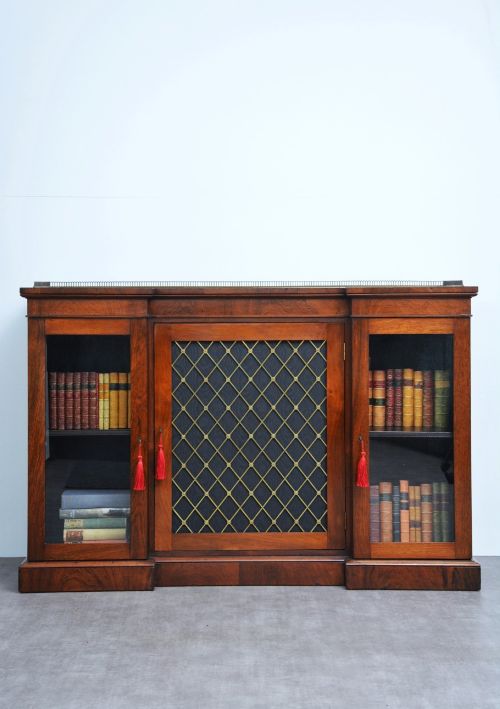
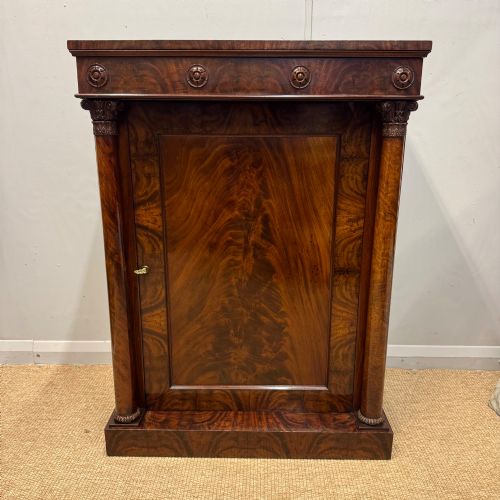
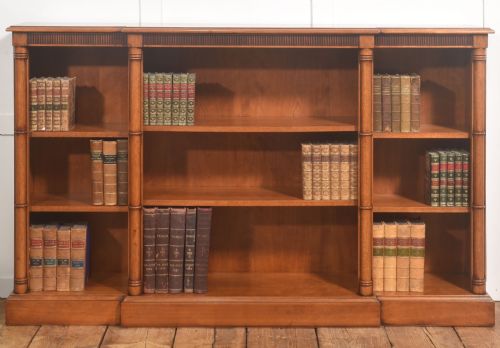
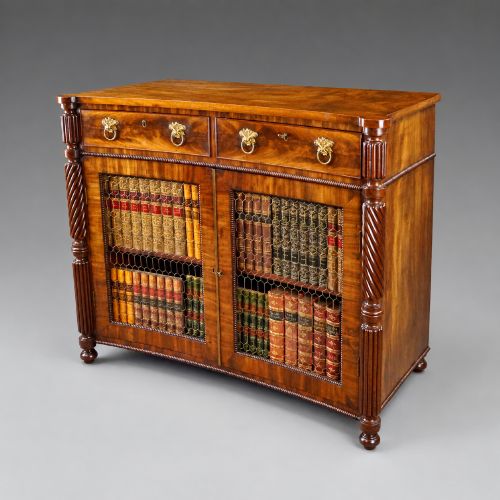
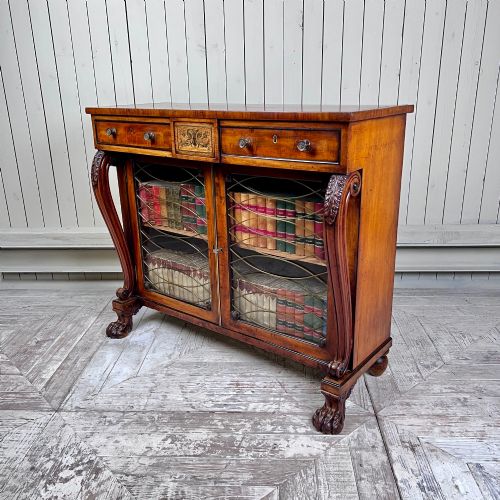
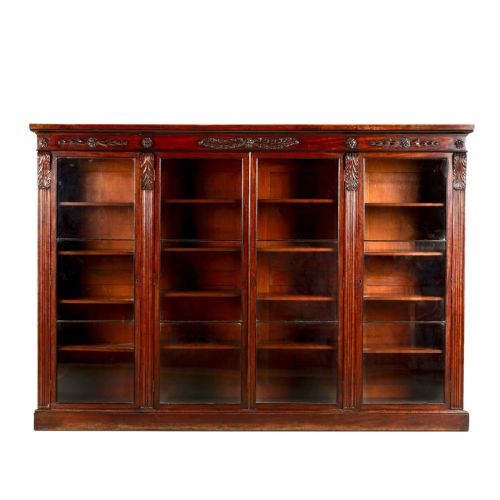
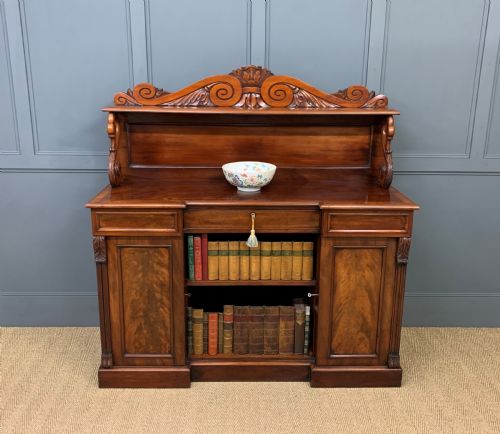
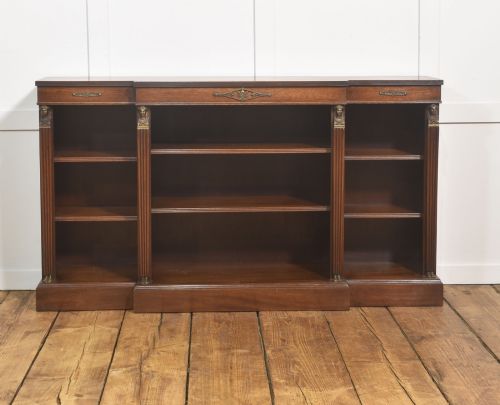
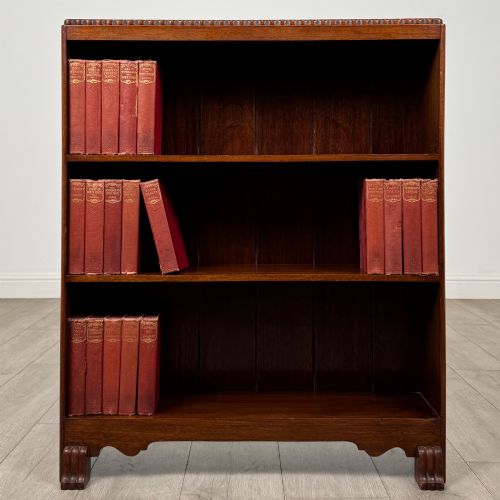
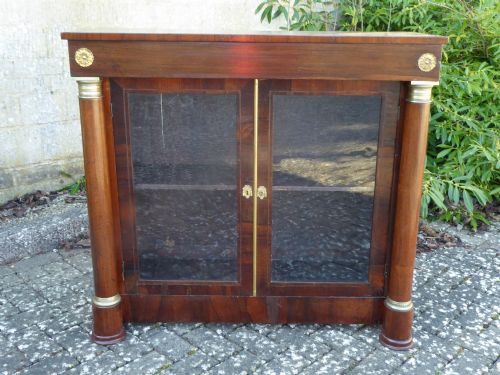
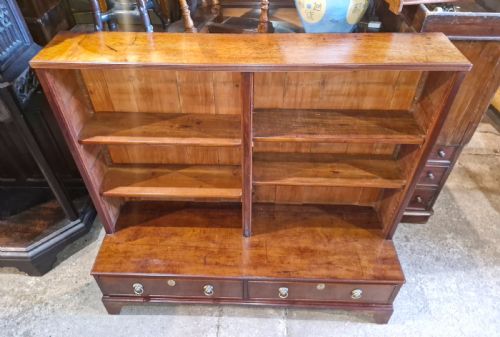
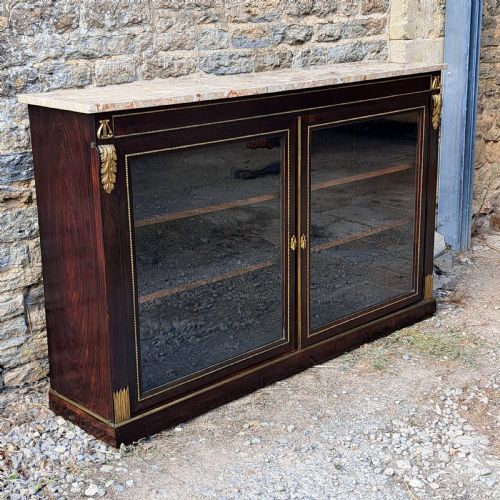
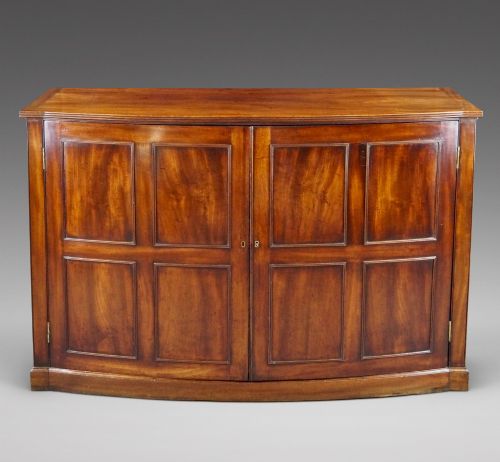
When searching for a georgian low bookcase cabinet, a buyer encounters low-slung timber furniture designed to sit comfortably beneath dado height or window sills without dominating a room. These pieces combine open upper shelving or glazed display doors with sturdy lower cupboards or drawers, originating primarily from the Georgian, Regency, and William IV periods.
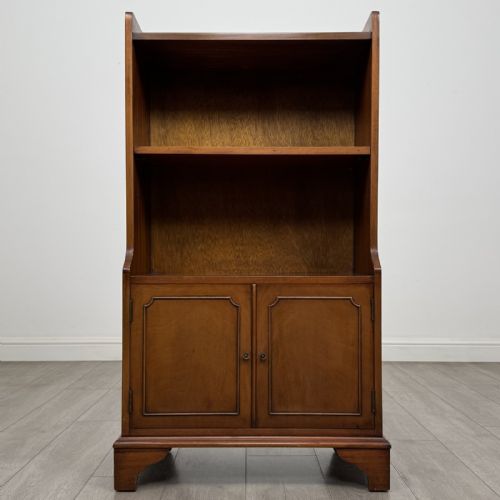
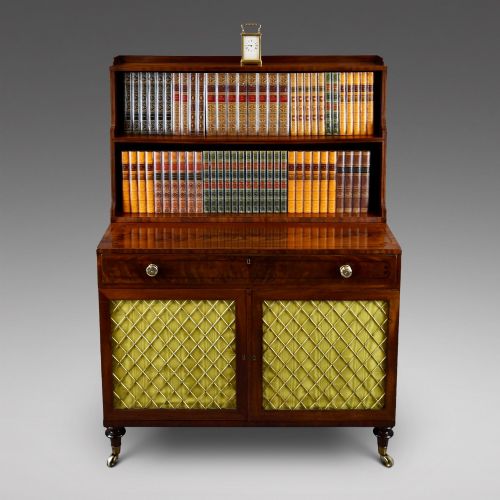
The versions met most frequently on this page span mahogany, rosewood, and oak timbers, often taking the form of waterfall bookcases, chiffoniers, or dwarf cabinets. Makers of the period engineered these items for domestic studies and libraries where vertical space was shared with paintings and mirrors.
Beyond standard upright bookcases, the low cabinet format frequently incorporates breakfront profiles, brass grilles, and inlaid friezes. Pieces range from straightforward George III press cupboards to elaborate Regency rosewood designs outfitted with brass mounts and ebony stringing.
Materials and construction methods
Makers relied heavily on dense hardwoods like mahogany and rosewood, often selecting flame or figured veneers to catch the light across principal surfaces. Secondary woods such as oak and pine provided rigid internal framing for shelves and cabinet carcases.
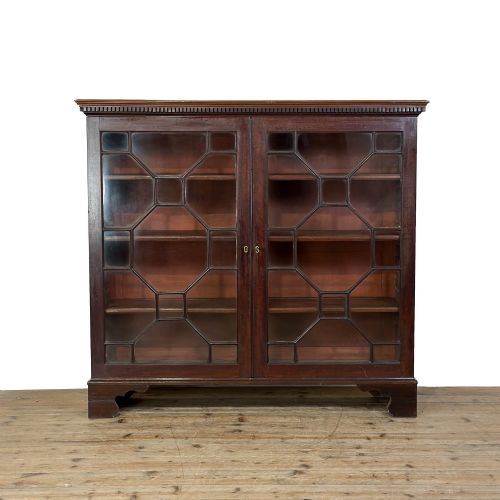
Decorative details demanded precise hand-workmanship, including brass inlay, pierced brass grilles, and delicate astragal glazing bars dividing individual panes of glass. Surface finishes were built using traditional polishes that enhanced the natural grain patterns of the timber.
Georgian Low Bookcase Cabinet Retail Price Guide 2026
Typical asking prices for georgian low bookcase cabinet among the pieces listed under this phrase on Sellingantiques today, from the lower quarter to the upper quarter. They describe what is for sale here now, not the wider market.
Several low bookcases come equipped with simulated paint finishes, proving that Georgian decorators loved a clever trick as much as solid timber.
What separates the finest examples
Quality rests upon the selection of timber figures, such as pollard oak or flame mahogany, matched symmetrically across drawer fronts and door panels. Superior examples exhibit crisply carved mouldings and tight, seamless joins that withstand decades of environmental change without warping.
The integration of secondary materials like finely cast brass mounts, silk-backed grilles, and original glass panes elevates an ordinary storage piece into a work of cabinet-making skill. Hardware integrity and the survival of fitted interior compartments further distinguish superior workshop output from standard commercial production.
Gillows·Maple and Co
The Georgian Low Bookcase Cabinet Glossary
- Breakfront
- A piece of furniture whose central section projects forward from the flanking wings. This architectural layout creates visual depth in larger rooms.
- Astragal glazing
- Narrow wooden bars that hold small panes of glass within a cabinet door. They form geometric patterns that allow visibility while protecting the contents.
- Chiffonier
- A low cabinet featuring enclosed shelves below and often a raised shelf or gallery above. It served as a versatile side table in dining rooms and parlours.
- Waterfall bookcase
- A tiered shelving unit where each successive shelf steps back from the one below. The graduated sides resemble the cascading steps of a waterfall.
- Press cupboard
- A large storage unit designed originally for linens, featuring upper doors opening to sliding trays and lower drawers. They often double as low bookcase cabinets when fitted with display shelves.
Georgian Low Bookcase Cabinet: Frequently Asked Questions
Where should I place a low bookcase?
These cabinets suit studies, living rooms, and hallways where tall bookcases would overwhelm the wall space. Their lower profile allows artwork or mirrors to hang comfortably directly above them.
Position them away from direct heat sources and strong sunlight to protect fragile rosewood and mahogany veneers from drying and fading over time.
How do I care for antique mahogany timber?
Dust the surfaces regularly with a soft, dry cloth to prevent particulate buildup in the grain and carved mouldings. Avoid silicone-based polishes that can penetrate the aged wood and attract further dust.
Maintain stable room humidity to prevent the solid timber and delicate veneers from cracking or separating from the carcase.
What is the difference between a chiffonier and a bookcase?
A chiffonier typically combines a low enclosed cupboard base with a raised shelf or small superstructure on top. Bookcases focus primarily on tiered open shelving or glass-fronted display areas for volumes.
Many Regency examples blur these boundaries by incorporating open lower display sections alongside traditional cupboard storage.
How can I identify a Regency period piece?
Regency items often feature classical architectural motifs inspired by ancient Greece and Rome, combined with dark exotic woods. Look for distinctive brass inlay, lion paw feet, and pierced brass gallery rails.
Construction methods from this era also show heavier brass mountings and more pronounced breakfront proportions than earlier Georgian iterations.