
Georgian Linen Cabinet
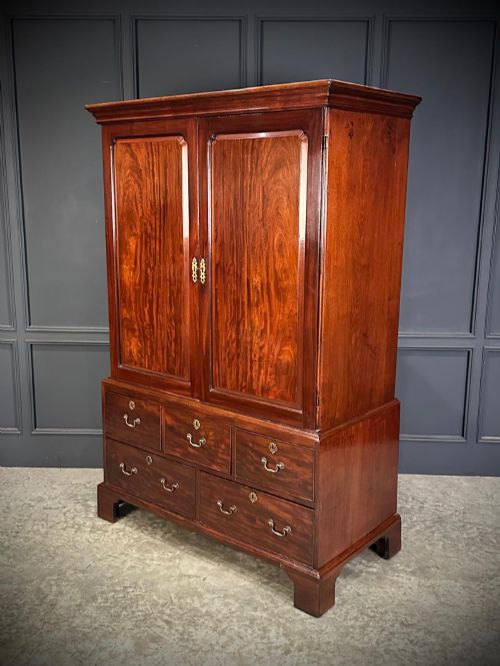
A georgian linen cabinet is a substantial piece built to store household textiles, and collectors prize these timber presses for their imposing presence and functional depth.
Georgian Linen Cabinet
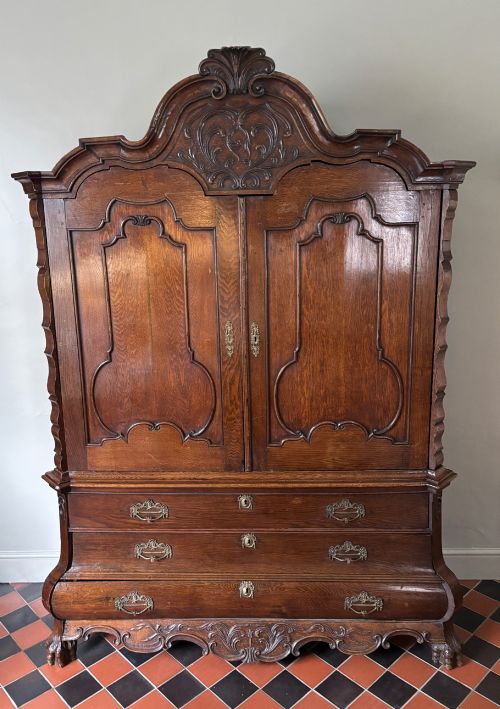
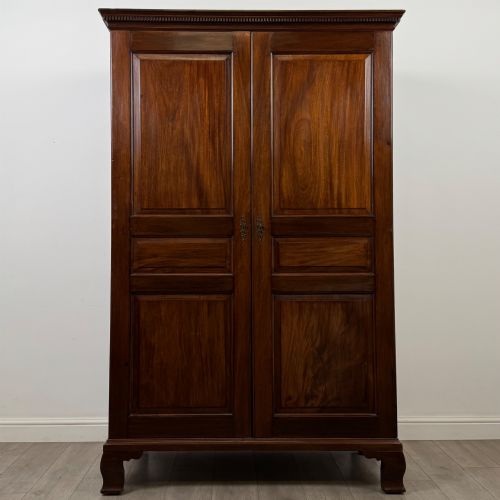
When you search for a georgian linen cabinet, you encounter tall storage furniture designed primarily for domestic organisation. The listings show these pieces appearing under names like linen presses, wardrobes, and press cupboards, spanning the eighteenth and nineteenth centuries.
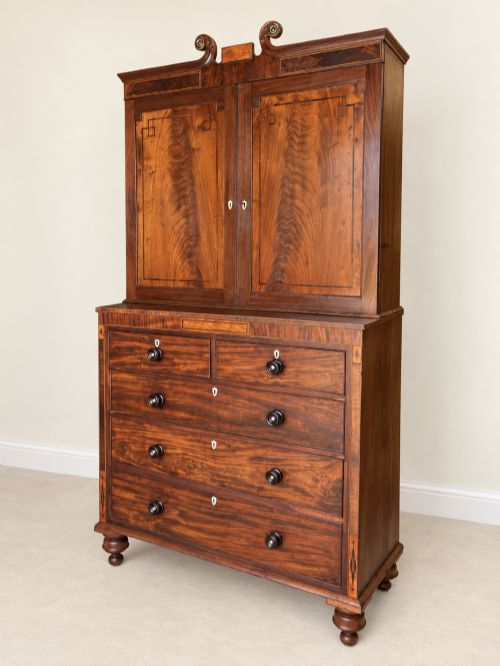
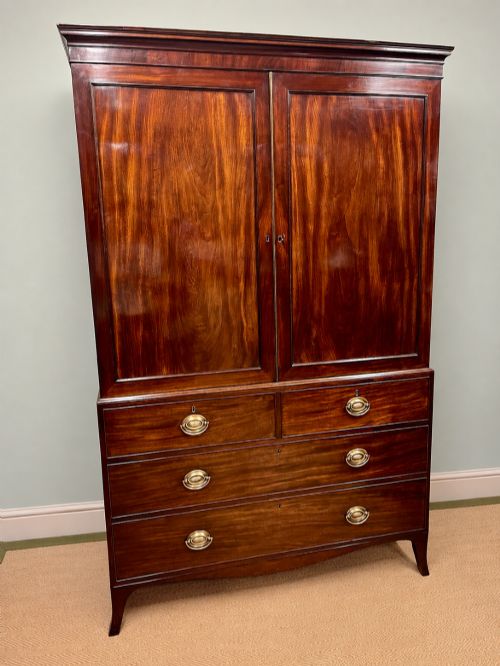
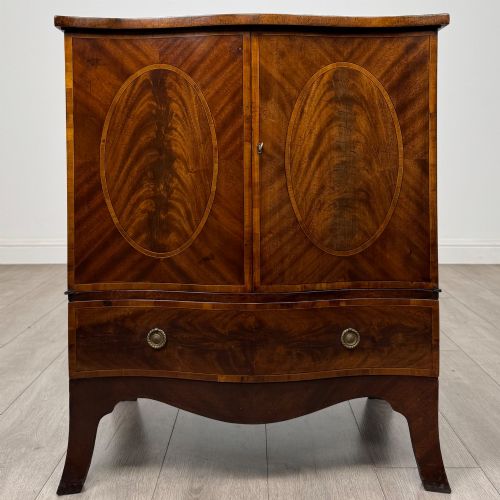
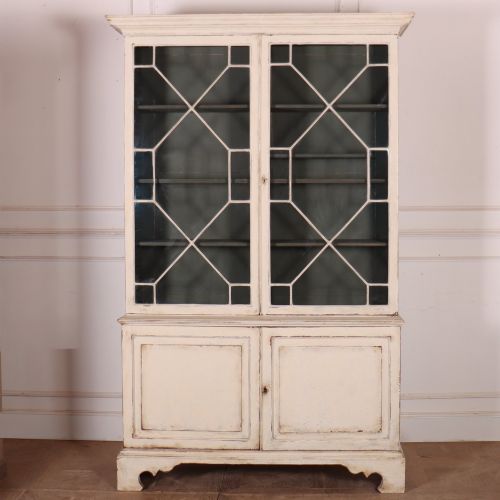
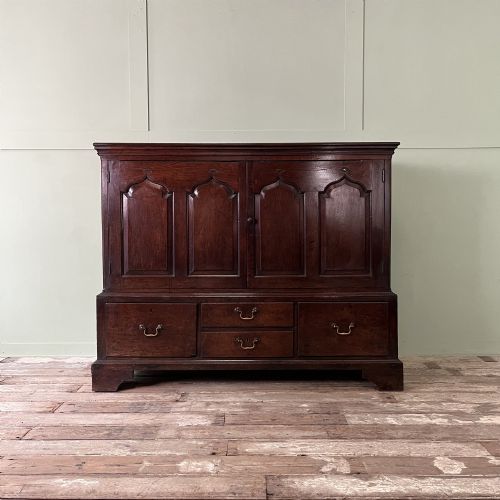
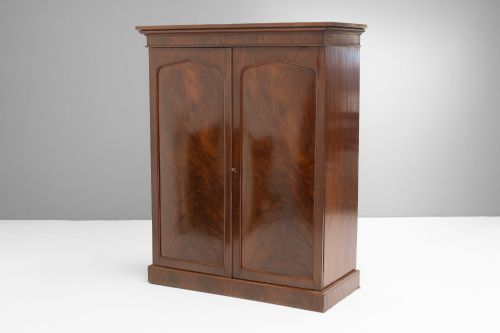
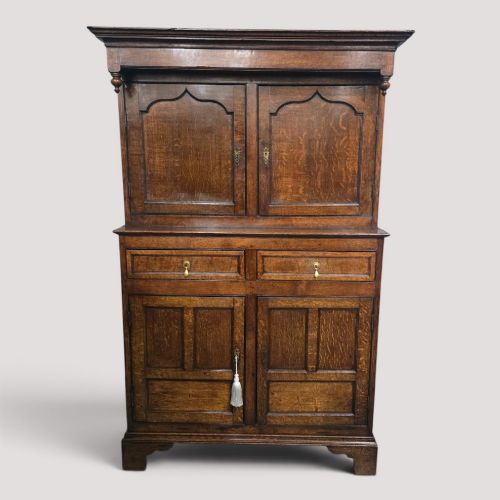
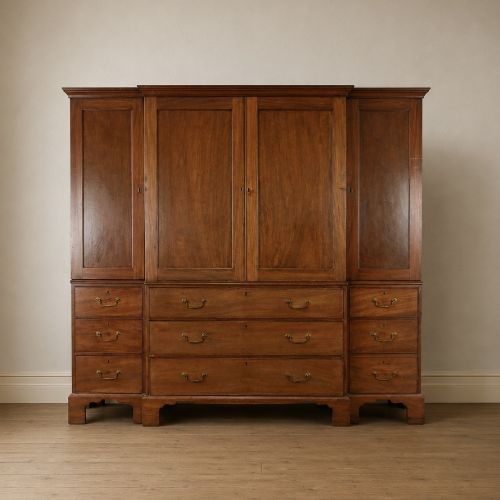
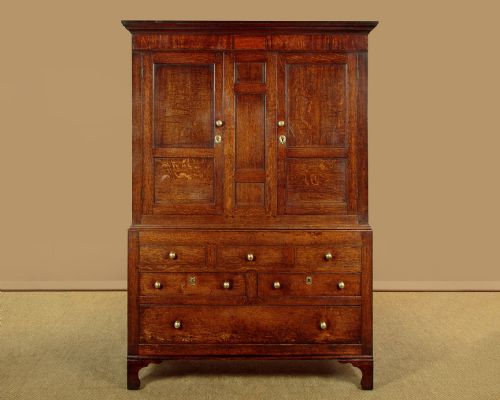
You are most likely to meet mahogany and oak versions on this page, reflecting the dominant timbers of the Georgian and Regency periods. Regional country pieces sit alongside formal urban designs, offering everything from low dwarf cupboards to large breakfront wardrobes.
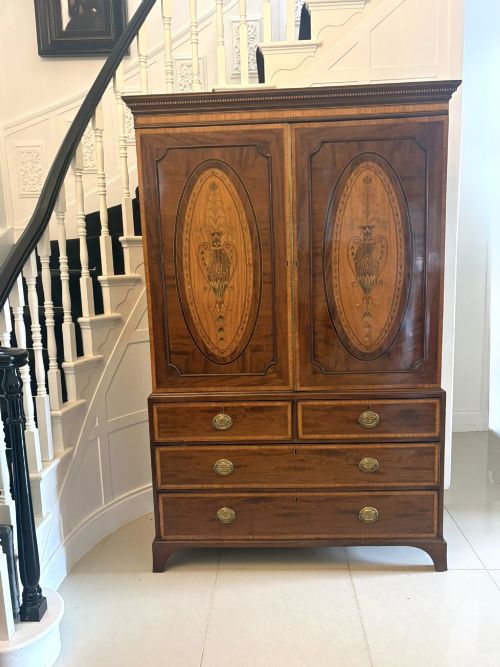
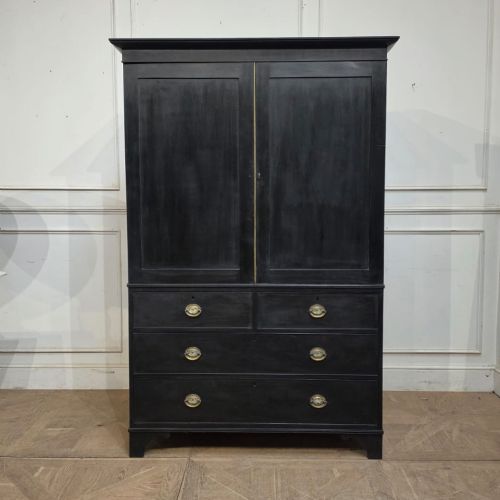
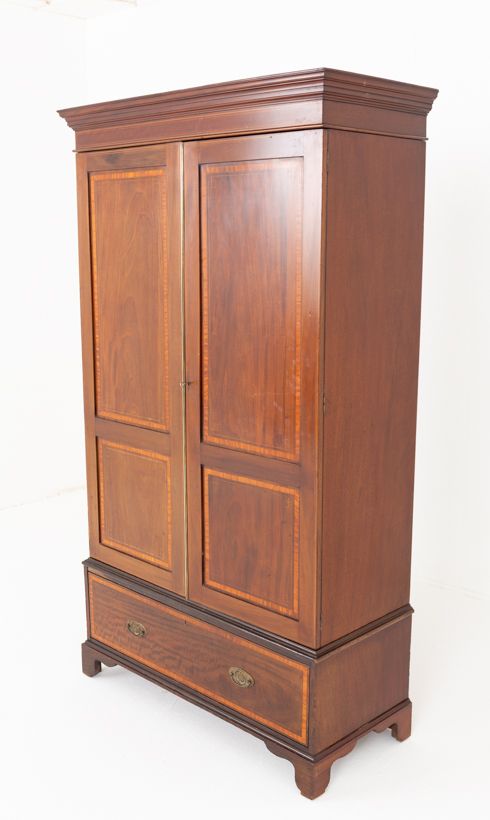
The form typically combines upper shelving enclosed by doors with a bank of drawers below. Variants include satinwood inlay, blind fretwork cornices, and secretaire drawers, showing how cabinet makers adapted the core storage function to changing domestic needs.
How they were made
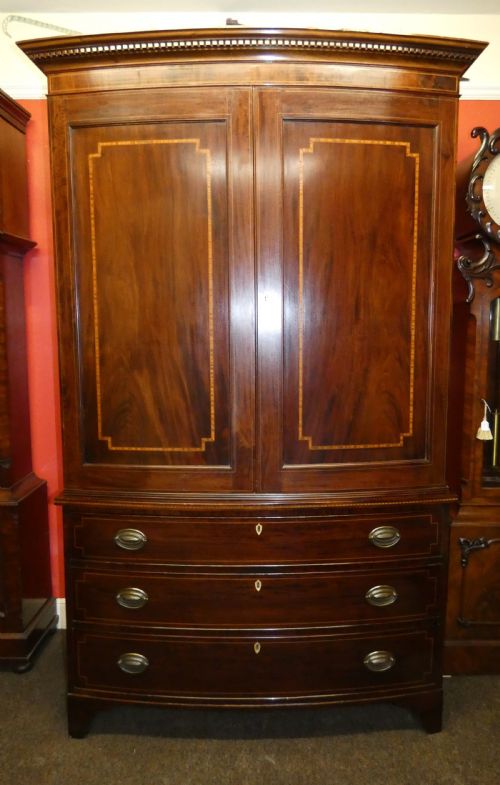
Makers constructed these cabinets using solid timbers and veneers over secondary woods, relying on mahogany and oak for structural integrity and visual weight. Flame mahogany veneer and satinwood inlay appear on finer examples to create decorative contrast on the primary surfaces.
Brass hardware, including escutcheons, handles, and hinges, provides functional contrast to the dark wood. Joinery techniques such as dovetailed drawer construction and pegged frames ensure the large proportions remain stable over centuries of use.
The archive and active listings span multiple styles, from formal George III pieces to regional Welsh and English country furniture.
What varies in quality
The distinction between standard and exceptional pieces rests upon the choice of timber and the precision of surface decoration. Figured grain, careful book-matching of veneers, and intricate inlay elevate the visual impact of a cabinet significantly.
Proportion and architectural detail separate simpler country pieces from high-style urban furniture. Well-executed cornices, such as those featuring blind fretwork or carved mouldings, demonstrate a higher level of cabinet-making skill.
Gillows
The Georgian Linen Cabinet Glossary
- Linen press
- A tall cupboard featuring upper sliding trays or shelves originally intended for storing folded linens, paired with lower drawers.
- Blind fretwork
- Carved ornamentation applied to a flat surface to imitate pierced tracery without cutting entirely through the timber.
- Breakfront
- A piece of furniture where the central section projects forward from the flanking outer sections.
- Secretaire
- A cabinet or desk incorporating a pull-down writing drawer fitted with small compartments and pigeonholes.
- Dwarf
- A descriptive term for furniture built with a lower overall height than the standard tall press or wardrobe.
Georgian Linen Cabinet: Frequently Asked Questions
What is a georgian linen cabinet used for?
These cabinets served primarily to store household textiles, tablecloths, and garments before fitted closets became common in homes.
The upper section typically held sliding trays for flat linens, while the deep drawers below accommodated heavier clothing.
How do I date a georgian linen cabinet?
Dating relies on examining timber choices, construction methods, and hardware styles across the piece. Earlier examples often feature solid oak with simpler paneling, while later eighteenth and nineteenth-century versions frequently showcase mahogany veneers and satinwood inlay.
Secondary woods inside drawers and the style of the cornice mouldings also provide clear indicators of the period.
Where should I place one in my home?
Their substantial depth and height require a wall with adequate clearance, making bedrooms or large hallways ideal locations.
Consider the swing of the large doors and the pull-out depth of the lower drawers when planning your layout.
What is the difference between a press and a wardrobe?
A traditional press contains internal sliding trays or shelves behind its upper doors for storing folded linens rather than hanging garments.
Many pieces were later adapted with hanging rails inside the upper compartment to function as standard wardrobes.