
Georgian Library Seating
Georgian library seating spans substantial mahogany armchairs, wing chairs, and desk chairs designed for study and reading.
Georgian Library Seating
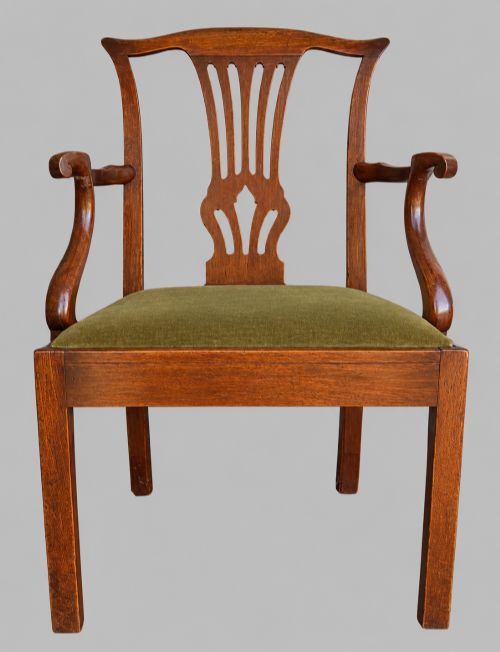
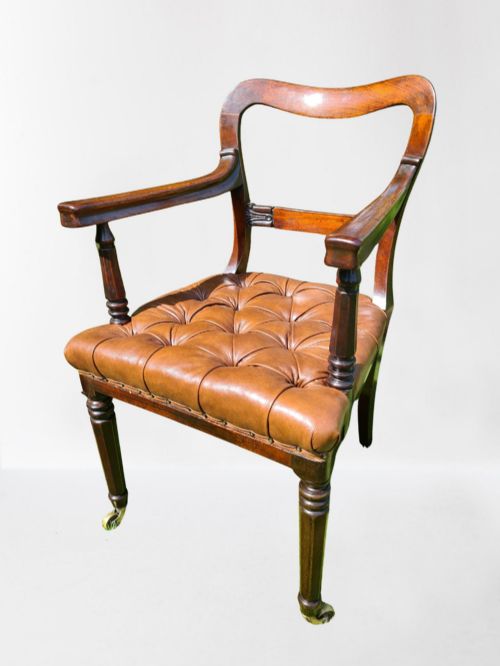
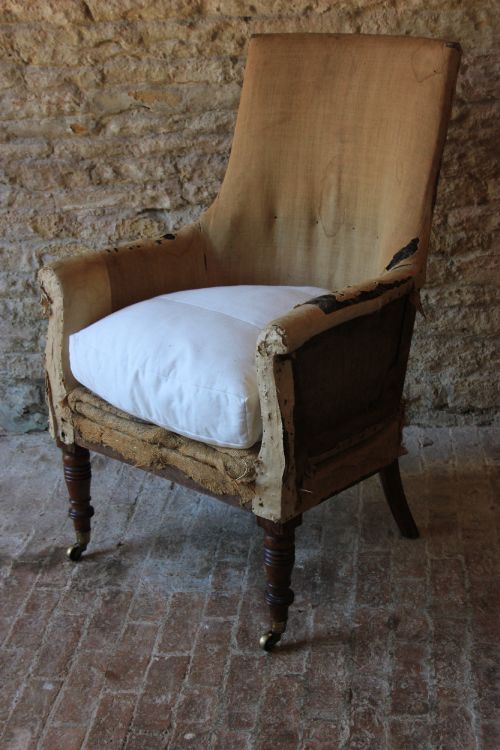
When you search for georgian library seating, you encounter sturdy armchairs, wing chairs, and desk chairs originating from the eighteenth and nineteenth centuries. These pieces were built for studies and libraries, offering substantial frames and upholstered seats designed for long hours of reading.
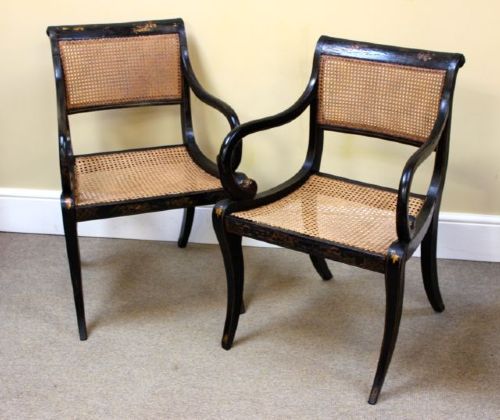
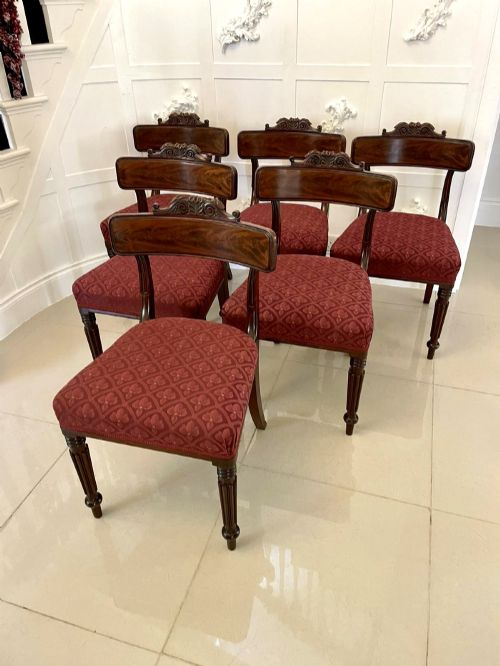
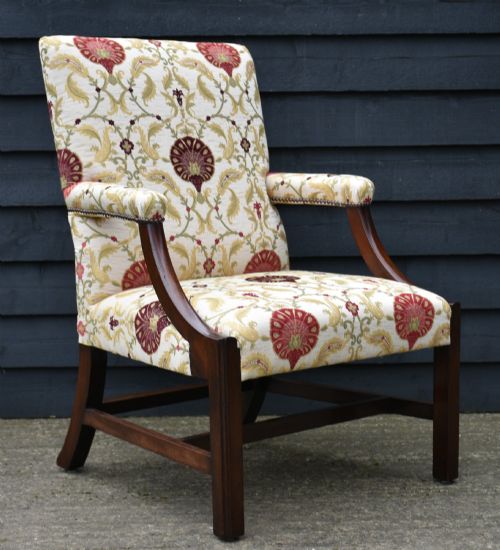
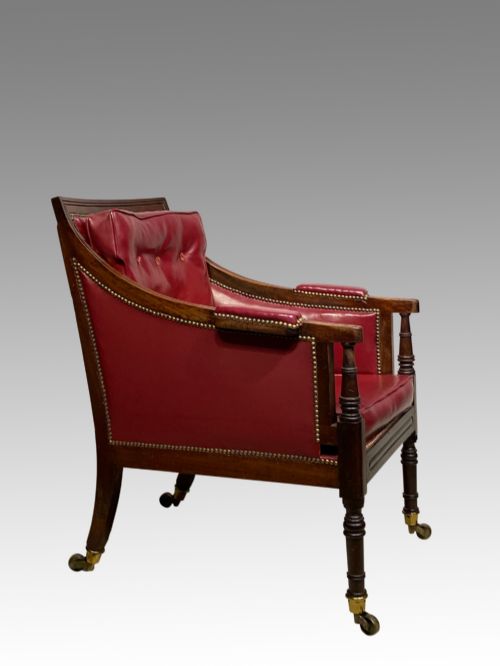
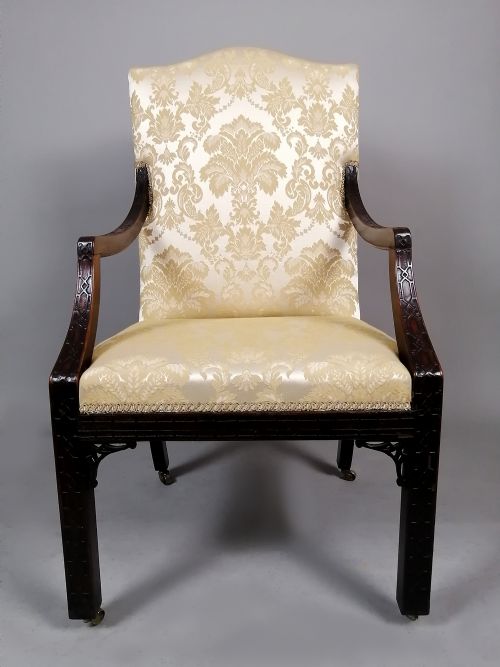
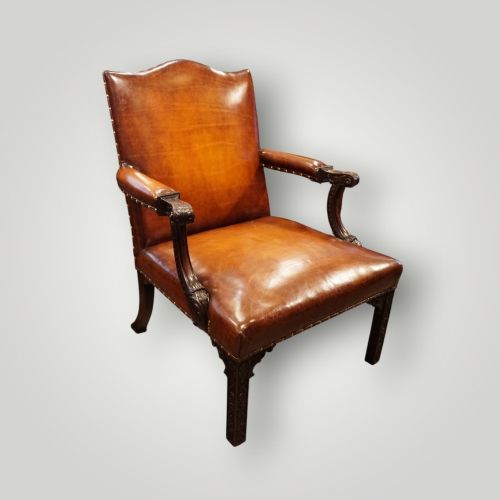
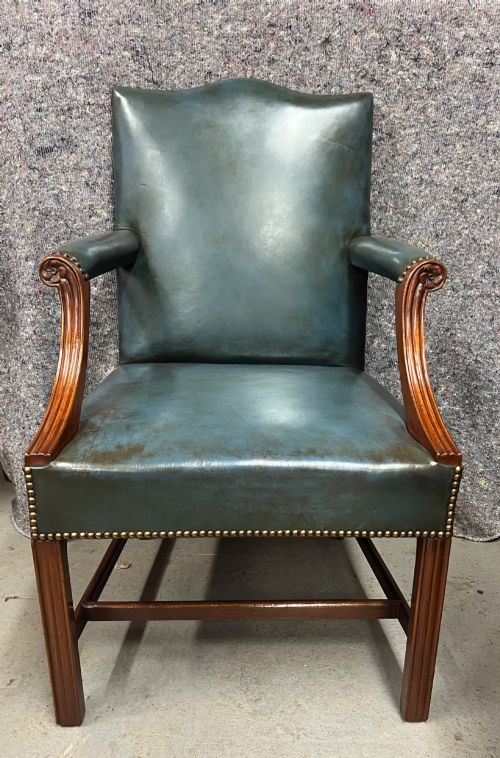
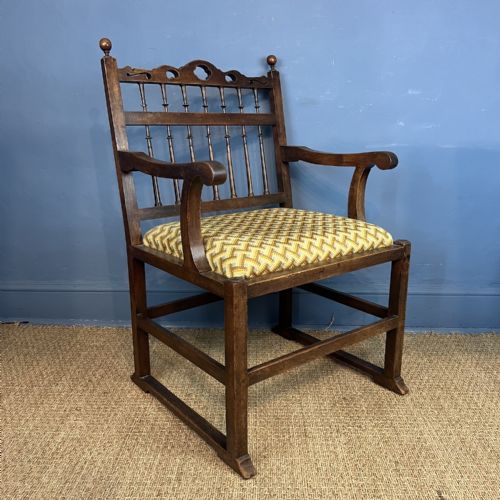
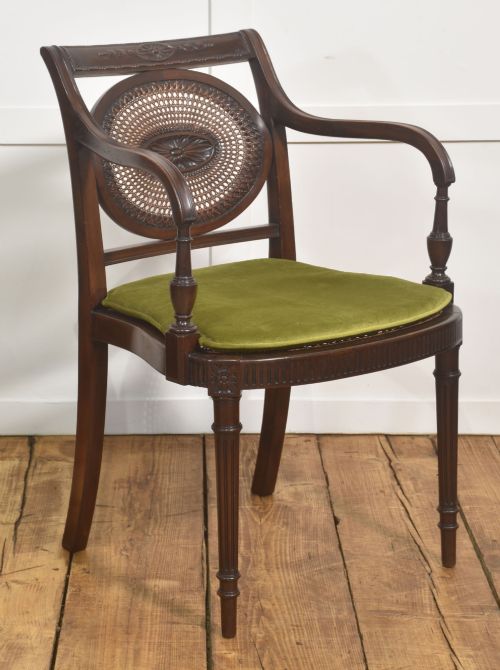
The selections available here range from solid mahogany Gainsborough chairs to caned bergères and mahogany desk chairs. You will find examples spanning the Georgian period itself alongside later nineteenth-century revivals and early twentieth-century interpretations.
Makers and designers of the period utilised robust hardwoods to construct seating that could withstand heavy daily use. The proportions remain generous, often featuring high backs and wide armrests intended to provide steady physical support.
Craftsmanship and Proportion
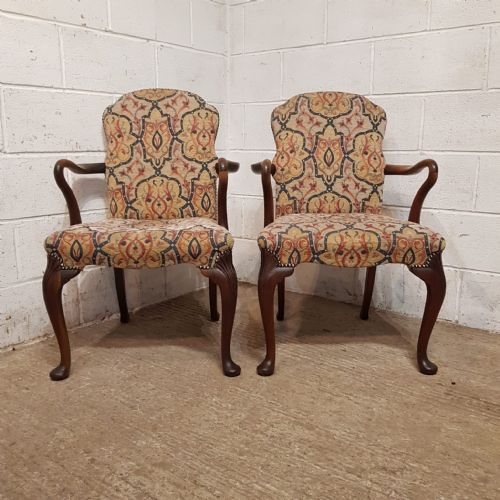
Quality rests in the precision of the timber carving and the integrity of the underlying frame construction. Finer examples display crisp blind fretwork, well-proportioned cabriole legs, and carefully selected grain patterns in the mahogany or rosewood.
The balance of the silhouette dictates the visual success of the chair, separating straightforward utility pieces from exceptional workshop productions. Original surface patination and undisturbed structural joinery further distinguish the finer survivals.
Listings feature mahogany, walnut, yew wood, and rosewood across forms including Gainsborough chairs, bergères, and desk chairs.
Gillows·George Bullock
The Georgian Library Seating Glossary
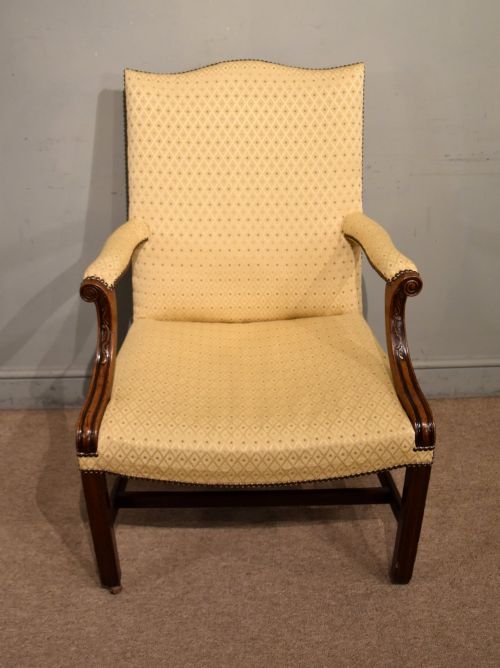
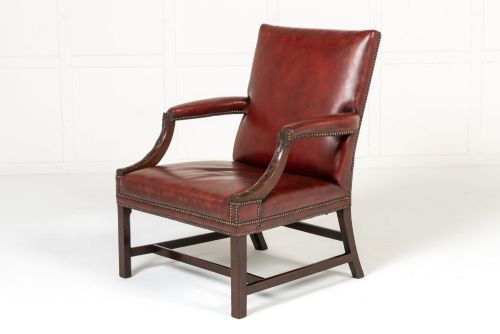
- Gainsborough chair
- A wide, open-armed mahogany armchair with a padded back and seat, designed in the eighteenth century. These chairs typically stand on carved cabriole or straight legs.
- Bergère
- An enclosed upholstered armchair featuring cane panels set into the wooden frame. This French-inspired form provides a lighter visual weight while retaining solid support.
- Wing chair
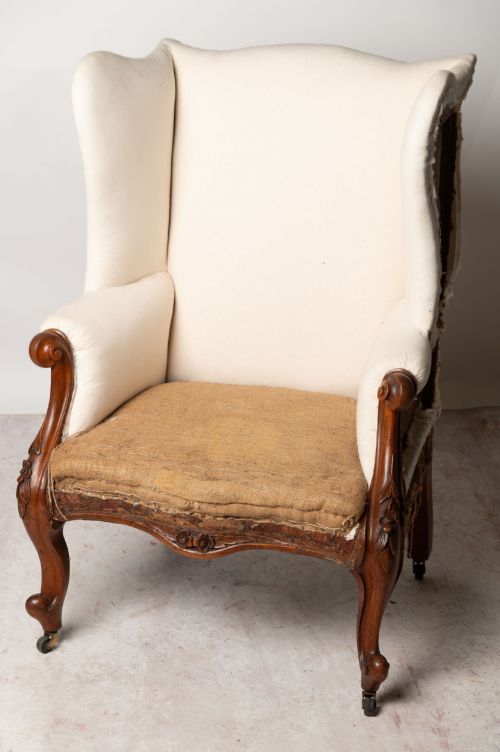
- A high-backed armchair with flanking side panels designed to shield the sitter from drafts. Early examples often incorporate deep horsehair stuffing and leather upholstery.
- Blind carving
- Carved ornament applied directly onto the flat surface of a wooden rail in imitation of fretwork. This technique appeared frequently on mid-eighteenth-century library seating.
- Parcel gilt
- A surface treatment where specific carved details receive a thin application of gold leaf over a darker base. This finish highlights particular motifs on Regency frames.
Georgian Library Seating: Frequently Asked Questions
How do I distinguish eighteenth-century pieces from later revivals?
Eighteenth-century originals display hand-cut joinery, period-specific timber ageing, and traditional construction methods without modern hardware. Wood shrinkage and natural surface wear accumulate in patterns consistent with extended age.
Revival pieces from the nineteenth and twentieth centuries often employ machine-assisted joints or timber preparations typical of later workshops. Examining the underside and interior framing reveals these technical markers.
Were these chairs used exclusively in libraries?
While originally commissioned for domestic libraries and studies, these seating forms also served in parlours, drawing rooms, and offices. Their robust construction made them versatile enough for various formal rooms within a large house.
Desk chairs and writing chairs specifically accommodated business and correspondence tasks. Their mobility and support suited them to multiple functional spaces.
How should I care for leather upholstery?
Leather upholstery requires periodic cleaning with a soft, damp cloth followed by a suitable leather conditioner to maintain flexibility. Avoid placing the chair in direct sunlight or near heat sources to prevent drying and cracking.
Gentle maintenance preserves the natural patination developed over decades of use. Regular dusting prevents particulate buildup in the grain and stitched seams.