




Georgian Lambing Chair
A georgian lambing chair is a heavy vernacular seat built to shelter against draughts, offering rugged comfort for fireside use.
Georgian Lambing Chair
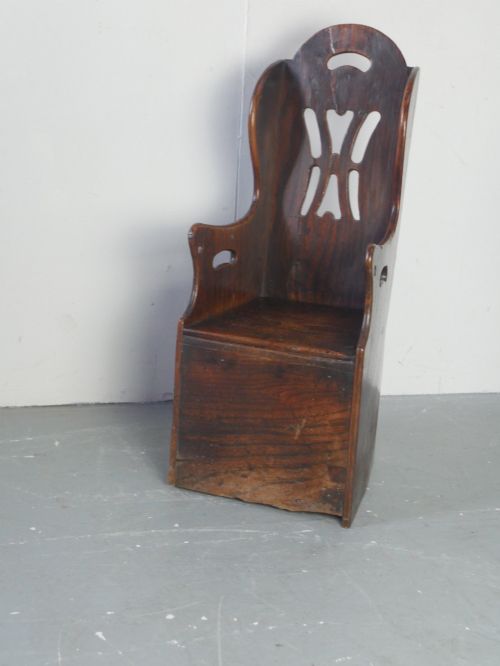
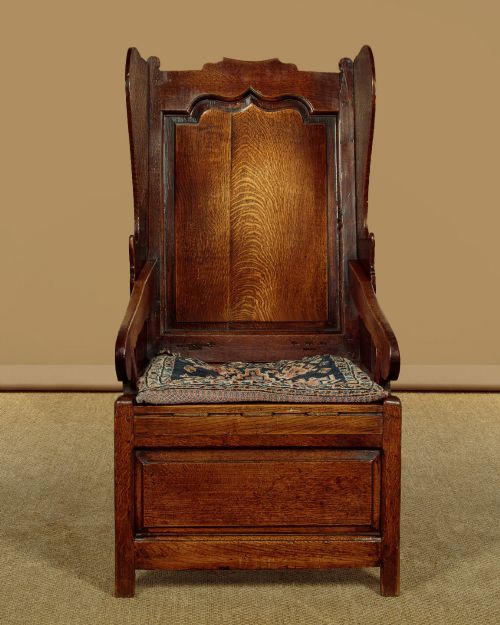
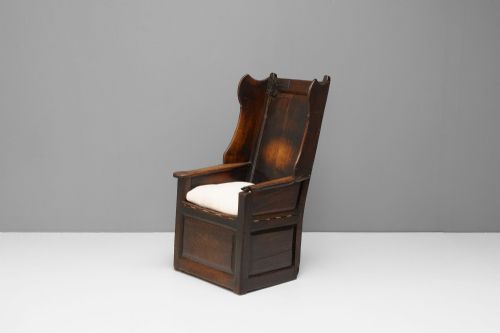
A georgian lambing chair is a traditional rustic seat, typically featuring high wings and solid sides designed to keep out cold cottage draughts. These pieces belong predominantly to the eighteenth century and the georgian period, often reflecting vernacular english or dutch country traditions.
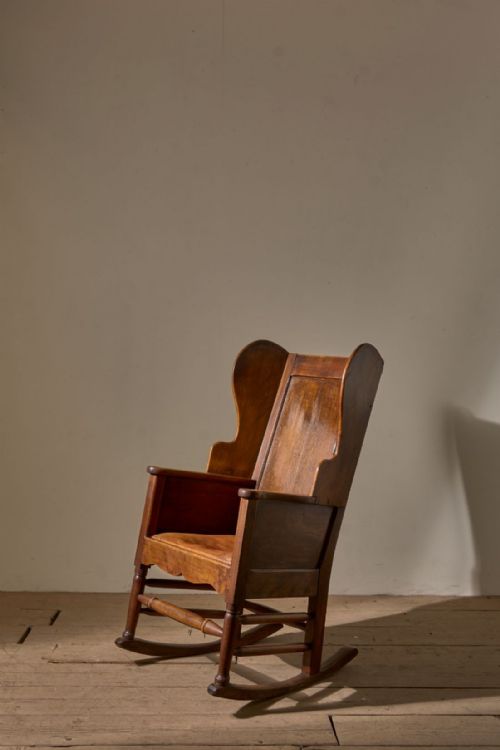
The selection here includes full-size armchairs alongside smaller children's chairs and chair tables. While standard armchairs dominate, rocking variants also appear in both oak and mahogany.
Makers shaped these seats for practical farmhouse utility, employing robust timber and enclosed lower sections. Surviving examples demonstrate how domestic furniture adapted to utilitarian needs before the nineteenth century.
How they were made
Joiners built these chairs using solid local timbers like oak, elm, and pine, occasionally turning to mahogany for finer examples. Panels were frequently joined using traditional pegging rather than metal fastenings.
Painted finishes appear on pine variants, whilst structural elements rely heavily on sturdy board construction to create the characteristic high wing and hooded forms.
Some nineteenth-century examples come sized specifically for children, proving that even toddlers needed protection from the fireside chill.
What varies in quality
The distinction between ordinary and superior pieces rests on the integrity of the timber panels and the survival of original painted surfaces. Bold proportions and undisturbed patination elevate certain examples above simpler vernacular forms.
Construction details such as integrated storage boxes beneath the seat or exceptionally deep wing hoods separate standard country seating from more substantial farmhouse chairs.
The Georgian Lambing Chair Glossary
- Vernacular
- Domestic furniture made by local craftsmen for everyday use rather than following strict metropolitan stylistic rules. These pieces often display regional quirks in construction and timber selection.
- Wing back
- An upholstered or solid wood upper section featuring projecting sides designed to trap heat around the sitter's head and shoulders. This feature is essential to the traditional lambing chair form.
- Panelled
- A method of construction where flat boards are fitted into grooved framing to allow for wood shrinkage without splitting. It provides structural strength to the sides and back of rural seating.
- Chair table
- A versatile dual-purpose form where the large back of the chair pivots or tilts forward to form a tabletop. This space-saving design is found in period country interiors.
Georgian Lambing Chair: Frequently Asked Questions
What is a lambing chair?
A lambing chair is a traditional wooden armchair featuring high solid sides and wings designed to protect the occupant from winter draughts in unheated rooms.
They were widely used in farmhouses and cottages, occasionally incorporating a drawer or compartment beneath the seat for keeping nursing lambs warm.
How old are these chairs?
Most traditional examples date from the eighteenth century, spanning the georgian period and the decades around eighteen hundred.
Later nineteenth-century interpretations also exist, often reflecting vernacular revivals or smaller children's proportions.
Which woods were used?
Joiners primarily utilised native hardwoods and softwoods including oak, elm, and pine, depending on regional availability.
Mahogany appears in select refined examples from the later georgian era, whilst painted finishes are commonly found on pine.
How do I live with one?
These substantial seats suit large country-style rooms or hallways where their architectural silhouette can stand against a plain wall.
Their robust construction handles everyday placement well, though stable indoor humidity helps preserve the aged timber surfaces.