





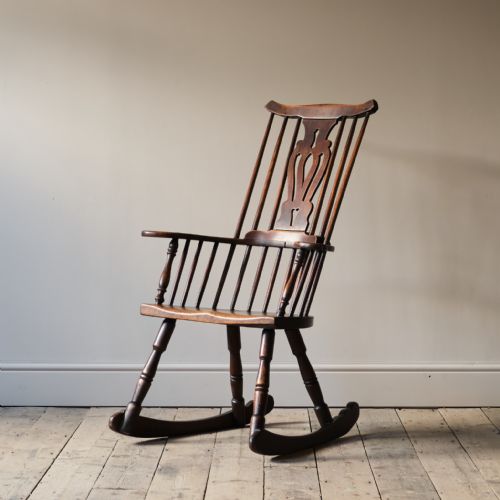
Dark Oak Rocker
These dark oak rocker pieces are sturdy country chairs and cradles built for motion, offering tactile warmth and centuries of domestic use.
Dark Oak Rocker
A dark oak rocker brings tactile warmth and centuries of domestic history into a room, serving as both a functional seat and a sculptural object. When searching for a dark oak rocker, buyers encounter a robust variety of forms designed for comfort and motion.
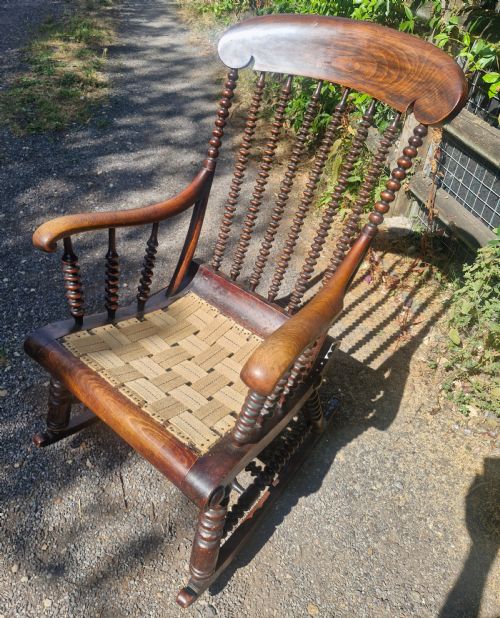
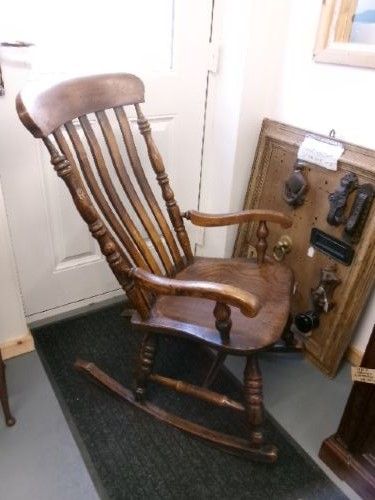
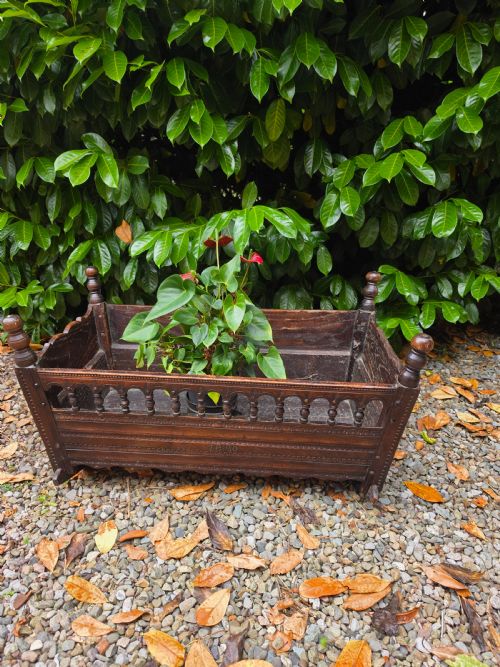
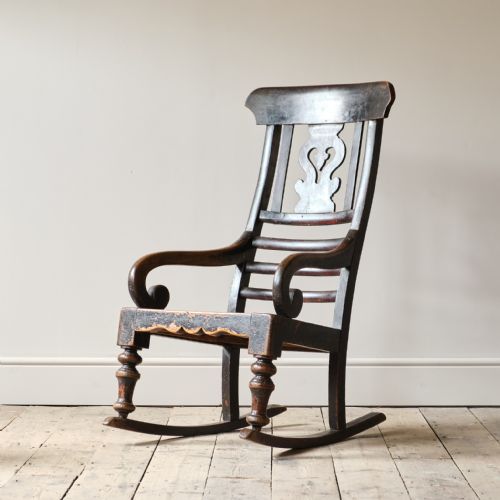
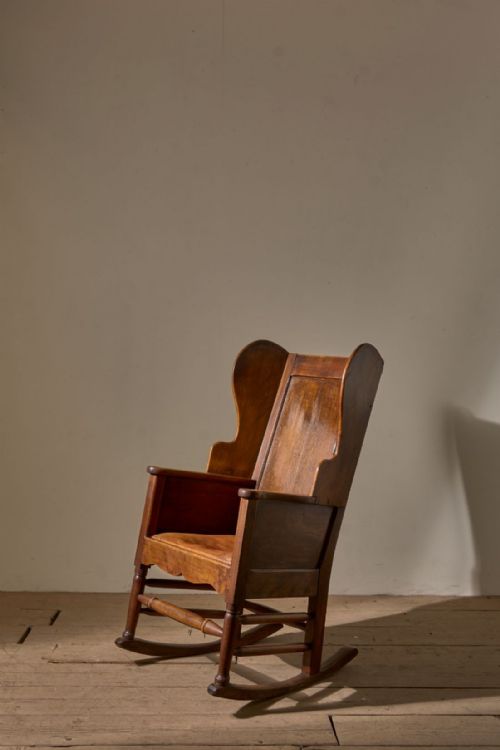
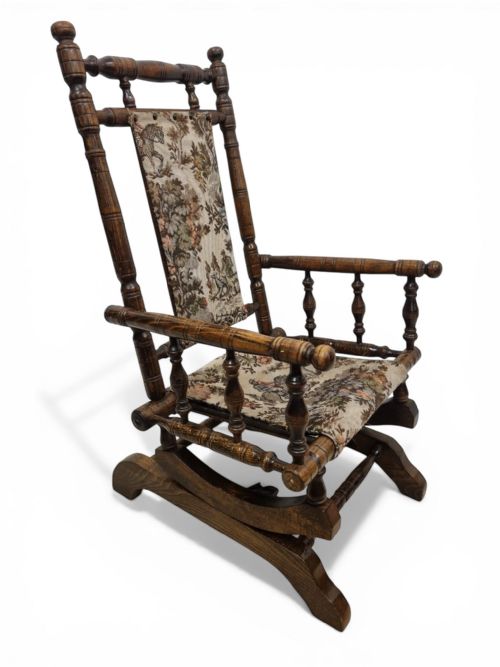
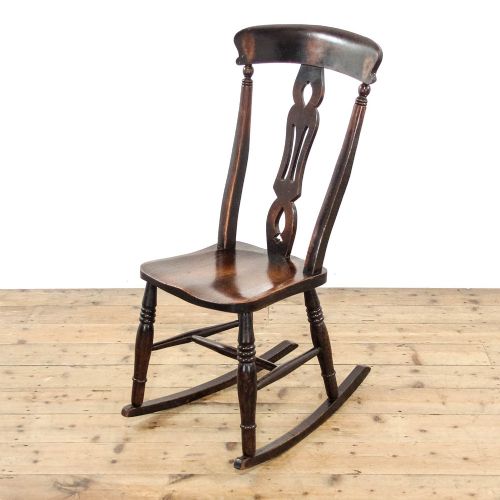
The selection ranges widely across periods, including 17th-century pieces, Georgian examples, and Victorian country variations. Forms span from spindle-back and ladder-back chairs to child-sized rocking chairs, lambing chairs, and enclosed field panel cradles on rockers.
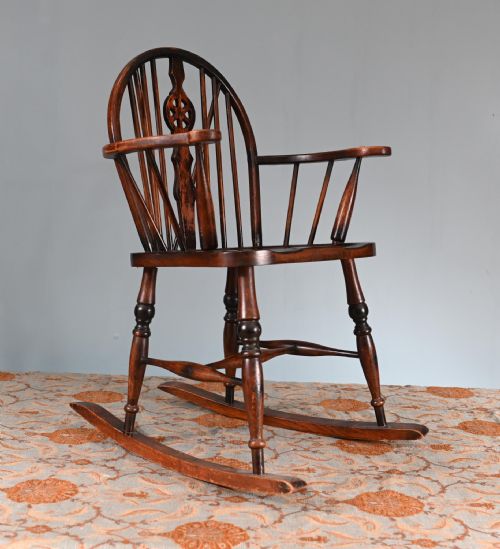
Originating largely from regional workshops, these items reflect English, Welsh, and Scottish vernacular traditions. Many incorporate country framing styles such as bobbin turnings, wheelbacks, and Windsor constructions tailored for everyday utility.
Factors That Determine Quality
Quality rests upon the integrity of the original timber and the retention of crisp vernacular details, such as well-defined bobbin turnings or crisp field panel mouldings. Examples that maintain their honest surface patination and structural cohesion without excessive timber replacement stand apart.
The proportion and balance of the rocker sweep relative to the upper chair or cradle body dictate the success of the piece. Superior examples exhibit harmonious proportions between the heavy seating framework and the delicate turning of spindles or ladder backs.
Listings feature oak combined with elm, beech, and rush across 17th-century, Georgian, and Victorian periods.
The Dark Oak Rocker Glossary
- Lambing chair
- A high-backed vernacular chair featuring solid wooden wings designed to shield the sitter from draughts. These pieces often incorporate storage compartments or sit low to the ground.
- Bobbin framing
- A style of decorative turning composed of repeating spherical or spool-shaped wooden segments. This technique appears frequently on 17th-century and 19th-century revival seating.
- Field panel
- A raised wooden panel set within a frame, featuring bevelled edges that slope inwards towards a central flat area. It adds structural rigidity and visual depth to early cradles.
- Windsor construction
- A method where individual turned spindles and legs are fitted directly into a thick, solid carved wooden seat rather than a conventional frame. This technique ensures high durability.
- Vernacular furniture
- Items made by local rural craftsmen using regional materials and traditional techniques, prioritising practical utility over academic architectural styles.
Dark Oak Rocker: Frequently Asked Questions
How do I date an early oak rocker?
Dating relies on examining the construction methods, tool marks left on the timber, and stylistic cues such as bobbin turnings or ladder backs. Earlier examples from the 17th and 18th centuries often show peg joinery and hand- cleft wood.
Later Victorian pieces frequently incorporate machine-turned components or mixed woods while mimicking earlier country vernacular traditions. Comparing the patina and wear patterns helps confirm the chronological placement.
Are these rockers comfortable for daily use?
Many of these country rockers offer surprisingly comfortable sits, particularly those with contoured wooden seats or supportive spindle backs. Their ergonomic designs were refined over generations for practical domestic comfort.
Buyers should note that seat heights and depths vary significantly compared to modern armchairs. Adding a simple loose cushion can easily adjust the ergonomics for contemporary living.
What is the difference between a cradle and a crib?
In historical listings, cradles are typically deeper, fully enclosed wooden boxes mounted on curved rocking feet, designed for infants. Cribs often feature slatted sides raised on higher underframes or rockers.
Both forms served traditional domestic roles in nurseries and farmhouses throughout the 17th, 18th, and 19th centuries. Their construction reflects the same regional joinery techniques found in chairs of the same periods.
How should I care for antique dark oak?
Maintaining antique dark oak requires keeping the timber away from direct heat sources and drastic humidity fluctuations to prevent splitting. Regular dusting with a soft, dry cloth preserves the dry-scraped or waxed surface patination.
Applying a microcrystalline wax sparingly once or twice a year helps nourish the wood and protect the finish. Avoid modern silicone-based polishes that can permanently alter the historic surface.