

Panelled Oak Armchair
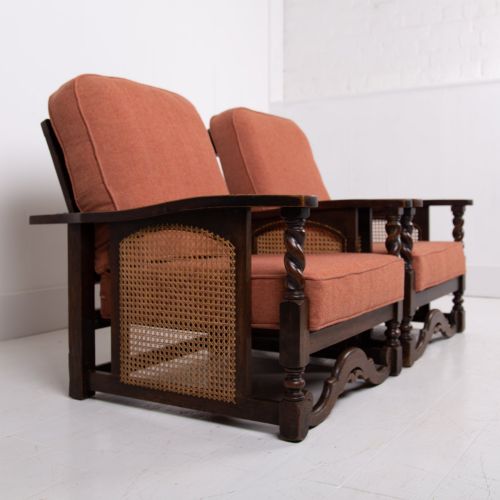
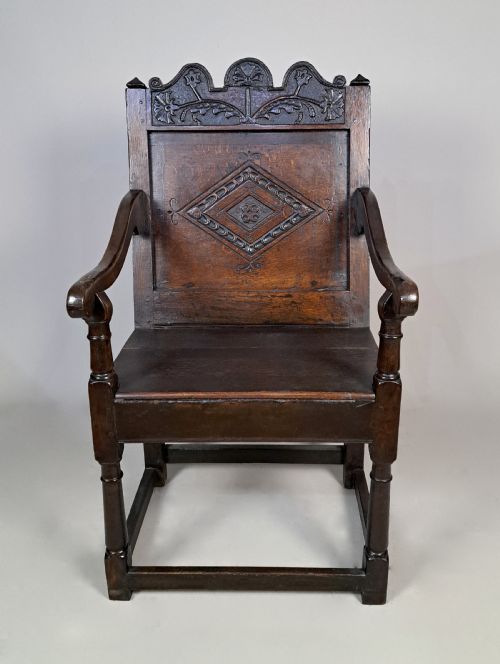
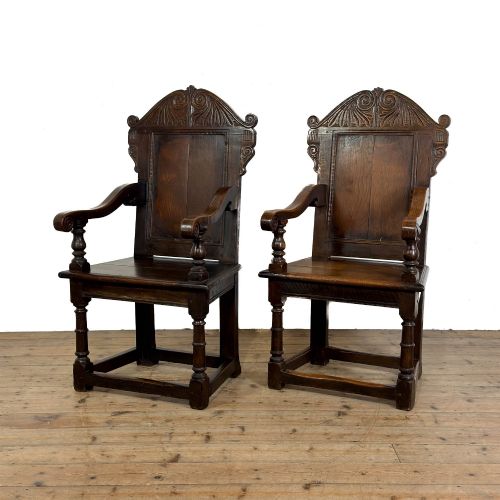
These panelled oak armchairs bring centuries of solid joinery and carved presence straight into a room.
Panelled Oak Armchair
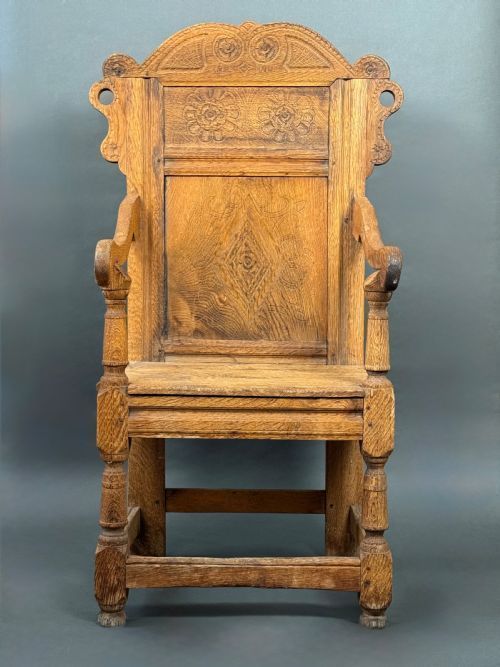
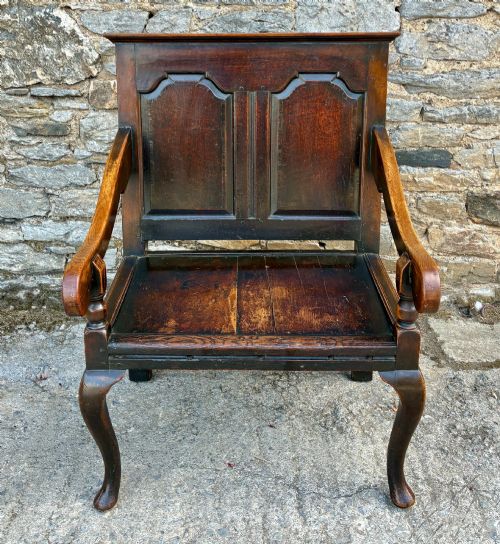
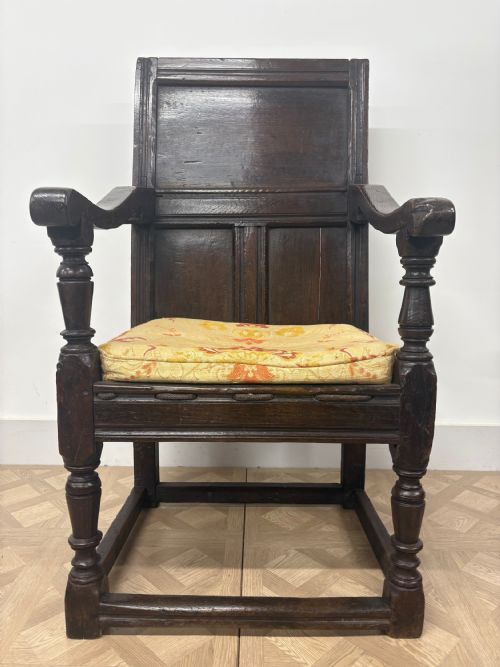
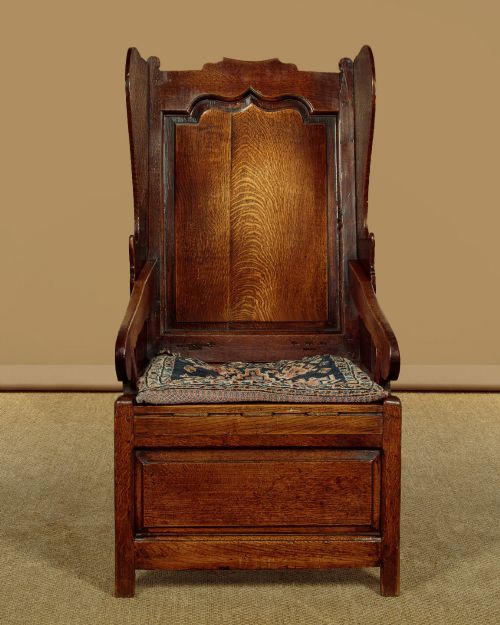
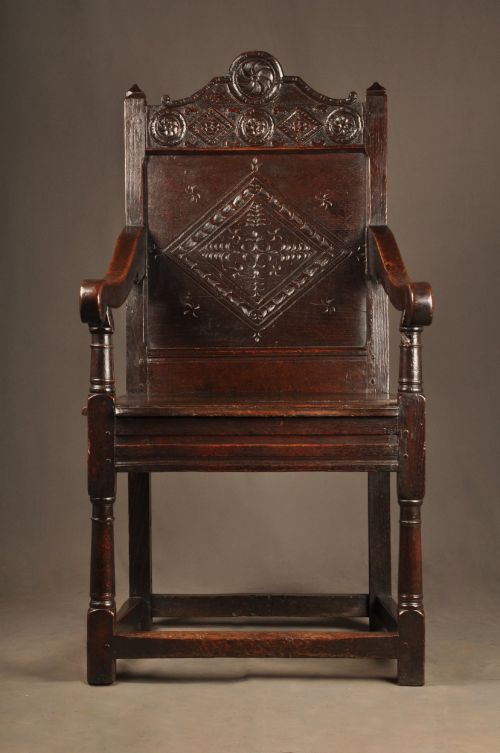
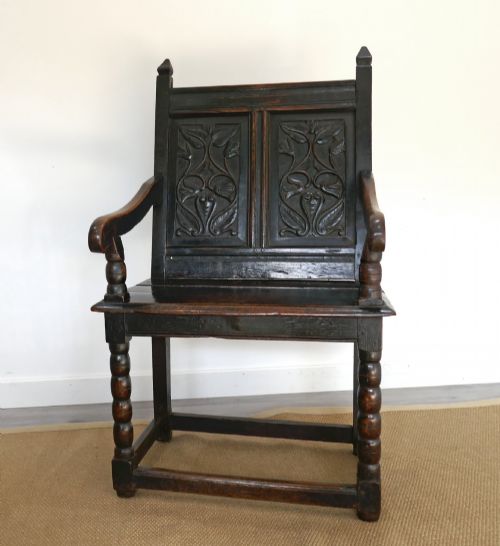
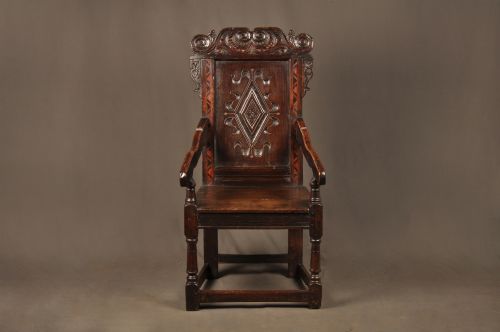
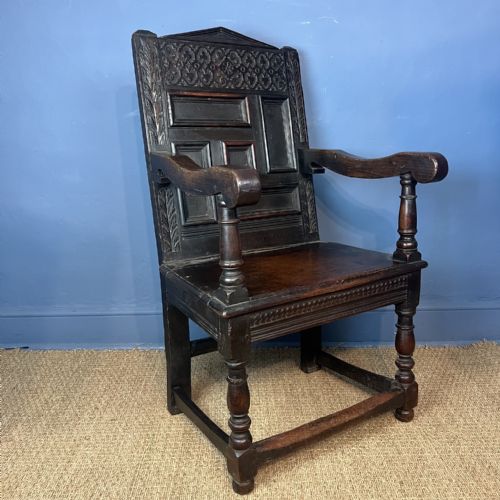
A panelled oak armchair relies on framed construction where inset wooden panels form a solid backrest, providing sturdy support and a formal silhouette. These pieces range from early provincial wainscot forms rooted in the seventeenth century to later vernacular interpretations made in regional workshops.
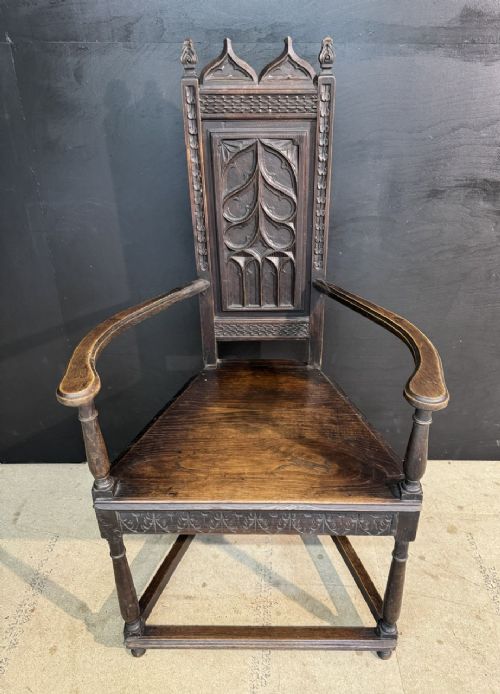
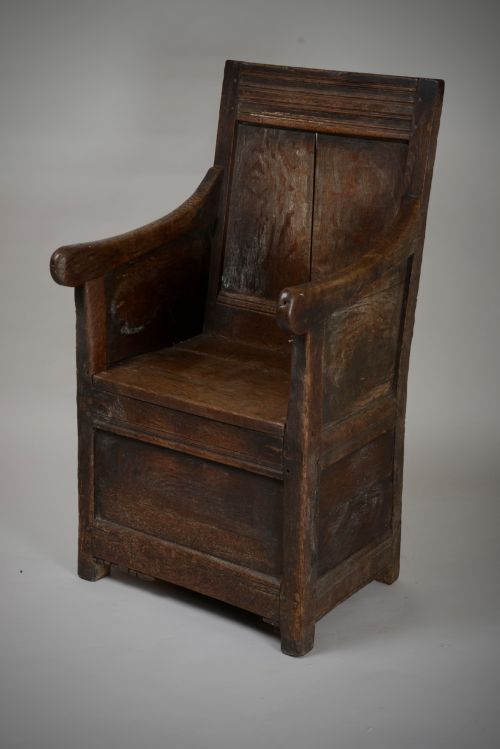
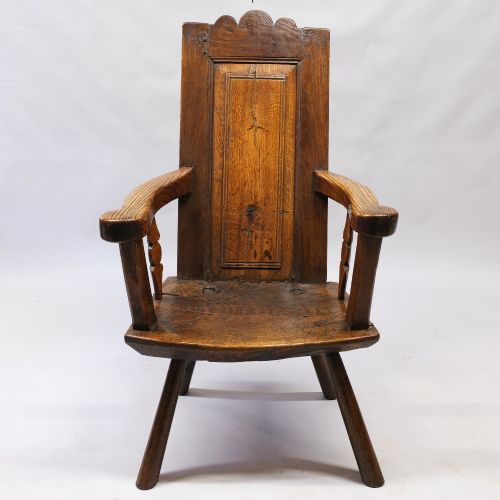
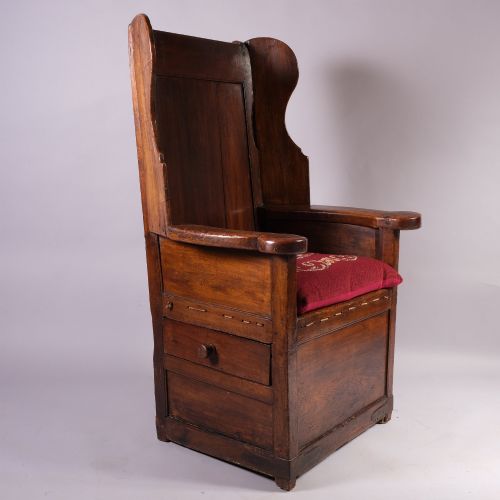
The inventory on this page consists predominantly of wainscot chairs, lambing chairs, and regional armchairs spanning the sixteenth to the nineteenth centuries. Examples stretch from robust Jacobean and Welsh origins to later revival pieces that copy these historic lines.
Materials and construction
Makers utilised solid oak almost exclusively for the main framework, panels, and arms, occasionally supplementing the build with elm, pine, or fabric. Joinery relied on mortise and tenon joints locked with wooden pegs rather than metal nails, ensuring structural rigidity over generations of use.
Carving, moulding, and occasional wood inlay decorate the crest rails and back panels, reflecting the stylistic tendencies of regions such as Yorkshire, Lancashire, and the West Country.
Several regional armchairs double as miniature thrones, built narrow enough to keep drafts at bay while commanding the kitchen hearth.
Quality differences
Depth and crispness of the hand carving separate standard provincial work from pieces commissioned for prominent households. Original surface patination, timber density, and the survival of uncompromised structural joints dictate the desirability of an example.
Extensive timber replacement or altered components diminish historical integrity, whereas untouched surfaces with deep, natural beeswax finishes represent the pinnacle of the survival of these seats.
The Panelled Oak Armchair Glossary
- Wainscot chair
- A heavy wooden armchair constructed with panelled backboards and solid timber seats, originating when oak furniture was costly and status-defining. These items sit low and upright.
- Lambing chair
- An enclosed fireside armchair featuring high wings and a solid lower box or panel to block draughts. They often incorporate elm or pine alongside oak.
- Mortise and tenon
- A traditional woodworking joint where a protruding tongue fits tightly into a corresponding cavity, secured by a wooden dowel. This method underpins the construction of seventeenth-century frames.
- Crest rail
- The horizontal member running across the very top of the chair back, frequently shaped, carved, or inscribed with dates and initials. It forms the visual cap of a panelled back.
- Stile
- The upright vertical post forming the outer edge of the panelled back or leg frame. These timbers bear the primary vertical load of the sitter.
Panelled Oak Armchair: Frequently Asked Questions
How do I identify a 17th century wainscot chair?
Seventeenth-century examples display pegged mortise and tenon joints, hand-split oak boards with natural grain undulations, and period-specific carving motifs such as strapwork or lunettes.
Examine the underside and interior joints for tool marks like adze or pit-saw traces, which point away from modern machine manufacture.
What is a lambing chair used for?
Lambing chairs were designed for domestic firesides, where the high solid wings and enclosed base protected the occupant from cold drafts in unheated rooms.
Some regional examples incorporate small under-seat compartments or low profiles suited to working tasks near the hearth.
Are these armchairs comfortable to sit in?
Original oak armchairs offer a rigid, upright posture with firm wooden seats rather than deep cushioning. Adding loose squab cushions makes daily seating more practical.
The geometry reflects the tailoring habits and posture expectations of historical periods.
How should I care for historic oak furniture?
Maintain a stable room humidity and apply occasional applications of traditional beeswax to nourish the dry timber surface. Avoid placing chairs near direct heat sources or strong sunlight.
Gentle dusting with a soft cloth preserves the accumulated patina built up over centuries.