


Table Chair Monks Bench
A table chair monks bench brings centuries of clever dual-purpose joinery into a hallway or living space, offering a seat that converts cleanly into a table.
Table Chair Monks Bench
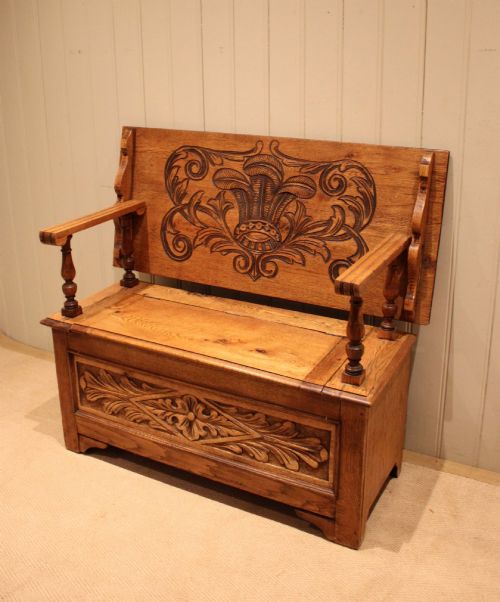
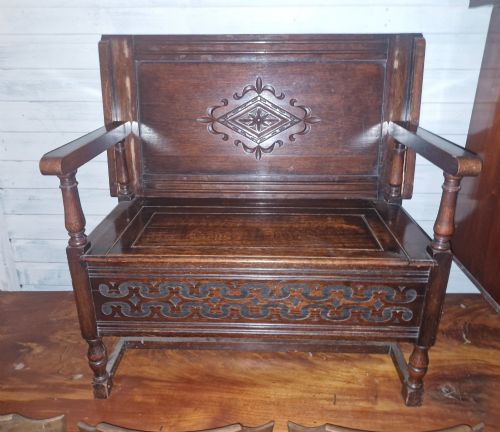
A table chair monks bench combines a timber seat with a pivoting back that folds flat to create a table top. When you search for a table chair monks bench, you encounter versatile multi-functional furniture designed to save space in historical domestic interiors.
The pieces listed here span centuries, ranging from early oak examples bearing seventeenth-century characteristics to revival iterations from the Victorian era and the nineteen-thirties. You are most likely to meet solid oak items featuring lift-up storage compartments beneath the seat and carved wooden panels.
Formations vary across these objects from compact hall seats to larger settles and low coffee table adaptations. Origins stretch from vernacular country workshops to formal revival pieces built with iron fittings and fabric upholstery.
How they were made
Makers relied primarily on solid oak and pine, utilising sturdy timber boards joined to withstand the dual strain of sitting and pivoting. Iron brackets, hinges and pins frequently secure the moving back-rest table top mechanism.
Surfaces often display carved detailing, panelled construction, and occasionally painted finishes on vernacular country pieces. Upholstered elements using fabric appear alongside bare timber to provide seating comfort.
Some nineteenth-century examples cleverly disguise themselves as mundane hall benches until someone flips the back and reveals a impromptu tea table.
What varies in quality
The standard of a table chair monks bench depends on the integrity of the pivoting mechanism and the weight of the timber used in the top. Early seventeenth-century originals display hand-cut joinery that differs significantly from later revival production methods.
Carved ornamentation ranges from crisp, deep relief work executed by skilled hands to shallower mechanical tooling on twentieth-century pieces. The thickness of the solid oak boards and the proportion of the conversion mechanism dictate the presence and longevity of the form.
The Table Chair Monks Bench Glossary
- Chair-table
- An early seating form with a large solid top that tilts vertically to act as a chair back. This design predates dedicated small tables in many vernacular homes.
- Settle
- A wooden bench with high backs and solid arms designed to block cold drafts in domestic rooms. Settles frequently incorporate box storage beneath the seat base.
- Vernacular
- Everyday utilitarian objects built by local craftspeople using regional materials rather than following high-style court fashions. These pieces prioritise practical function over academic design rules.
- Lift up seat
- A hinged wooden board forming the top of a box base used for storing household goods. This feature turns the bench into a trunk.
Table Chair Monks Bench: Frequently Asked Questions
How does the top convert into a table?
The upper back section pivots on wooden or iron pegs set into the arm supports. Lifting and tilting this back forward rests it flat across the arms to form a table top.
This clever dual-purpose mechanism allowed historical households to save floor space in smaller rooms when eating or working.
Where were these benches placed historically?
These pieces traditionally stood in hallways, near hearths, or in principal rooms where space remained at a premium. The high back shielded occupants from cold drafts near doors.
In modern settings, they function effectively as entrance hall seats, occasional tables, or distinctive statement furniture.
How do I spot a seventeenth century original?
Seventeenth-century examples display hand-split oak boards, pegged joints, and characteristic period carving styles like linenfold or geometric panels. Tool marks and natural timber shrinkage provide clear physical evidence of high age.
Later revival pieces from the nineteenth and twentieth centuries often feature machine-sawn timber and standardised hardware fittings.
What is stored inside the base?
The box compartment beneath the hinged seat served historically for storing blankets, dry goods, or family belongings. This hidden cavity kept domestic clutter out of sight in busy rooms.
Today, the interior space remains useful for stashing everyday items while keeping the historical silhouette intact.