






Oak Settle Chest
These oak settle chest pieces combine robust seating with concealed storage, offering a practical anchor for a hallway or living space.
Oak Settle Chest
When you search for an oak settle chest, you are looking at substantial multi-functional furniture designed for seating and storage, often appearing as a hall bench, monks bench, or enclosed armchair. The examples found here span from the seventeenth century through to the twentieth century, encompassing varied aesthetic movements.
You are most likely to meet pieces from the Victorian and Edwardian eras, alongside earlier eighteenth-century examples and revival pieces. These items bridge the gap between heavy utility and decorative woodwork, serving as practical seats with hinged lids or panelled compartments beneath.
The forms range from straight-back settles to convertible monks benches and hall seats. Each piece reflects the enduring appeal of heavy timber furniture designed to withstand daily domestic use.
Materials and construction
Construction relies heavily on solid oak, selected for its strength and durability. Carpenters utilised traditional joinery methods to build the box bases and panelled backs that define these items.
Metal components such as brass and iron appear primarily as functional hinges, latches, and fixings. Decorative enrichment is achieved through deep carving rather than applied veneers.
The listings span from the seventeenth century to the twentieth century, incorporating solid oak, brass, and iron materials.
What separates the fine examples
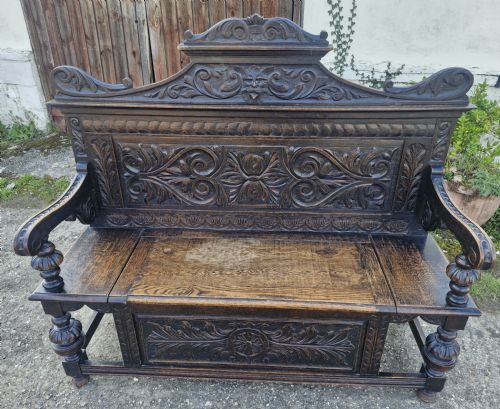
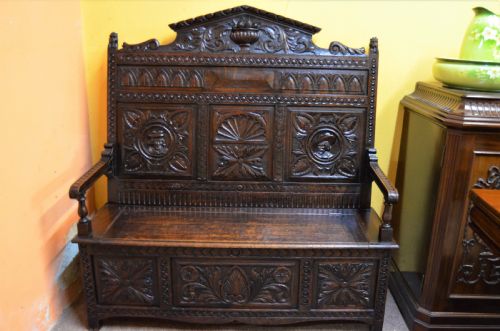
The standard of carving distinguishes standard production from superior work. Crisp, deeply chiselled details on panels and arms indicate skilled craftsmanship, whereas softer, shallower work suggests more commercial execution.
Proportion and the retention of original timber integrity dictate desirability. Pieces that maintain their structural cohesion without excessive timber replacement hold greater authority.
The Oak Settle Chest Glossary
- Settle
- A wooden bench with a high back, solid arms, and a box base for storage. It was traditionally placed near the hearth to block draughts.
- Monks bench
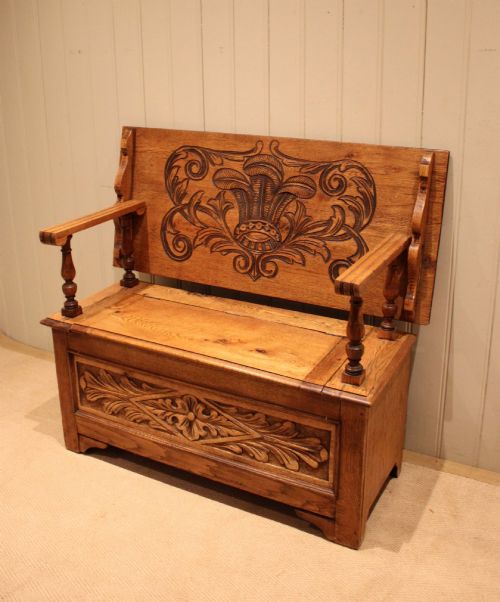
- A convertible piece of furniture featuring a back that tilts forward to form a table top over a box seat. This dual purpose suited smaller domestic spaces.
- Jacobean Revival
- A nineteenth-century style imitating seventeenth-century English woodwork. It is characterised by dark oak, geometric moulding, and heavy proportions.
- Green Man
- A decorative motif depicting a human face disgorged from foliage or entirely made of leaves. It symbolises rebirth and appears frequently in nineteenth-century carved woodwork.
Oak Settle Chest: Frequently Asked Questions
Where should I place an oak settle chest?
These pieces suit entrance halls and large landings where their dual role as a seat and a storage chest can be fully utilised. Their high backs also make them effective in dining spaces or against large living room walls.
Because they are constructed from heavy timber, ensure the floor space can accommodate their depth and that adequate clearance is left for any hinged lids or convertible tops to open fully.
How do I use the storage space?
The compartment beneath the seat lifts via a hinged lid, offering practical storage for bulky items such as blankets, boots, or winter textiles. This internal space formed the original purpose of the box base.
When loading the chest, distribute weight evenly across the base and avoid placing damp items directly onto unlined historic timber to prevent moisture damage.
How can I tell a Victorian revival piece from an earlier one?
Examination of the tool marks, timber colour, and joinery methods reveals the period of manufacture. Seventeenth and eighteenth-century examples display hand-riven timber characteristics and traditional peg construction that differ from later machine-finished revival work.
Revival pieces often feature softer carving styles and standardised hardware, whereas genuine early pieces show distinctive wear patterns consistent with centuries of domestic use.
How do I care for solid oak furniture?
Maintain the timber by applying traditional beeswax periodically to nourish the surface and preserve the natural grain. Avoid placing the piece near direct heat sources or in fluctuating humidity to prevent wood splitting.
Dust regularly with a dry cloth and lift rather than drag the furniture when repositioning it to protect the structural joints from undue stress.