


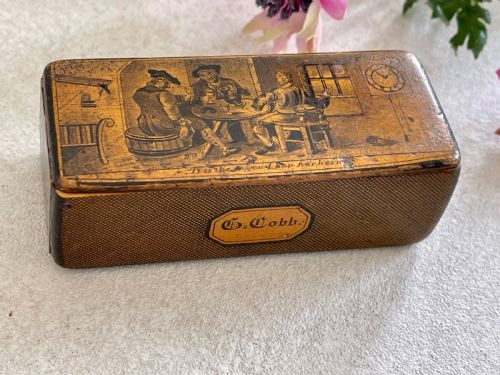


Georgian Lacquer Box
A georgian lacquer box brings together smooth painted surfaces and meticulous orientalist motifs, offering a compact place to store precious keepsakes.
Georgian Lacquer Box
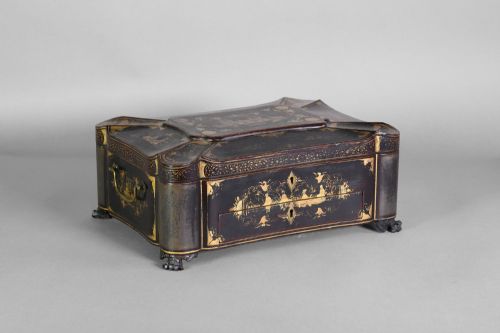
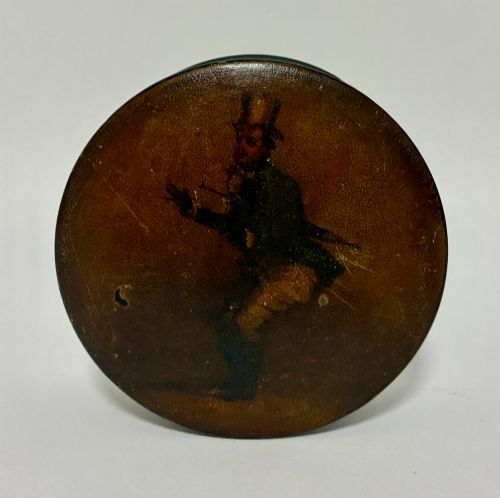
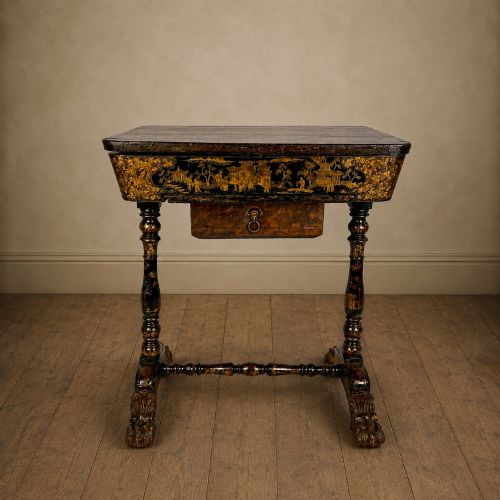
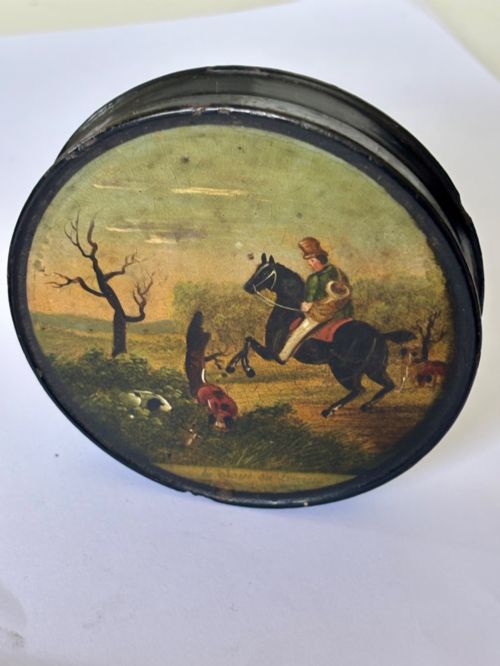
A georgian lacquer box encompasses small pocket snuff boxes alongside larger tea caddies, sewing tables, and miniature cabinets on stands. The pieces span the eighteenth and nineteenth centuries, moving from early japanned designs to intricate Regency penwork.
Pocket snuff boxes in papier-mâché or painted tin appear frequently, often decorated with figural scenes or topographical views. Larger containers such as workboxes and tea caddies show elaborate chinoiserie motifs in black, yellow, or gilt varnish.
Makers drew on diverse regional traditions, creating English penwork pieces, German factory boxes, and French Empire designs. These objects served utilitarian functions for tobacco, tea, and sewing, elevated by decorative painting and varnishing techniques.
Materials and construction
Wood, papier-mâché, and tin form the structural foundation of these pieces, providing a stable base for layers of ground colour and varnish. Artisans applied successive coats of paint and lacquer to build a smooth, durable surface.
Decoration relied heavily on penwork, hand painting, and gilt detailing to render miniature figures, foliage, and architectural scenes. Brass hinges, locks, and bone details frequently complete the construction of caddies and boxes.
Listings feature items in wood, papier-mâché, tin, and brass, spanning the eighteenth and nineteenth centuries.
Craftsmanship and preservation
Quality rests on the crispness of the penwork and the delicacy of the hand-painted details across the surface. Superior examples maintain intact varnish layers without extensive flaking, obscuring the original gilt or pigment underneath.
The sophistication of the underlying form, whether a standard rectangular snuff box or an elaborate cabinet on stand, dictates the piece's ambition. Original brass hardware and fitted interior compartments further distinguish finer workshop output.
G Cobb·Stobwasser
The Georgian Lacquer Box Glossary
- Japanner
- An artisan who imitated Asian lacquer work using European varnishes and paints on wood or metal bases. This technique produced glossy, durable finishes adorned with raised gilt motifs.
- Penwork
- A decorative technique using fine ink or paint applied with a pen to create intricate monochrome or tinted line drawings. It was widely utilised on Regency boxes and tea caddies.
- Papier-mâché
- A composite material made from paper pulp or layers of paper glued and pressed together, then dried and varnished. It provided a lightweight yet sturdy base for moulded snuff boxes.
- Toleware
- Painted or enamelled sheet metal items produced for household use. These objects often received colourful japanned finishes that mirrored the appearance of lacquered wood.
Georgian Lacquer Box: Frequently Asked Questions
What were tea caddies used for?
Tea caddies stored precious tea leaves securely under lock and key when tea was an expensive commodity.
Their interior compartments kept different leaf varieties separate until the leaves were measured into the pot.
How do I care for lacquer boxes?
Keep these pieces away from direct sunlight and damp environments to protect the fragile varnish and paint layers.
Dust them gently with a dry, soft cloth rather than using liquid cleaning products or polishes.
Are penwork boxes English?
Many fine penwork boxes originated in England during the Regency period, often featuring delicate ink drawings on pale wood.
Other regional centres in Europe produced comparable decorated wares using similar drawing and varnishing techniques.
What is papier mâché?
Papier-mâché is a durable composite formed from compressed paper pulp or layered sheets treated with glue.
Manufacturers moulded this material into smooth snuff boxes and trays before applying decorative paint and varnish.