





Georgian Inlaid Work Box
A georgian inlaid work box is a domestic container for sewing or keepsakes, combining fine cabinet woods with precise decorative stringing.
Georgian Inlaid Work Box
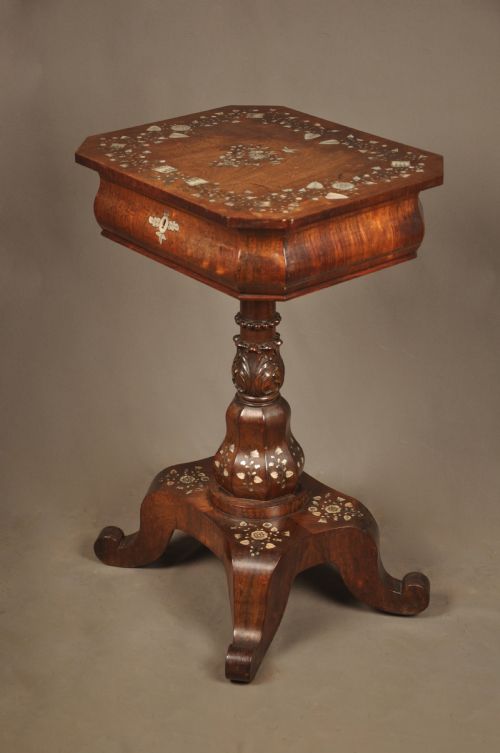
A georgian inlaid work box encompasses portable lidded caskets, ladies sewing boxes, and occasional work tables designed for domestic use. The pieces found here span the Georgian, Regency, and Victorian eras, reflecting shifting tastes in functional furniture.
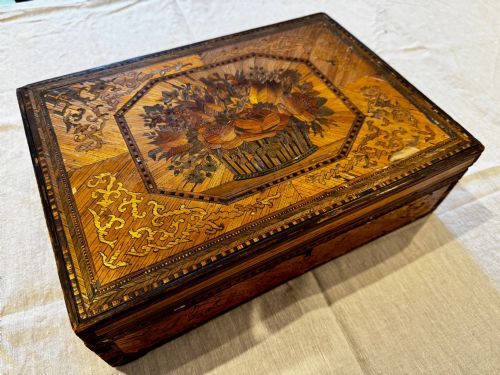
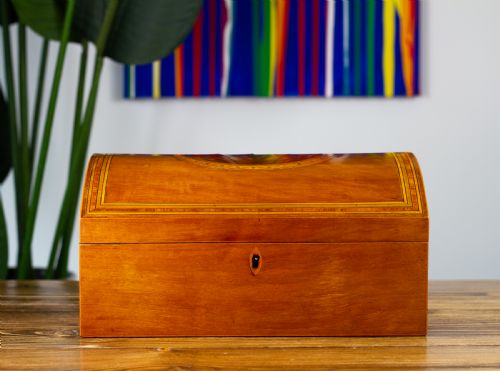
Makers utilised rich timbers such as rosewood, mahogany, and satinwood, frequently embellished with boxwood or wood inlay to create geometric and floral patterns. Smaller lidded boxes sit alongside larger sewing tables fitted with internal compartments.
Materials and construction methods
Cabinet makers constructed these pieces from dense tropical hardwoods like rosewood and mahogany, often pairing them with contrasting lighter woods such as boxwood, harewood, and satinwood for decorative stringing and banding.
Surface ornamentation relied on precision wood inlay, brass pique work, and mother of pearl inserts. Interiors frequently featured silk linings, fitted compartments, and specialised spaces for needlework or jewellery.
Georgian Inlaid Work Box Retail Price Guide 2026
Typical asking prices for georgian inlaid work box among the pieces listed under this phrase on Sellingantiques today, from the lower quarter to the upper quarter. They describe what is for sale here now, not the wider market.
Object forms range from lidded tabletop sewing boxes and jewellery caskets to freestanding work tables and unusual snuff shoes.
Quality factors in construction and finish
The standard of a georgian inlaid work box depends upon the selection of timber and the precision of the contrasting inlay work. Finer examples display tight grain matching and immaculate mitred joints that withstand centuries of handling.
Internal fitting and hardware also differentiate grades of production. Superior pieces retain original silk linings, functional locks with keys, and delicately turned interior compartments rather than modern replacements.
The Georgian Inlaid Work Box Glossary
- Inlay
- A technique where pieces of contrasting wood or material are fitted into a recess flush with the surface. This creates intricate decorative motifs without altering the structural plane of the box.
- Stringing
- Thin lines of contrasting wood inlaid into the surface of furniture and boxes to create borders. It defines panels and highlights the geometric form of the piece.
- Pique work
- Tiny points or pins of gold or brass tapped into a base material such as tortoiseshell. It forms delicate foliage and floral patterns on small luxury items.
- Parquetry
- Geometric mosaic woodwork formed by fitting small blocks of timber together. It creates repeating patterns across the lids and surfaces of games and work boxes.
- Satinwood
- A lustrous tropical timber with a golden sheen used extensively for cabinet making. Its reflective quality suited the delicate inlay work of the period.
Georgian Inlaid Work Box: Frequently Asked Questions
What was a georgian inlaid work box used for?
These boxes served primarily as portable repositories for needlework, thread, pins, and personal keepsakes. Ladies utilised them during quiet hours for sewing and organising correspondence.
Larger versions double as writing slopes or jewellery caskets, offering compartmentalized storage for valuable personal items. Their decorative exteriors ensured they sat proudly on tables in private parlours.
How do I date a georgian inlaid work box?
Dating relies on observing the primary timber, the style of the inlay, and the construction of the internal compartments. Regency and Georgian pieces often feature rosewood or satinwood with geometric stringing.
Later Victorian adaptations introduce different hardware and alternative internal layouts. Comparing the secondary woods inside the box often reveals clues regarding the exact period of manufacture.
Where should I place a work box in my home?
These compact boxes sit well on side tables, chests of drawers, or desks where their decorative lids can be appreciated. Table variants function naturally as occasional pieces in a living room or bedroom.
Position them away from direct sunlight and radiators to protect the delicate wood veneers and historic polish. Keeping them on stable surfaces ensures the hinged lids open without strain.
How do I care for antique wood inlay?
Maintain the finish by dusting gently with a dry, soft cloth and avoiding chemical sprays or excess moisture. Natural wax applied sparingly helps nourish dry timber and preserves the sheen.
Protect the box from sudden temperature shifts that cause wood to expand and contract. This prevents the tiny inlaid stringing elements from lifting away from the base wood.