

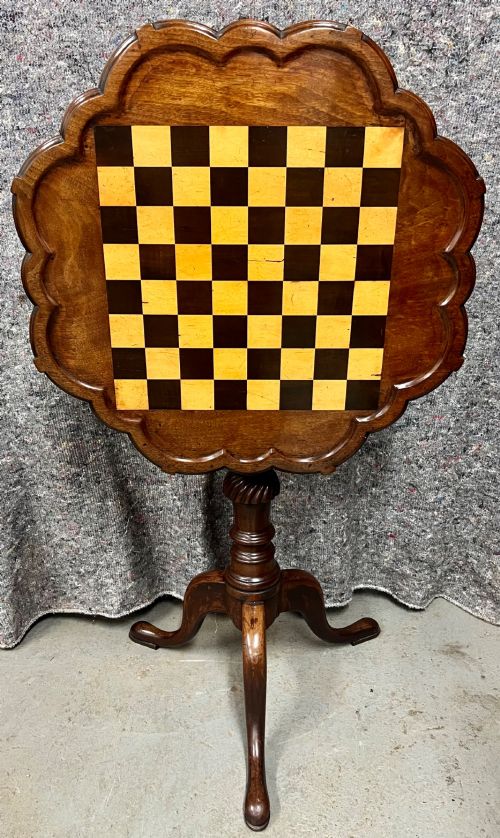


Georgian Inlaid Tea Table
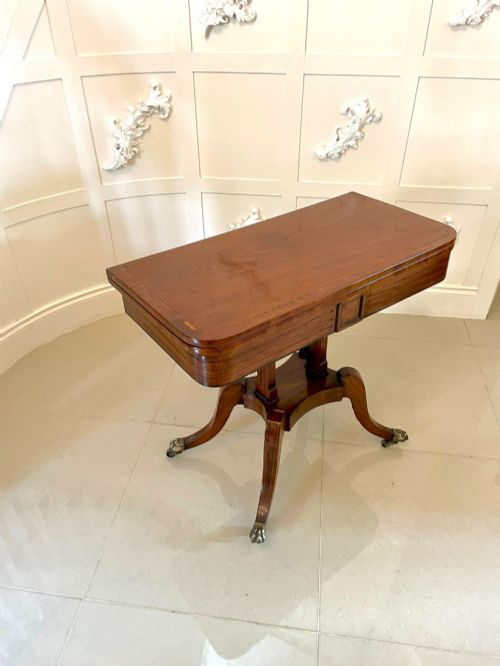
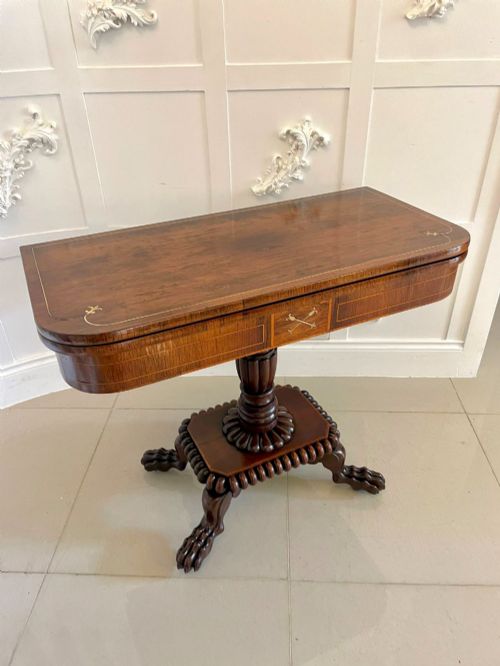
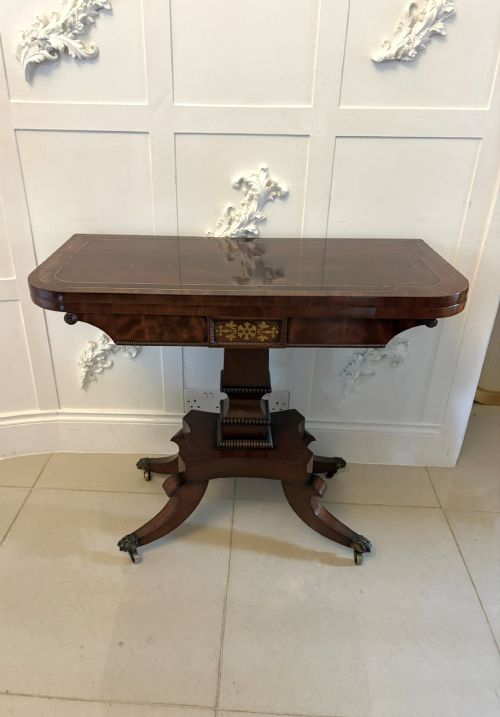
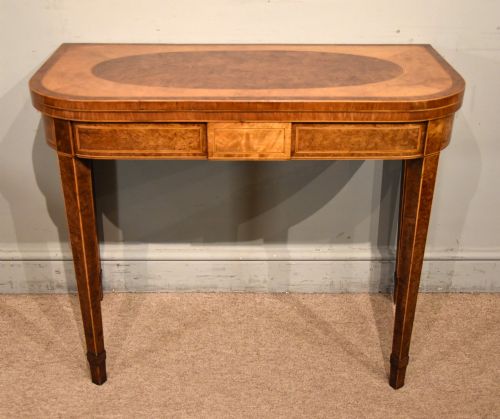
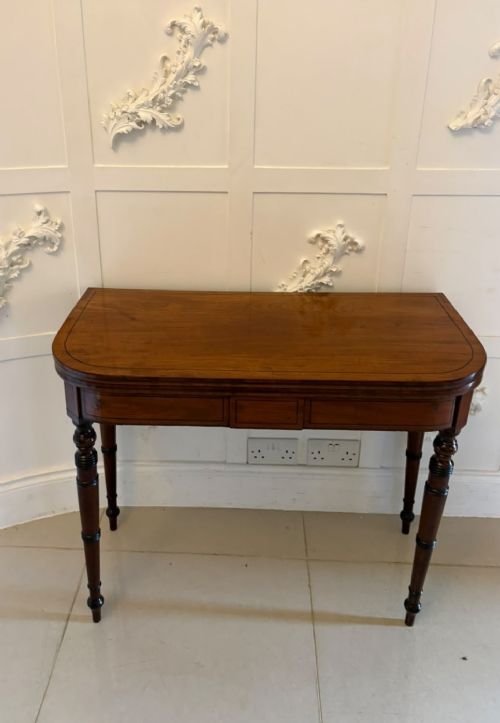
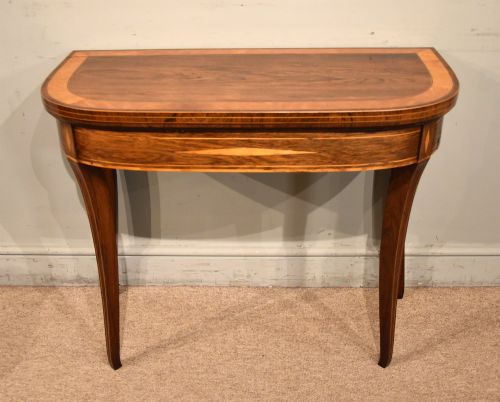
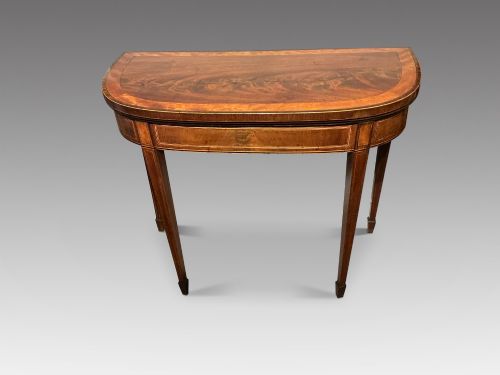
A georgian inlaid tea table brings refined timber surfaces and subtle contrasting stringing into a room, offering a folding top designed for hospitality.
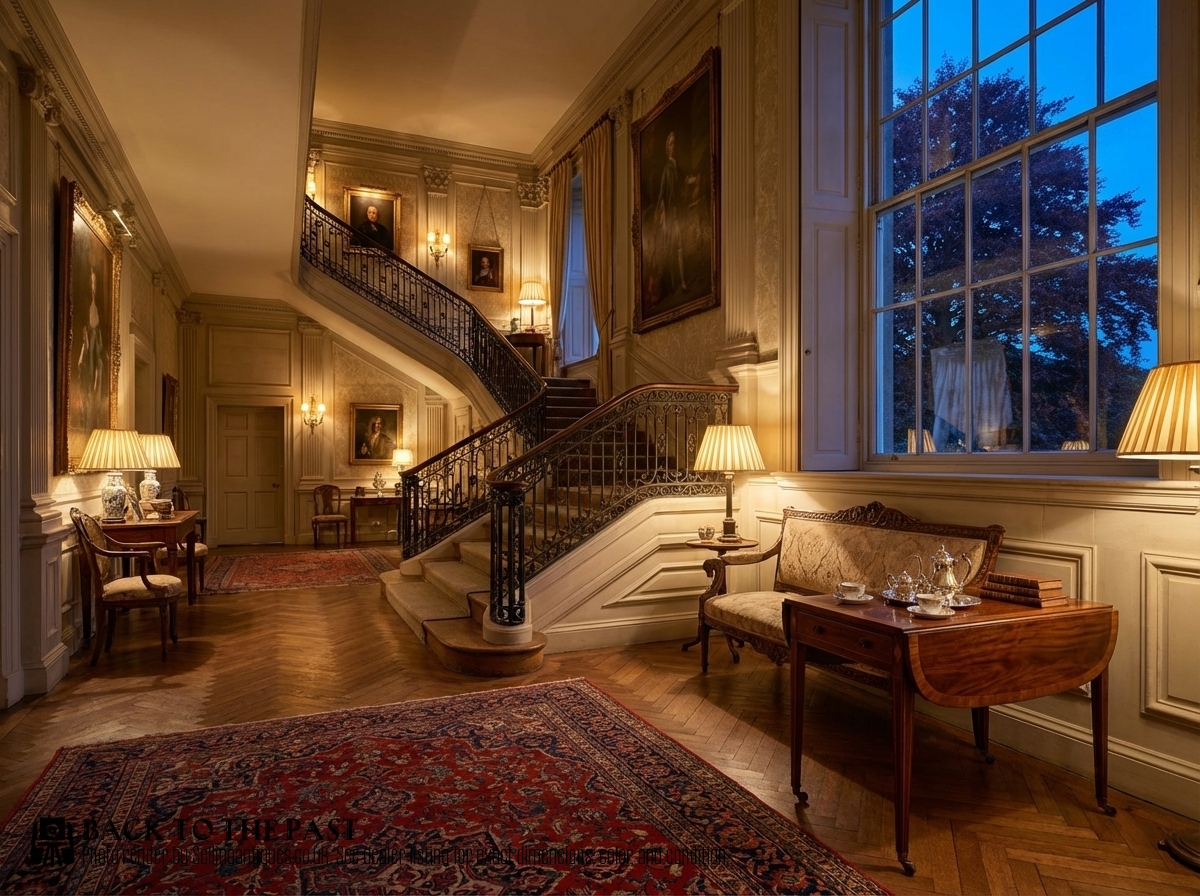
Georgian Inlaid Tea Table
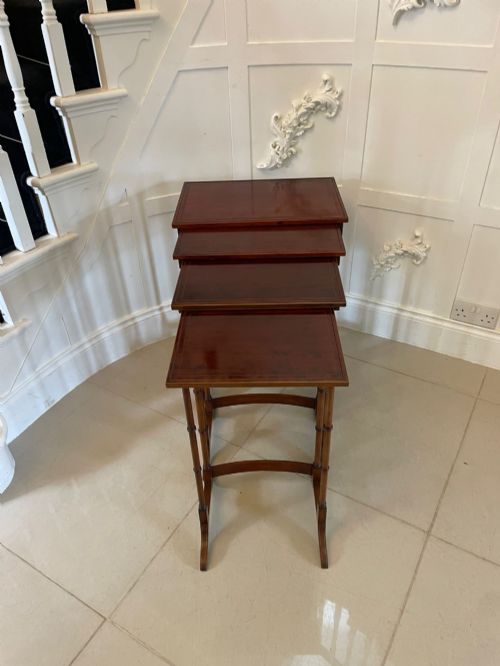
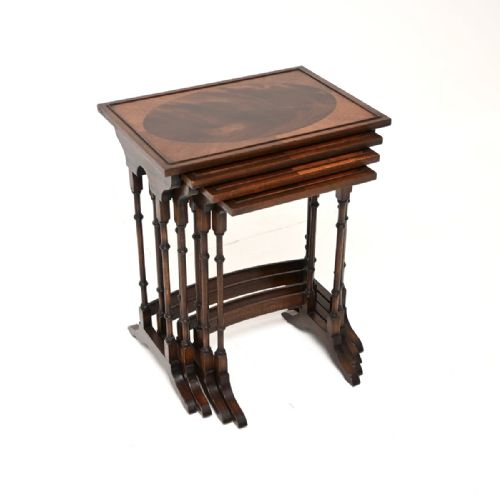
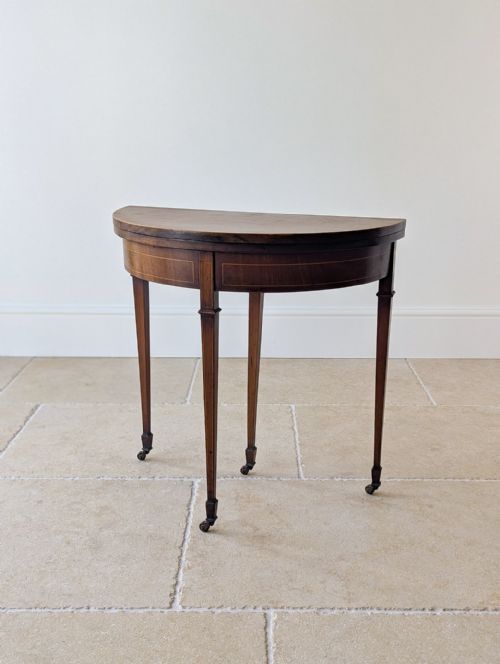
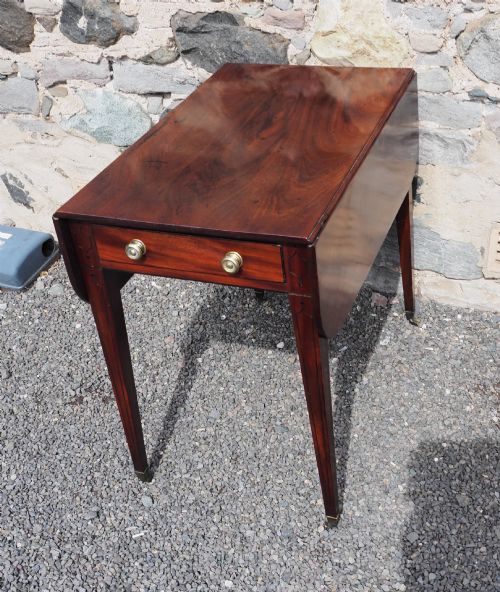
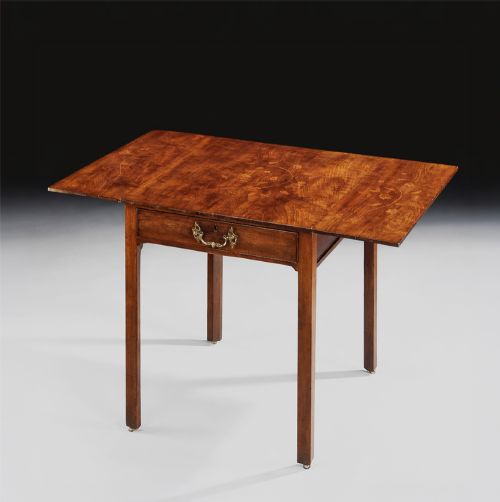
A georgian inlaid tea table sits within a broader selection of period English furniture that includes card tables, side tables, and pembroke tables. The examples met most frequently on this page feature fold-over tops and semi-circular or D-shape formats suited to domestic spaces.
Makers and workshops constructed these items primarily during the eighteenth and early nineteenth centuries, drawing on georgian, regency, and sheraton design idioms. The surviving pieces demonstrate how drawing rooms adapted versatile furniture formats for social gatherings and tea service.
Meticulous timber selection defines the category, combining primary structural woods with decorative veneers. Buyers encounter variations spanning compact tripod stands through to demilune consoles designed to sit flush against drawing room walls.
How they were made
Cabinet makers built the structural carcases using dense timbers such as mahogany, rosewood, and amboyna, chosen for stability and rich grain patterns. They applied decorative veneers and contrasting borders in satinwood, boxwood, ebony, and burr yew wood across the folding tops and aprons.
Inlay techniques involved cutting delicate channels into the primary wood to receive linear stringing or geometric marquetry motifs. Joinery relied on traditional hand-cut joints, while folding leaves utilised wooden pivot mechanisms or brass hinges recessed into the timber.
Georgian Inlaid Tea Table Retail Price Guide 2026
Typical asking prices for georgian inlaid tea table among the pieces listed under this phrase on Sellingantiques today, from the lower quarter to the upper quarter. They describe what is for sale here now, not the wider market.
The listings span multiple centuries, incorporating 18th Century, Georgian, Regency, 19th Century, Edwardian, and 1920 periods.
What varies in quality
The sophistication of the timber figure and the precision of the contrasting inlay dictate the standing of an individual piece. Workshops employing finely figured mahogany matched with crisp boxwood and satinwood stringing achieved a higher level of decorative harmony.
Proportion and the integrity of the structural joints separate standard cabinet work from superior examples. Pieces retain their appeal when the timber surfaces have aged naturally without excessive intervention, preserving the depth of the original polish and the sharpness of the inlaid borders.
Bruce & Burns of Edinburgh
The Georgian Inlaid Tea Table Glossary
- Demilune
- Half-moon shape. This format allowed tables to stand flat against a wall when closed and open into a full circle or oval for use.
- Crossbanding
- A border of veneer laid around the perimeter of a table top with the grain running perpendicular to the centre panel.
- Stringing
- Narrow strips of contrasting wood inlaid into channels cut into the surface to form linear borders and geometric patterns.
- Pembroke table
- A small rectangular table featuring two hinged drop leaves supported by pivoting brackets.
- Turn-over top
- A hinged table top that folds open to double its surface area, supported by a swing leg or a pivoting frame.
Georgian Inlaid Tea Table: Frequently Asked Questions
What is a georgian inlaid tea table used for?
These tables served primarily for the formal serving of tea in eighteenth-century drawing rooms. The hinged top allowed the furniture to occupy minimal space against a wall when not in use.
When unfolded, the top provided a stable surface for porcelain tea wares and social entertaining. Many examples also functioned as card or game tables depending on the daily requirements of the household.
How do you tell a george iii table from a regency one?
George III pieces frequently exhibit restrained architectural proportions and classical satinwood or boxwood stringing patterns. Cabinet makers of this era favoured graceful tapering legs and balanced geometric symmetry.
Regency examples often incorporate bolder rosewood timbers, brass inlay details, and more robust silhouettes influenced by classical revival motifs. The choice of secondary woods and the specific execution of the crossbanding help distinguish between the two periods.
How do you care for antique timber surfaces?
Protect antique wood from direct sunlight and sudden humidity changes to prevent timber movement and veneer lifting. Maintaining a stable indoor climate preserves the natural oils within the historic polish.
Apply a microcrystalline wax sparingly when the surface appears dry, buffing gently with a soft cotton cloth. Avoid modern aerosol polishes containing silicone, which can penetrate porous historical finishes.
Where should you place a demilune table in a room?
A demilune shape fits naturally against flat wall spaces in hallways, drawing rooms, or dining areas. Placing the straight edge against the wall leaves the curved front visible as a decorative feature.
They also work effectively behind sofas or paired in larger reception rooms to balance the spatial layout. Opening the top requires adequate clearance around the piece to accommodate the pivoting leaf.