



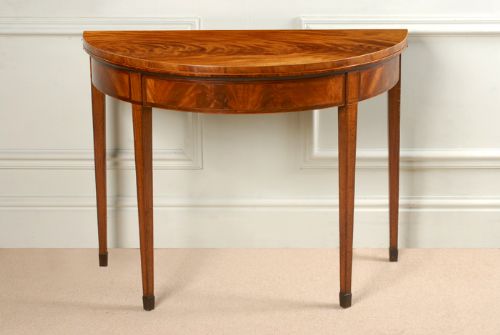


Semi Circular Tea Table
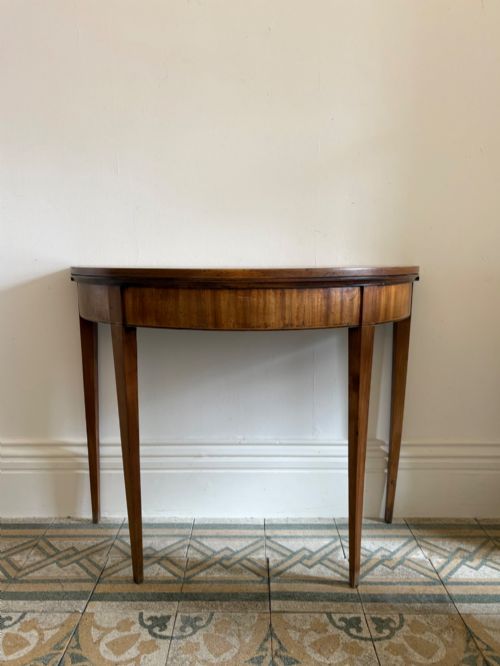
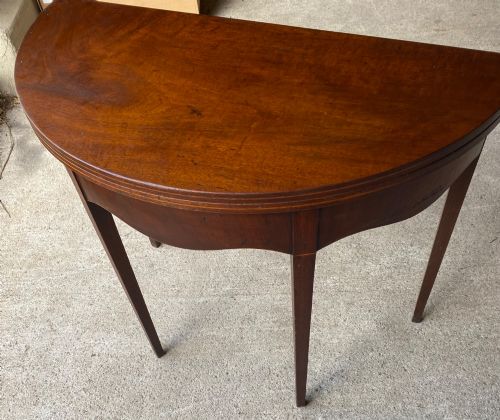
A semi circular tea table brings folding top utility and graceful curved fronts into eighteenth and nineteenth century rooms.
Semi Circular Tea Table
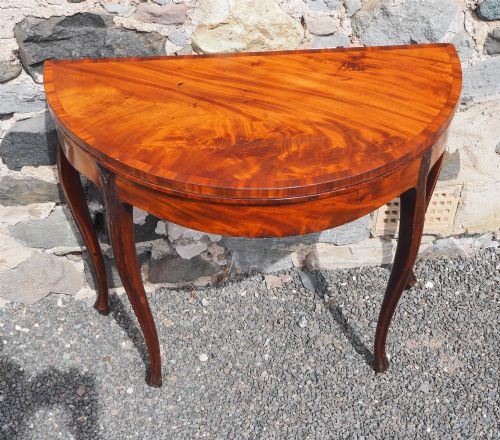
When you search for a semi circular tea table, you enter a field dominated by eighteenth and nineteenth century examples in mahogany and satinwood. The pieces on this page span Georgian periods through to later revivals, offering fold over tops and demi lune console formats that double their surface area when opened.
You are most likely to meet mahogany variants featuring fold over mechanisms, alongside card and games tables sharing the same curved footprint. These objects functioned in period drawing rooms to hold tea service equipment before folding flat against the wall.
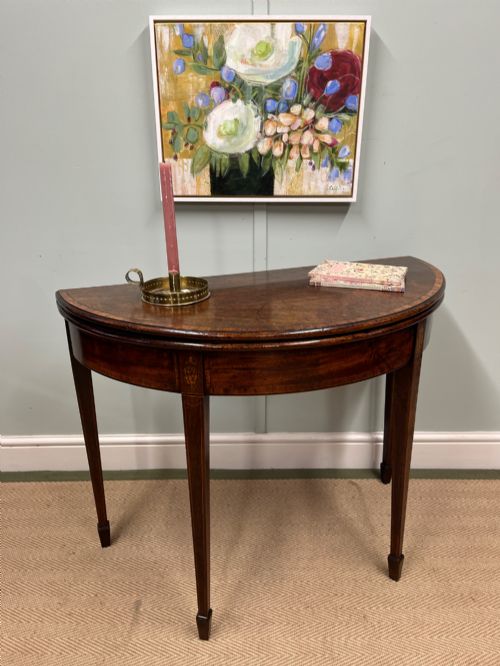
The material evidence points heavily towards George III and Sheraton influences, where cabinetmakers utilised figured veneers and delicate stringing. These tables balance practical surface area with compact wall placement.
How they were made
Cabinetmakers constructed these tables primarily from solid mahogany and oak carcasses, applying figured mahogany veneer or satinwood to the prominent curved surfaces. Boxwood and wood inlay often define the edges and borders through contrasting geometric stringing.
The fold over mechanisms rely on hinged leaves supported by pivoting rear legs, allowing the console format to transform into a stable circular top. Fine brass hinges and fittings secure the moving sections while maintaining flush alignment when closed.
Semi Circular Tea Table Retail Price Guide 2026
Typical asking prices for semi circular tea table among the pieces listed under this phrase on Sellingantiques today, from the lower quarter to the upper quarter. They describe what is for sale here now, not the wider market.
Many fold over tops conceal hidden compartments once used for storing candle sticks or counters.
What varies in quality
The distinction between ordinary and exceptional tables rests in the choice of timber and the precision of the veneer work. Flame mahogany veneer and intricate boxwood inlay require master carpentry to curve smoothly across the demi lune frame without lifting at the grain edges.
Structural integrity in the hinge mechanism and the leg pivot separation marks the better workshops. A superior table exhibits tight joints and balanced proportions when bearing weight on the extended rear leg.
The Semi Circular Tea Table Glossary
- Demi lune
- Half moon shape. This term describes the curved front profile characteristic of these console and tea tables.
- Fold over top
- A hinged wooden leaf. The design allows the surface to double in width when unfolded for use.
- Stringing
- Thin inlaid lines of contrasting wood. Makers used boxwood to create delicate borders around the mahogany panels.
- Console table
- A table designed to stand against a wall. Many examples in this category double as card or tea tables.
Semi Circular Tea Table: Frequently Asked Questions
How do I use a semi circular tea table today?
These pieces function well in hallways or living rooms placed flat against a wall as console tables. Opening the top creates a useful surface for lamps or display when entertaining.
Keep them away from direct heat sources and radiators to protect the antique wood veneers from drying and cracking over time.
What is the difference between a tea table and a card table?
Tea tables usually feature plain wooden interiors designed to support ceramic tea services. Card tables often conceal a baize or leather lined surface beneath the fold over leaf for games.
Both share the same semi circular footprint when closed, making them visually similar until the top is opened.
How do I tell George III period pieces apart?
George III pieces frequently display refined mahogany timbers with subtle boxwood stringing and tapered legs. Later nineteenth century versions often show heavier proportions and different secondary woods like oak.
Examine the underside construction and the grain patterns to understand the period of manufacture.
Are these tables sturdy when opened?
A well designed table relies on a swing leg or concertina action to support the pivoting leaf. The weight distributes evenly across the frame when the rear leg locks into position.
Care should be taken not to lean heavy weights on the unsupported overhang of the open leaf.