
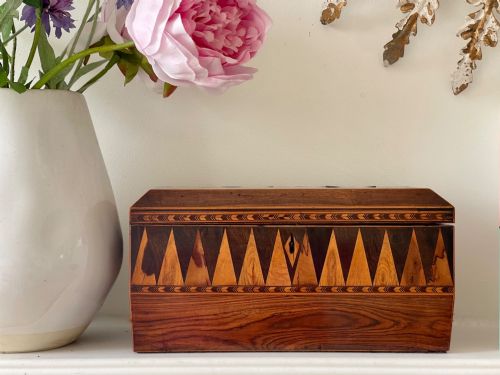
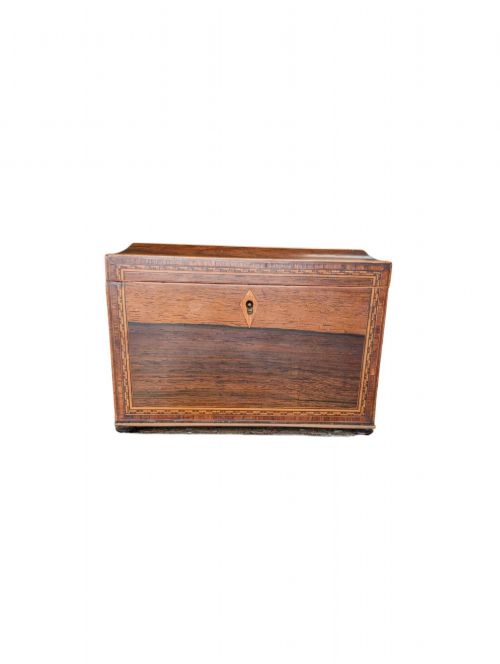
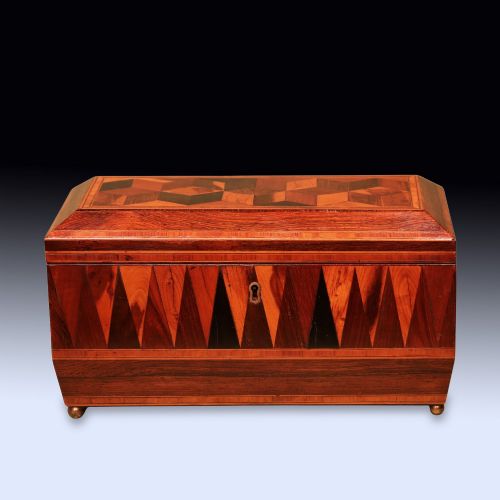


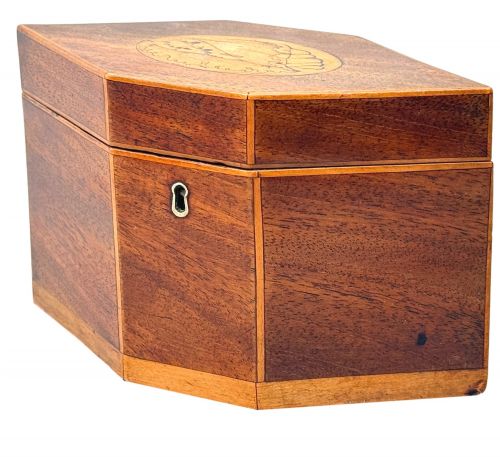


Georgian Inlaid Tea Caddy
A georgian inlaid tea caddy is a domestic box for storing dried tea leaves, combining refined cabinetry with decorative surface ornament.
Georgian Inlaid Tea Caddy
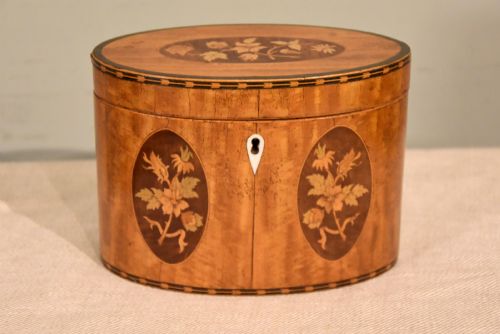
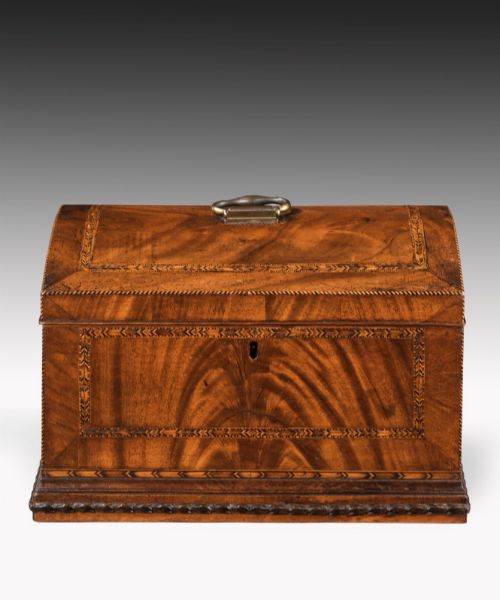
A georgian inlaid tea caddy is a box designed to preserve precious tea leaves, appearing in forms such as rectangular, oval, octagonal, hexagonal, and sarcophagus shapes.
The versions most frequently found on this page date from the Georgian and Regency periods, spanning the eighteenth and early nineteenth centuries.
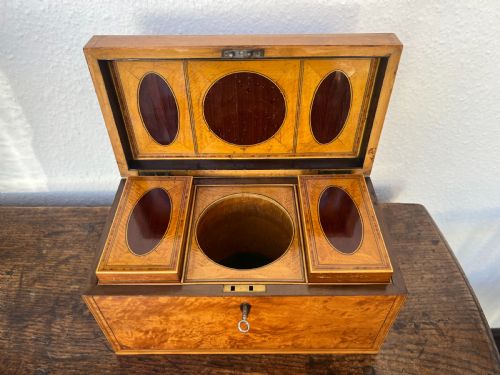
Makers constructed these containers in various woods including mahogany, satinwood, rosewood, harewood, and yew, often incorporating fitted interiors for canisters and mixing bowls.
How They Were Made
Craftsmen built these containers from dense timbers like mahogany and rosewood, applying contrasting veneers and marquetry details in boxwood, ebony, and satinwood.
Surface decoration frequently relied on delicate wood inlay, parquetry, and shell motifs, sometimes complemented by brass stringing, escutcheons, and lion mask handles.
Listings demonstrate a preference for mahogany and satinwood across eighteenth-century examples, shifting toward rosewood and brass in the nineteenth century.
What Varies in Quality
The standard of a piece depends upon the precision of the cabinetwork, the complexity of the wood inlay, and the survival of original fitted interiors and internal compartments.
Richer examples display specialised timbers such as partridge wood, thuya wood, and burr yew, combined with pictorial shell or floral marquetry rather than simple line stringing.
The Georgian Inlaid Tea Caddy Glossary
- Tea caddy
- A small box or chest intended for the storage of loose tea leaves. These containers were typically fitted with locks and internal compartments.
- Marquetry
- The art and craft of applying pieces of veneer to a structure to form decorative patterns and pictorial designs. This technique utilises contrasting timbers to create visual depth.
- Parquetry
- A geometric mosaic of wood pieces used for surface decoration on boxes and furniture. It relies on regular angular arrangements.
- Sarcophagus form
- A box design featuring a sloping lid and a pedestal base, popular during the Regency period. This architectural shape resembles a miniature stone tomb.
- Stringing
- A narrow strip of contrasting wood or light-coloured inlay used to outline panels and borders on cabinetry. It accentuates the geometric lines of the form.
Georgian Inlaid Tea Caddy: Frequently Asked Questions
What were tea caddies used for?
Tea was an expensive commodity in the eighteenth century and required secure storage to prevent theft and preserve aroma.
Containers were kept locked by the head of the household, who dispensed the leaves personally for each pot.
How do I tell a Georgian caddy from a Regency one?
Georgian examples often favour oval, octagonal, or rectangular shapes with delicate satinwood shell inlays and bracket feet.
Regency pieces tend toward sarcophagus forms, pedestal bases, brass lion mask handles, and bolder rosewood grains with brass inlay.
Did these boxes have internal compartments?
Many interiors feature multiple lidded compartments to separate different varieties of tea leaves.
Some examples also retain central recesses that once held small glass mixing bowls for blending.
How do I care for antique wood surfaces?
Keep these wooden boxes away from direct sunlight and sudden changes in ambient temperature to prevent timber splitting.
An occasional application of microcrystalline wax helps nourish the dry antique polish without building up residue.