



Inlaid Mahogany Tea Caddy
An inlaid mahogany tea caddy brings domestic history to a room, holding dry leaf securely within patterned timber.
Inlaid Mahogany Tea Caddy
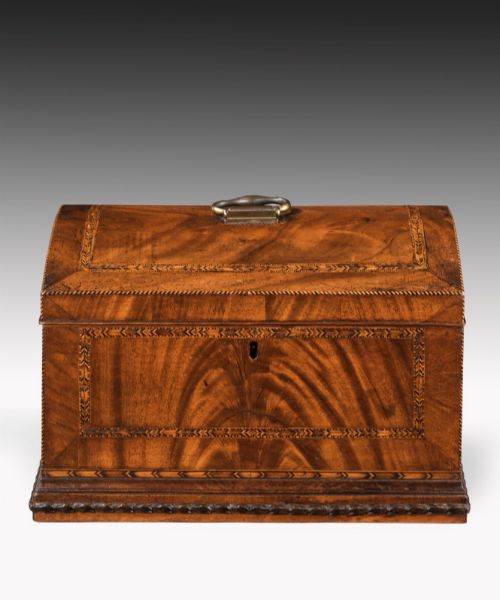
An inlaid mahogany tea caddy is a small lidded box designed to store loose leaves when tea was an expensive commodity, appearing on this page mostly in Georgian, Regency, and Victorian iterations.
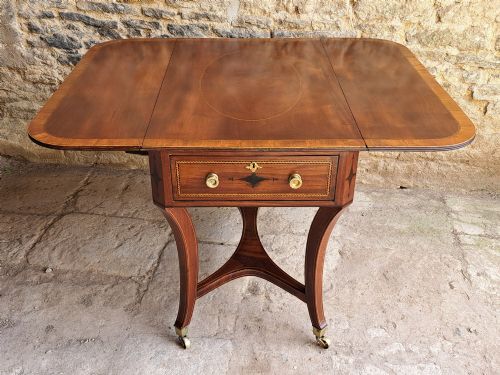
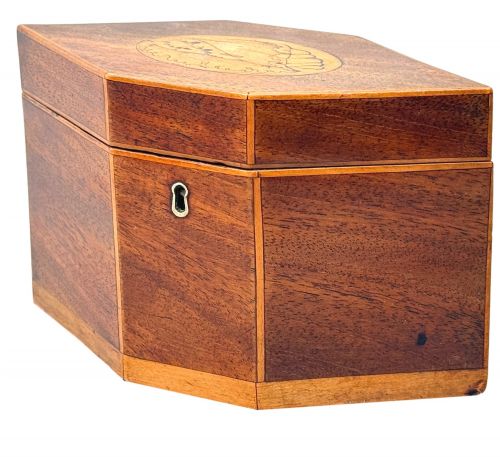
The forms span simple rectangular boxes, domed lids, hexagonal shapes, and occasional larger chests or tables that house internal compartments and mixing bowls.
Buyers seeking this phrase meet pieces originating from the eighteenth and nineteenth centuries, often showing contrasting stringing or decorative motifs set into the main timber.
How they were made
Cabinet makers constructed the bodies from solid mahogany or applied veneers over secondary woods, shaping them into octagonal, oval, or sarcophagus profiles.
Inlay work relied on contrasting materials such as boxwood, ebony, satinwood, and bone, cut precisely and inserted into channels to create geometric lines or central shell motifs.
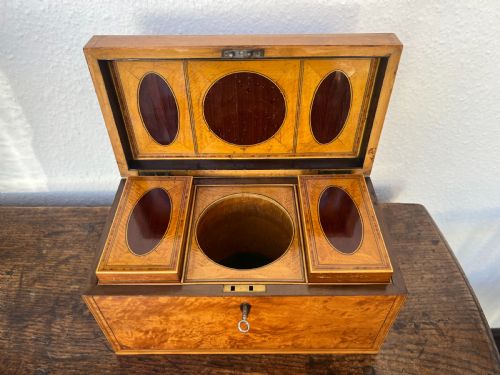
Internal elements often included fitted wooden lids for individual canisters, sometimes accompanied by brass escutcheons, handles, or metal linings.
Some boxes hide delicate moth and cannon motifs alongside traditional shell inlays.
What varies in quality
The distinction between ordinary boxes and superior examples rests on the crispness of the timber selection, such as flame mahogany figure, and the precision of the contrasting inlay.
Makers who invested time in delicate stringing, well-fitted interior lids, and original hardware produced pieces that retain their structural integrity and decorative appeal over centuries.
Proportion and balance dictate the presence of the object in a room, where restrained geometric borders often outlast heavier decorative treatments.
The Inlaid Mahogany Tea Caddy Glossary
- Escutcheon
- A small plate surrounding the keyhole, often fashioned from brass or bone to protect the surrounding wood from wear. This detail helps date the box by its metalwork style.
- Stringing
- Narrow strips of contrasting wood inlaid into channels in the main surface to form geometric borders. It defines the edges of panels on eighteenth-century furniture.
- Canister
- An internal compartment or separate vessel designed to hold dry tea leaves safely. Many boxes contain multiple lidded canisters flanking a central aperture.
- Sarcophagus
- A box form featuring a steep, sloping lid and often resting on paw feet, popular during the Regency period. This architectural shape gives a substantial presence to smaller chests.
- Veneer
- A thin layer of figured wood applied over a stable secondary timber base to create a decorative exterior. Flame mahogany veneers provide the rippling grain patterns seen on finer boxes.
Inlaid Mahogany Tea Caddy: Frequently Asked Questions
What were tea caddies used for?
These boxes stored expensive black and green teas when leaves were kept under lock and key in the parlour. Servants or hosts measured out portions for each pot using internal canisters.
Today, they function as decorative objects on side tables or serve to store small keepsakes and jewellery away from light and dust.
How do I tell a Georgian caddy from a Victorian one?
Georgian examples tend to feature restrained boxwood stringing, oval medallions, and simpler rectangular or octagonal proportions dating from the eighteenth century. Later Victorian pieces often incorporate heavier dome tops, bolder brass mounts, and contrasting amboyna or ebony.
Examining the internal construction, hinges, and secondary woods helps confirm the manufacturing period.
Why do some caddies have two compartments?
Two internal sections allowed households to store different varieties of tea, such as green and black, in the same box. A central space occasionally accommodated a glass mixing bowl for blending leaves.
Single caddies usually held one primary blend or served specialised functions like coffee storage.
How should I care for a mahogany box?
Keep wooden boxes away from direct sunlight and radiators to prevent the dry heat from cracking the mahogany or lifting the delicate veneer. A light application of appropriate wax maintains the sheen on the antique finish.
Avoid placing damp items directly onto the internal wood surfaces.