
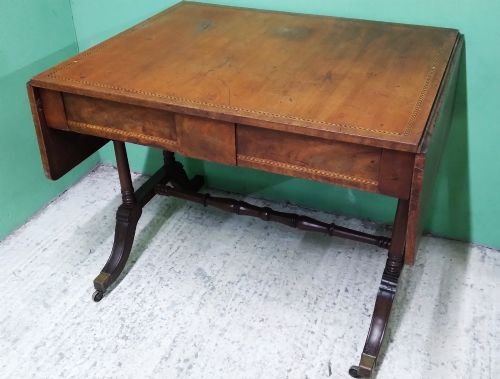
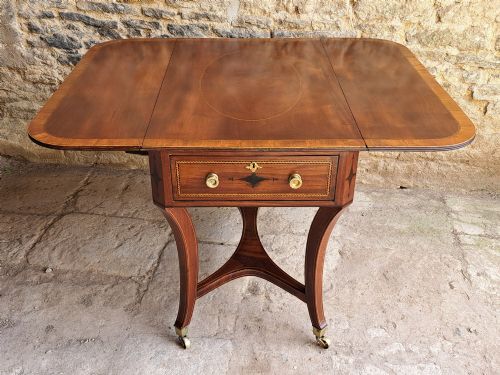
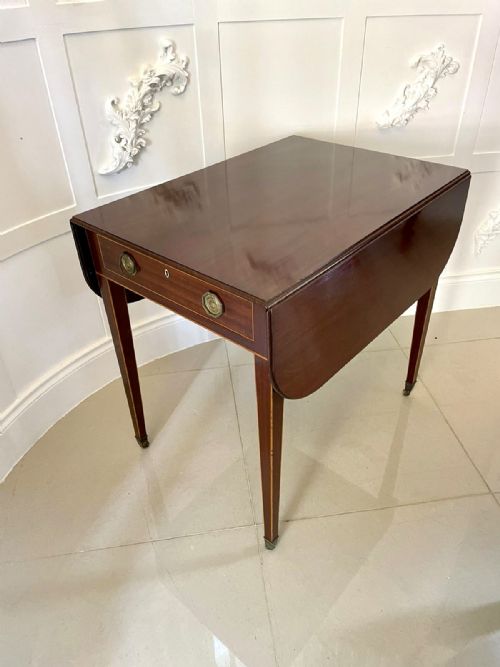
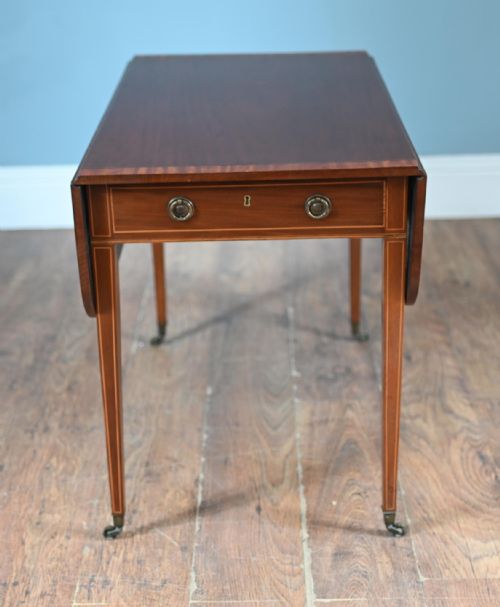
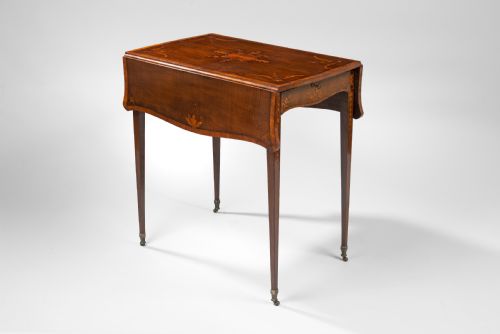


Georgian Inlaid Sofa Table
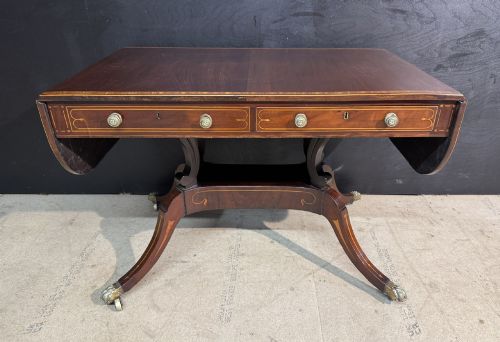
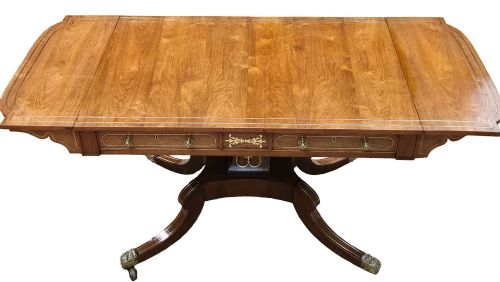
A georgian inlaid sofa table stands as a versatile centrepiece, offering elegant drop leaves and striking timber contrasts for the drawing room.
Georgian Inlaid Sofa Table
When you search for a georgian inlaid sofa table, you encounter elegant freestanding tables designed originally to stand before a sofa, featuring drop flaps on either side to extend the surface. These pieces frequently date from the Georgian and Regency periods, spanning the late eighteenth and early nineteenth centuries.
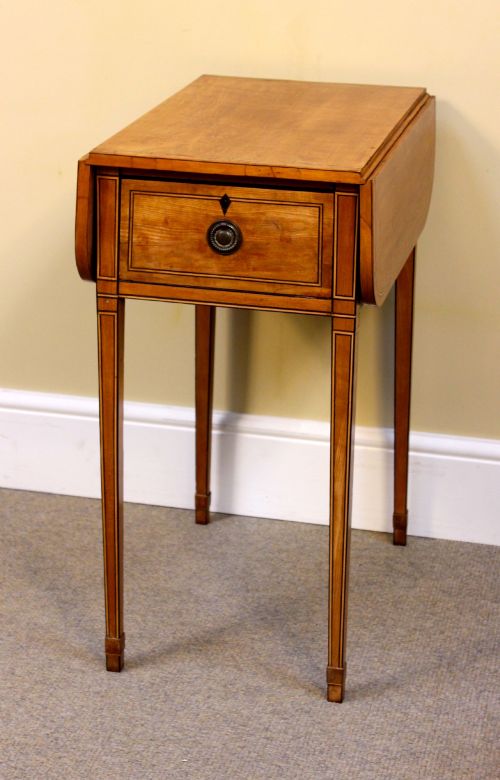
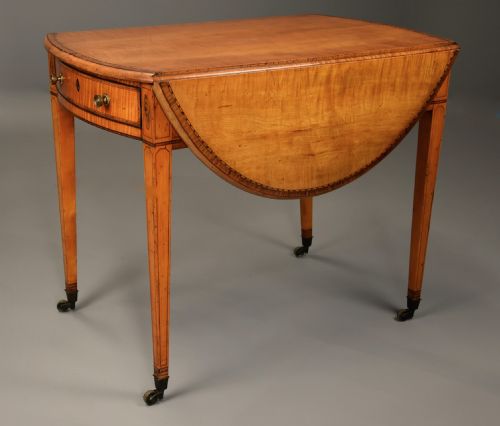
The evidence shows these tables appear in various forms, including sofa tables, pembroke tables, and library tables. Mahogany and rosewood form the primary bodies, enriched with satinwood, ebony, and boxwood stringing or marquetry.
How they were made
Cabinet makers utilised dense primary timbers like mahogany and rosewood, often figuring the grain for visual depth on the top surfaces. Secondary woods provided structural stability to the Pembroke and drop-flap mechanisms.
Inlay and stringing techniques defined the ornamentation, incorporating satinwood, boxwood, and ebony lines. Brass mounts and brass inlay also appeared on select Regency examples, adding metallic contrast to the dark timber.
Listings feature mahogany, rosewood, satinwood, ebony, and boxwood among the primary and inlay materials.
What varies in quality
The crispness of the timber inlay and the choice of figured veneers distinguish the finer examples from standard workshop production. Superior pieces display precise botanical marquetry or delicate stringing that integrates harmoniously with the primary wood.
Construction details such as freestanding finished backs, original brass fittings, and the seamless movement of drop leaves indicate superior craftsmanship. The richness of the natural patina accumulated over the centuries elevates the standing of individual tables.
The Georgian Inlaid Sofa Table Glossary
- Drop flap
- A hinged leaf on either side of a table that raises to extend the top surface. These flaps are supported by swing brackets.
- Marquetry
- Decorative veneer work forming pictorial or geometric patterns using various coloured woods. Craftsmen cut these designs into the primary surface.
- Stringing
- Thin inlay lines of contrasting wood set into channels in the furniture surface. This technique outlines drawers and table tops.
- Pembroke table
- A small rectangular table with two hinged drop leaves on opposing sides. It often includes a single drawer.
- Figured mahogany
- Timber cut to reveal distinctive grain patterns such as fiddleback or flame. This enhances the visual texture of the piece.
Georgian Inlaid Sofa Table: Frequently Asked Questions
What is a georgian inlaid sofa table used for?
These tables served originally for needlework, writing, or tea while positioned near a sofa in the principal rooms. Their drop leaves allowed the furniture to expand when needed and fold down to save space.
Today, buyers utilise them as console tables, desks, or freestanding centre tables in living spaces and hallways. Their finished backs permit placement away from walls.
How do I identify a georgian period table?
Examination of the timber construction, dovetails, and secondary woods helps determine the manufacturing period. Georgian and Regency examples display hand-cut joints and period-specific brass hardware.
Makers of the era relied on solid mahogany, rosewood, and satinwood veneers rather than modern laminates. The presence of subtle wear patterns and natural wax finishes indicates considerable age.
What distinguishes a sofa table from a pembroke table?
Sofa tables were traditionally built to stand behind a sofa, possessing a longer rectangular top with two drop leaves and often dual drawers. Pembroke tables generally feature smaller proportions with narrower drop leaves.
Both forms utilise drop flaps, but sofa tables frequently emphasise symmetry for freestanding placement in a room. Pembroke tables more commonly stood against a wall when not in use.
How should I care for a rosewood or mahogany table?
Maintain these antique tables by keeping them away from direct sunlight and sudden temperature shifts. Such environmental controls prevent the timber and delicate inlay from warping or drying out.
Apply occasional natural wax and buff gently with a soft cloth to preserve the surface sheen. Avoid silicone-based polishes that can damage historic finishes.