



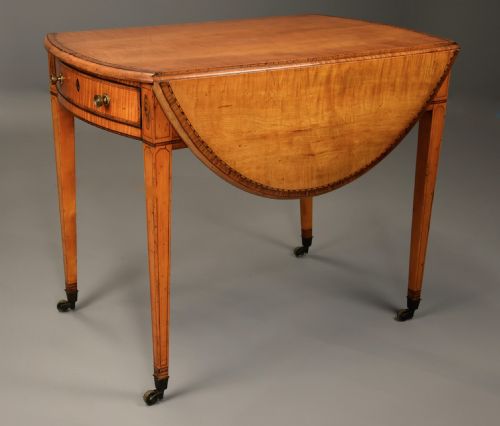
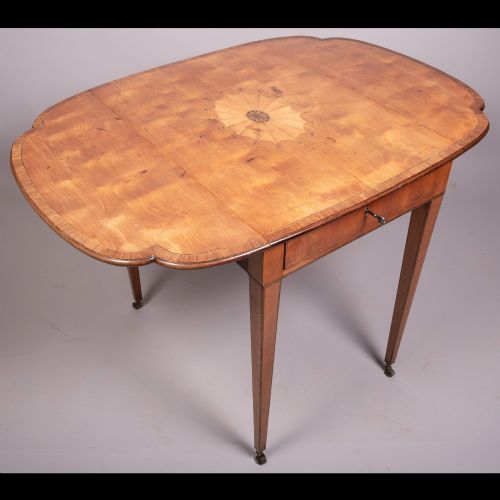
Georgian Inlaid Drop Leaf
These georgian inlaid drop leaf tables combine timber and fine stringing to create versatile surfaces.
Georgian Inlaid Drop Leaf
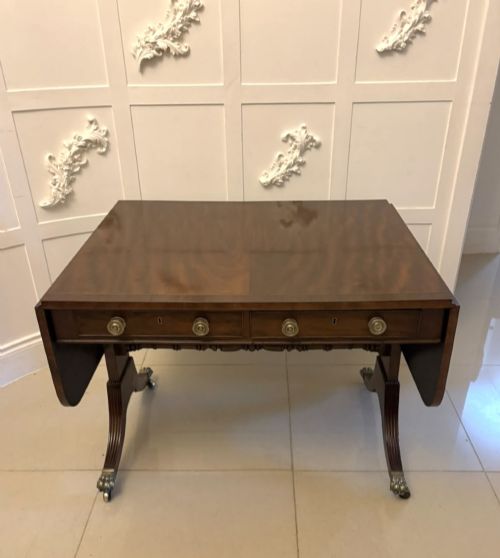
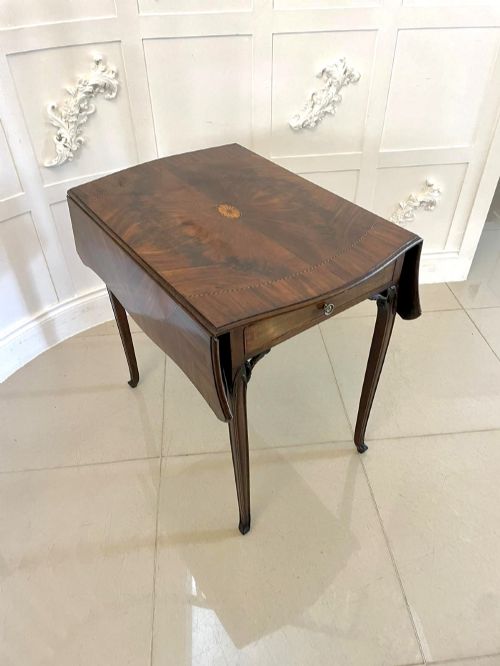
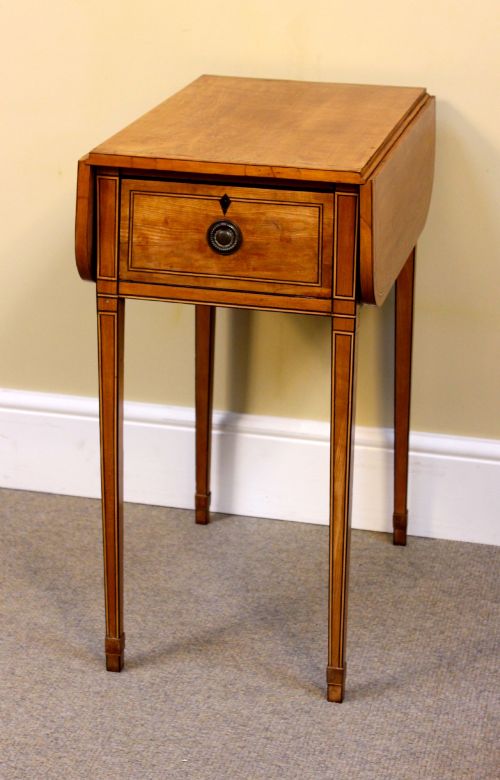
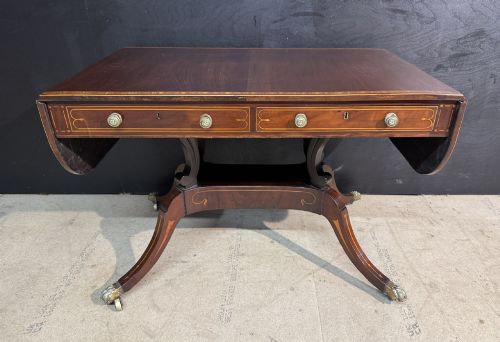
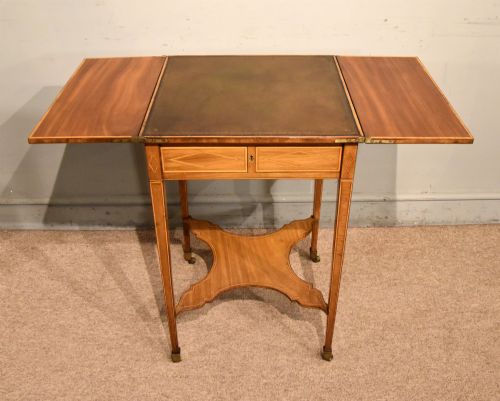
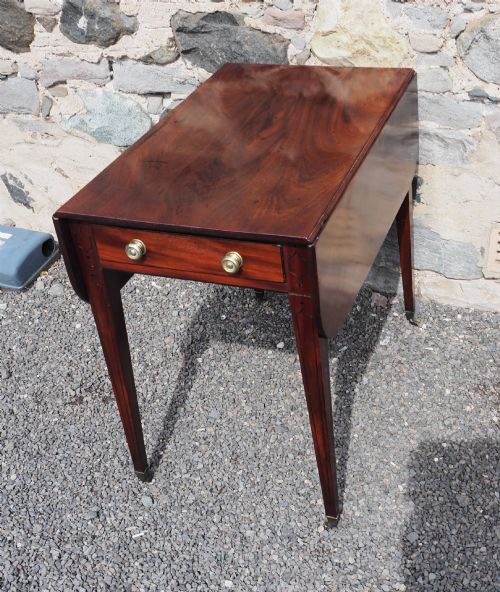
When you search for georgian inlaid drop leaf tables, you encounter versatile multi-flap furniture designed for domestic interiors. The forms span occasional, writing, sewing, and sofa tables alongside standard drop-leaf and drop-flap formats.
The material record shows a strong presence of mahogany, satinwood, and rosewood bodies enriched with contrasting stringing and banding. Most examples belong to the eighteenth century, the Georgian era, and the Regency period, with occasional Edwardian items appearing.
How they were made
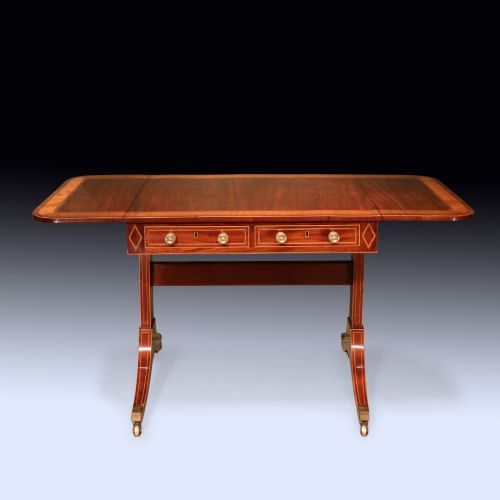
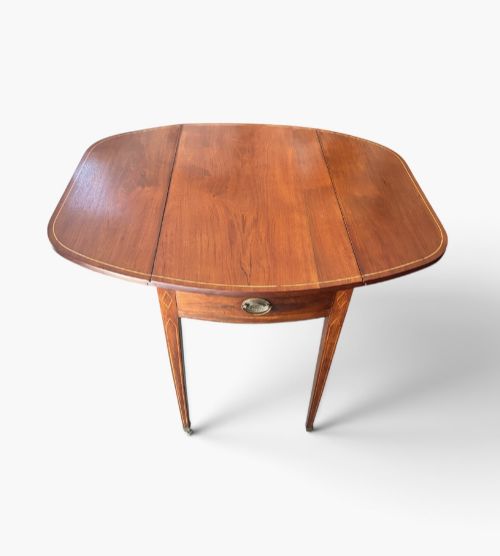
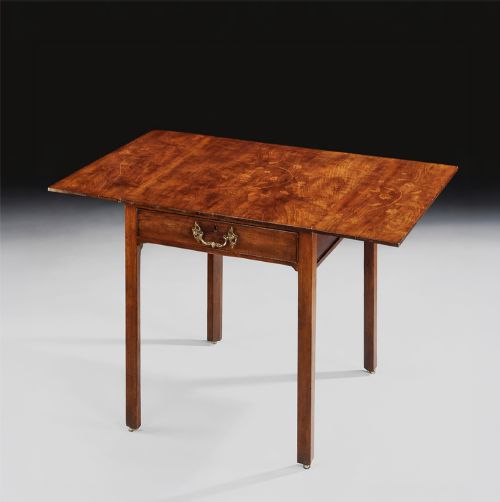
Cabinet makers constructed these tables primarily from solid and veneered timbers including mahogany, satinwood, and rosewood. Surfaces received intricate decorative elements through wood inlay, boxwood and ebony stringing, and marquetry detailing.
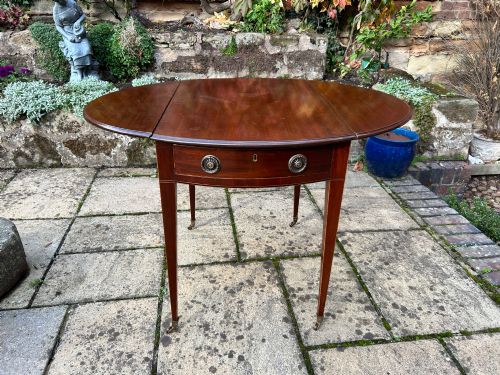
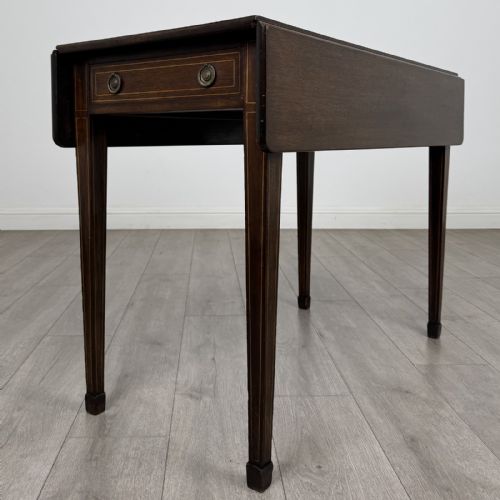
Structural highlights include brass mounts, hardware, and pedestal supports which accompanied the folding leaf mechanisms. Craftspeople utilised contrasting timbers to frame panels and define edges on Pembroke and sofa table tops.
Georgian Inlaid Drop Leaf Retail Price Guide 2026
Typical asking prices for georgian inlaid drop leaf among the pieces listed under this phrase on Sellingantiques today, from the lower quarter to the upper quarter. They describe what is for sale here now, not the wider market.
Work tables concealed sewing compartments inside, hiding needles and threads beneath polished folding lids.
What varies in quality
The standard of a georgian inlaid drop leaf table rests upon the precision of its timber selection and the crispness of its stringing. Superior examples display carefully chosen grain patterns in the primary wood alongside finely executed marquetry.
Construction rigour in the drop-leaf hinges and stability in the freestanding frames distinguish finer workshops from simpler output. The subtlety of the colour contrasts between the base wood and the inlay dictates the visual balance.
The Georgian Inlaid Drop Leaf Glossary
- Pembroke table
- A small form featuring two hinged drop leaves on opposite sides, frequently fitted with a drawer. It served multiple domestic uses in sitting rooms and parlours.
- Sofa table
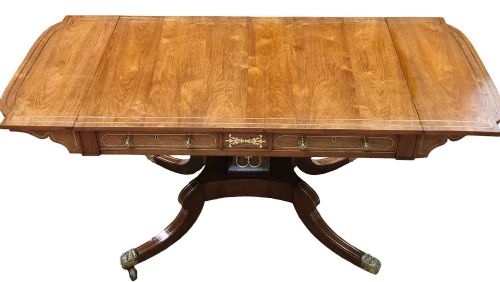
- A long, rectangular table designed to stand in front of a sofa, possessing drop flaps at either end. These often feature double pedestal bases or trestle supports.
- Stringing
- Thin lines of contrasting wood or light-coloured material inlaid into channels cut into the furniture surface. It creates geometric borders and panels.
- Marquetry
- The art of forming decorative patterns using thin veneers of various coloured woods. This technique adorns tabletops with pictorial or symmetrical motifs.
- Drop leaf
- A hinged flap at the side of a table that lifts to extend the surface area. Brackets or pivoting legs support the leaf when raised.
Georgian Inlaid Drop Leaf: Frequently Asked Questions
What rooms suit a drop leaf table?
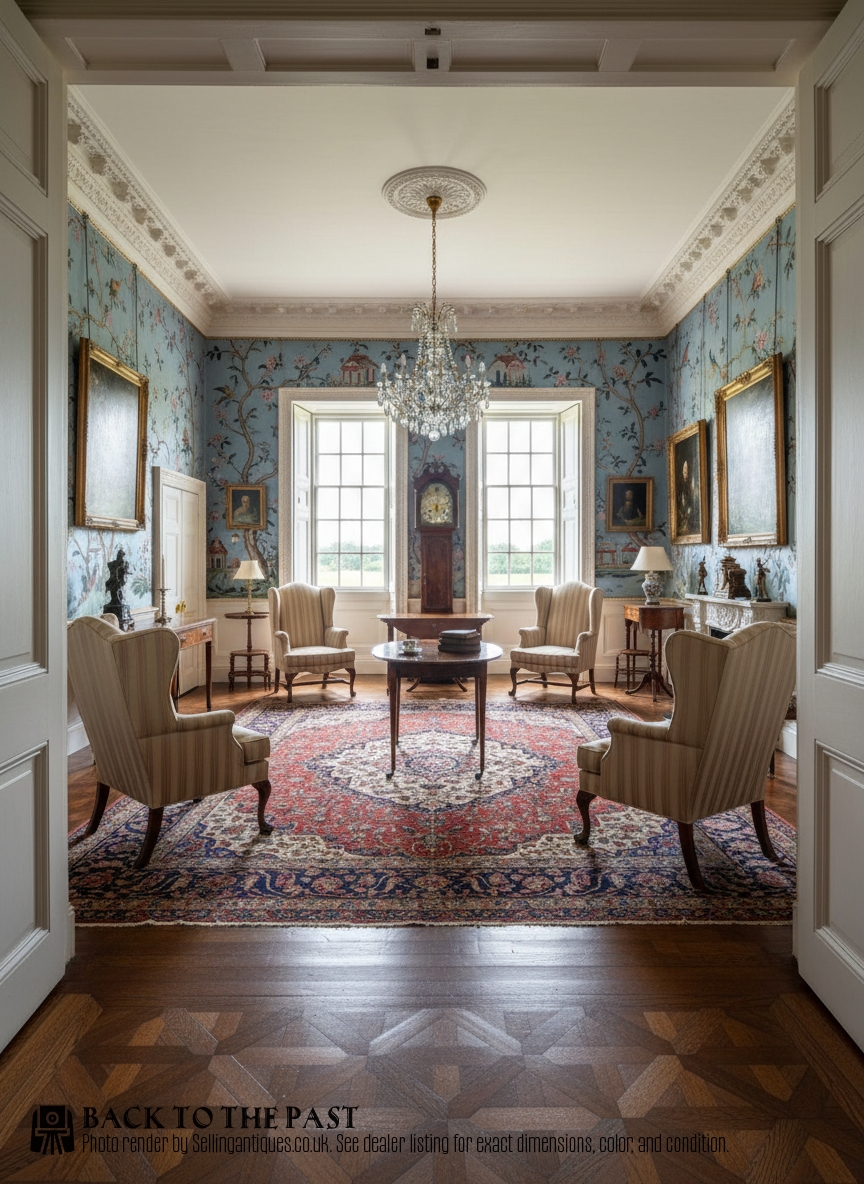
These tables adapt well to sitting rooms, studies, and dining spaces where floor space changes throughout the day. Drop leaves allow the furniture to sit flat against a wall or expand for writing and serving.
The slender proportions of Pembroke and sofa tables ensure they integrate easily beside seating without overwhelming smaller interior layouts.
How do I distinguish George III from Regency pieces?
George III pieces generally display classical proportions, straight or tapering legs, and restrained satinwood or boxwood stringing. Mahogany serves as the predominant timber foundation for this era.
Regency examples frequently introduce rosewood, bolder brass mounts, and heavier pedestal or saber leg supports. The decorative focus shifts towards striking grain contrasts and metal inlays.
Were these tables used for dining?
Certain larger sofa tables and drop-leaf formats accommodated casual dining or tea service in private quarters. Their extending leaves provided flexibility for meals before permanent dining tables became standard in every room.
Smaller variants functioned primarily for writing, sewing, or holding decorative objects rather than formal meals.
What maintenance do inlaid surfaces require?
Inlaid surfaces benefit from consistent indoor humidity levels and protection from direct sunlight to prevent timber shrinkage. Regular dusting with a soft cloth preserves the polish without stripping old finishes.
Avoid placing damp items directly onto antique wood to protect the delicate boxwood or ebony stringing from moisture damage.