
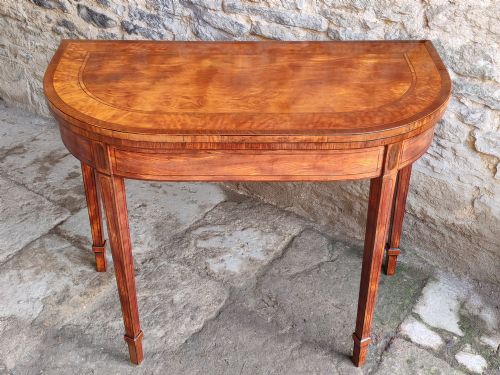
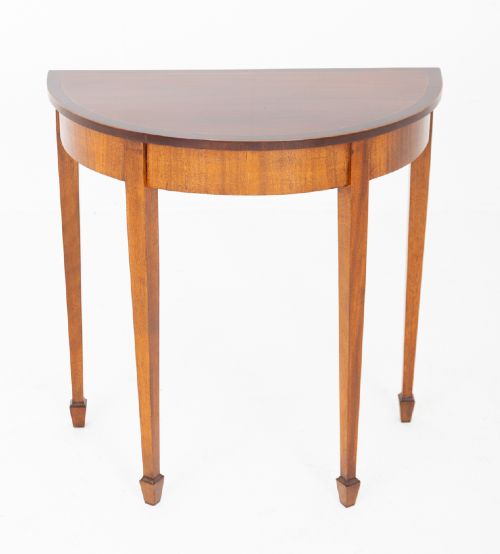
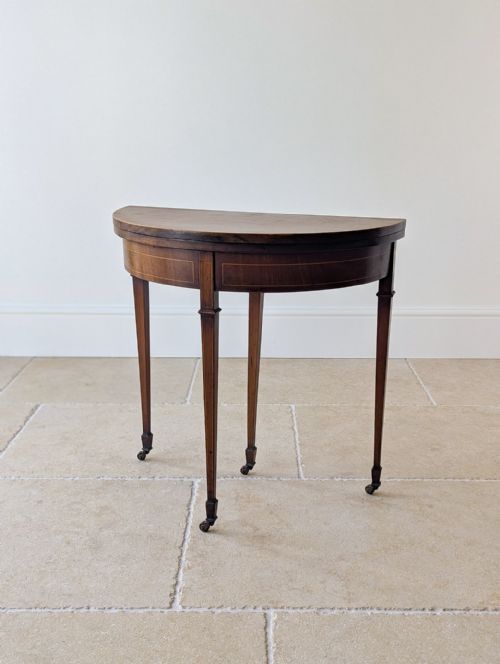
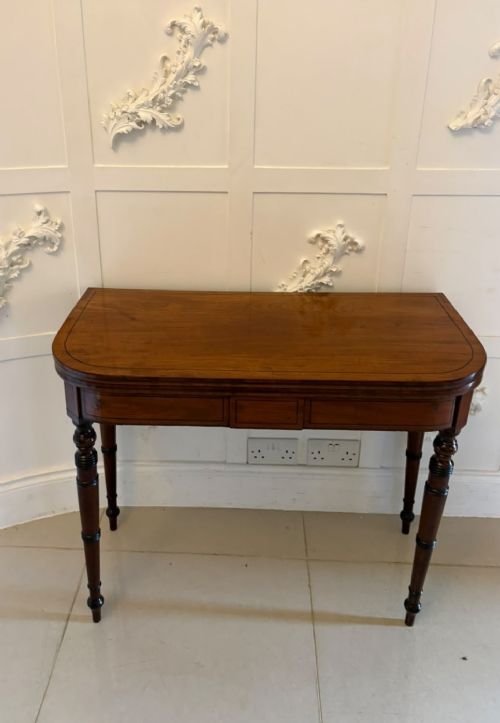
Georgian Inlaid Console Table
A georgian inlaid console table brings formal elegance to a hallway, often doubling as a card or tea table through a clever fold-over top.
Georgian Inlaid Console Table
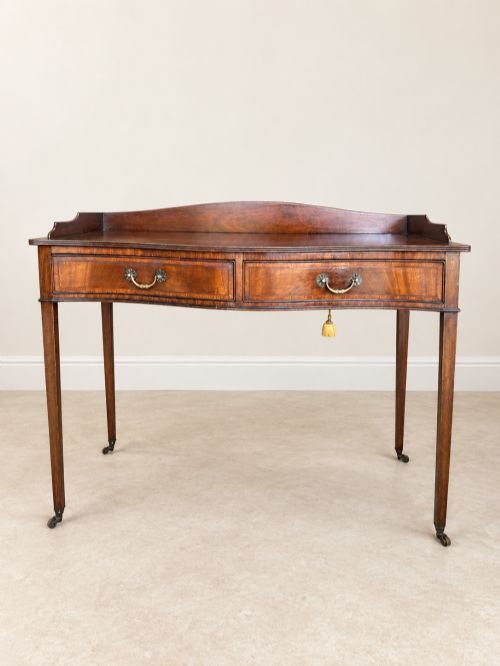
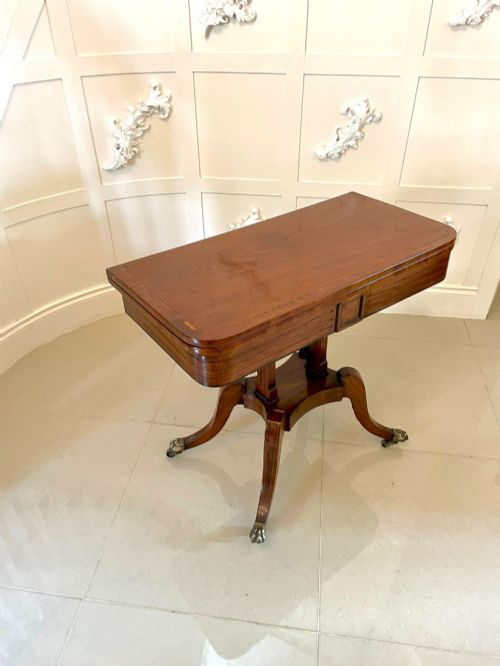
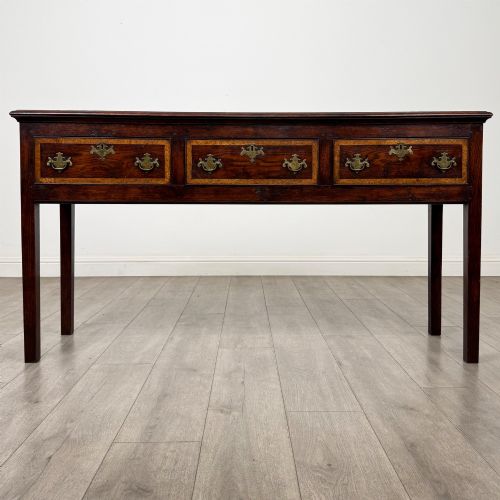
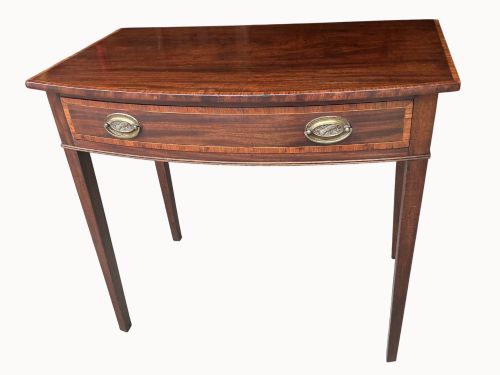
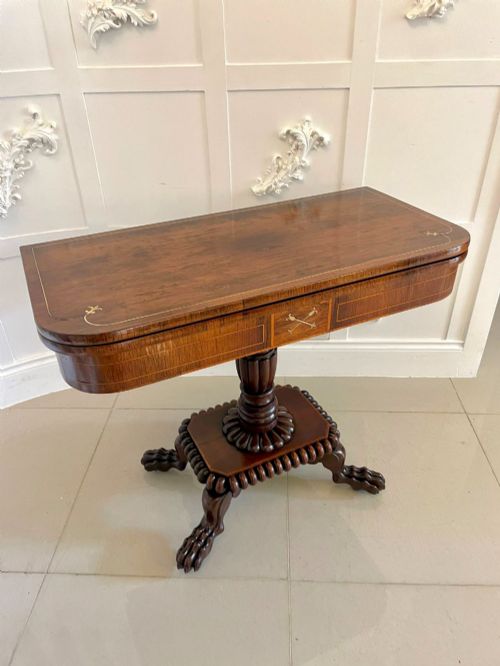
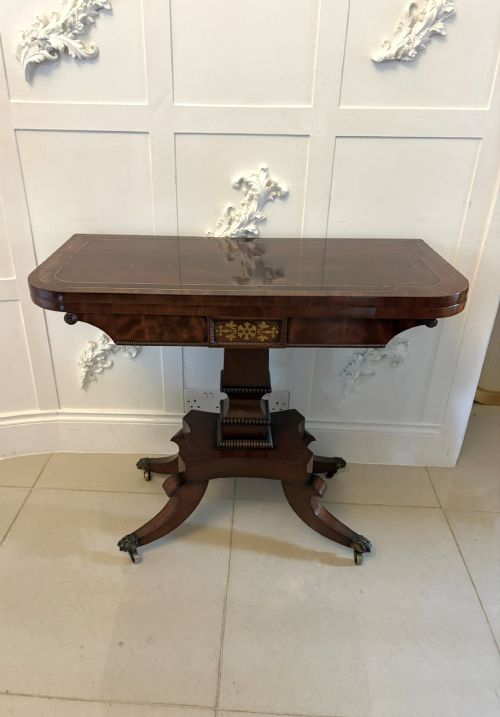
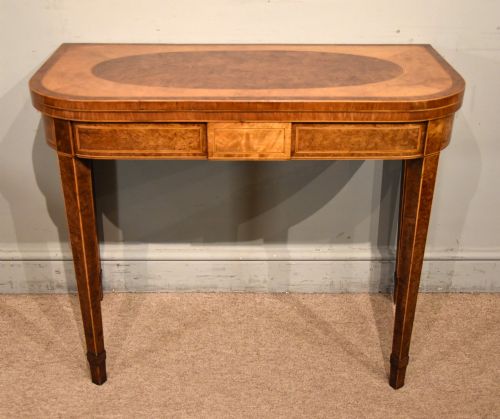
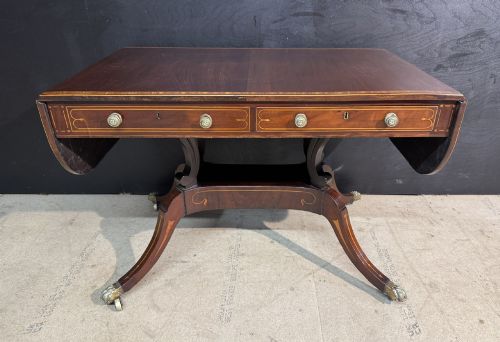
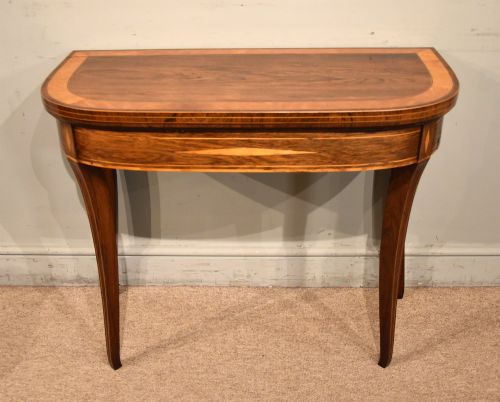
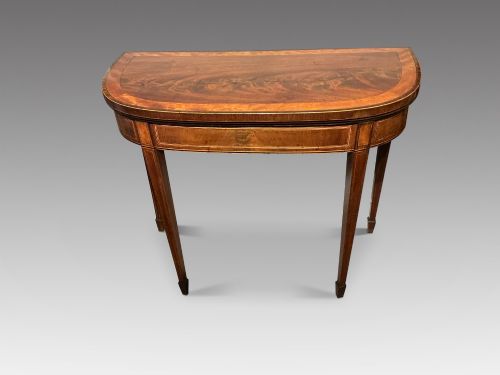
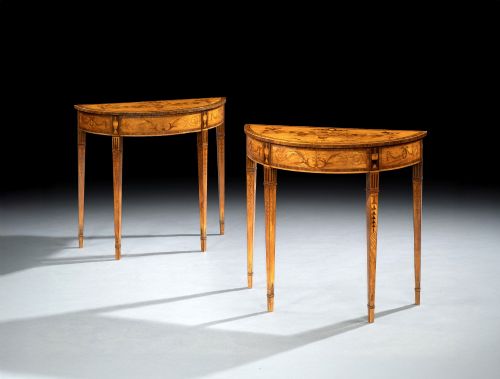
A georgian inlaid console table combines architectural form with decorative surface work, appearing most frequently in demi-lune shapes designed to sit flat against a wall. The pieces listed span the Georgian, Regency and Edwardian eras, with many examples functioning doubly as card, games or tea tables through folding tops supported by pivoting legs.
Makers often shaped these tables from rich timbers, incorporating satinwood, rosewood, and mahogany alongside intricate boxwood and wood inlay work. While some remain strictly as side or console tables, the fold-over variant dominates the selection, reflecting a period demand for versatile domestic furniture.
How they were made
Cabinetmakers constructed these tables using solid mahogany, oak, or fruitwood carcases overlaid with fine veneers of satinwood, rosewood, and amboyna. Surfaces received decorative enrichment through contrasting wood inlay, boxwood stringing, and marquetry detailing.
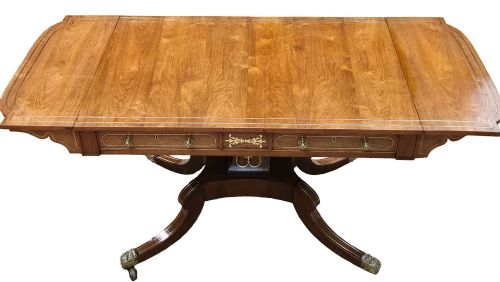
Regency examples frequently integrated cast brass inlay alongside brass stringing and mounts to accent the timber grain. Joinery relied on traditional hand-cut joints, while folding tops utilised precision wooden hinges and pivoting rear legs to support the opened leaf.
Some tables hide secret wells beneath their folding tops, once designed to store playing cards and heavy bone counters.
What varies in quality
The sophistication of the timber selection dictates the primary tier of quality, with highly figured mahogany and well-matched satinwood veneers marking superior workshops. Finely rendered marquetry and crisp, precise wood inlay require exceptional hand skill that elevates an example above plain or mechanically repetitive ornament.
Structural integrity and the retention of original brass elements or patinated polish determine the lasting worth of a piece. Tables that preserve their original folding mechanisms and unwarped timber tops command greater respect among collectors.
Bruce & Burns of Edinburgh
The Georgian Inlaid Console Table Glossary
- Demi-lune
- Half-moon shape. This semicircular design allows console tables to stand flat against a wall while occupying minimal floor space.
- Inlay
- Inserting contrasting materials. Cabinetmakers recessed wood, satinwood, or brass into the primary timber surface to create geometric or floral patterns.
- Crossbanding
- Border veneer running perpendicular. Strips of rosewood or satinwood framed the main top timber to create a distinct contrasting edge.
- Marquetry
- Pictorial veneer work. Artisans assembled small pieces of various coloured woods to form elaborate decorative scenes across the table top.
- Stringing
- Thin inlaid lines. Fine threads of boxwood or ebony outlined drawers, legs, and tabletops to add subtle linear definition.
Georgian Inlaid Console Table: Frequently Asked Questions
What is a georgian inlaid console table?
It is a decorative side table produced during the eighteenth or early nineteenth century, featuring inlaid wood patterns and often a folding top.
Such tables stood against reception room walls and transformed into gaming or tea surfaces when guests arrived.
How were folding console tables used?
They served a dual purpose in period homes as narrow side furniture and expanded playing areas for cards.
The hinged leaf flipped open to reveal a baize-lined or polished timber surface supported by a swing leg.
How do I identify a Regency example?
Regency pieces often display distinct brass inlay, rosewood veneers, and classical architectural proportions dating from the early nineteenth century.
They lean towards bolder contrast between dark timbers and bright metallic or light wood details.
Where should I place one at home?
A hallway, landing, or living room wall suits their shallow profile, keeping walkways clear while offering surface display space.
Keeping them out of direct sunlight protects delicate satinwood veneers and antique polishing from fading.