
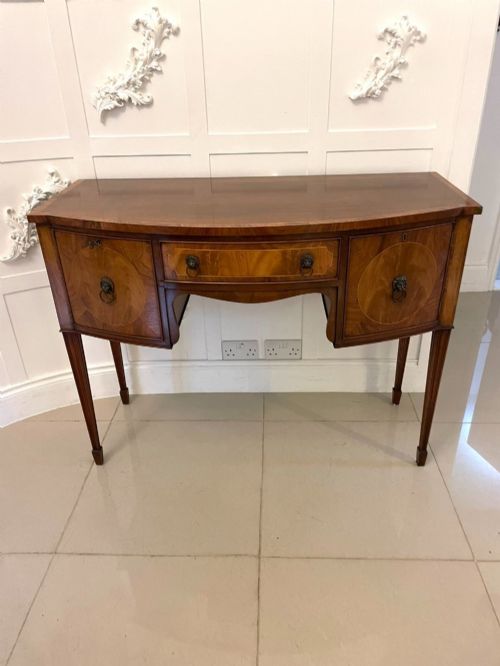
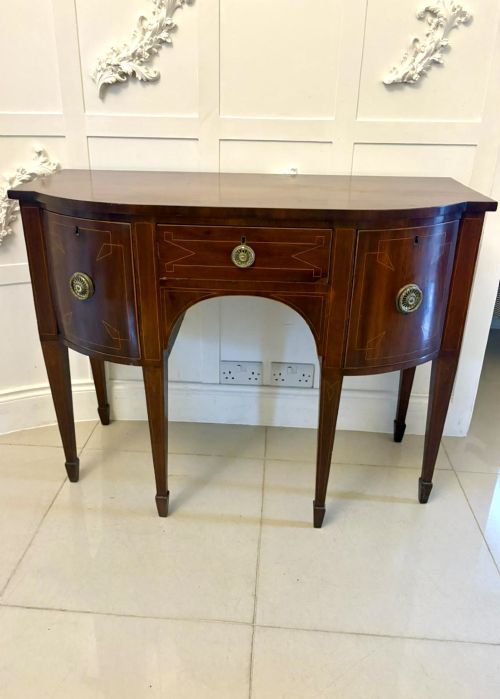
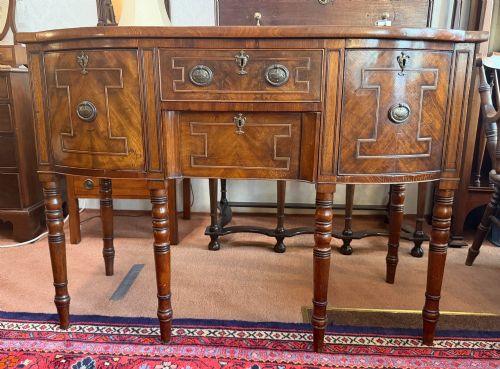
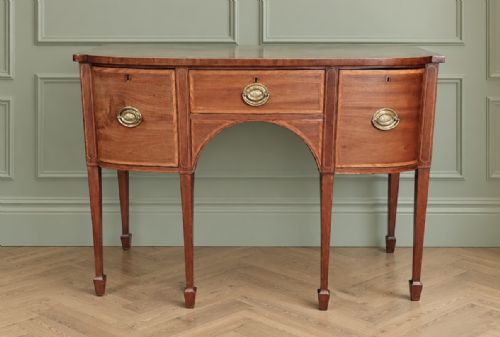
Georgian Inlaid Buffet
A georgian inlaid buffet brings classical proportion and refined timber to the dining room, offering both display surface and discrete storage.
Georgian Inlaid Buffet
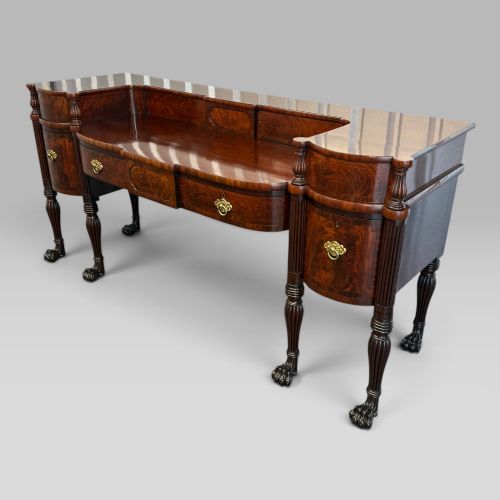
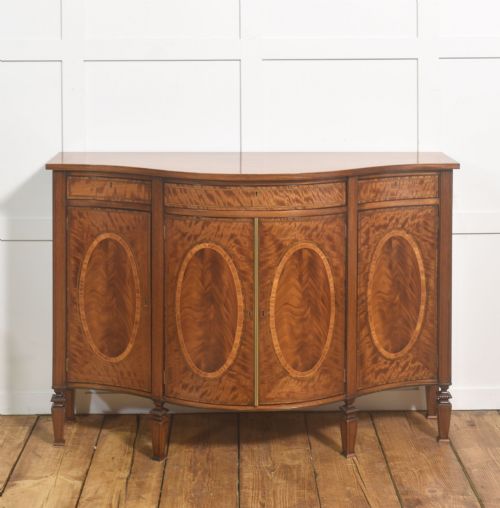
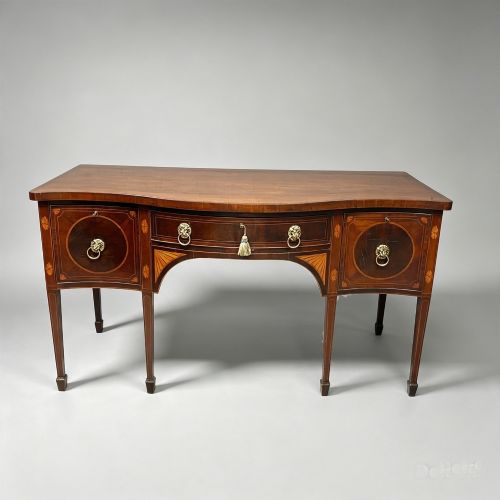
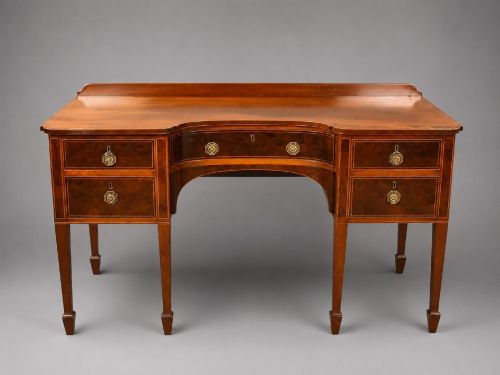
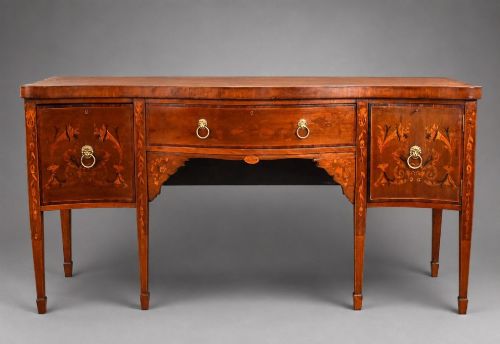
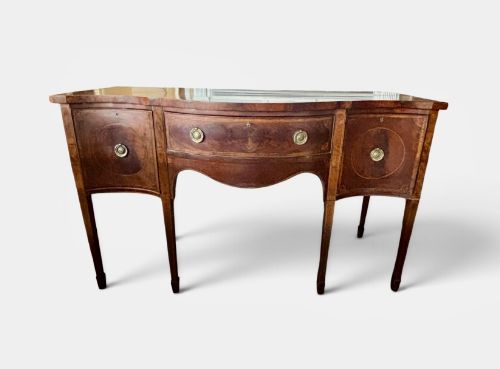
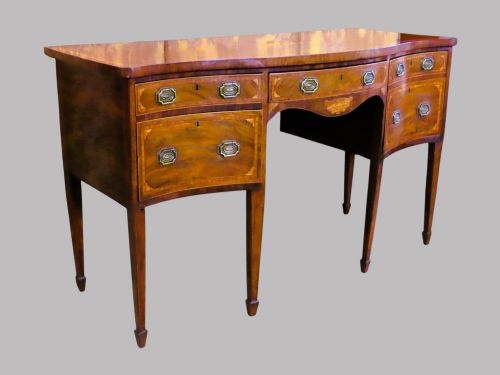
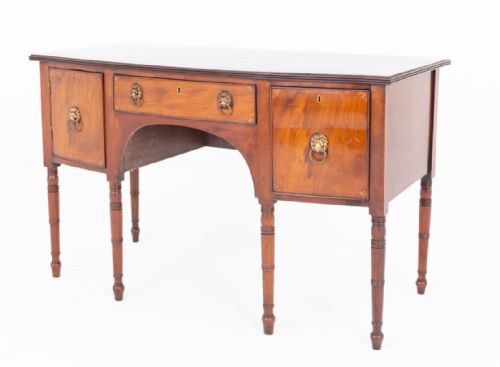
A georgian inlaid buffet principally encompasses serving tables, sideboards, and dresser bases produced during the eighteenth and nineteenth centuries, alongside later revival interpretations. These pieces generally feature linear surfaces designed for the dining room, often adapted with bow-fronts or serpentine outlines.
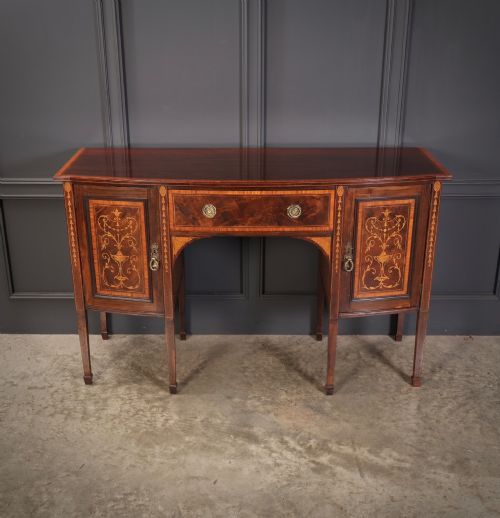
The versions most commonly met on this page span the George III and Regency periods, alongside Edwardian and Sheraton Revival pieces that echo those earlier proportions. Makers often employed mahogany as a primary carcase timber, enriched with contrasting banded edges and geometric stringing.
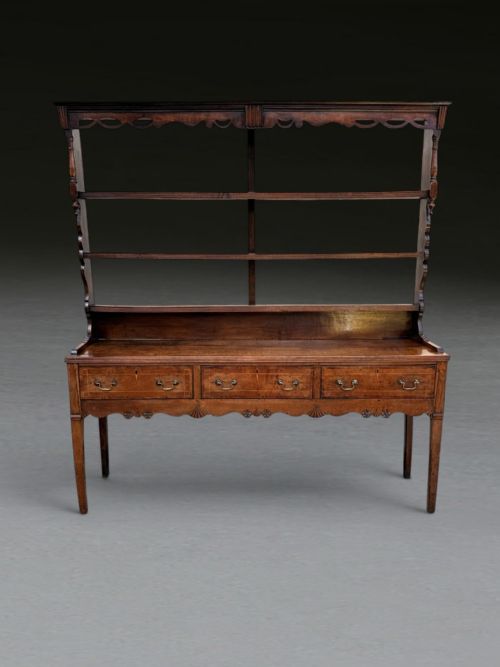
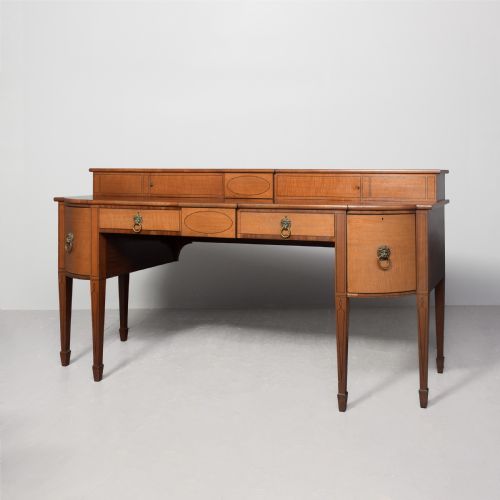
Beyond standard sideboards, the selection extends to oak dresser bases and breakfront formats incorporating pedestal supports or stage-backs. Each variant serves the traditional function of holding dining silver, linen, and serving vessels while projecting architectural dignity.
Distinctions in Quality and Execution
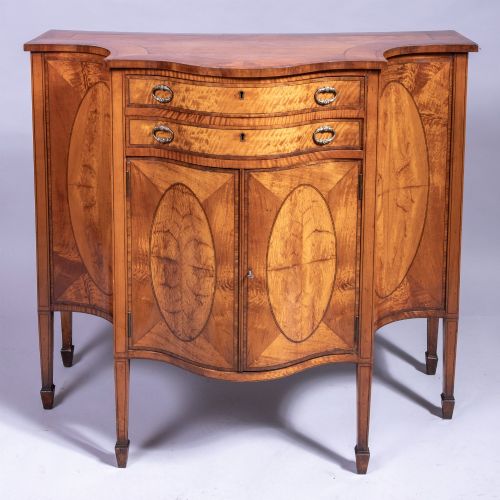
Quality rests significantly on the choice of timber and the restraint of the decorative scheme, where figured flame mahogany and crisp boxwood stringing elevate the piece above plain utility. Superior examples maintain balanced proportions across serpentine or bow-front curves without distortion in the framing.
The crispness of the inlay work and the integrity of the secondary woods inside drawers signal workshop competence. Original brass hardware and well-fitted drawer linings further distinguish cabinet work intended for elite dining rooms from simpler vernacular output.
Materials recorded across the inventory include satinwood, boxwood, ebony, oak, and brass alongside primary mahogany carcases.
The Georgian Inlaid Buffet Glossary
- Serpentine
- A front contour that curves outward at the centre and inward toward the ends, requiring advanced cabinetmaking skill. This flowing shape defines the most desirable eighteenth-century serving tables.
- Stringing
- Thin lines of contrasting timber inlaid into shallow channels on the furniture face. It creates delicate geometric borders around drawer fronts and tabletops.
- Flame mahogany
- A veneer cut from timber where the branch meets the trunk, producing a rippling flame-like pattern. It was prized for principal display surfaces on better sideboards.
- Bow-front
- A convex curved front profile that projects outward in a smooth arc. This shape softens the room's geometry while increasing internal storage capacity.
- Marquetry
- Elaborate decorative patterns formed by fitting together contrasting veneers of wood or shell. It creates pictorial or symmetrical designs across cabinet doors and tabletops.
Georgian Inlaid Buffet: Frequently Asked Questions
What is a georgian inlaid buffet used for today?
These pieces serve effectively as sideboards in modern dining rooms, providing generous surface space for serving food and drinks during gatherings.
Cupboard and drawer space below accommodates tableware, linens, and bottles, blending historical character with practical storage.
How do I tell an original Georgian piece from a revival?
Examination of construction marks, timber shrinkage, and interior secondary woods reveals the age of a piece. Eighteenth-century examples display hand-cut joinery and aged patination that later nineteenth-century revival pieces rarely replicate with exact fidelity.
Will a serpentine sideboard fit in a modern dining room?
Serpentine forms project outward in the centre, requiring careful measurement of floor space to ensure clearance around the dining table. Their curved profiles help soften narrow rooms by eliminating sharp corners.
How should I care for antique mahogany surfaces?
Maintain the timber by applying traditional beeswax periodically, avoiding silicone sprays and direct sunlight which fades flame mahogany veneers. Consistent indoor humidity prevents timber movement and splitting in the joints.