

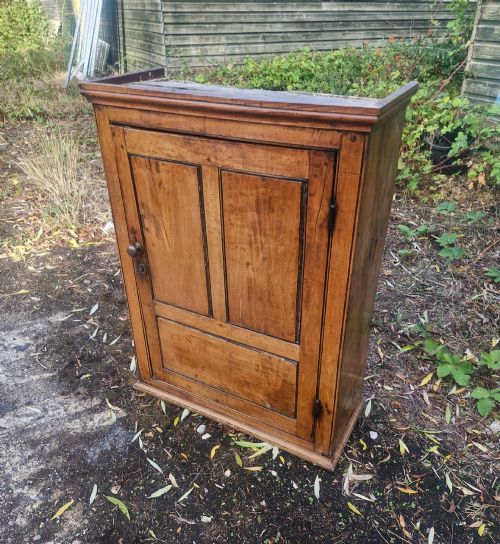
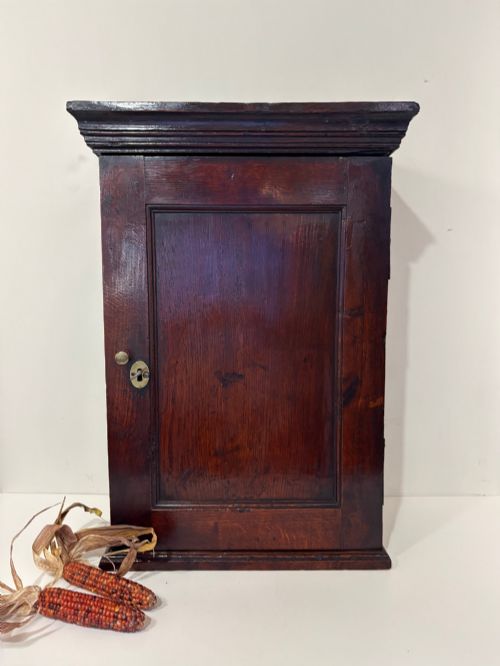
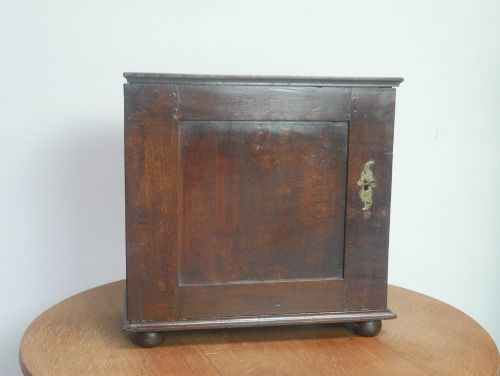
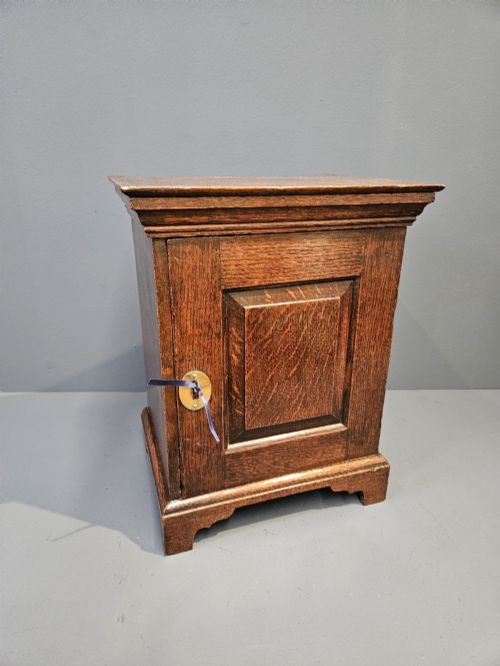



Georgian Hanging Spice Cupboard
A georgian hanging spice cupboard is a compact wall-mounted timber box designed to preserve precious kitchen stores.
Georgian Hanging Spice Cupboard
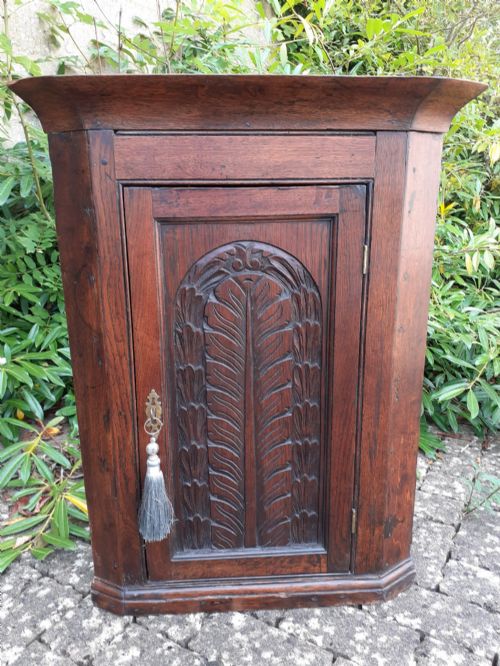
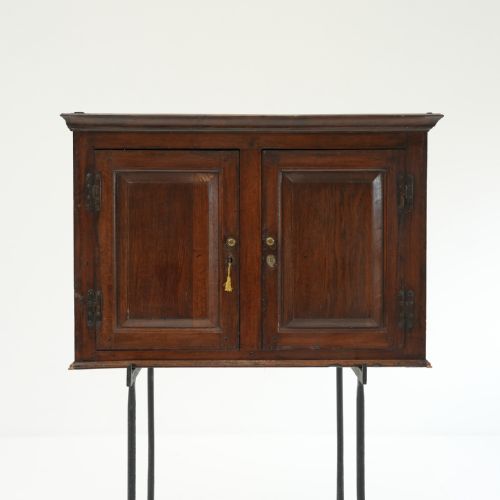
A georgian hanging spice cupboard is a small wall-mounted storage piece designed for domestic interiors during the eighteenth and early nineteenth centuries. The pieces on this page span the 1700s, 18th century, George II, and late Georgian periods, appearing mainly as wall cabinets and spice cupboards.
Makers constructed these cabinets using oak, mahogany, and pine, often incorporating small internal drawers alongside the main door. Regional variants such as Welsh vernacular styles and provincial farmhouse pieces feature alongside standard Georgian forms.
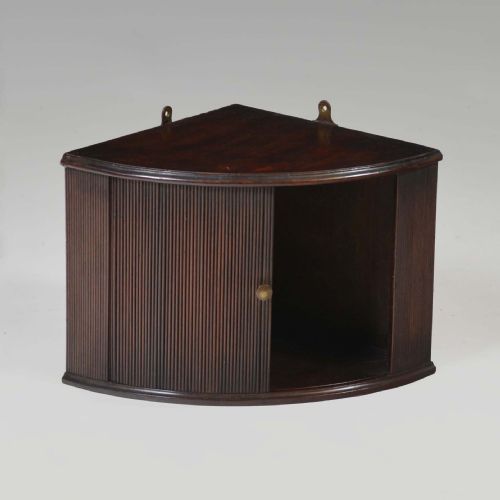
Most examples hang directly on the wall or sit in corners, utilising flat or tambour fronts to secure the contents. Buyers encounter standard wall cupboards as well as specialised spice cabinets with fitted interiors.
How they were made
Joiners built these cupboards primarily from solid oak and mahogany, occasionally using pine for secondary elements like internal partitions and backboards. Wood inlay and carving embellish finer examples, such as the dated 1763 cabinet.
Hardware played a functional role through wrought iron and brass hinges, locks, and escutcheons secured to the timber doors. Tambour fronts utilised narrow strips of wood glued to a fabric backing to slide around curved tracks on corner cabinets.
Listings feature oak and mahogany predominantly, with pine and wrought iron appearing in regional provincial pieces from the eighteenth century.
What varies in quality
The choice of primary timber sets the baseline, with finely figured mahogany and dense early oak commanding greater interest than utility pine. Surface patination and the survival of original brass or wrought iron hardware distinguish superior examples from altered pieces.
Internal complexity marks out better work, particularly where makers installed multiple small drawers or intricate fielded panel doors. Structural integrity in the hanging points and the retention of original backboards indicate how well a cabinet survived domestic use.
The Georgian Hanging Spice Cupboard Glossary
- Tambour
- A flexible sliding door formed of narrow vertical strips of wood attached to canvas or leather backing. This mechanism allowed doors to curve around the frame of corner cabinets without swinging outward.
- Fielded panel
- A wooden panel with bevelled edges that fit into a grooved frame, allowing the timber to expand and contract safely with humidity changes. It adds depth and shadow to cabinet doors.
- Escutcheon
- A protective plate surrounding the keyhole of a cabinet door, usually fashioned from brass or iron. It prevented the key from wearing away the surrounding timber.
- Vernacular
- Furniture made by local provincial cabinetmakers using regional traditions and native woods rather than following London court fashions. Welsh vernacular pieces often display distinctive proportions and mouldings.
- Patina
- The deep surface sheen and colour developed by aged wood through decades of handling, polishing, and exposure to light. It serves as an indicator of genuine age.
Georgian Hanging Spice Cupboard: Frequently Asked Questions
What did they store inside?
These cabinets held expensive imported spices, culinary herbs, and valuable dry goods that required secure storage away from damp kitchen air. Many included small internal drawers specifically for segregating different types of provisions.
Over time, owners also used them for domestic medicines, small documents, or valuables. The presence of internal compartments indicates their original role in managing precious household stores.
How do I hang a heavy oak cupboard safely?
Wall-mounted antique cabinets require secure fixing directly into wall studs or masonry using appropriate weight-bearing screws and brackets. The original hanging loops or internal screw holes need careful assessment before supporting the weight of solid oak.
Professional installation is recommended because eighteenth-century hardwood cabinets are heavier than modern wall units. Ensuring the wall fixings match the age and structural condition of the backboards protects the timber from splitting.
How can I tell a George II piece from later Georgian work?
George II examples typically date from the mid eighteenth century and display heavier oak construction with robust mouldings and straightforward panel geometry. The timber often shows denser grain patterns characteristic of earlier forestry practices.
Later Georgian pieces from around 1800 frequently incorporate mahogany, lighter framing, and occasionally tambour fronts or refined inlay work. Stylistic shifts reflect broader interior design changes toward lighter proportions by the end of the century.
Were these cabinets meant for kitchens?
These cupboards served in domestic spaces where valuable stores needed protection, which often included parlours, pantries, and private rooms alongside kitchens. Their compact scale allowed them to fit into tight wall spaces or room corners.
The inclusion of fine carved details and mahogany veneers on certain models suggests they hung in reception rooms where guests could observe them. Utility versions with plain oak construction likely remained closer to food preparation areas.